A record of documented arms, meaning and origin, researched for the de Monté family lines. Documented in 3 countries.
Reg. 5504 · Dutch, D–F
Coat of Arms & Family Crest Details
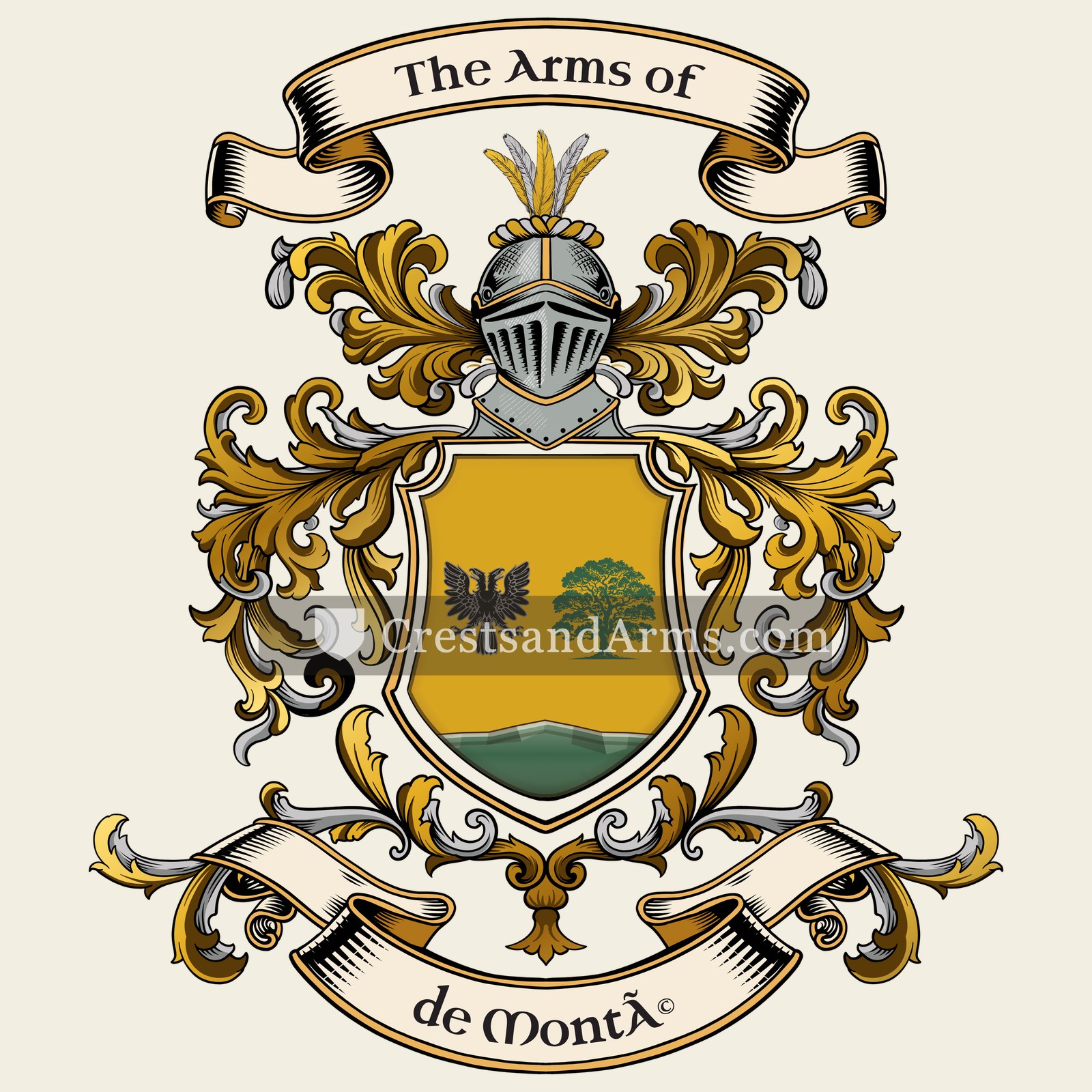
Symbols on this shield
mountThe ground held, and steadfastness upon it
eagleNobility, strength and a keen mind
treeLife, endurance and deep roots
Colours
Gold (Or)Means: Generosity
Green (Vert)Means: Hope
Black (Sable)Means: Constancy
Historical info
Source
J. B. Rietstap, Armorial Général, Gouda: G. B. van Goor Zonen, 1884–87
Blazon (the actual original written record)
“D'or à la moitié inférieure d'une aigle mouv. du chef, tenant de sa serre dextre une boule et de sa sen. un faisceau de trois flèches, le tout de sa.; lesdits meubles surmontant un arbre terrassé de sin.”
NetherlandsRotterdam, c. 1815
Where the de Monté Arms Were Recorded
Rotterdam
Map of Netherlands showing where the de Monté arms are recorded
The de Monté arms were recorded in Rotterdam, c. 1815.
This is where the arms were entered in the register. Families often moved to other parts of the country, so the same name can turn up in more than one region.
Region
Rotterdam
Town
Rotterdam
First recorded
1815
Granting Authority for the de Monté Arms
Hoge Raad van Adel
Photograph made by me · CC BY-SA 3.0
The body that granted and recorded arms in Netherlands in this period.
William I of the Netherlands
Sovereign of the period
William I of the Netherlands
1815–1840
Reigning in Netherlands when the de Monté arms are first recorded.
How Arms Worked in Netherlands
In the Netherlands, coats of arms were often used by noble families and those who held specific public offices. These arms were passed down through the generations to legitimate descendants. Younger branches of a family usually kept the original design without needing to add special marks. This system ensured that the family identity remained clear and consistent over many years.
Granting authority
The Hoge Raad van Adel is the official body that regulates and manages noble titles and coats of arms in the Netherlands.
How they got arms
Families typically obtained their coats of arms through official royal grants or by proving their long-standing historical use of the symbols.
Where arms were recorded
Coats of arms are officially recorded in the registers held by the Hoge Raad van Adel, which began its work in 1814.
The family's standing
Recorded among the armigerous families of Netherlands.
Origin & History of the de Monté Family in Netherlands
The family name de Monté first appears in the historical record of Rotterdam around 1815, a time when the Netherlands was undergoing significant social and administrative changes following the end of the Napoleonic era. During this period, the Dutch government began formalizing civil registration systems, requiring families to officially record their surnames and lineages for the state. The name itself suggests a connection to geographic features, as the prefix indicates an association with mountainous or elevated terrain, which contrasts interestingly with the flat, low-lying landscape of the port city of Rotterdam. As the family established their roots in this bustling maritime hub, they became part of the city’s vibrant merchant culture. This transition into the official records of the early nineteenth century marks the beginning of their documented presence in the region, reflecting the broader movement of families settling into urban centers during the formation of the modern Kingdom of the Netherlands.
Coat of Arms & Family Crest Details
Symbols on this shield
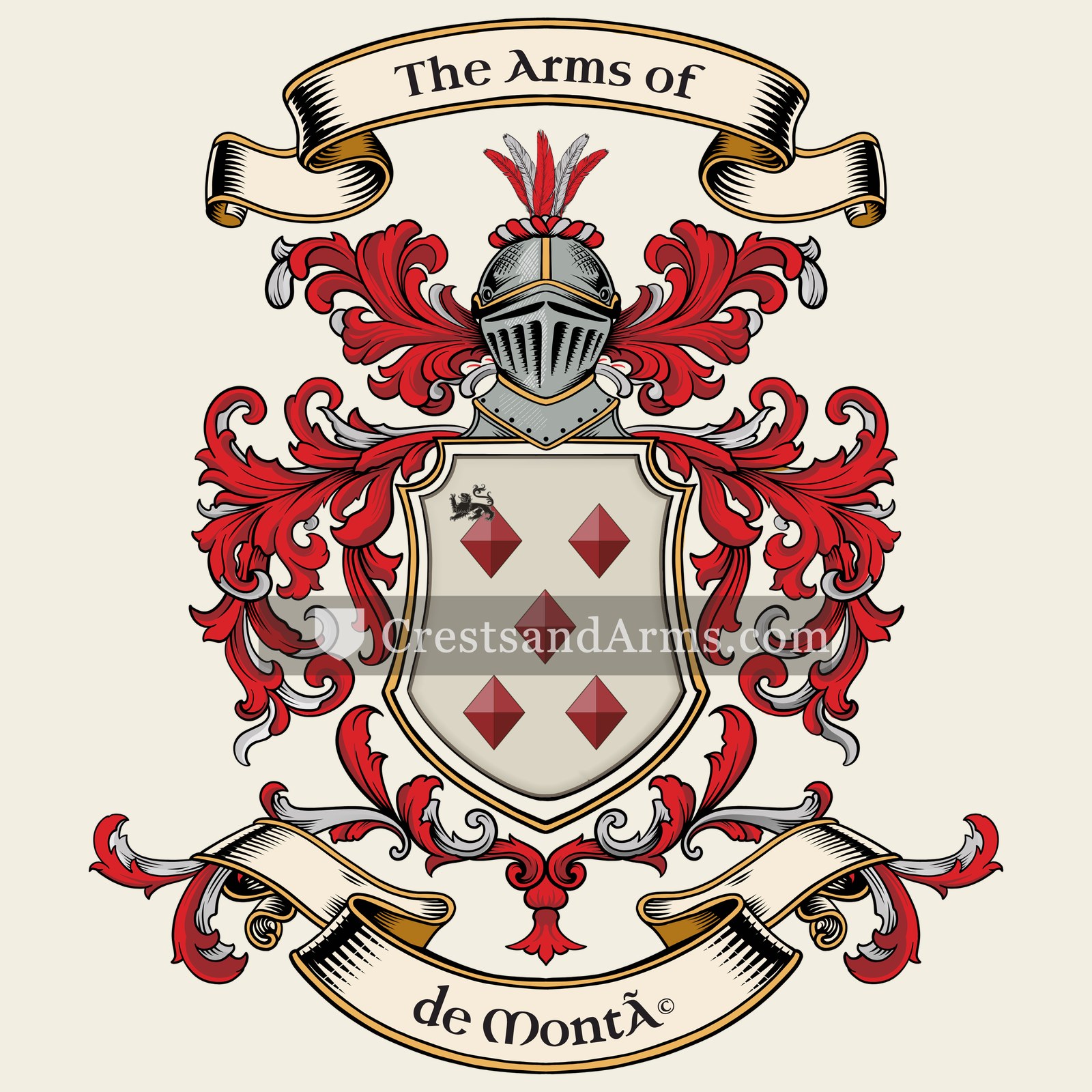
lozengeHonour and nobility, and the arms of a woman
lionCourage, strength and royalty
Colours
Silver (Argent)Means: Peace and sincerity
Red (Gules)Means: Military strength
Historical info
Source
J. B. Rietstap, Armorial Général, Gouda: G. B. van Goor Zonen, 1884–87
Blazon (the actual original written record)
“D'arg. à cinq los. de gu., rangées en barre; au fr.-q. de gu., ch. d'un léopard lionné du champ.”
BelgiumBruxelles, c. 1737
Where the de Monté Arms Were Recorded
Bruxelles
Map of Belgium showing where the de Monté arms are recorded
The de Monté arms were recorded in Bruxelles, c. 1737.
This is where the arms were entered in the register. Families often moved to other parts of the country, so the same name can turn up in more than one region.
The body that granted and recorded arms in Belgium in this period.
Charles VI, Holy Roman Emperor
Sovereign of the period
Charles VI, Holy Roman Emperor
1711–1740
Reigning in Netherlands when the de Monté arms are first recorded.
How Arms Worked in Belgium
In Belgium, a coat of arms is considered personal property that is passed down through the male line to legitimate descendants. Families often use the same shield design across generations to show their shared heritage. If a branch of the family wants to change the design, they must apply for an official update to their specific version of the arms.
Granting authority
The Conseil héraldique is the official body that regulates and approves all coats of arms in Belgium.
How they got arms
Families obtain their coats of arms through formal royal grants or by confirming their historical right to use existing designs.
Where arms were recorded
All approved coats of arms are officially recorded in the public registers of the Conseil héraldique since 1844.
The family's standing
Recorded among the armigerous families of Belgium.
Origin & History of the de Monté Family in Belgium
The history of the de Monté family in Belgium is rooted in the urban landscape of Brussels during the eighteenth century. Official records confirm that members of the family were established residents of the city by 1737, living during a period when Brussels served as a major center for trade and administration in the Austrian Netherlands. The name itself suggests a connection to elevated terrain, which was a common way to identify families who lived near hills or fortified heights in the region. As the family integrated into the local community, they participated in the social and economic life of the capital, navigating the complex guild structures and civic requirements of the time. By settling in Brussels, the de Monté family became part of the long tradition of urban families who helped shape the city’s development throughout the Enlightenment era.
Coat of Arms & Family Crest Details
Symbols on this shield
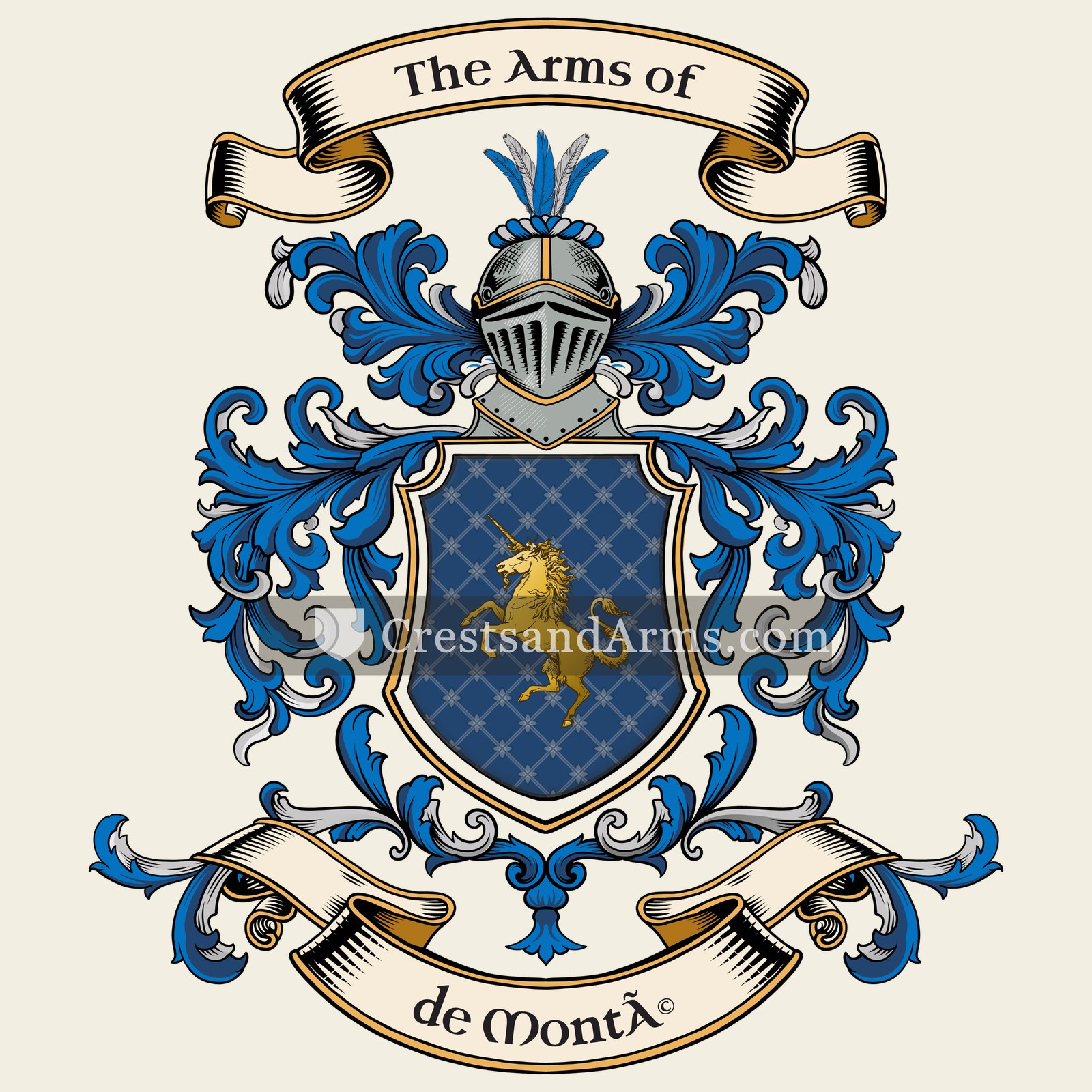
unicornPurity, and extreme courage in defence of honour
Colours
Blue (Azure)Means: Loyalty and truth
Gold (Or)Means: Generosity
Historical info
Source
J. B. Rietstap, Armorial Général, Gouda: G. B. van Goor Zonen, 1884–87
Blazon (the actual original written record)
“D'azur à une licorne naiss. d'or.”
ItalyRome, c. 1775
Where the de Monté Arms Were Recorded
Rome
Map of Italy showing where the de Monté arms are recorded
The de Monté arms were recorded in Rome, c. 1775.
This is where the arms were entered in the register. Families often moved to other parts of the country, so the same name can turn up in more than one region.
The body that granted and recorded arms in Italy in this period.
Alvise Giovanni Mocenigo
Sovereign of the period
Alvise Giovanni Mocenigo
1763–1778
Reigning in Netherlands when the de Monté arms are first recorded.
How Arms Worked in Italy
In the Italian states, coats of arms were often used by noble families to show their status and history. These symbols were passed down through the generations to all legitimate male descendants. Younger branches of a family usually kept the original design but sometimes added small changes to distinguish their specific line from the main branch.
Granting authority
Various local rulers and city governments controlled the use of coats of arms across the different Italian states.
How they got arms
Families often assumed their own arms or received them as official grants from local lords, popes, or city councils.
Where arms were recorded
Arms were recorded in local city archives or private family books rather than in one single national register.
The family's standing
Recorded among the armigerous families of Italy.
Origin & History of the de Monté Family in Italy
The history of the de Monté family in Italy is deeply rooted in the social and administrative landscape of eighteenth-century Rome. By 1775, the family was already established within the city, a time when Rome served as a major center for European diplomacy, art, and religious administration. Families with this surname often moved in circles connected to the papal court or the professional classes that managed the daily functions of the Eternal City. The name itself suggests a connection to high ground or a specific geographic feature, which was a common way for families to identify their origins during the transition from the feudal era to the modern age. As residents of Rome during the late Enlightenment, the de Monté family likely navigated a society defined by strict social hierarchies and the influence of the Catholic Church. Their presence in the city during this period highlights their role as part of the urban elite who helped shape the cultural and civic identity of Rome before the major political shifts of the nineteenth century.
Related Branches & Arms
Root word
Mons
Latin term referring to a mountain, hill, or elevated piece of land.
This name
de MontéRefers to someone who lived on or near a mountain or prominent hill.
also spelled
Monte
de Montay
Related arms
Demontvariant spelling
Montevariant spelling
Documented Sources
J. B. Rietstap, Armorial Général, Gouda: G. B. van Goor Zonen, 1884–87


 mountThe ground held, and steadfastness upon it
 eagleNobility, strength and a keen mind
 treeLife, endurance and deep roots
 mountThe ground held, and steadfastness upon it
 eagleNobility, strength and a keen mind
 treeLife, endurance and deep roots

 lozengeHonour and nobility, and the arms of a woman
 lionCourage, strength and royalty

 unicornPurity, and extreme courage in defence of honour