Map of Netherlands showing where the De Neef arms are recorded
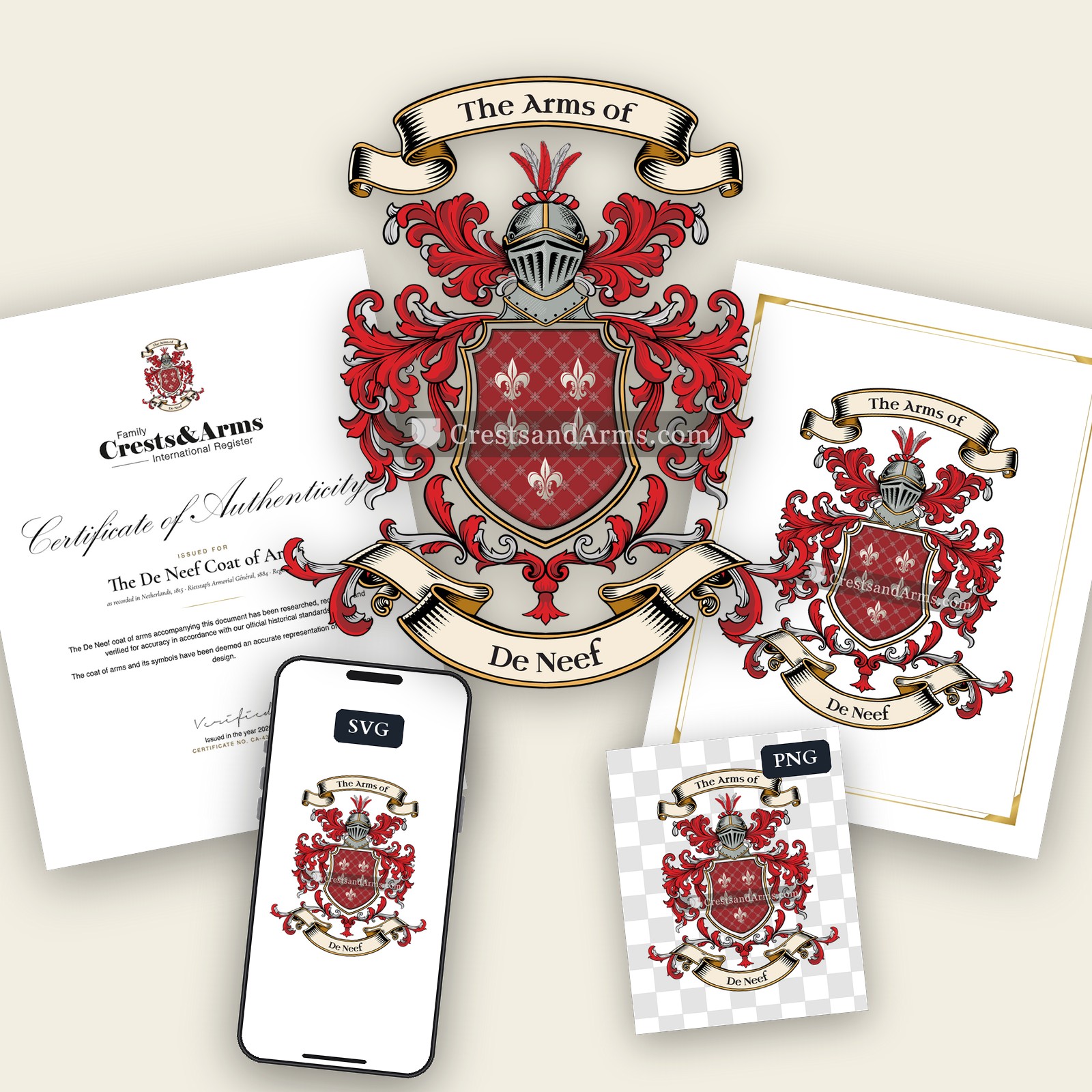
The De Neef arms were recorded in Amsterdam, c. 1815.
This is where the arms were entered in the register. Families often moved to other parts of the country, so the same name can turn up in more than one region.
Region
Amsterdam
Town
Amsterdam
First recorded
1815
Granting Authority for the De Neef Arms
Hoge Raad van Adel
Photograph made by me · CC BY-SA 3.0
The body that granted and recorded arms in Netherlands in this period.
William I of the Netherlands
Sovereign of the period
William I of the Netherlands
1815–1840
Reigning in Netherlands when the De Neef arms are first recorded.
How Arms Worked in Netherlands
In the Netherlands, coats of arms were often used by noble families and those who held specific public offices. These arms were passed down through the generations to legitimate descendants. Younger branches of a family usually kept the original design without needing to add special marks. This system ensured that the family identity remained clear and consistent over many years.
Granting authority
The Hoge Raad van Adel is the official body that regulates and manages noble titles and coats of arms in the Netherlands.
How they got arms
Families typically obtained their coats of arms through official royal grants or by proving their long-standing historical use of the symbols.
Where arms were recorded
Coats of arms are officially recorded in the registers held by the Hoge Raad van Adel, which began its work in 1814.
The family's standing
Recorded among the armigerous families of Netherlands.
Origin & History of the De Neef Family in Netherlands
The family name De Neef finds its roots in the Dutch language, where the term "neef" historically functioned as a broad descriptor for various male relatives, including nephews, cousins, or even grandsons. By the time the family was firmly established in Amsterdam in 1815, the name likely served as a way to distinguish specific branches of a family tree within the growing urban population. During the early nineteenth century, Amsterdam was a bustling center of trade and social change following the end of the Napoleonic era. Families like the De Neefs were part of a society that was increasingly documenting its citizens through formal civil registries. This period marked a transition where surnames became permanent fixtures of identity, moving away from older, more fluid naming traditions. As the family settled into the city, they became part of the fabric of Dutch life, contributing to the local community during a time when the Netherlands was redefining its national identity and administrative systems.
Coat of Arms & Family Crest Details
Symbols on this shield
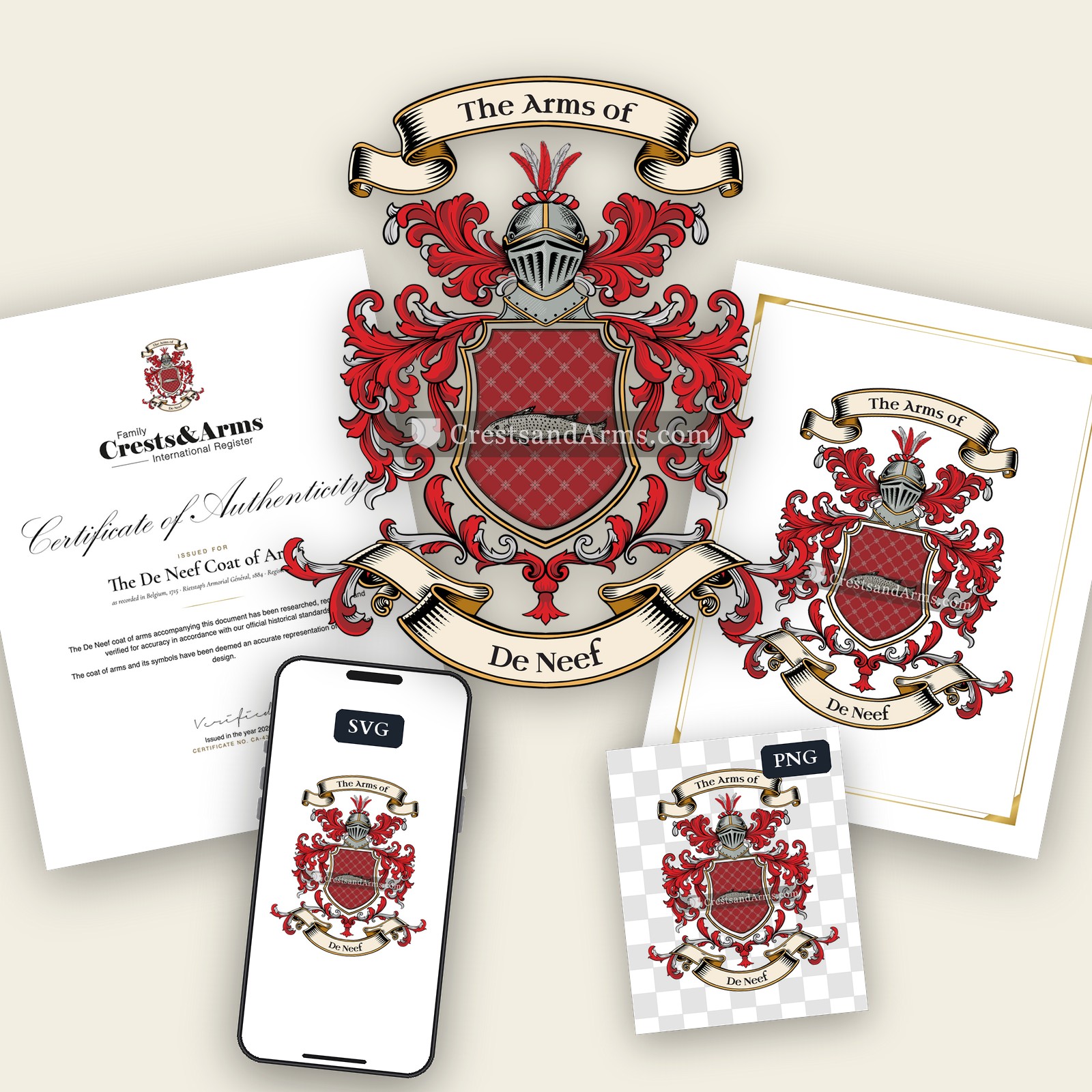
troutPlenty, and the rivers of the family's country
Colours
Red (Gules)Means: Military strength
Silver (Argent)Means: Peace and sincerity
Historical info
Source
J. B. Rietstap, Armorial Général, Gouda: G. B. van Goor Zonen, 1884–87
Blazon (the actual original written record)
“De gu. à une truite d'arg., posée en bande. Cq. cour. C.: un pélican avec ses petits d'or et sa piété de gu. T.: à dextre un Indien de carn., ceint et cour. de plumes de diverses couleurs, les bras et les jambes ornés du même, tenant de sa main dextre un arc et de sa sen. une bannière aux armes de l'écu (la truite posée en barre), portant le carquois sur le dos rempli de flèches; à sen. un Turc, hab. d'une tunique courte d'azur, bordée d'herm., liée autour du corps d'une écharpe blanche, la tête coiffée d'un turban du même; tenant de sa main dextre une bannière aux armes de l'écu et de sa sen. une épée haute d'arg., garnie d'or. Au-dessus du cimier les mots. DE NEVE CRIE: et au-dessous de l'écu les mots VOORDE. VOORDE!”
BelgiumGand, c. 1715
Digital archive packCoat of arms PNG, gold border print PDF, vector SVG and the certificate of authenticity. Sent to your email in minutes.
Map of Belgium showing where the De Neef arms are recorded
The De Neef arms were recorded in Gand, c. 1715.
This is where the arms were entered in the register. Families often moved to other parts of the country, so the same name can turn up in more than one region.
The body that granted and recorded arms in Belgium in this period.
Charles VI, Holy Roman Emperor
Sovereign of the period
Charles VI, Holy Roman Emperor
1711–1740
Reigning in Netherlands when the De Neef arms are first recorded.
How Arms Worked in Belgium
In Belgium, a coat of arms is considered personal property that is passed down through the male line to legitimate descendants. Families often use the same shield design across generations to show their shared heritage. If a branch of the family wants to change the design, they must apply for an official update to their specific version of the arms.
Granting authority
The Conseil héraldique is the official body that regulates and approves all coats of arms in Belgium.
How they got arms
Families obtain their coats of arms through formal royal grants or by confirming their historical right to use existing designs.
Where arms were recorded
All approved coats of arms are officially recorded in the public registers of the Conseil héraldique since 1844.
The family's standing
Recorded among the armigerous families of Belgium.
Origin & History of the De Neef Family in Belgium
The family name De Neef finds its roots in the Dutch-speaking regions of Belgium, where it functioned as a descriptive surname. In the local dialect, the name translates to "the nephew," which suggests that the original bearer was likely identified by his relationship to a prominent or well-known uncle in his community. By 1715, historical records confirm that members of the family were established in the city of Ghent, known locally as Gand. During this period, Ghent was a vital center for trade and textile production, and families like the De Neefs were often integrated into the urban fabric of the city as skilled laborers or merchants. As the family grew, they became part of the social and economic life of the region, reflecting the common naming patterns of the era where nicknames based on family ties eventually became permanent hereditary surnames.
Coat of Arms & Family Crest Details
Symbols on this shield
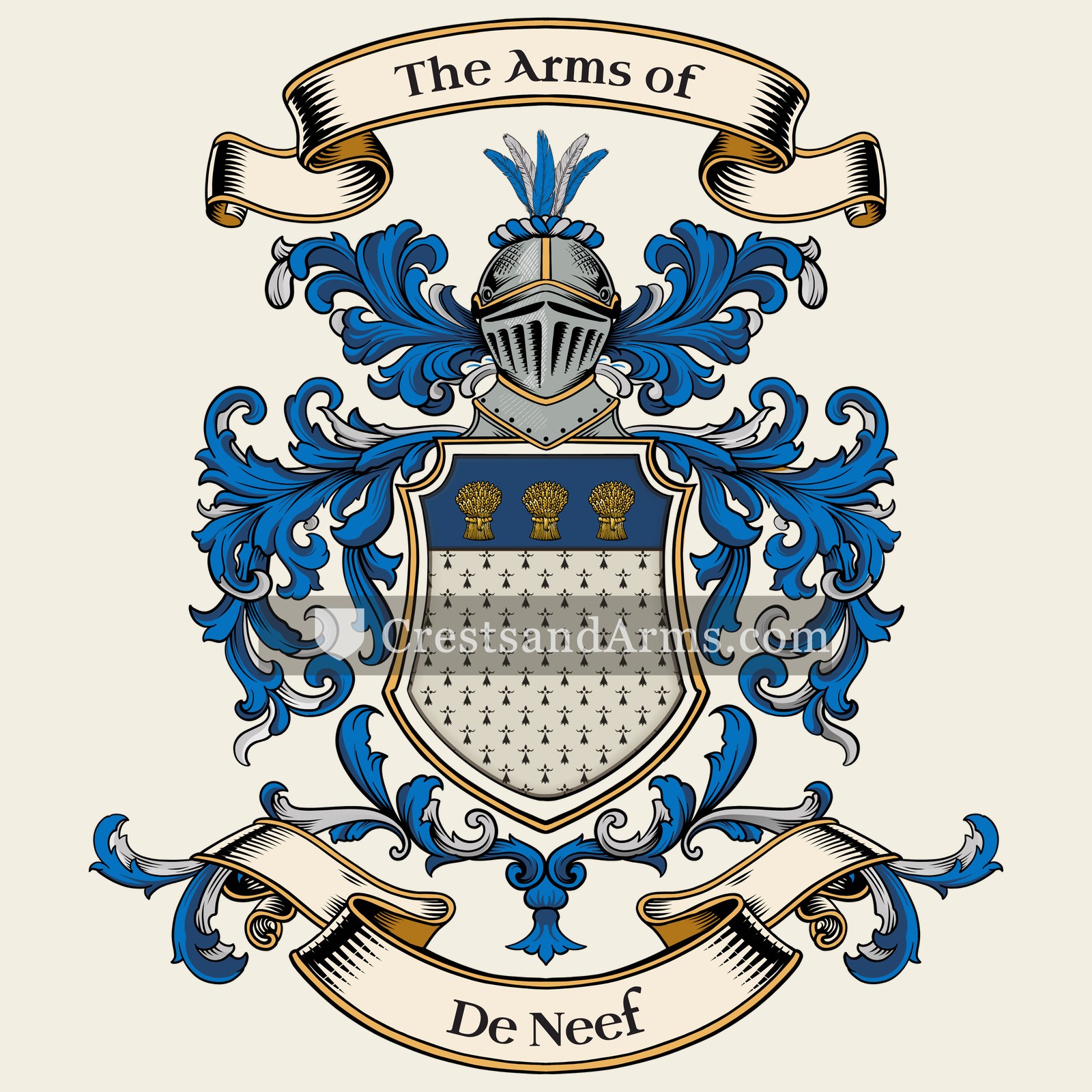
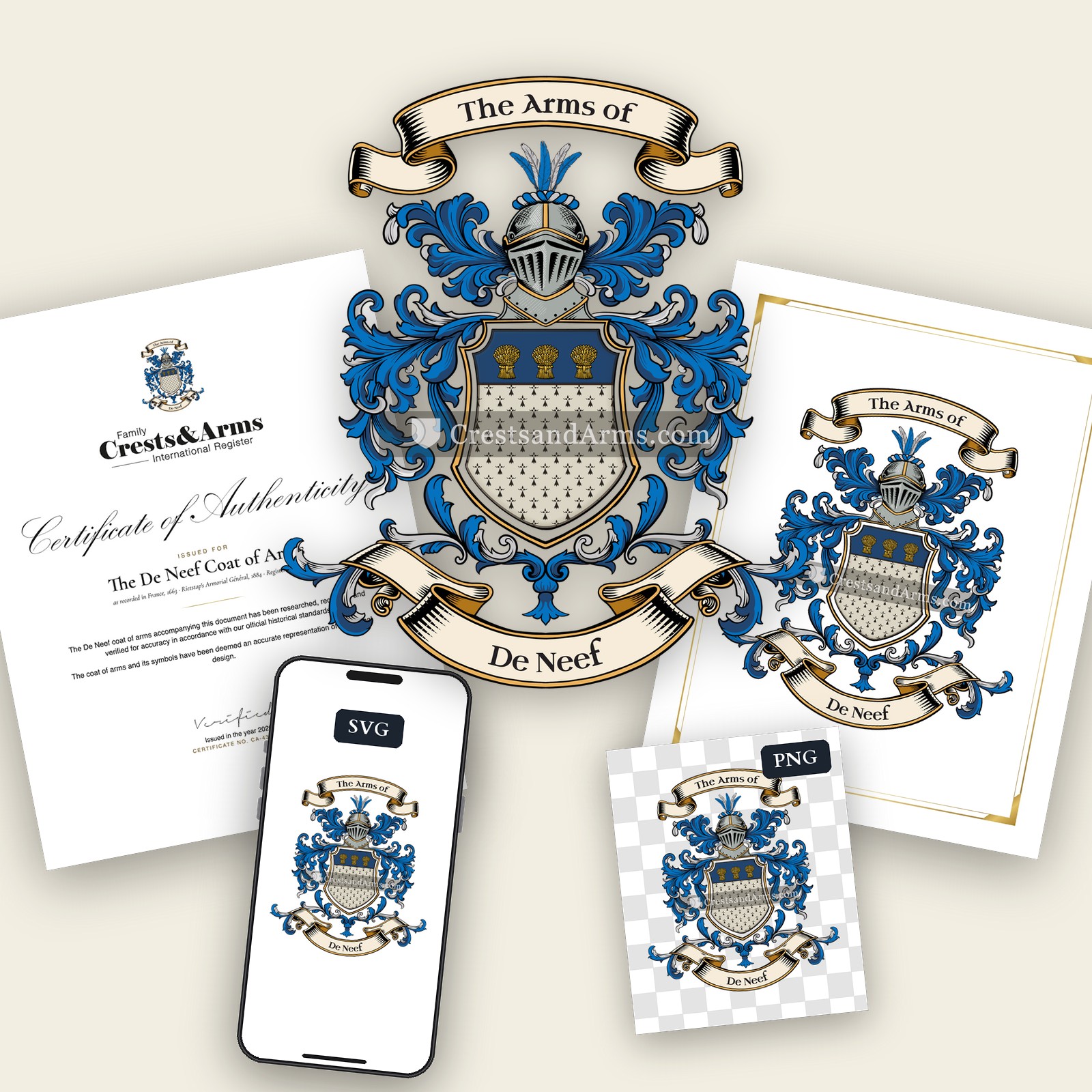
chiefAuthority, wisdom and dominion
wheatsheafPlenty, and the harvest of one's own labour
Colours
ErmineMeans: Dignity
Blue (Azure)Means: Loyalty and truth
Gold (Or)Means: Generosity
Historical info
Source
J. B. Rietstap, Armorial Général, Gouda: G. B. van Goor Zonen, 1884–87
Blazon (the actual original written record)
“D'herm.; au chef d'azur, ch. de trois gerbes d'or. - Ou: D'herm. à la fasce d'azur, ch. de trois gerbes d'or.”
Francec. 1663
Digital archive packCoat of arms PNG, gold border print PDF, vector SVG and the certificate of authenticity. Sent to your email in minutes.
Map of France showing where the De Neef arms are recorded
The De Neef arms were recorded in France, c. 1663.
Arms such as these were typically recorded in Bretagne.
More families held coats of arms in Bretagne than anywhere else in France. The land was divided into many small estates rather than a few large ones, so far more households counted as gentry, and each needed a shield of its own to be told apart.
This is where the arms were entered in the register. Families often moved to other parts of the country, so the same name can turn up in more than one region.
The body that granted and recorded arms in France in this period.
Louis XIV of France
Sovereign of the period
Louis XIV of France
1643–1715
Reigning in Netherlands when the De Neef arms are first recorded.
How Arms Worked in France
In France, a coat of arms was a mark of honor that passed down through the male line to all legitimate descendants. Families often used the same shield without changes to show their shared heritage. If a branch wanted to stand out, they could add a small mark to their shield to show their specific place in the family tree.
Granting authority
The Juge d'armes de France acted as the official authority that regulated and verified coats of arms across the country.
How they got arms
Families typically inherited their arms from ancestors, though they could also receive them through royal grants or by proving their noble status.
Where arms were recorded
Coats of arms were officially recorded in the Armorial Général de France, which began its main collection in the year 1696.
The family's standing
Recorded among the armigerous families of France.
Origin & History of the De Neef Family in France
The name De Neef carries a history deeply rooted in the linguistic and social traditions of northwestern Europe. While the name is often associated with Dutch or Flemish origins, its presence in France by 1663 reveals a family that moved across regional borders during a time of significant social change. In the context of Bretagne, the name likely functioned as a descriptive identifier, as the term itself translates to "the nephew" in older Germanic dialects. Families during the seventeenth century often adopted such names to distinguish themselves within growing village communities or to mark their relationship to a prominent local figure. By settling in the coastal regions of France, the early members of this family integrated into the local administrative and agricultural systems of the era. Their presence in the historical records of Bretagne suggests they were part of the steady migration of families who sought new opportunities in the western provinces of the French kingdom.
De Neef Meaning & Related Branches
Root word
neve
Middle Dutch word for nephew, cousin, or relative.
This name
De NeefRefers to a person who is a nephew or a kinsman.
also spelled
de Nev
de Nevee
de Nevve
Documented Sources
J. B. Rietstap, Armorial Général, Gouda: G. B. van Goor Zonen, 1884–87
Leenders, K.A.H.W., Van heerlijkheid tot gemeente: De geschiedenis van de Nederlandse gemeentelijke indeling, 2013
Van der Schaar, J., Woordenboek van voornamen, 2010
Stadsarchief Amsterdam, Bevolkingsregister 1815
Nationaal Archief, Burgerlijke Stand en Bevolking in Nederland
Digital archive packCoat of arms PNG, gold border print PDF, vector SVG and the certificate of authenticity. Sent to your email in minutes.


 fleur de lisPurity, light, and the sixth son
 fleur de lisPurity, light, and the sixth son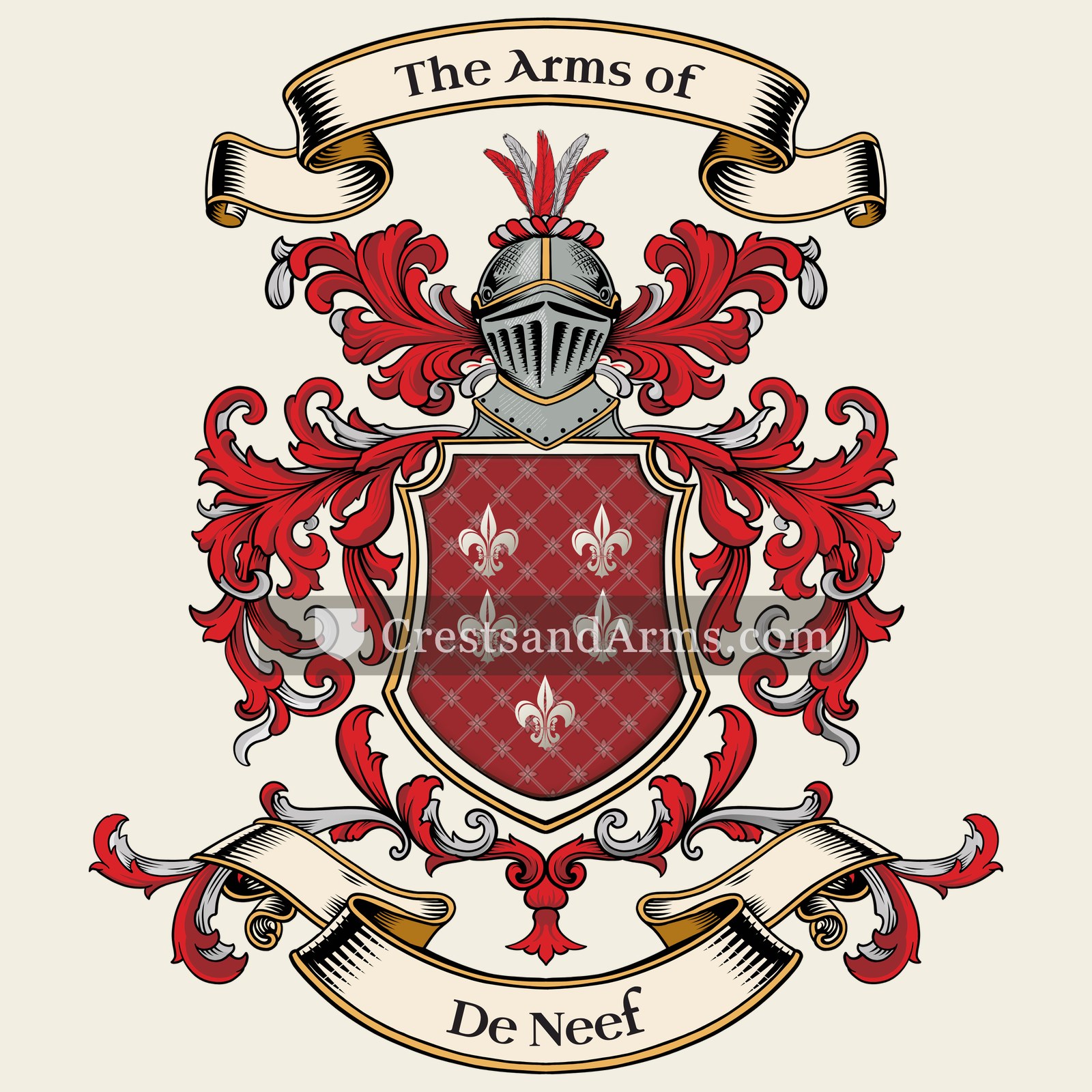


 troutPlenty, and the rivers of the family's country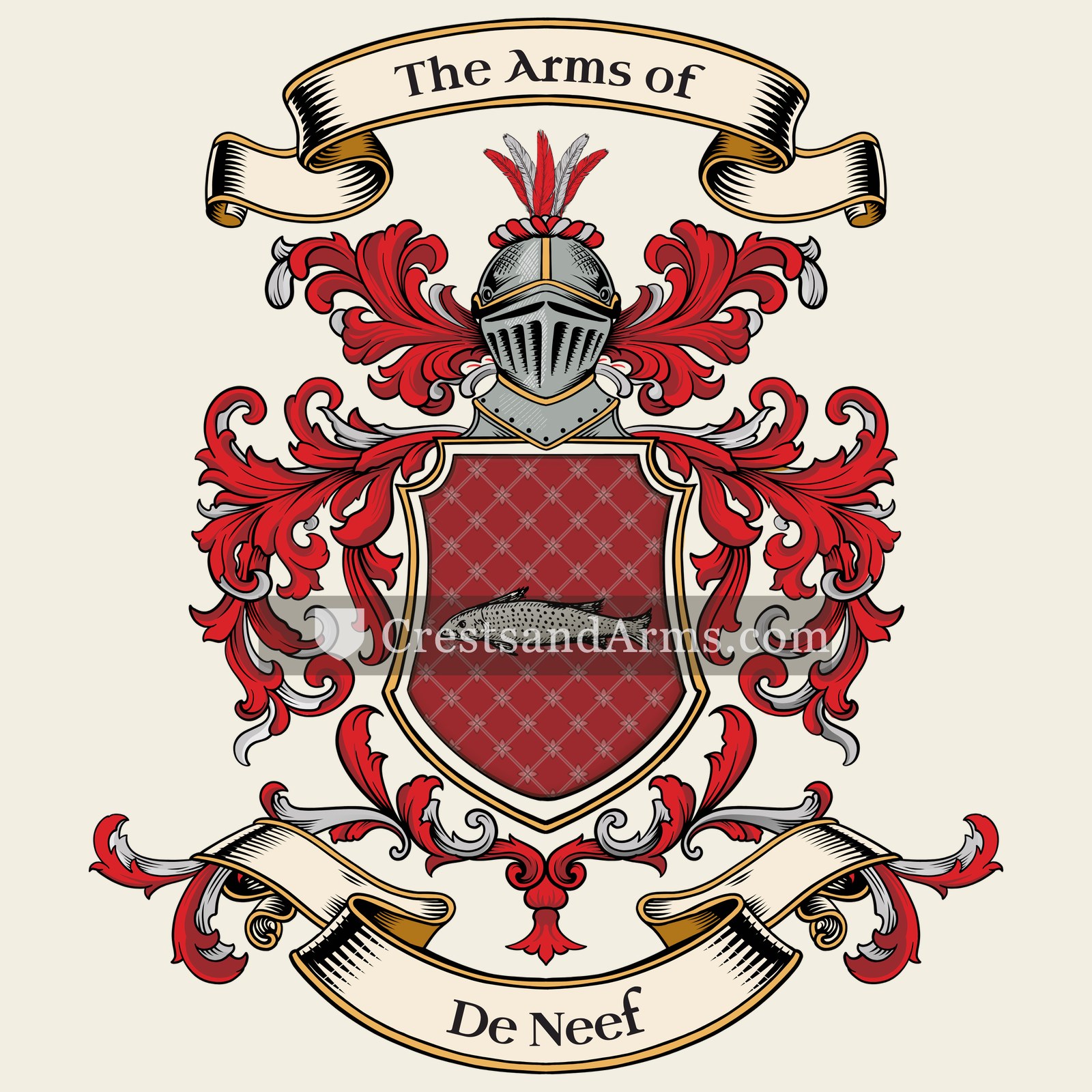


 chiefAuthority, wisdom and dominion
 wheatsheafPlenty, and the harvest of one's own labour