Map of Netherlands showing where the de Ridder arms are recorded
The de Ridder arms were recorded in Netherlands, c. 1815.
Arms such as these were typically recorded in Friesland.
Friesland was low, wet country on the northern coast of the Netherlands, farmed by families who had held the same land for centuries. Free landholders were unusually common there, and a free landholder could carry arms.
This is where the arms were entered in the register. Families often moved to other parts of the country, so the same name can turn up in more than one region.
Region
Friesland
First recorded
1815
Granting Authority for the de Ridder Arms
Hoge Raad van Adel
Photograph made by me · CC BY-SA 3.0
The body that granted and recorded arms in Netherlands in this period.
William I of the Netherlands
Sovereign of the period
William I of the Netherlands
1815–1840
Reigning in Netherlands when the de Ridder arms are first recorded.
How Arms Worked in Netherlands
In the Netherlands, coats of arms were often used by noble families and those who held specific public offices. These arms were passed down through the generations to legitimate descendants. Younger branches of a family usually kept the original design without needing to add special marks. This system ensured that the family identity remained clear and consistent over many years.
Granting authority
The Hoge Raad van Adel is the official body that regulates and manages noble titles and coats of arms in the Netherlands.
How they got arms
Families typically obtained their coats of arms through official royal grants or by proving their long-standing historical use of the symbols.
Where arms were recorded
Coats of arms are officially recorded in the registers held by the Hoge Raad van Adel, which began its work in 1814.
The family's standing
Recorded among the armigerous families of Netherlands.
Origin & History of the de Ridder Family in Netherlands
The surname de Ridder is a descriptive name that translates to the knight or the rider in Dutch. During the Middle Ages, names like this were often given to people who served in a lord’s cavalry or participated in local tournaments. While the name appears in various regions across the Low Countries, the family established a notable presence in the northern province of Friesland by the early nineteenth century. In 1815, the Netherlands underwent significant administrative changes following the Napoleonic era, and the government began requiring citizens to formally register their surnames in civil records. Families living in Friesland at this time often held roles in local agriculture or maritime trade, reflecting the practical and hardworking nature of the Frisian people. Over time, the name evolved from a title of social status into a permanent family identifier that was passed down through generations as the family integrated into the changing social structure of the Dutch state.
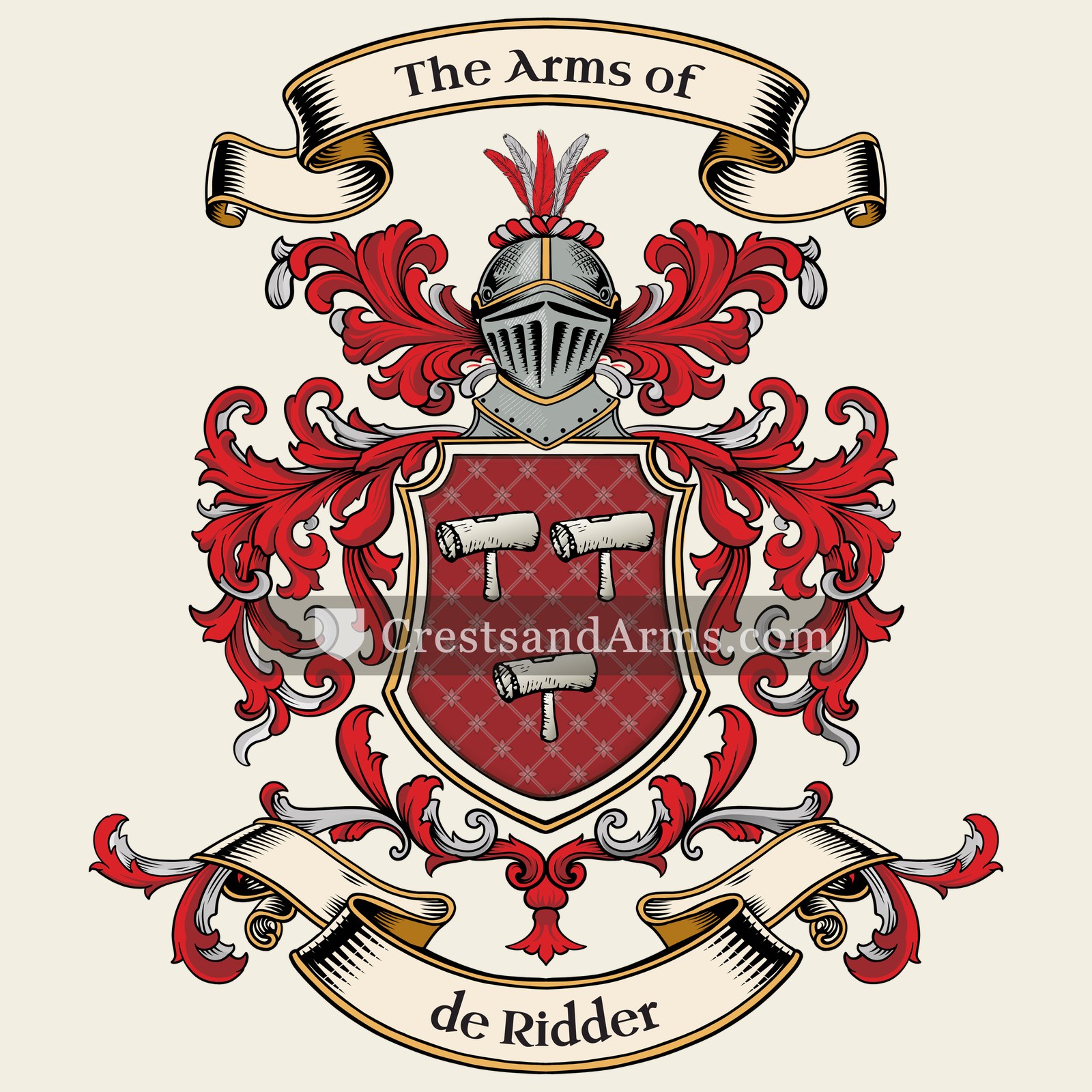
Coat of Arms & Family Crest Details
Symbols on this shield
hammerHonest labour, and the smith's craft
Colours
Red (Gules)Means: Military strength
Silver (Argent)Means: Peace and sincerity
Historical info
Source
J. B. Rietstap, Armorial Général, Gouda: G. B. van Goor Zonen, 1884–87
Blazon (the actual original written record)
“De gu. à trois maillets penchés d'arg.”
FlandreFlandre, c. 1663
Digital archive packCoat of arms PNG, gold border print PDF, vector SVG and the certificate of authenticity. Sent to your email in minutes.
Map of France showing where the de Ridder arms are recorded
The de Ridder arms were recorded in Flandre, c. 1663.
Flandre grew rich on cloth, and its towns were among the busiest in Europe. Merchant families bought land with their profits and took arms to go with it, so trade put as many names in the registers here as land did.
This is where the arms were entered in the register. Families often moved to other parts of the country, so the same name can turn up in more than one region.
The body that granted and recorded arms in France in this period.
Louis XIV of France
Sovereign of the period
Louis XIV of France
1643–1715
Reigning in Netherlands when the de Ridder arms are first recorded.
How Arms Worked in France
In France, a coat of arms was a mark of honor that passed down through the male line to all legitimate descendants. Families often used the same shield without changes to show their shared heritage. If a branch wanted to stand out, they could add a small mark to their shield to show their specific place in the family tree.
Granting authority
The Juge d'armes de France acted as the official authority that regulated and verified coats of arms across the country.
How they got arms
Families typically inherited their arms from ancestors, though they could also receive them through royal grants or by proving their noble status.
Where arms were recorded
Coats of arms were officially recorded in the Armorial Général de France, which began its main collection in the year 1696.
The family's standing
Recorded among the armigerous families of Flandre.
Origin & History of the de Ridder Family in France
The surname de Ridder originates from the Dutch and Flemish term for a knight or a mounted warrior. While the name is deeply rooted in the linguistic traditions of the Low Countries, its presence in France is tied to the shifting borders and cultural exchanges of the seventeenth century. By 1663, records confirm that members of the family were well-established in the region of Flandre. During this era, this territory was a complex crossroads where French and Flemish influences constantly overlapped due to ongoing military campaigns and political treaties. Families living in this area often navigated a bilingual environment, and the name de Ridder served as a clear identifier of a family with historical ties to the local landed gentry or professional military class. As the French crown expanded its influence into these northern territories, families like the de Ridders became part of the evolving social fabric of the kingdom, maintaining their distinct identity while adapting to the administrative changes of the French state.
de Ridder Meaning & Related Branches
Root word
ridder
A mounted warrior or a person of noble rank.
This name
de RidderRefers to a knight or a person who served in a cavalry role.
also spelled
Ridder
de Rider
Related arms
Hayesimilar arms
Riddervariant spelling
Documented Sources
J. B. Rietstap, Armorial Général, Gouda: G. B. van Goor Zonen, 1884–87
Meertens, P.J., De betekenis van Nederlandse familienamen, 1959
Tresoar (Frisian Historical and Literary Center), Burgerlijke Stand van Friesland (Civil Registry of Friesland) 1811–1950
Van der Schaar, J., Woordenboek van voornamen, 1964
Digital archive packCoat of arms PNG, gold border print PDF, vector SVG and the certificate of authenticity. Sent to your email in minutes.


 fleur de lisPurity, light, and the sixth son
 swanGrace, light and the poet's art
 fleur de lisPurity, light, and the sixth son
 swanGrace, light and the poet's art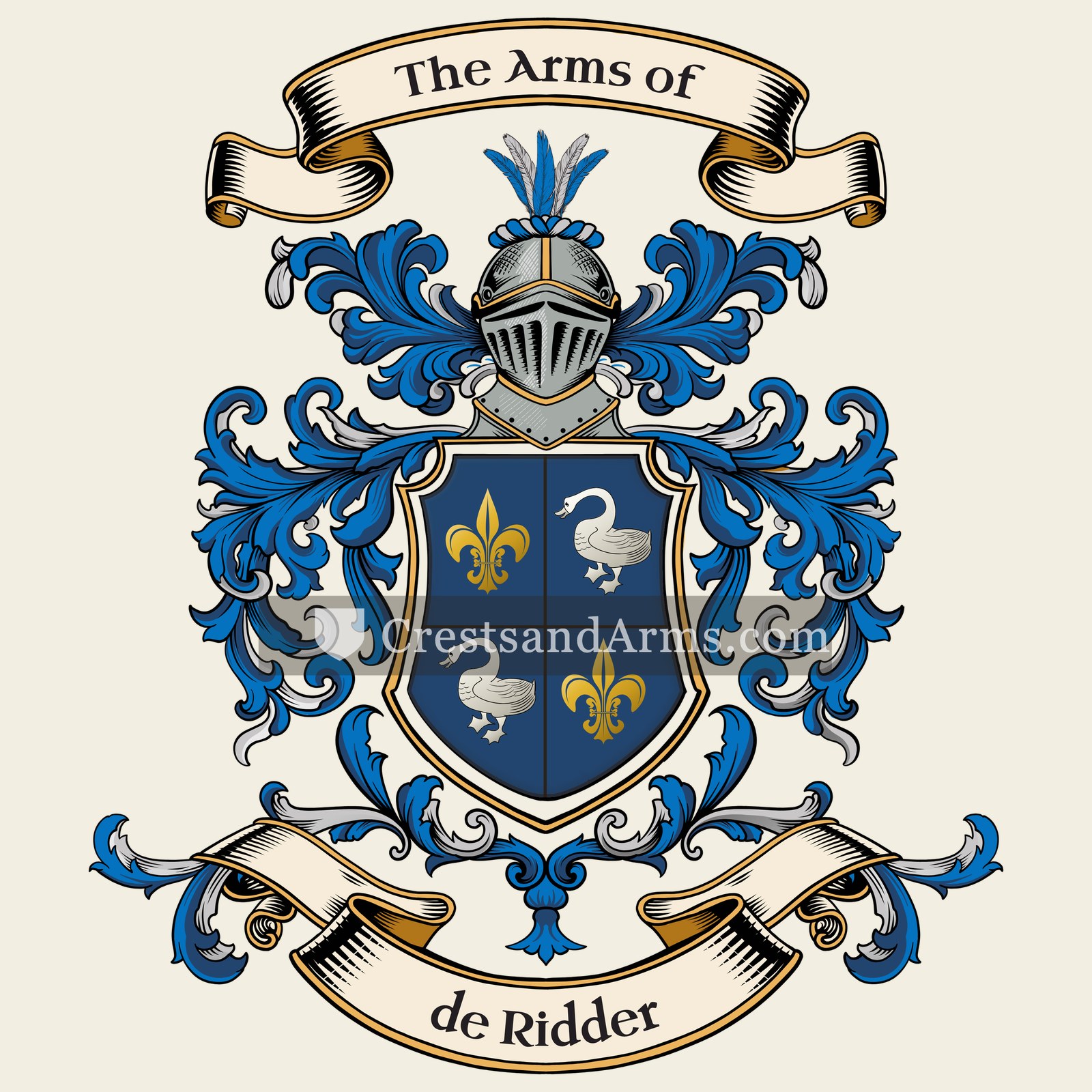


 hammerHonest labour, and the smith's craft