Map of Spain showing where the de Silva arms are recorded
The de Silva arms were recorded in Spain, c. 1722.
Arms such as these were typically recorded in Castile.
Castile was the heart of Spain and the source of most of its noble families. Land won in the long wars against the Moors was granted out to fighting men, and a man granted land was granted arms along with it.
This is where the arms were entered in the register. Families often moved to other parts of the country, so the same name can turn up in more than one region.
The body that granted and recorded arms in Spain in this period.
Philip V of Spain
Sovereign of the period
Philip V of Spain
1714–1724
Reigning in Spain when the de Silva arms are first recorded.
How Arms Worked in Spain
In Spain, a coat of arms was considered a form of property that belonged to the entire family line. These arms were passed down from a father to all his children equally. Younger branches of the family usually kept the original design without needing to add any special marks to distinguish their specific line.
Granting authority
The Cronista Rey de Armas was the official body that regulated and granted coats of arms throughout Spain.
How they got arms
Families often obtained their arms through royal grants or by proving their noble status to the official heraldic authority.
Where arms were recorded
Coats of arms were officially recorded in the registers of the Cronista Rey de Armas starting in 1496.
The family's standing
Recorded among the armigerous families of Spain.
Origin & History of the de Silva Family in Spain
The name de Silva originated in the Iberian Peninsula and carries a deep connection to the rugged landscapes of the Middle Ages. While the name is often associated with the lush forests of the region, it evolved from the Latin word silva, meaning woods or forest. By the time members of the family were documented in Castile in 1722, the name had already been established for centuries as a prominent identifier for families living near wooded areas or serving as guardians of royal lands. During this era, the family played a role in the social and administrative structure of the Spanish kingdoms. They were part of a society that was rapidly changing through trade, agriculture, and local governance. As the family moved through the provinces of Castile, they integrated into the local community and helped shape the identity of the region. Their presence in 1722 reflects a long history of migration and settlement that defined many noble and common lineages across Spain during the eighteenth century.
Coat of Arms & Family Crest Details
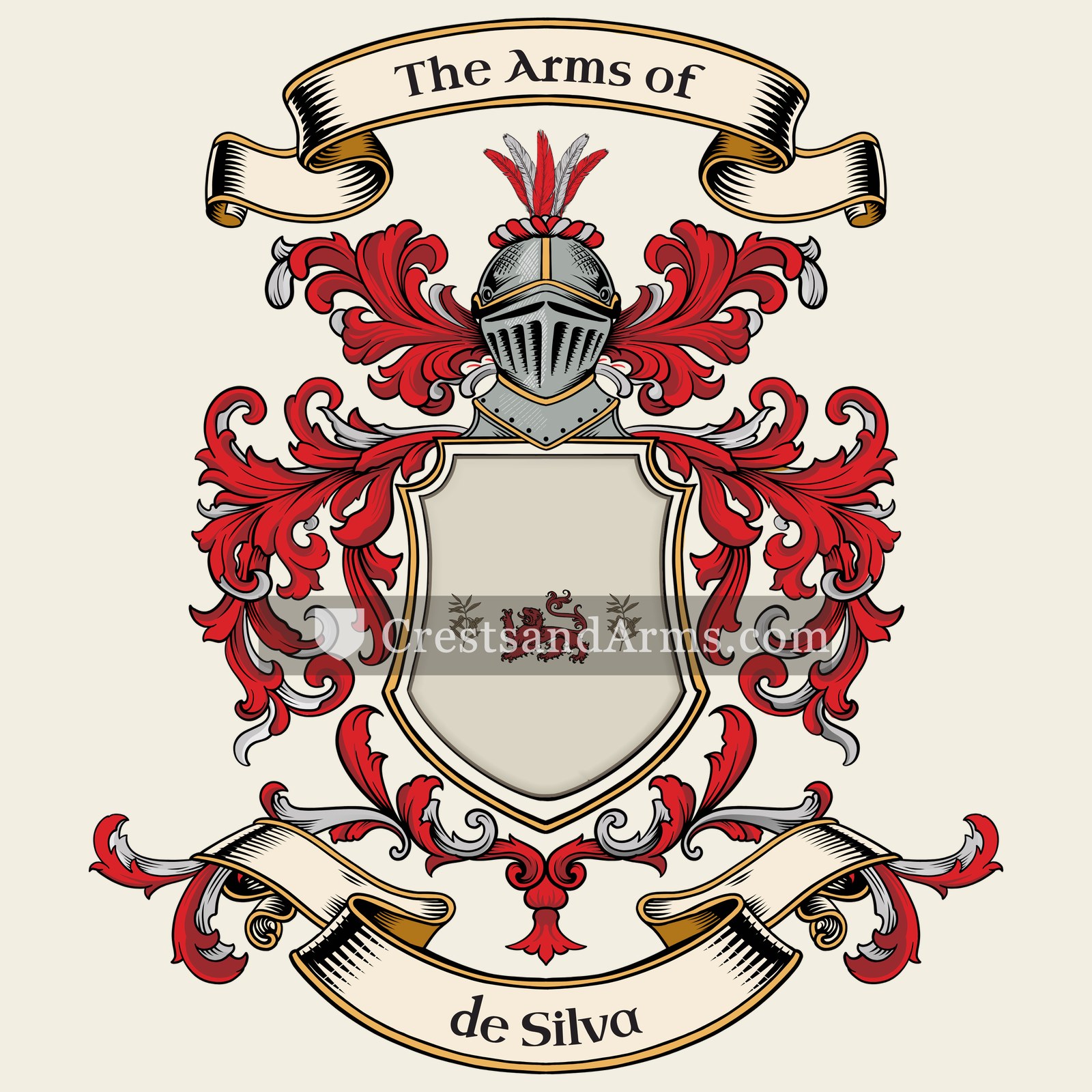
Symbols on this shield
lionCourage, strength and royalty
branchPeace, and new growth
Colours
Silver (Argent)Means: Peace and sincerity
Red (Gules)Means: Military strength
Historical info
Source
Sir Bernard Burke, The General Armory of England, Scotland, Ireland and Wales, London: Harrison & Sons, 1884
Blazon (the actual original written record)
“Ar. a lion ramp. gu. betw. two laurel branches saltireways in base ppr”
Englandc. 1620
Digital archive packCoat of arms PNG, gold border print PDF, vector SVG and the certificate of authenticity. Sent to your email in minutes.
Map of England showing where the de Silva arms are recorded
The de Silva arms were recorded in England, c. 1620.
Arms such as these were typically recorded in York.
Yorkshire is the largest of the English counties, and it held more gentry families than any other. Land there was split among a great many households rather than a few, so a great many of them carried arms.
This is where the arms were entered in the register. Families often moved to other parts of the country, so the same name can turn up in more than one region.
The body that granted and recorded arms in England in this period.
James VI and I
Sovereign of the period
James VI and I
1603–1625
Reigning in Spain when the de Silva arms are first recorded.
How Arms Worked in England
English heraldry allowed arms to be shared by all legitimate descendants of the original owner. These symbols were treated as personal property that moved through the generations to all children. While the eldest son kept the original design, other family members could use the same shield without needing to change it or register their own unique versions.
Granting authority
The College of Arms in London has regulated the use of coats of arms throughout England and Wales since 1484.
How they got arms
Families typically obtained their coats of arms through a formal grant from the Crown or by proving their ancient right to them.
Where arms were recorded
All official coats of arms are recorded in the registers kept at the College of Arms, which date back to the fifteenth century.
The family's standing
Recorded among the armigerous families of England.
Origin & History of the de Silva Family in England
The family name de Silva originated in the Iberian Peninsula, but its presence in England tells a story of movement and adaptation. While the name is deeply rooted in Portuguese and Spanish history, records confirm that members of the family were living in York by 1620. During this period, England saw an influx of merchants and skilled professionals from across Europe who were drawn to the country for trade and religious refuge. Settling in a northern hub like York suggests that these early family members were likely integrated into the local mercantile class, navigating the social and economic shifts of the seventeenth century. As they established their lives in a new country, the family name served as a link to their Mediterranean heritage while they became part of the evolving fabric of English society.
de Silva Meaning & Related Branches
Root word
Silva
Latin word meaning forest, woodland, or jungle.
This name
de SilvaRefers to a person who lived near or worked in a forest.
also spelled
Desylva
Silva
Dasilva
Related arms
Du Silvavariant spelling
Documented Sources
J. B. Rietstap, Armorial Général, Gouda: G. B. van Goor Zonen, 1884–87
Menéndez Pidal, Ramón. Orígenes del español: estado lingüístico de la Península Ibérica hasta el siglo XI. 1926
Archivo General de Simancas. Registro del Sello de Corte. 1722
Real Academia Española. Diccionario de autoridades. 1737
Digital archive packCoat of arms PNG, gold border print PDF, vector SVG and the certificate of authenticity. Sent to your email in minutes.


 lionCourage, strength and royalty
 lionCourage, strength and royalty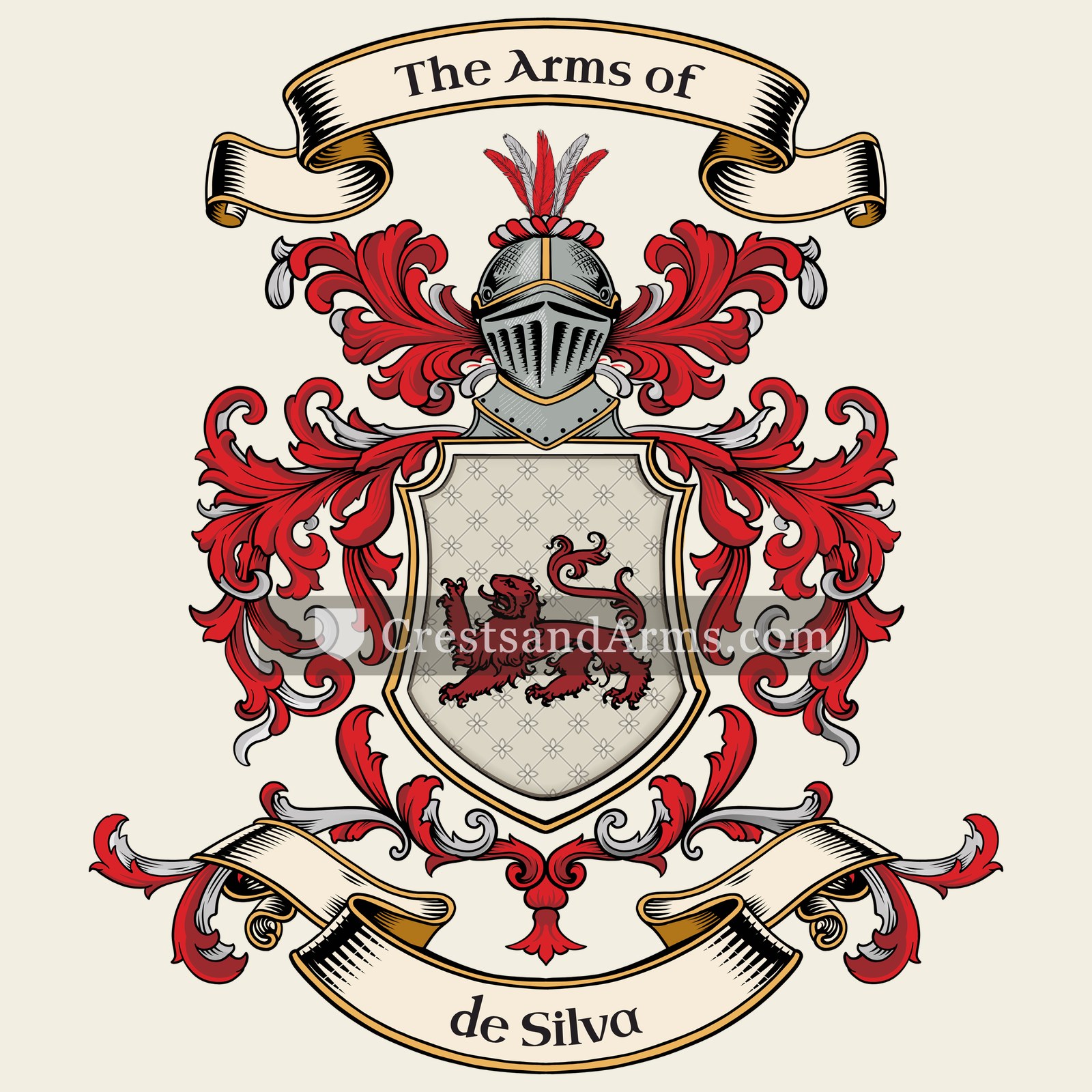


 branchPeace, and new growth