Map of Netherlands showing where the de Vos arms are recorded
The de Vos arms were recorded in Netherlands, c. 1815.
Arms such as these were typically recorded in Friesland.
Friesland was low, wet country on the northern coast of the Netherlands, farmed by families who had held the same land for centuries. Free landholders were unusually common there, and a free landholder could carry arms.
This is where the arms were entered in the register. Families often moved to other parts of the country, so the same name can turn up in more than one region.
Region
Friesland
First recorded
1815
Granting Authority for the de Vos Arms
Hoge Raad van Adel
Photograph made by me · CC BY-SA 3.0
The body that granted and recorded arms in Netherlands in this period.
William I of the Netherlands
Sovereign of the period
William I of the Netherlands
1815–1840
Reigning in Netherlands when the de Vos arms are first recorded.
How Arms Worked in Netherlands
In the Netherlands, coats of arms were often used by noble families and those who held specific public offices. These arms were passed down through the generations to legitimate descendants. Younger branches of a family usually kept the original design without needing to add special marks. This system ensured that the family identity remained clear and consistent over many years.
Granting authority
The Hoge Raad van Adel is the official body that regulates and manages noble titles and coats of arms in the Netherlands.
How they got arms
Families typically obtained their coats of arms through official royal grants or by proving their long-standing historical use of the symbols.
Where arms were recorded
Coats of arms are officially recorded in the registers held by the Hoge Raad van Adel, which began its work in 1814.
The family's standing
Recorded among the armigerous families of Netherlands.
Origin & History of the de Vos Family in Netherlands
The surname de Vos is a classic example of a descriptive name that originated from the Dutch word for fox. In the early history of the Netherlands, such names were often given to people based on their physical appearance, their personality, or even their clever nature. While the name is found throughout the country, the records from 1815 confirm that members of the de Vos family were well-established in the northern province of Friesland during the time of the Napoleonic era. This period was significant because the Dutch government began requiring citizens to register permanent family names for official civil records. Before this time, many families in rural areas like Friesland used patronymics, which meant a person’s last name was simply based on their father’s first name. The transition to a fixed surname like de Vos suggests that these ancestors were part of a growing movement toward organized record-keeping and modern social identification in the Dutch provinces.
Coat of Arms & Family Crest Details
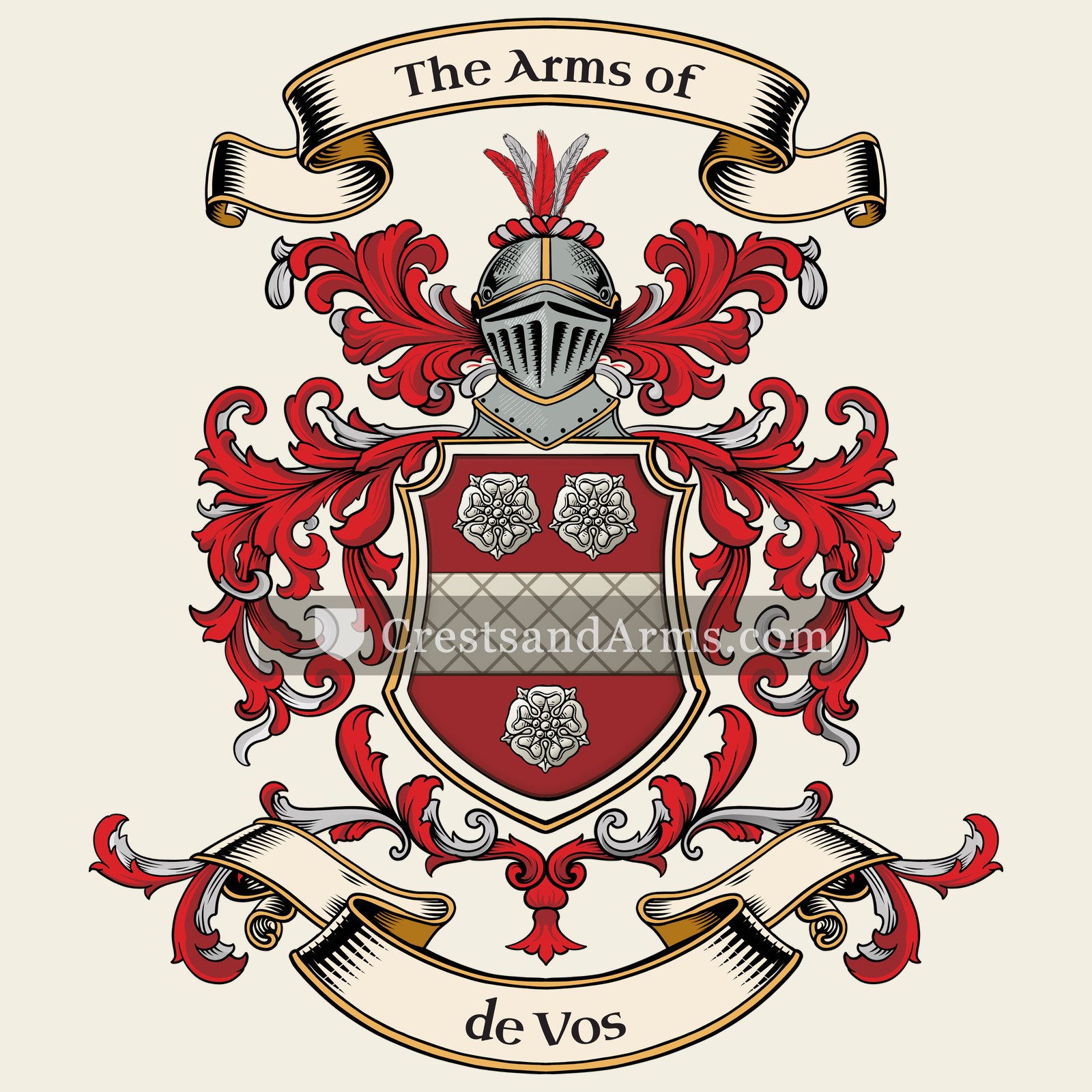
Symbols on this shield
fessThe military belt, and readiness to serve
roseThe seventh son, and beauty with grace
Colours
Red (Gules)Means: Military strength
Silver (Argent)Means: Peace and sincerity
Historical info
Source
J. B. Rietstap, Armorial Général, Gouda: G. B. van Goor Zonen, 1884–87
Blazon (the actual original written record)
“De gu. à la fasce d'arg., acc. de trois roses du même, bout. d'or [Armes de Martin de Vos, peintre, né à Anvers en 1531, fils de Pierre de Vos, natif de Gouda.]”
BelgiumAnvers, c. 1737
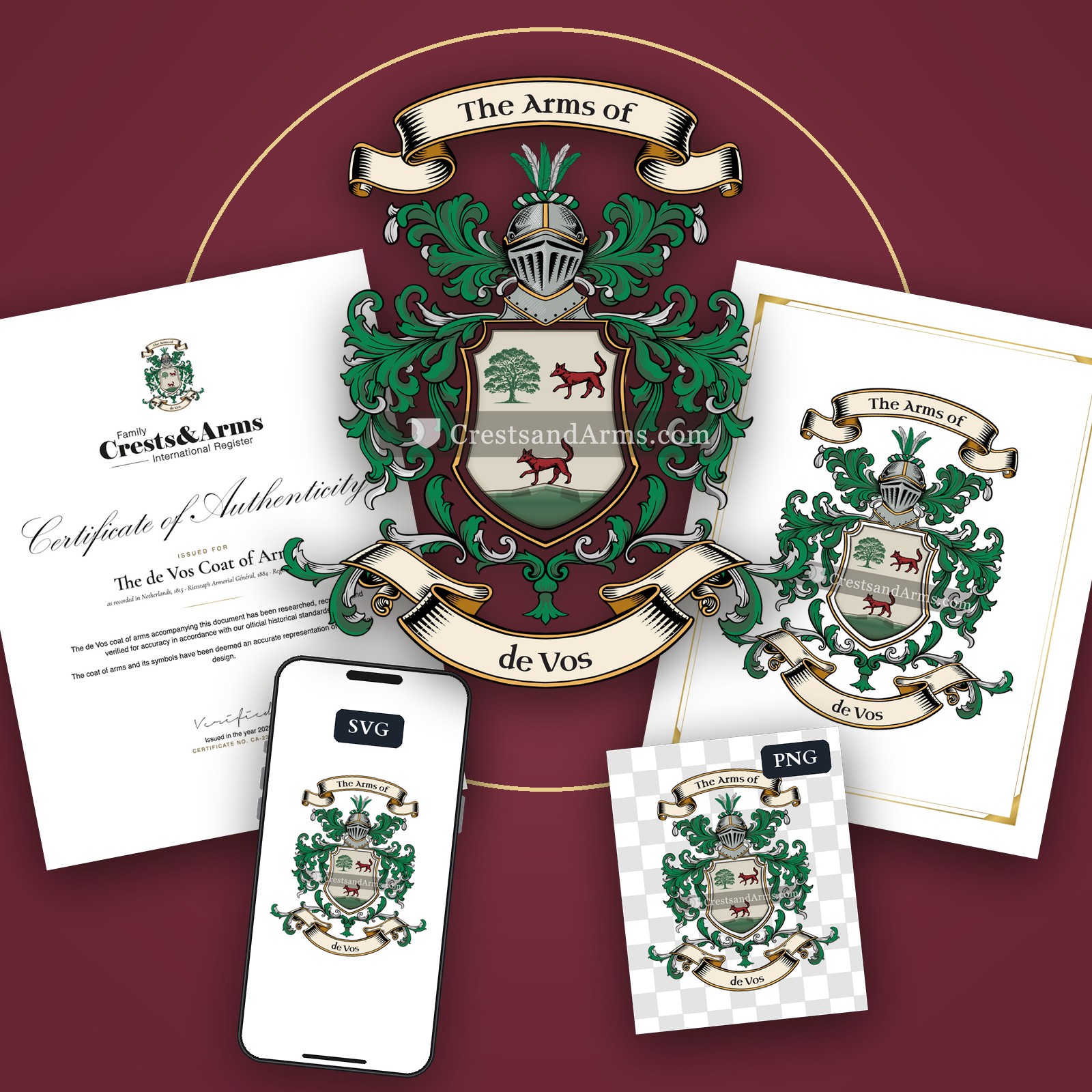
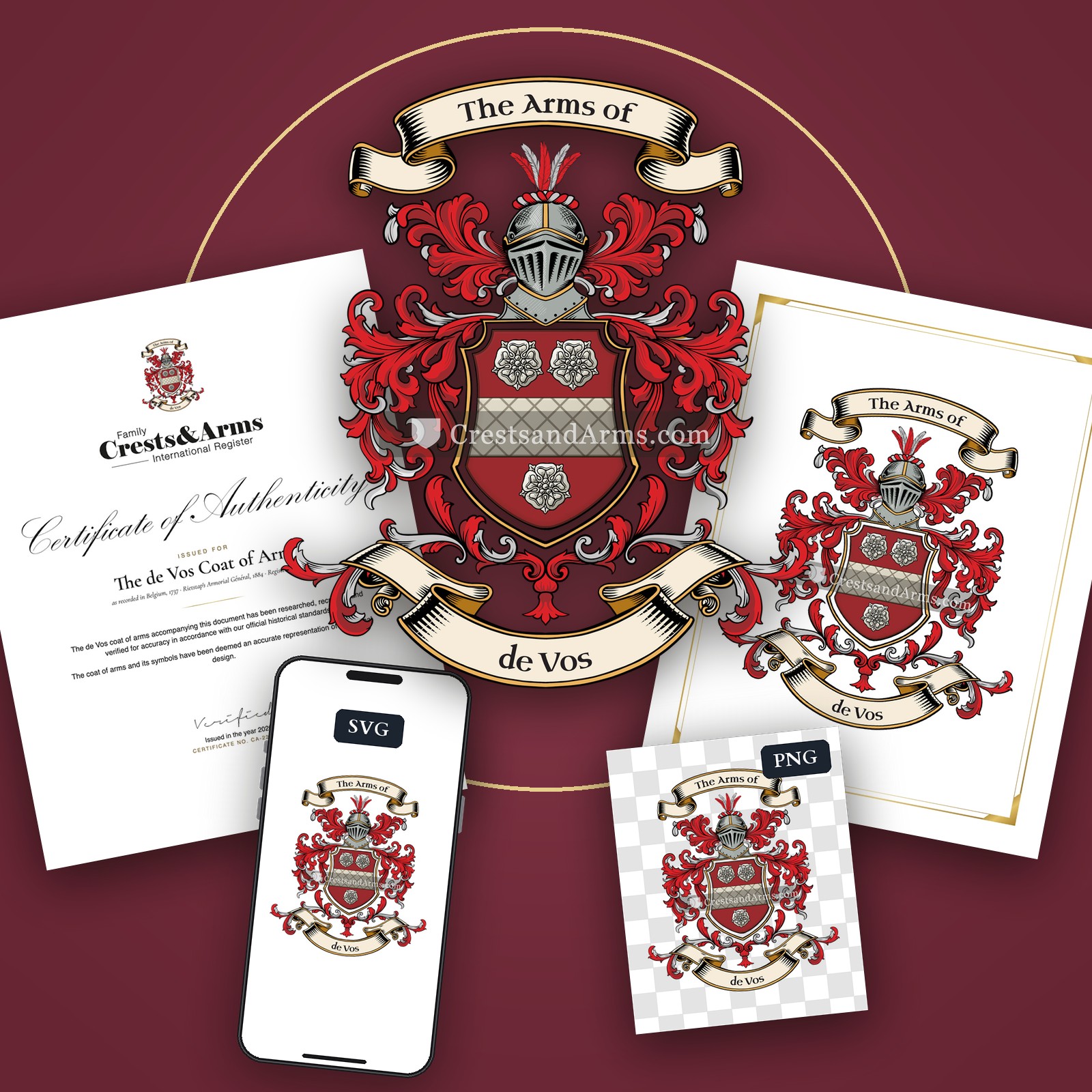
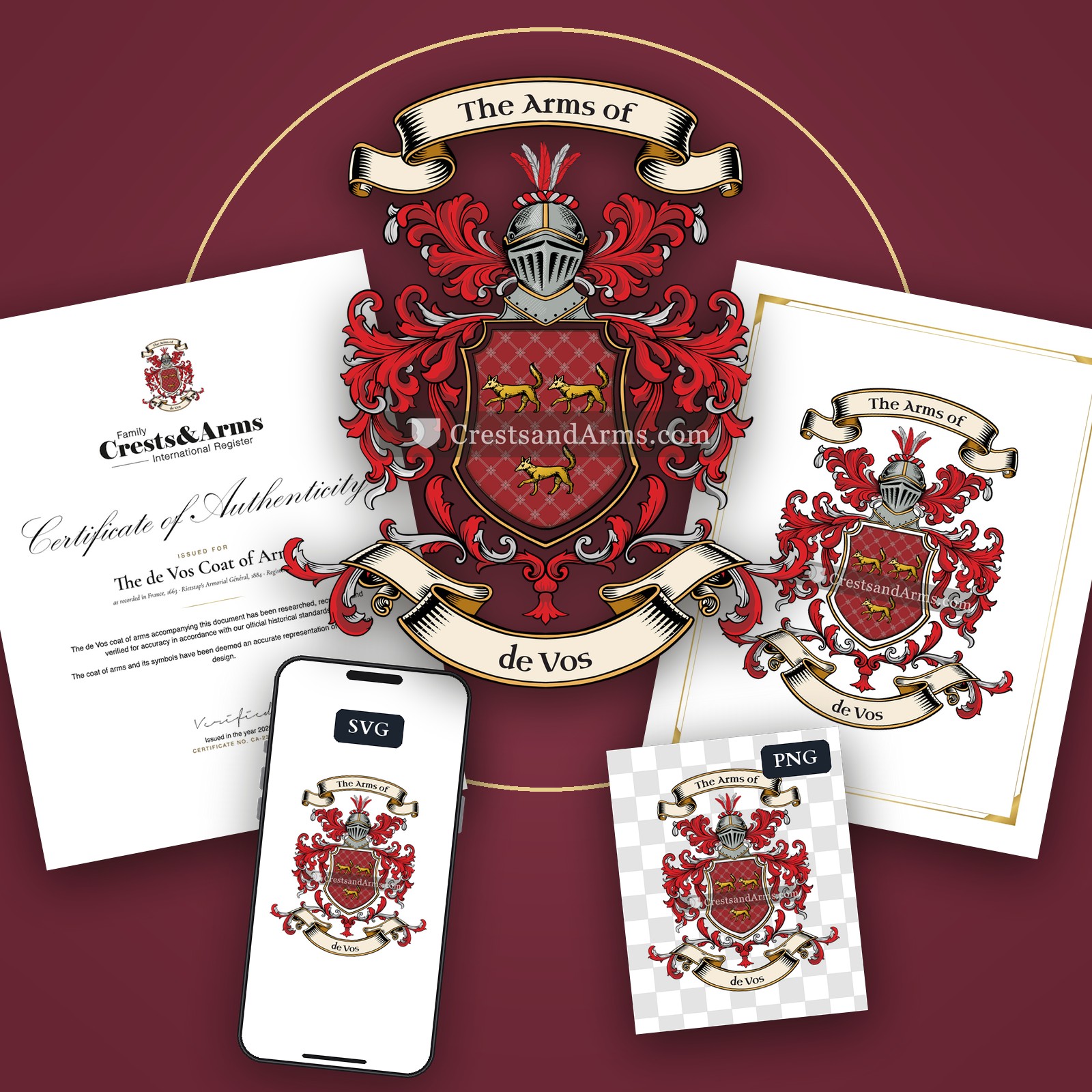
Digital archive packCoat of arms PNG, gold border print PDF, vector SVG and the certificate of authenticity. Sent to your email in minutes.
Map of Belgium showing where the de Vos arms are recorded
The de Vos arms were recorded in Anvers, c. 1737.
This is where the arms were entered in the register. Families often moved to other parts of the country, so the same name can turn up in more than one region.
The body that granted and recorded arms in Belgium in this period.
Charles VI, Holy Roman Emperor
Sovereign of the period
Charles VI, Holy Roman Emperor
1711–1740
Reigning in Netherlands when the de Vos arms are first recorded.
How Arms Worked in Belgium
In Belgium, a coat of arms is considered personal property that is passed down through the male line to legitimate descendants. Families often use the same shield design across generations to show their shared heritage. If a branch of the family wants to change the design, they must apply for an official update to their specific version of the arms.
Granting authority
The Conseil héraldique is the official body that regulates and approves all coats of arms in Belgium.
How they got arms
Families obtain their coats of arms through formal royal grants or by confirming their historical right to use existing designs.
Where arms were recorded
All approved coats of arms are officially recorded in the public registers of the Conseil héraldique since 1844.
The family's standing
Recorded among the armigerous families of Belgium.
Origin & History of the de Vos Family in Belgium
The surname de Vos is a classic example of a name derived from a nickname, as it translates directly to "the fox" in Dutch. In the historical context of Belgium, this name was often given to individuals who were known for their cleverness, sharp wit, or perhaps a reddish hair color. By the early 18th century, the family had established a notable presence in the city of Antwerp, which was then a major hub for trade and culture in the Southern Netherlands. Records confirm that members of the de Vos family were active in Antwerp by 1737, participating in the urban life of a city that was recovering from the economic shifts of the previous century. During this period, the family likely integrated into the professional or merchant classes that defined the social structure of the region, helping to shape the local community through their daily work and civic involvement.
Coat of Arms & Family Crest Details
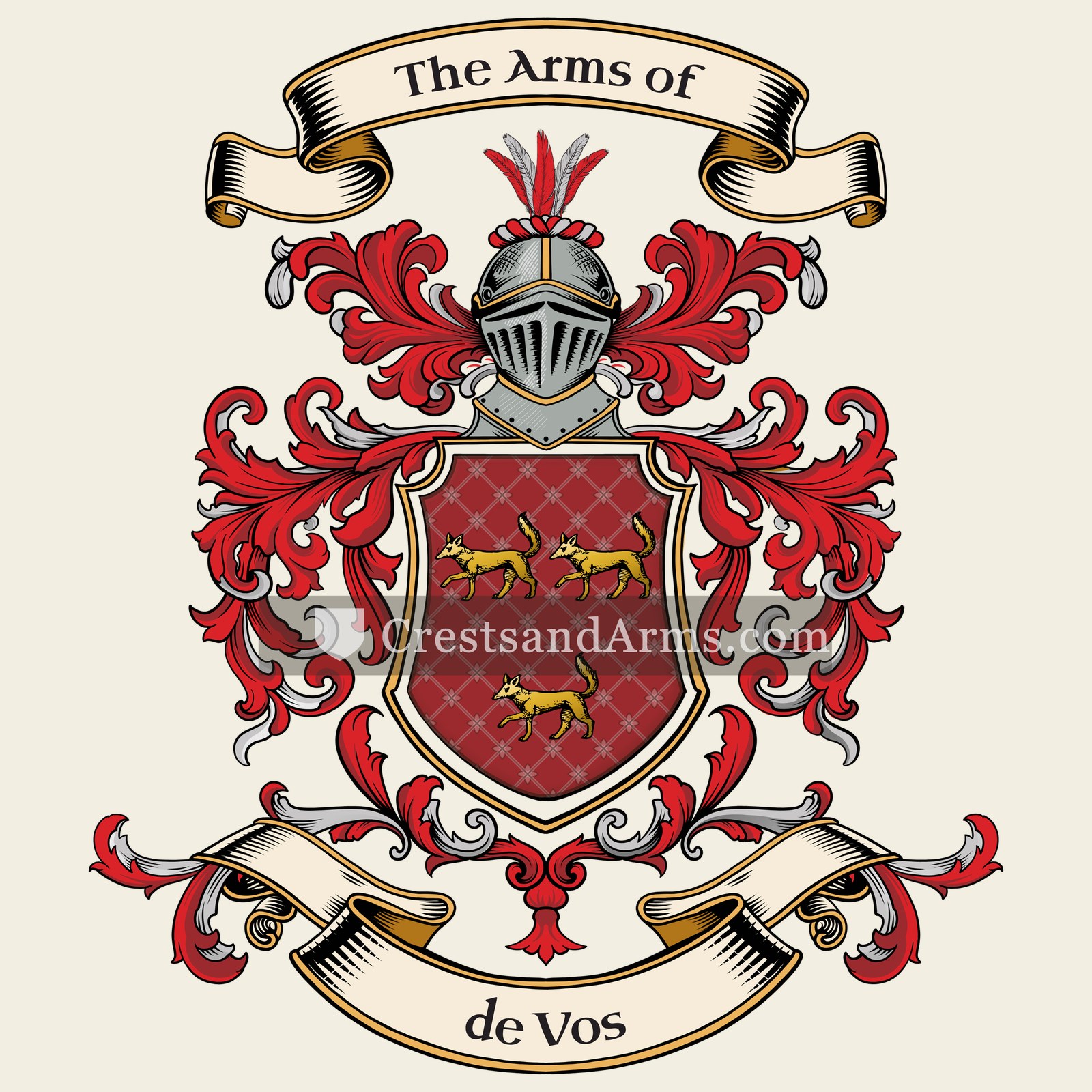
Symbols on this shield
foxWit and wisdom in defence
Colours
Red (Gules)Means: Military strength
Gold (Or)Means: Generosity
Historical info
Source
J. B. Rietstap, Armorial Général, Gouda: G. B. van Goor Zonen, 1884–87
Blazon (the actual original written record)
“De gu. à trois renards pass. d'or.”
FlandreFlandre, c. 1663
Digital archive packCoat of arms PNG, gold border print PDF, vector SVG and the certificate of authenticity. Sent to your email in minutes.
Map of France showing where the de Vos arms are recorded
The de Vos arms were recorded in Flandre, c. 1663.
Flandre grew rich on cloth, and its towns were among the busiest in Europe. Merchant families bought land with their profits and took arms to go with it, so trade put as many names in the registers here as land did.
This is where the arms were entered in the register. Families often moved to other parts of the country, so the same name can turn up in more than one region.
The body that granted and recorded arms in France in this period.
Louis XIV of France
Sovereign of the period
Louis XIV of France
1643–1715
Reigning in Netherlands when the de Vos arms are first recorded.
How Arms Worked in France
In France, a coat of arms was a mark of honor that passed down through the male line to all legitimate descendants. Families often used the same shield without changes to show their shared heritage. If a branch wanted to stand out, they could add a small mark to their shield to show their specific place in the family tree.
Granting authority
The Juge d'armes de France acted as the official authority that regulated and verified coats of arms across the country.
How they got arms
Families typically inherited their arms from ancestors, though they could also receive them through royal grants or by proving their noble status.
Where arms were recorded
Coats of arms were officially recorded in the Armorial Général de France, which began its main collection in the year 1696.
The family's standing
Recorded among the armigerous families of Flandre.
Origin & History of the de Vos Family in France
The family name de Vos originates from the Dutch and Flemish word for fox, which was likely used as a descriptive nickname for an ancestor known for being clever or cunning. While the name is deeply rooted in the Low Countries, its presence in France grew as families moved across the shifting borders of the Flanders region during the seventeenth century. By 1663, records confirm that members of the de Vos family were established in this area, living through a time when the region was heavily influenced by both French and Flemish cultures. As the French monarchy expanded its territory, many families with Flemish names became integrated into the administrative and social fabric of northern France. This migration was often driven by the search for new trade opportunities or the need to escape the frequent regional conflicts that defined the borderlands at that time. Over the generations, the name transitioned from a simple local nickname into a stable family identity that persisted through the changing political landscape of the French frontier.
de Vos Meaning & Related Branches
Root word
Vulpes
A Latin term referring to the biological genus of foxes.
This name
de VosA topographic or occupational surname originally used to describe a cunning person or a fox hunter.
also spelled
Vos
Related arms
Blackwoodsimilar arms
Vosvariant spelling
Documented Sources
J. B. Rietstap, Armorial Général, Gouda: G. B. van Goor Zonen, 1884–87
Meertens, P.J., De betekenis van de Nederlandse familienamen, 1957
Van der Schaar, J., Woordenboek van voornamen, 1964
Tresoar (Fries Historisch en Letterkundig Centrum), Burgerlijke Stand van Friesland (1811-1950)
Nationaal Archief, Registers van de Burgerlijke Stand
Digital archive packCoat of arms PNG, gold border print PDF, vector SVG and the certificate of authenticity. Sent to your email in minutes.


 mountThe ground held, and steadfastness upon it
 treeLife, endurance and deep roots
 foxWit and wisdom in defence
 mountThe ground held, and steadfastness upon it
 treeLife, endurance and deep roots
 foxWit and wisdom in defence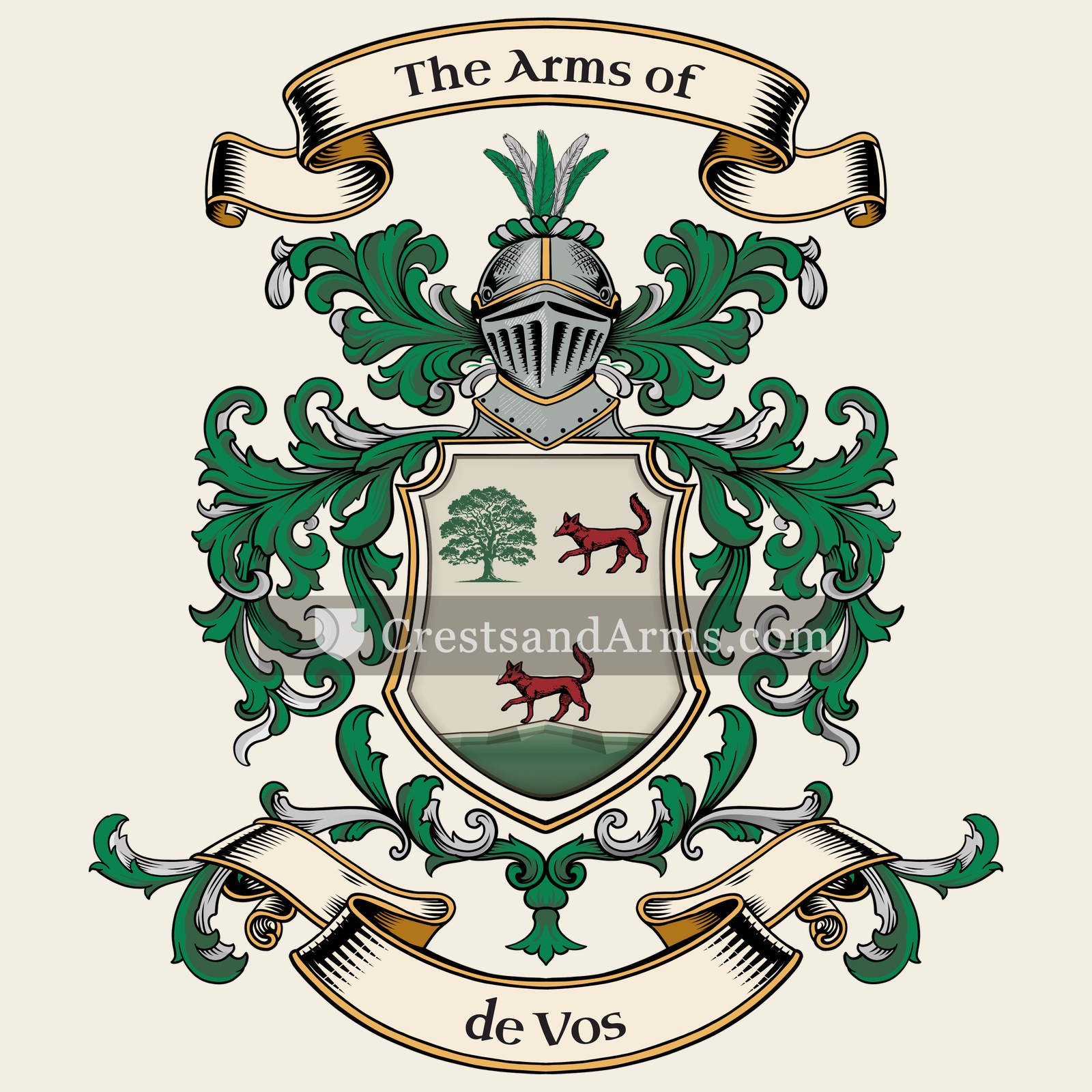


 fessThe military belt, and readiness to serve
 roseThe seventh son, and beauty with grace