Map of Netherlands showing where the de Buck arms are recorded
The de Buck arms were recorded in Bois-le, c. 1815.
This is where the arms were entered in the register. Families often moved to other parts of the country, so the same name can turn up in more than one region.
Region
Bois-le
Town
Bois-le
First recorded
1815
Granting Authority for the de Buck Arms
Hoge Raad van Adel
Photograph made by me · CC BY-SA 3.0
The body that granted and recorded arms in Netherlands in this period.
William I of the Netherlands
Sovereign of the period
William I of the Netherlands
1815–1840
Reigning in Netherlands when the de Buck arms are first recorded.
How Arms Worked in Netherlands
In the Netherlands, coats of arms were often used by noble families and those who held specific public offices. These arms were passed down through the generations to legitimate descendants. Younger branches of a family usually kept the original design without needing to add special marks. This system ensured that the family identity remained clear and consistent over many years.
Granting authority
The Hoge Raad van Adel is the official body that regulates and manages noble titles and coats of arms in the Netherlands.
How they got arms
Families typically obtained their coats of arms through official royal grants or by proving their long-standing historical use of the symbols.
Where arms were recorded
Coats of arms are officially recorded in the registers held by the Hoge Raad van Adel, which began its work in 1814.
The family's standing
Recorded among the armigerous families of Netherlands.
Origin & History of the de Buck Family in Netherlands
The family name de Buck has deep roots in the southern regions of the Netherlands, particularly within the area surrounding the city of Bois-le-Duc, which is known locally as 's-Hertogenbosch. By the early 19th century, records confirm that members of the family were well-established residents in this historic fortified city. The name itself is likely derived from the Middle Dutch word "buck" or "bok," which often served as a descriptive nickname for a person with a spirited or stubborn personality, or perhaps as a reference to a specific location or sign associated with a family home. As the family lived in the Brabant region during the turbulent years of the Napoleonic era and the subsequent formation of the United Kingdom of the Netherlands in 1815, they were part of a society transitioning from French rule to a new national identity. Over time, the family became integrated into the local urban fabric, contributing to the social and economic life of the province through their presence in the city's administrative and trade records.
Coat of Arms & Family Crest Details
Symbols on this shield
mountThe ground held, and steadfastness upon it
goatOne who wins by diplomacy rather than force
treeLife, endurance and deep roots
Colours
Silver (Argent)Means: Peace and sincerity
Green (Vert)Means: Hope
Black (Sable)Means: Constancy
Historical info
Source
J. B. Rietstap, Armorial Général, Gouda: G. B. van Goor Zonen, 1884–87
Blazon (the actual original written record)
“D'arg. au bouc de sa., ramp. contre un arbre de sin.; le tout soutenu d'une terrasse de sin.”
FlandreFlandre, c. 1663
Digital archive packCoat of arms PNG, gold border print PDF, vector SVG and the certificate of authenticity. Sent to your email in minutes.
Map of France showing where the de Buck arms are recorded
The de Buck arms were recorded in Flandre, c. 1663.
Flandre grew rich on cloth, and its towns were among the busiest in Europe. Merchant families bought land with their profits and took arms to go with it, so trade put as many names in the registers here as land did.
This is where the arms were entered in the register. Families often moved to other parts of the country, so the same name can turn up in more than one region.
The body that granted and recorded arms in France in this period.
Louis XIV of France
Sovereign of the period
Louis XIV of France
1643–1715
Reigning in Netherlands when the de Buck arms are first recorded.
How Arms Worked in France
In France, a coat of arms was a mark of honor that passed down through the male line to all legitimate descendants. Families often used the same shield without changes to show their shared heritage. If a branch wanted to stand out, they could add a small mark to their shield to show their specific place in the family tree.
Granting authority
The Juge d'armes de France acted as the official authority that regulated and verified coats of arms across the country.
How they got arms
Families typically inherited their arms from ancestors, though they could also receive them through royal grants or by proving their noble status.
Where arms were recorded
Coats of arms were officially recorded in the Armorial Général de France, which began its main collection in the year 1696.
The family's standing
Recorded among the armigerous families of Flandre.
Origin & History of the de Buck Family in France
The family name de Buck has deep roots in the historical region of Flanders, which straddled the border between modern-day France and Belgium during the seventeenth century. By 1663, records confirm that members of the family were well-established in this area, living through a time when the territory was frequently shifting between the control of the French crown and the Spanish Netherlands. The name itself is likely derived from the Middle Dutch word for a male goat or a buck, which was often used as a descriptive nickname for a person with a spirited or stubborn personality. As the French monarchy expanded its influence into Flanders under King Louis XIV, families like the de Bucks became part of a complex social landscape defined by changing borders and the blending of Flemish and French cultures. These early ancestors were often involved in local trade or agriculture, navigating the challenges of a region that served as a frequent battlefield for European powers. Their presence in the historical record during this era highlights the resilience of families who maintained their identity while living in a territory undergoing significant political transformation.
Coat of Arms & Family Crest Details
Symbols on this shield
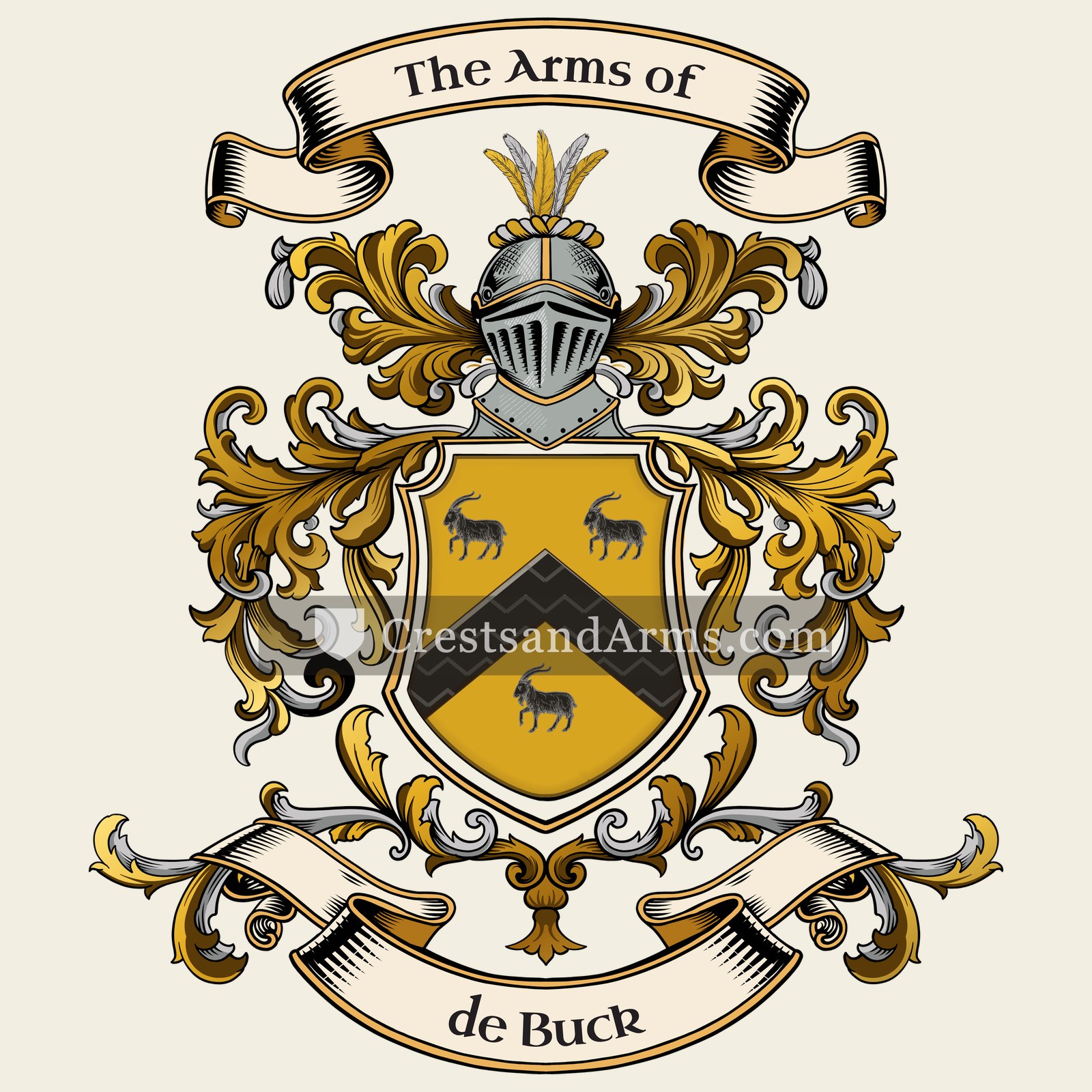
chevronProtection, and faithful service completed
goatOne who wins by diplomacy rather than force
Colours
Gold (Or)Means: Generosity
Black (Sable)Means: Constancy
Historical info
Source
J. B. Rietstap, Armorial Général, Gouda: G. B. van Goor Zonen, 1884–87
Blazon (the actual original written record)
“D'or au chev. de sa., acc. de trois têtes et cols de bouc du même. C.: une tête et col de bouc de sa., entre un vol d'or et de sa.”
BelgiumGand, c. 1737
Digital archive packCoat of arms PNG, gold border print PDF, vector SVG and the certificate of authenticity. Sent to your email in minutes.
Map of Belgium showing where the de Buck arms are recorded
The de Buck arms were recorded in Gand, c. 1737.
This is where the arms were entered in the register. Families often moved to other parts of the country, so the same name can turn up in more than one region.
The body that granted and recorded arms in Belgium in this period.
Charles VI, Holy Roman Emperor
Sovereign of the period
Charles VI, Holy Roman Emperor
1711–1740
Reigning in Netherlands when the de Buck arms are first recorded.
How Arms Worked in Belgium
In Belgium, a coat of arms is considered personal property that is passed down through the male line to legitimate descendants. Families often use the same shield design across generations to show their shared heritage. If a branch of the family wants to change the design, they must apply for an official update to their specific version of the arms.
Granting authority
The Conseil héraldique is the official body that regulates and approves all coats of arms in Belgium.
How they got arms
Families obtain their coats of arms through formal royal grants or by confirming their historical right to use existing designs.
Where arms were recorded
All approved coats of arms are officially recorded in the public registers of the Conseil héraldique since 1844.
The family's standing
Recorded among the armigerous families of Belgium.
Origin & History of the de Buck Family in Belgium
The family name de Buck has deep roots in the historical landscape of Flanders, particularly within the city of Ghent, which was known as Gand in French. By the year 1737, records confirm that members of the family were already established residents of this influential textile hub. During the eighteenth century, Ghent served as a vital center for trade and craftsmanship, and families like the de Bucks often integrated themselves into the local urban economy. The name itself likely originated as a descriptive nickname, possibly referring to a physical trait or a connection to a specific animal, which was a common naming practice in the Low Countries during the Middle Ages. As the family grew, they became part of the social fabric of the region, navigating the complex political shifts that defined Belgium long before it became an independent nation. Their presence in the city archives during this era highlights a long history of stability and participation in the civic life of the Flemish people.
de Buck Meaning & Related Branches
Root word
Buc
Old Germanic term referring to a male goat or buck.
This name
de BuckA topographic or occupational name denoting someone who lived near a buck or raised goats.
also spelled
Debuc
Buck
Related arms
Buckvariant spelling
de Bucvariant spelling
Documented Sources
J. B. Rietstap, Armorial Général, Gouda: G. B. van Goor Zonen, 1884–87


 fishA true and generous mind, and Christian faith
 lozengeHonour and nobility, and the arms of a woman
 fishA true and generous mind, and Christian faith
 lozengeHonour and nobility, and the arms of a woman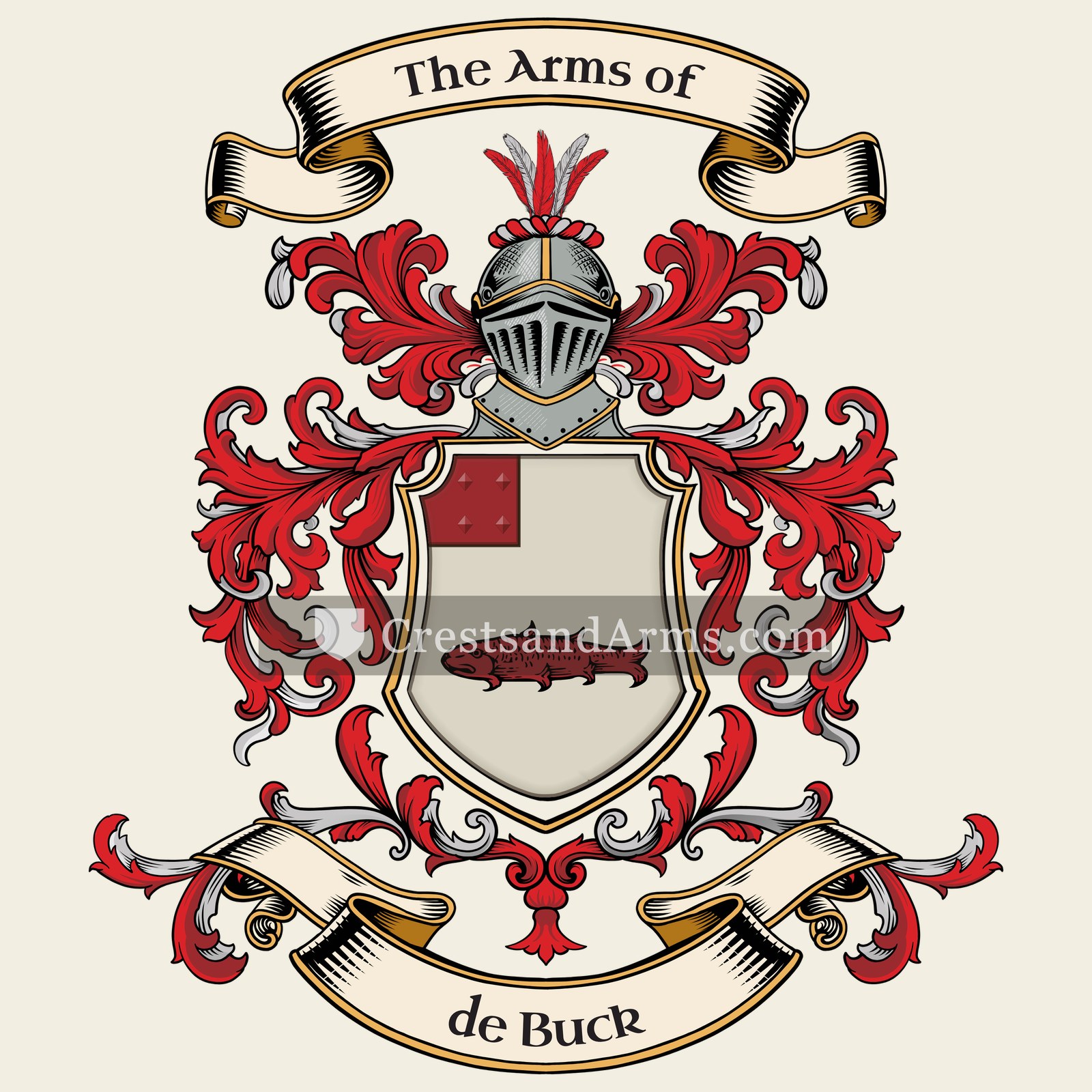


 mountThe ground held, and steadfastness upon it
 goatOne who wins by diplomacy rather than force
 treeLife, endurance and deep roots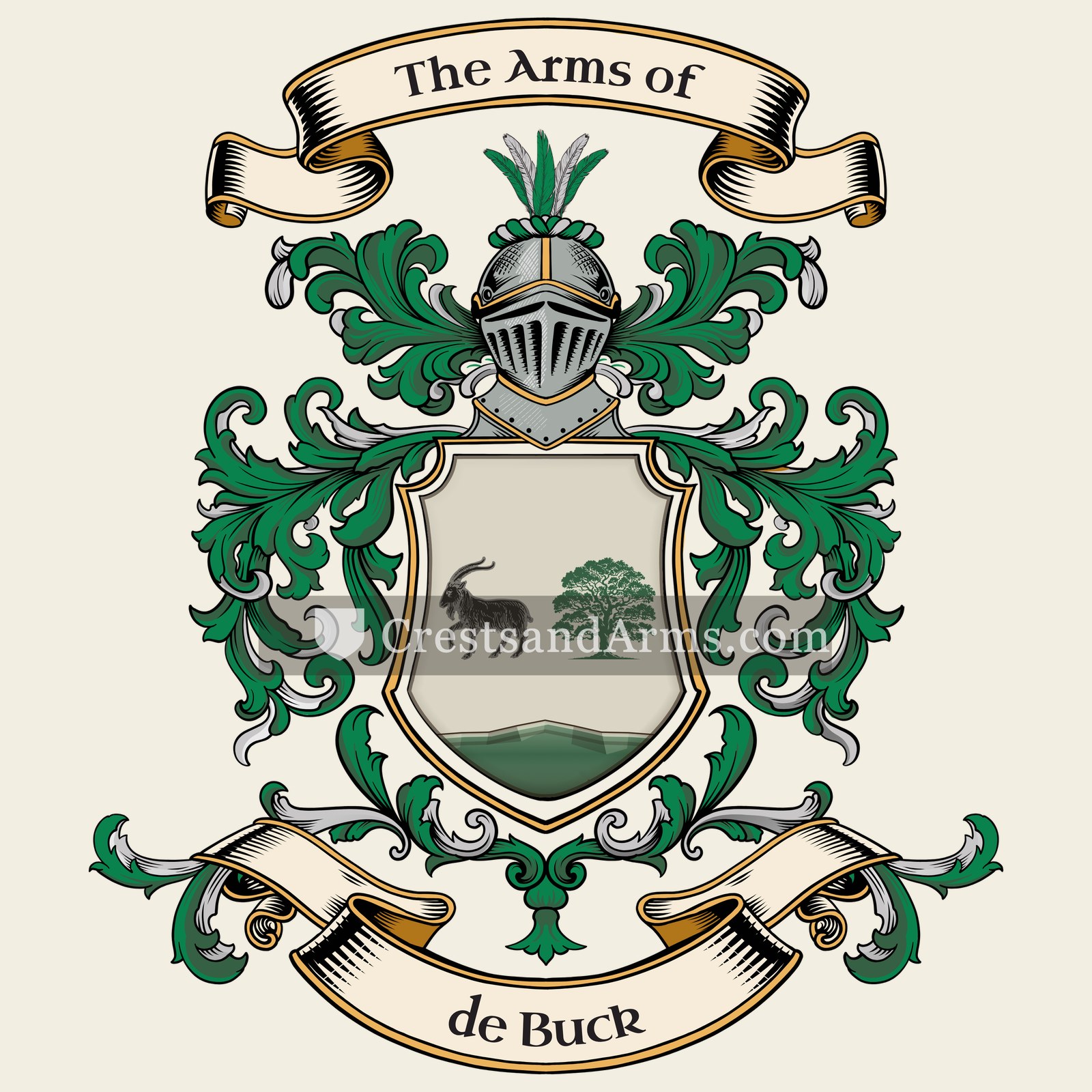


 chevronProtection, and faithful service completed