Map of Belgium showing where the Defranco arms are recorded
The Defranco arms were recorded in Hainaut, c. 1737.
Hainaut sat on the border between France and the Low Countries and was fought over for centuries. Families there held their land under arms and expected to defend it, so a shield was a working thing.
This is where the arms were entered in the register. Families often moved to other parts of the country, so the same name can turn up in more than one region.
The body that granted and recorded arms in Belgium in this period.
Charles VI, Holy Roman Emperor
Sovereign of the period
Charles VI, Holy Roman Emperor
1711–1740
Reigning in Belgium when the Defranco arms are first recorded.
How Arms Worked in Belgium
In Belgium, a coat of arms is considered personal property that is passed down through the male line to legitimate descendants. Families often use the same shield design across generations to show their shared heritage. If a branch of the family wants to change the design, they must apply for an official update to their specific version of the arms.
Granting authority
The Conseil héraldique is the official body that regulates and approves all coats of arms in Belgium.
How they got arms
Families obtain their coats of arms through formal royal grants or by confirming their historical right to use existing designs.
Where arms were recorded
All approved coats of arms are officially recorded in the public registers of the Conseil héraldique since 1844.
The family's standing
Recorded among the armigerous families of Hainaut.
Origin & History of the Defranco Family in Belgium
The family name Defranco traces its roots in Belgium to the historic province of Hainaut, where records confirm the presence of family members as early as 1737. During this period, the region was a center for agriculture and coal mining, which shaped the daily lives and occupations of local families. The name itself likely originated as a descriptive term, potentially identifying individuals who had arrived from the neighboring regions of France or those who were recognized for their specific status within the community. As the family established itself in Hainaut, they became part of a complex social landscape defined by the shifting borders between the Austrian Netherlands and surrounding territories. By maintaining a presence in this industrial and cultural crossroads, the early generations of the Defranco family contributed to the long-standing demographic history of the Walloon region.
Meaning of the Defranco family crest colors & symbols
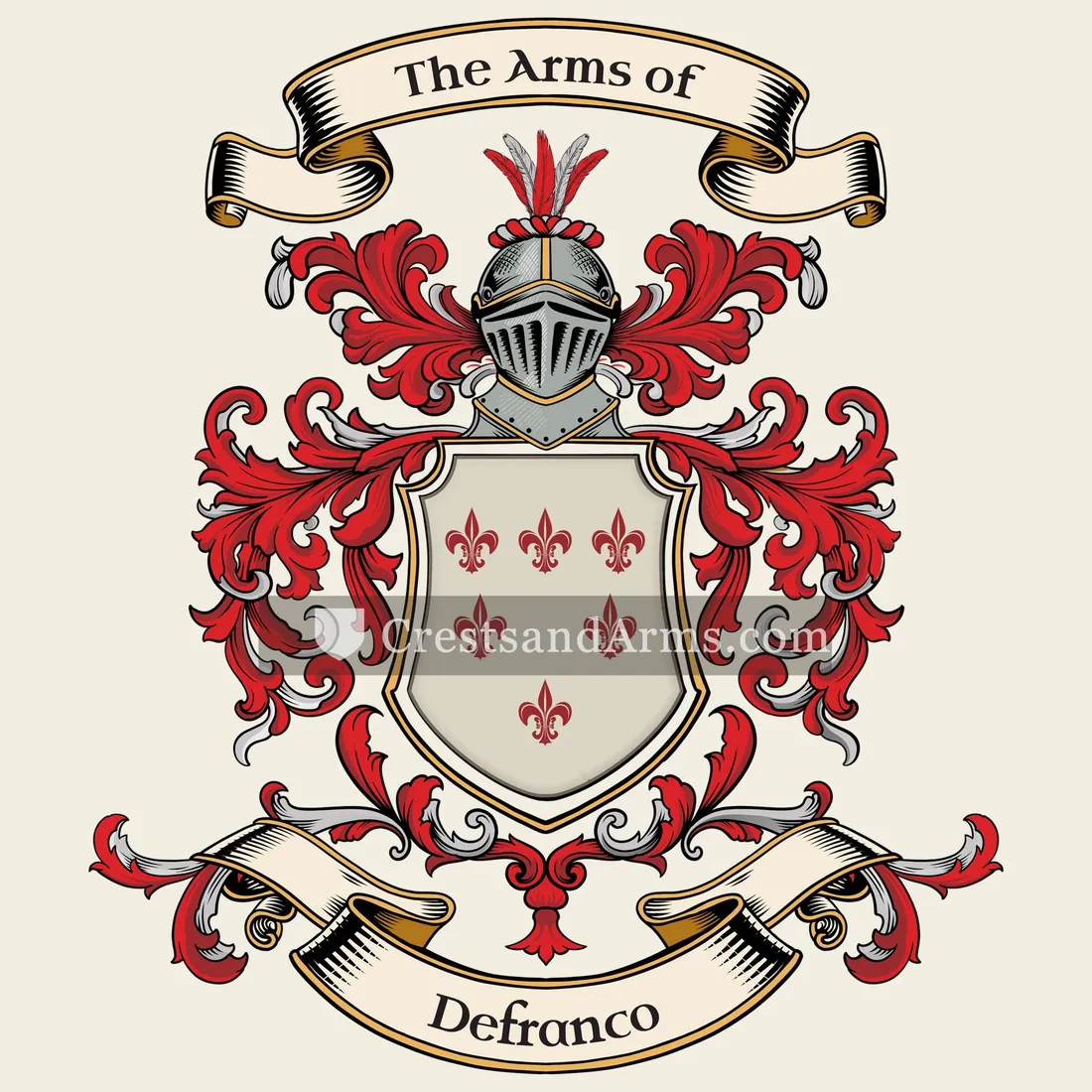
Symbols on this shield
fessThe military belt, and readiness to serve
fleur de lisPurity, light, and the sixth son
Colours
Silver (Argent)Means: Peace and sincerity
Red (Gules)Means: Military strength
Historical info
Source
J. B. Rietstap, Armorial Général, Gouda: G. B. van Goor Zonen, 1884–87
Blazon (the actual original written record)
“Fascé d'arg. et d'azur; les fasces d'arg. ch. de six fleurs-de-lis de gu., 3, 2 et 1.”
Francec. 1640
Digital archive packCoat of arms PNG, gold border print PDF, vector SVG and the certificate of authenticity. Sent to your email in minutes.
Map of France showing where the Defranco arms are recorded
The Defranco arms were recorded in France, c. 1640.
Arms such as these were typically recorded in Bretagne.
More families held coats of arms in Bretagne than anywhere else in France. The land was divided into many small estates rather than a few large ones, so far more households counted as gentry, and each needed a shield of its own to be told apart.
This is where the arms were entered in the register. Families often moved to other parts of the country, so the same name can turn up in more than one region.
The body that granted and recorded arms in France in this period.
Louis XIII of France
Sovereign of the period
Louis XIII of France
1617–1643
Reigning in Belgium when the Defranco arms are first recorded.
How Arms Worked in France
In France, a coat of arms was a mark of honor that passed down through the male line to all legitimate descendants. Families often used the same shield without changes to show their shared heritage. If a branch wanted to stand out, they could add a small mark to their shield to show their specific place in the family tree.
Granting authority
The Juge d'armes de France acted as the official authority that regulated and verified coats of arms across the country.
How they got arms
Families typically inherited their arms from ancestors, though they could also receive them through royal grants or by proving their noble status.
Where arms were recorded
Coats of arms were officially recorded in the Armorial Général de France, which began its main collection in the year 1696.
The family's standing
Recorded among the armigerous families of France.
Origin & History of the Defranco Family in France
The name Defranco emerged as a distinct identifier within the historical landscape of France, rooted in the linguistic traditions of the region. By 1640, members of the family were firmly established in the province of Bretagne, a coastal area known for its unique cultural identity and strong ties to maritime trade. During the seventeenth century, families in this region often derived their names from their geographic origins or their social status within the local community. The prefix in the name suggests a connection to the Frankish people, reflecting a lineage that likely integrated into the social fabric of northwestern France long before the seventeenth century. Life in Bretagne during this era was defined by a mix of agricultural work and seafaring, and the presence of the family in official records from this period indicates that they were active participants in the local economy. As the family grew, they contributed to the development of their parishes, leaving behind a legacy that is tied to the enduring history of the Breton people.
Defranco Meaning & Related Branches
Root word
Francus
A person of the Frankish tribe or a free man.
This name
DefrancoDerived from the prefix de meaning of and the name Franco, signifying one from the Frankish people.
also spelled
France
Franse
Frantz
de Frans
Documented Sources
J. B. Rietstap, Armorial Général, Gouda: G. B. van Goor Zonen, 1884–87
Archives de l'État à Mons, Registres paroissiaux de la province de Hainaut, 1737
Duvivier, Charles, Recherches sur le Hainaut ancien, 1891
Piérard, Christian, Histoire de la province de Hainaut, 1975
Digital archive packCoat of arms PNG, gold border print PDF, vector SVG and the certificate of authenticity. Sent to your email in minutes.


 cross symbolChristian faith and service
 cross symbolChristian faith and service
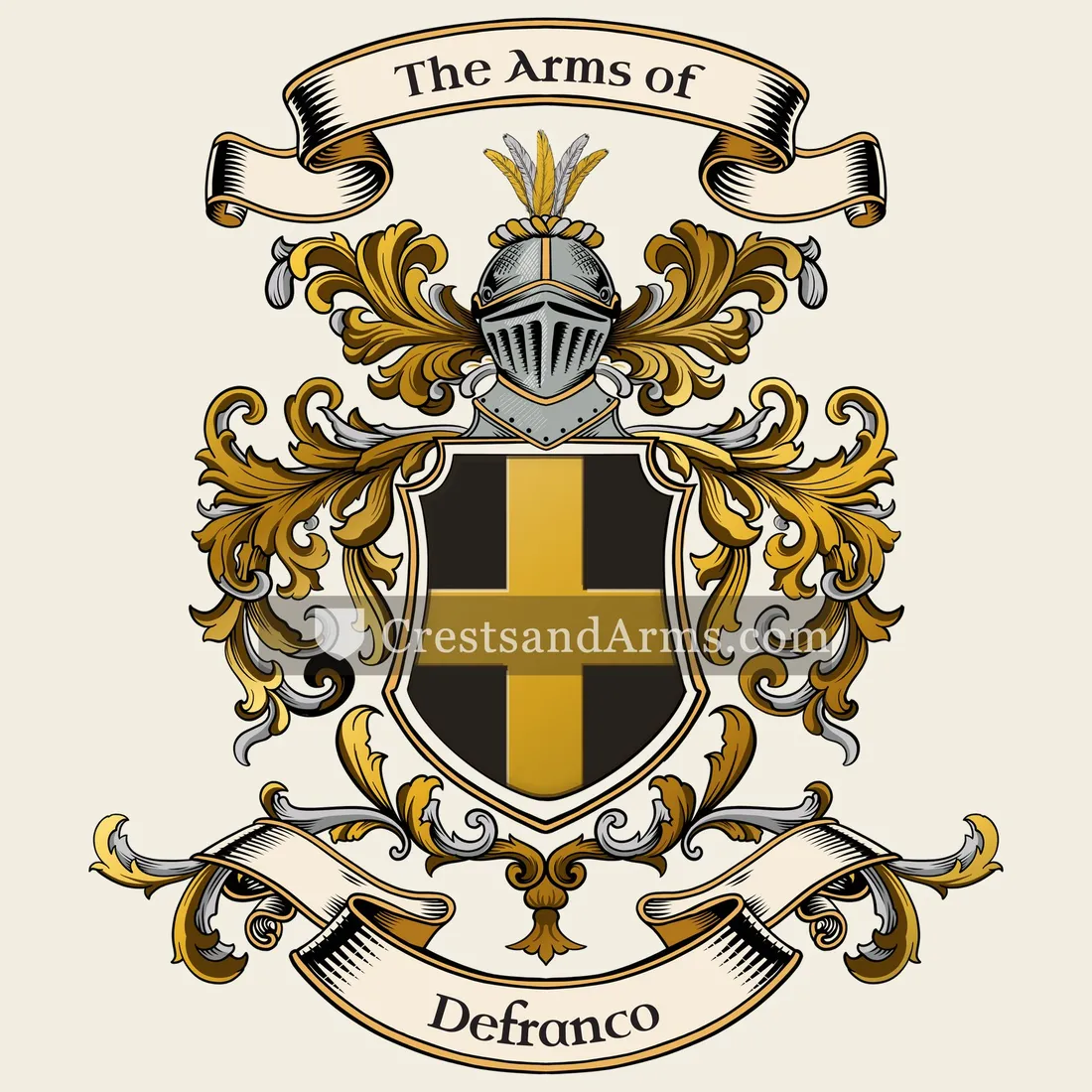


 fessThe military belt, and readiness to serve
 fleur de lisPurity, light, and the sixth son