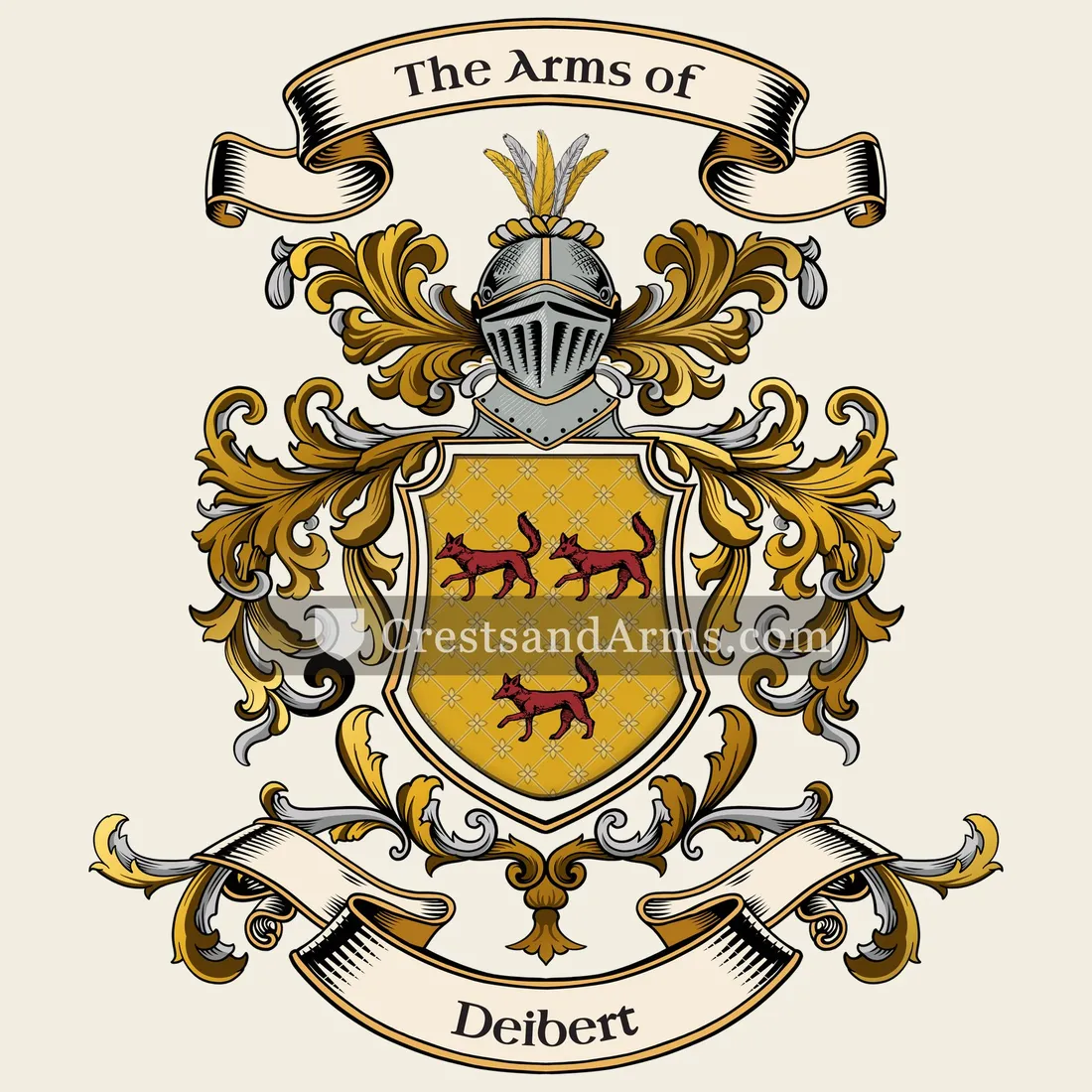
Map of Belgium showing where the Deibert arms are recorded
The Deibert arms were recorded in Bruxelles, c. 1853.
This is where the arms were entered in the register. Families often moved to other parts of the country, so the same name can turn up in more than one region.
The body that granted and recorded arms in Belgium in this period.
Leopold I of Belgium
Sovereign of the period
Leopold I of Belgium
1831–1865
Reigning in Belgium when the Deibert arms are first recorded.
How Arms Worked in Belgium
In Belgium, a coat of arms is considered personal property that is passed down through the male line to legitimate descendants. Families often use the same shield design across generations to show their shared heritage. If a branch of the family wants to change the design, they must apply for an official update to their specific version of the arms.
Granting authority
The Conseil héraldique is the official body that regulates and approves all coats of arms in Belgium.
How they got arms
Families obtain their coats of arms through formal royal grants or by confirming their historical right to use existing designs.
Where arms were recorded
All approved coats of arms are officially recorded in the public registers of the Conseil héraldique since 1844.
The family's standing
Recorded among the armigerous families of Belgium.
Origin & History of the Deibert Family in Belgium
The surname Deibert originates from the Germanic linguistic tradition, evolving from the ancient personal name Theodobert. This name is composed of two distinct roots meaning people and bright or famous, which together suggest a meaning of famous among the people. While the name has deep roots in the German-speaking regions of Europe, family records confirm that members of the Deibert line were established in the village of Bruxelles, Wisconsin, by 1853. These early settlers were part of a larger wave of immigrants who traveled from Europe to the American Midwest during the mid-nineteenth century. By settling in this specific area, the family became part of the foundational community that helped transform the rugged landscape of the Door Peninsula into a productive agricultural region. Their presence in the official census and land records of that time provides a clear link between their European heritage and their new life as pioneers in the United States.
Deibert Meaning & Related Branches
Root word
Dietbert
Derived from Germanic elements meaning people and bright or famous.
This name
DeibertA surname denoting a descendant of someone known as the bright or famous ruler of the people.
also spelled
Deberio
de Beryo
Beriot
Documented Sources
J. B. Rietstap, Armorial Général, Gouda: G. B. van Goor Zonen, 1884–87
Door County Historical Society, Door County Historical Records: 1850-1900
Holand, Hjalmar R., History of Door County, Wisconsin: The County Beautiful, 1917
United States Census Bureau, 1860 United States Federal Census, Door County, Wisconsin
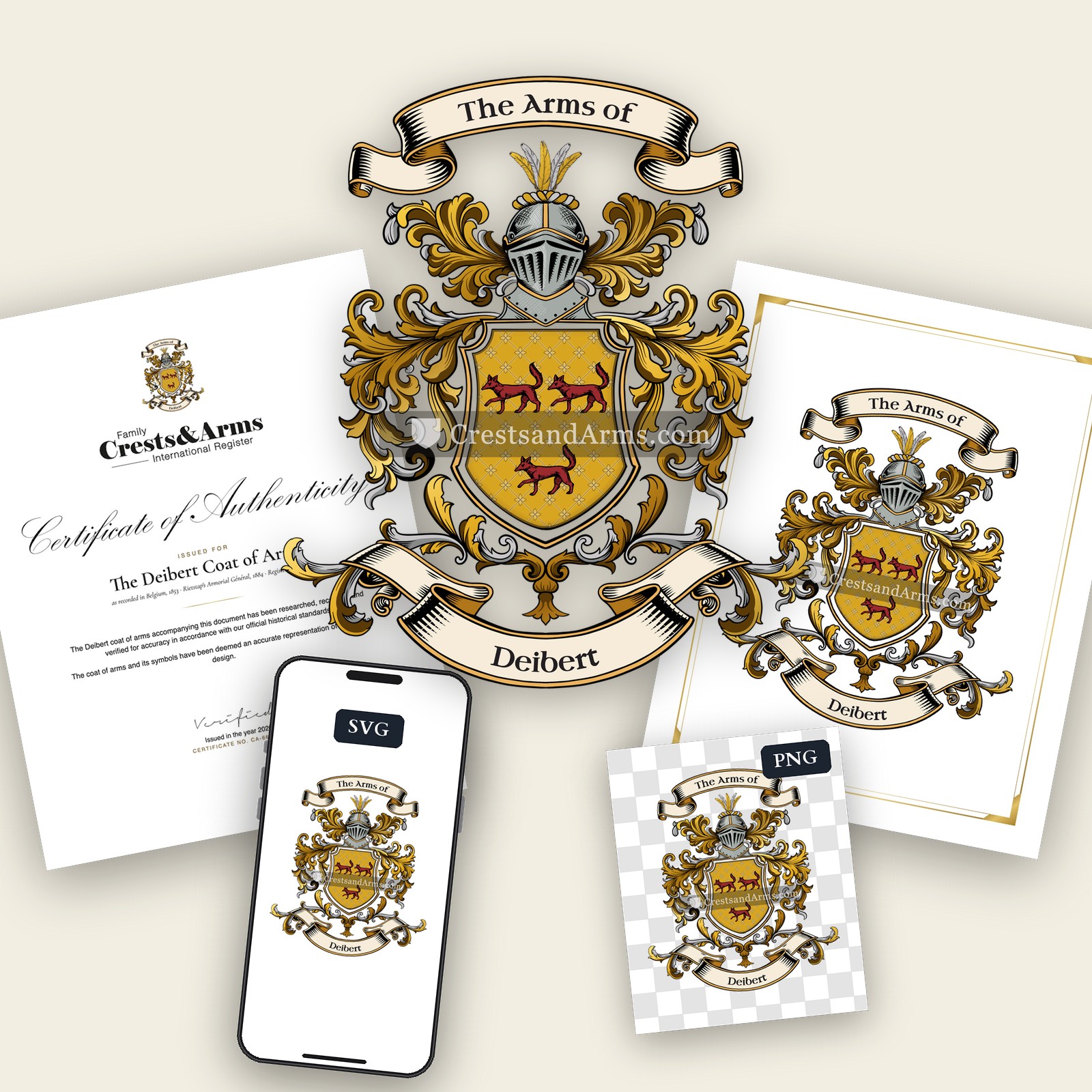
Digital archive packCoat of arms PNG, gold border print PDF, vector SVG and the certificate of authenticity. Sent to your email in minutes.


 foxWit and wisdom in defence
 foxWit and wisdom in defence