Map of Ireland showing where the De Lacy arms are recorded
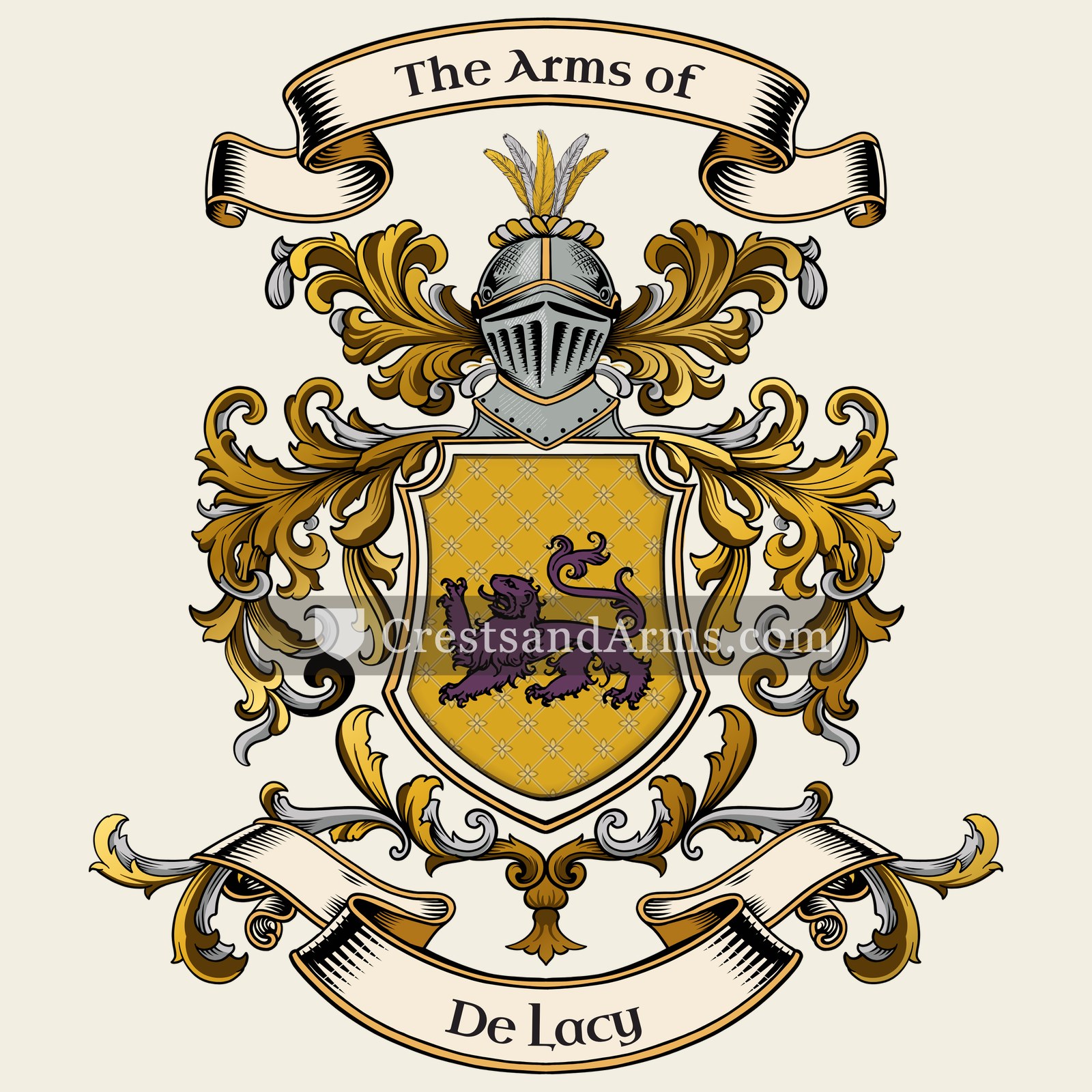
The De Lacy arms were recorded in Lincoln, c. 1172.
Lincolnshire was rich farming country, and its wealth was spread across many middling families. Households of that size bought land and took arms, and the county holds a large share of English names.
This is where the arms were entered in the register. Families often moved to other parts of the country, so the same name can turn up in more than one region.
The body that granted and recorded arms in Ireland in this period.
Henry II of England
Sovereign of the period
Henry II of England
1154–1189
Reigning in Ireland when the De Lacy arms are first recorded.
How Arms Worked in Ireland
The Ulster King of Arms granted coats of arms to individuals who proved their social standing and good character. These symbols were typically inherited by all legitimate descendants of the original holder. If a family branch wanted a unique look, they could apply for a specific change to their design through the office to ensure their identity remained distinct.
Granting authority
The Ulster King of Arms acted as the official body that regulated and issued all coats of arms throughout Ireland.
How they got arms
Families obtained their arms through formal grants issued by the office after proving their eligibility and paying the required fees.
Where arms were recorded
All official grants were recorded in the registers held by the Ulster King of Arms starting from the year 1552.
The family's standing
Recorded among the armigerous families of Lincoln.
Origin & History of the De Lacy Family in Ireland
The De Lacy family name originates from the village of Lassy in the Calvados region of Normandy. Following the Norman Conquest of England in 1066, members of the family rose to prominence by serving the crown as loyal landholders and administrators. By 1172, historical records confirm that the family had established a significant presence in Lincoln, where they played an active role in the local governance and social structure of the city. This move to Lincoln allowed the family to expand their influence across the northern regions of England. Over time, the family became deeply embedded in the political landscape of the Middle Ages, often acting as trusted advisors to the monarchy. Their transition from Norman landowners to influential figures in English society highlights the rapid integration of continental families into the British administrative system during the twelfth century.
De Lacy Meaning & Related Branches
Root word
Lassy
A place name referring to a location in Normandy, France.
This name
De LacyAn Anglo-Norman habitational surname indicating origin from the town of Lassy.
also spelled
Delacie
Delacey
Delassie
Related arms
Readrecorded with De Lacy, same area
Sibthorperecorded with De Lacy, same area
Walronrecorded with De Lacy, same area
Wintonrecorded with De Lacy, same area
Documented Sources
Sir Bernard Burke, The General Armory of England, Scotland, Ireland and Wales, London: Harrison & Sons, 1884
Crouch, David. The Normans: The History of a Dynasty. 2002
Loyd, Lewis C. The Origins of Some Anglo-Norman Families. 1951
Stenton, Frank. Anglo-Saxon England. 1971
The National Archives, Pipe Rolls (Rotuli de Dominabus et pueris et puellis de donatione regis in XII comitatibus)
Digital archive packCoat of arms PNG, gold border print PDF, vector SVG and the certificate of authenticity. Sent to your email in minutes.


 lionCourage, strength and royalty
 lionCourage, strength and royalty