A record of documented arms, meaning and origin, researched for the Delmar family lines. Documented in 2 countries.
Reg. 1127 · German, D–F
Coat of Arms & Family Crest Details
Symbols on this shield
mountThe ground held, and steadfastness upon it
fessThe military belt, and readiness to serve
ringFidelity, and a promise kept
oakGreat age, strength and steadfastness
columnFortitude and constancy
mulletThe third son, and a divine quality from above
Colours
Blue (Azure)Means: Loyalty and truth
Silver (Argent)Means: Peace and sincerity
Black (Sable)Means: Constancy
Gold (Or)Means: Generosity
Green (Vert)Means: Hope
Historical info
Source
J. B. Rietstap, Armorial Général, Gouda: G. B. van Goor Zonen, 1884–87
Blazon (the actual original written record)
“Coupé: au 1 parti: a. d'azur à trois annelets mal-ordonnés et entrelacés d'or; b. d'arg. à une branche de chêne arr. de sin., en barre; au 2 d'or à une piramide au nat., posée sur une terrasse de sin. A la fasce de sa., br. sur le coupé et ch. de trois étoiles (5) d'arg. L'écu bordé d'or.”
Germanyc. 1810
Digital archive packCoat of arms PNG, gold border print PDF, vector SVG and the certificate of authenticity. Sent to your email in minutes.
Map of Germany showing where the Delmar arms are recorded
The Delmar arms were recorded in Germany, c. 1810.
Arms such as these were typically recorded in Bavaria.
Bavaria was a country of old landed families and walled market towns. Estates passed down the same line for centuries, and both the landowners and the leading townsmen kept arms, which is why so many Bavarian names sit in the registers.
This is where the arms were entered in the register. Families often moved to other parts of the country, so the same name can turn up in more than one region.
The body that granted and recorded arms in Germany in this period.
Frederick William III of Prussia
Sovereign of the period
Frederick William III of Prussia
1797–1840
Reigning in Germany when the Delmar arms are first recorded.
How Arms Worked in Germany
Prussian heraldry was strictly tied to social rank and noble status rather than being a free choice for every citizen. These symbols were treated as permanent family property that moved through the generations to all legitimate heirs. If a family branch wanted to change their design to stand out, they had to apply for official permission to alter their specific version of the shield.
Granting authority
The Prussian Heroldsamt acted as the central state office that managed and strictly controlled all noble titles and coats of arms.
How they got arms
Families usually obtained their arms through formal royal grants or by proving their long-standing noble status to the state authorities.
Where arms were recorded
All official coats of arms were kept in the rolls of the Prussian Heroldsamt, which functioned from 1706 until 1918.
The family's standing
Recorded among the armigerous families of Germany.
Origin & History of the Delmar Family in Germany
The surname Delmar carries a rich history tied to the geographic landscapes of Southern Germany. By the early 19th century, records confirm that members of the family were firmly established in the region of Bavaria. The name itself is often interpreted as a locational descriptor, likely derived from the French phrase "de la mer," which translates to "of the sea." While the family settled in the landlocked hills and forests of Bavaria, the name suggests that their ancestors may have originally migrated from coastal regions before integrating into the local German culture. During the 1800s, families in this area were often identified by their trade or their place of origin, and the Delmar name served as a distinct marker of their heritage. As the family grew, they became part of the social and economic fabric of the Bavarian countryside, contributing to the local traditions and community life that defined that era of German history.
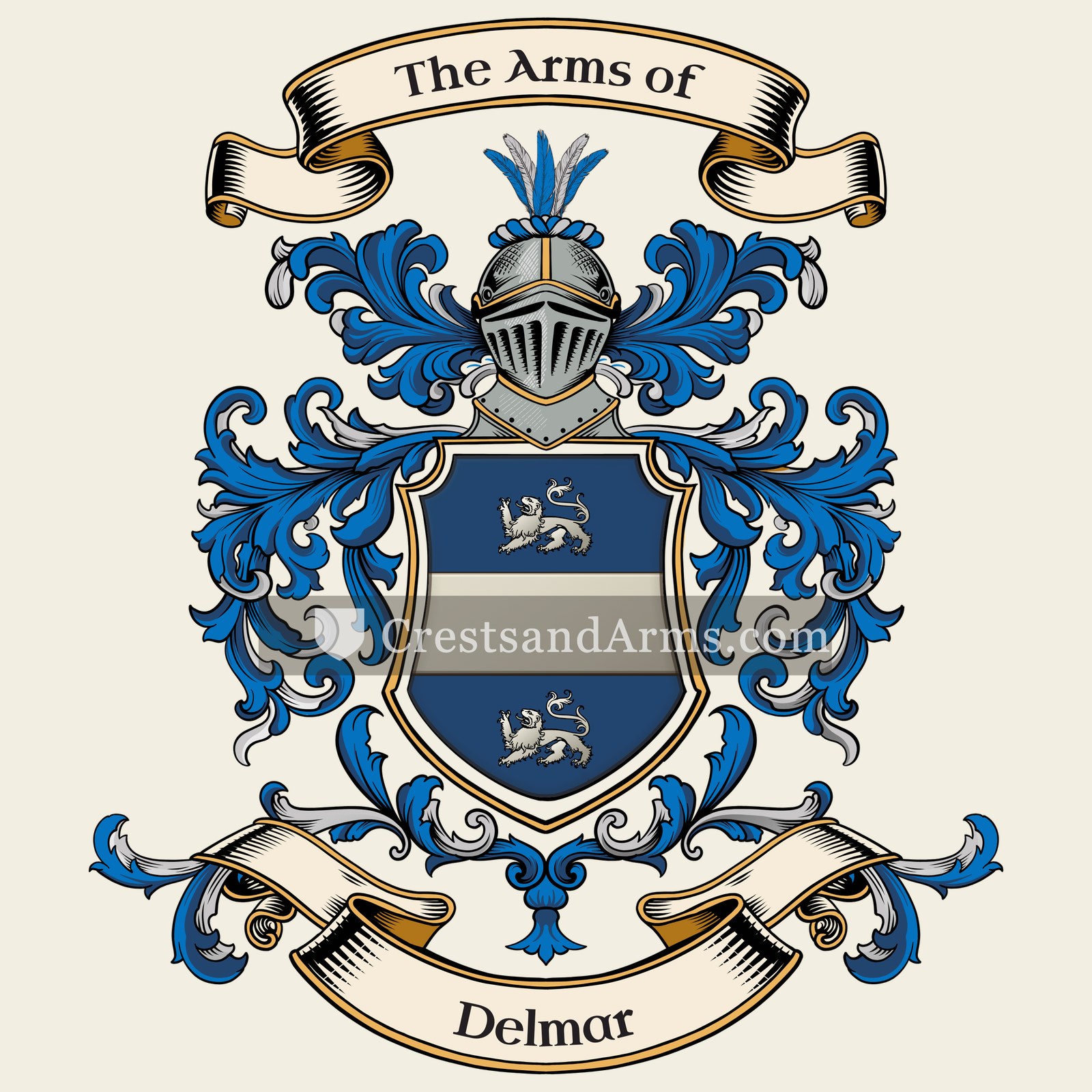
Coat of Arms & Family Crest Details
Symbols on this shield
lionCourage, strength and royalty
Colours
Blue (Azure)Means: Loyalty and truth
Silver (Argent)Means: Peace and sincerity
Historical info
Source
Sir Bernard Burke, The General Armory of England, Scotland, Ireland and Wales, London: Harrison & Sons, 1884
Blazon (the actual original written record)
“Az. three barrulets dancettée betw. two lions pass. ar”
KentKenfield · Kent, c. 1620
Digital archive packCoat of arms PNG, gold border print PDF, vector SVG and the certificate of authenticity. Sent to your email in minutes.
Map of England showing where the Delmar arms are recorded
The Delmar arms were recorded in Kent, c. 1620.
Kent sits between London and the short crossing to Europe, and the trade passing through made it wealthy. Merchant families bought land with that money, and it was landowners who took coats of arms.
This is where the arms were entered in the register. Families often moved to other parts of the country, so the same name can turn up in more than one region.
The body that granted and recorded arms in England in this period.
James VI and I
Sovereign of the period
James VI and I
1603–1625
Reigning in Germany when the Delmar arms are first recorded.
How Arms Worked in England
English heraldry allowed arms to be shared by all legitimate descendants of the original owner. These symbols were treated as personal property that moved through the generations to all children. While the eldest son kept the original design, other family members could use the same shield without needing to change it or register their own unique versions.
Granting authority
The College of Arms in London has regulated the use of coats of arms throughout England and Wales since 1484.
How they got arms
Families typically obtained their coats of arms through a formal grant from the Crown or by proving their ancient right to them.
Where arms were recorded
All official coats of arms are recorded in the registers kept at the College of Arms, which date back to the fifteenth century.
The family's standing
Recorded among the armigerous families of Kent.
Origin & History of the Delmar Family in England
The history of the Delmar family in England begins in the early seventeenth century, with records confirming their presence in the county of Kent by 1620. The name itself is rooted in the French phrase de la mer, which translates to of the sea. This suggests that the family likely originated from coastal regions in France before crossing the English Channel to settle in the fertile landscapes of Kent. During this period, Kent served as a vital gateway for immigrants arriving from the continent, often due to religious or economic shifts in Europe. As the family established themselves in their new home, they integrated into the local agricultural and social structures of the English countryside. Over time, the name evolved from its descriptive French origins into a distinct surname that became firmly tied to the history of southeastern England.
Delmar Meaning & Related Branches
Root word
de la mare
Old French term meaning of the sea or of the pool.
This name
DelmarA topographic surname referring to someone who lived near a lake or marsh.
also spelled
Delmarr
Delmare
Delmarrs
Delmer
Related arms
Thompsonrecorded with Delmar, same area
Thomsonrecorded with Delmar, same area
Documented Sources
J. B. Rietstap, Armorial Général, Gouda: G. B. van Goor Zonen, 1884–87
Bavarian State Archives (Bayerisches Hauptstaatsarchiv), General-Landes-Direktion Records, 1810
Bauer, Richard, Geschichte Münchens: Von den Anfängen bis zur Gegenwart, 2003
Dudenredaktion, Duden Familiennamen: Herkunft und Bedeutung von 20.000 Nachnamen, 2005
Digital archive packCoat of arms PNG, gold border print PDF, vector SVG and the certificate of authenticity. Sent to your email in minutes.


 mountThe ground held, and steadfastness upon it
 fessThe military belt, and readiness to serve
 ringFidelity, and a promise kept
 oakGreat age, strength and steadfastness
 columnFortitude and constancy
 mulletThe third son, and a divine quality from above
 mountThe ground held, and steadfastness upon it
 fessThe military belt, and readiness to serve
 ringFidelity, and a promise kept
 oakGreat age, strength and steadfastness
 columnFortitude and constancy
 mulletThe third son, and a divine quality from above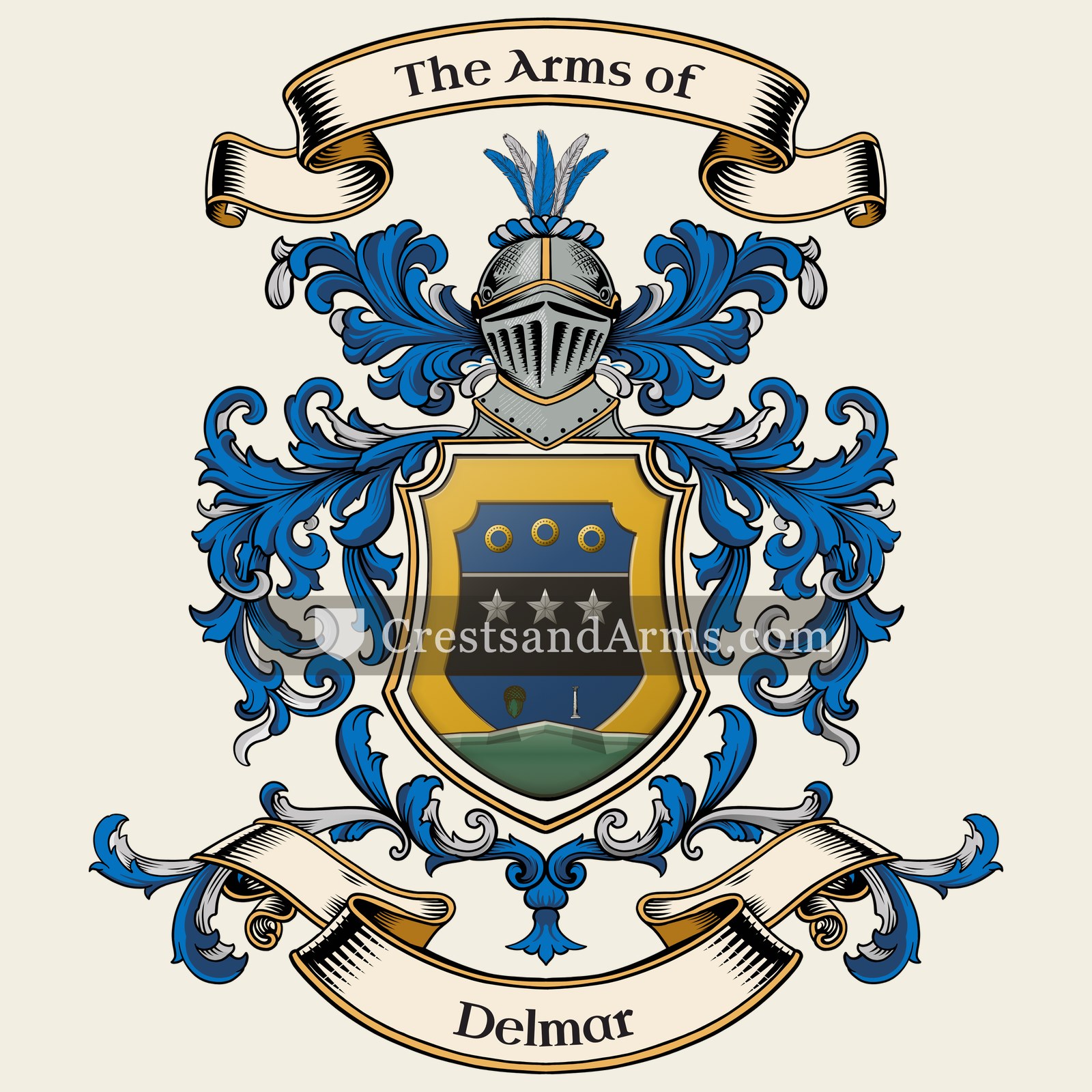


 lionCourage, strength and royalty