Map of Belgium showing where the de May arms are recorded
The de May arms were recorded in Bruxelles, c. 1737.
This is where the arms were entered in the register. Families often moved to other parts of the country, so the same name can turn up in more than one region.
The body that granted and recorded arms in Belgium in this period.
Charles VI, Holy Roman Emperor
Sovereign of the period
Charles VI, Holy Roman Emperor
1711–1740
Reigning in Belgium when the de May arms are first recorded.
How Arms Worked in Belgium
In Belgium, a coat of arms is considered personal property that is passed down through the male line to legitimate descendants. Families often use the same shield design across generations to show their shared heritage. If a branch of the family wants to change the design, they must apply for an official update to their specific version of the arms.
Granting authority
The Conseil héraldique is the official body that regulates and approves all coats of arms in Belgium.
How they got arms
Families obtain their coats of arms through formal royal grants or by confirming their historical right to use existing designs.
Where arms were recorded
All approved coats of arms are officially recorded in the public registers of the Conseil héraldique since 1844.
The family's standing
Recorded among the armigerous families of Belgium.
Origin & History of the de May Family in Belgium
The family name de May established a firm presence in the city of Brussels by the year 1737, marking a period when the family became integrated into the urban fabric of the Austrian Netherlands. During the eighteenth century, Brussels served as a bustling administrative and cultural hub, and families bearing this name were often involved in the professional and mercantile life of the city. The prefix "de" suggests a historical connection to a specific place or a landed origin, which was common for families navigating the social hierarchies of the time. As residents of Brussels, the de May family lived through a transformative era defined by shifting European political alliances and the gradual modernization of city governance. Their presence in the historical records of the capital reflects the broader movement of families who settled in the city to participate in its growing economy and administrative systems.
Coat of Arms & Family Crest Details
Symbols on this shield
chevronProtection, and faithful service completed
Colours
Gold (Or)Means: Generosity
Blue (Azure)Means: Loyalty and truth
Historical info
Source
J. B. Rietstap, Armorial Général, Gouda: G. B. van Goor Zonen, 1884–87
Blazon (the actual original written record)
“D'or au chev. d'azur. C.: un sauvage iss. T.: deux sauvages.”
PonthieuPonthieu, c. 1663
Digital archive packCoat of arms PNG, gold border print PDF, vector SVG and the certificate of authenticity. Sent to your email in minutes.
Map of France showing where the de May arms are recorded
The de May arms were recorded in Ponthieu, c. 1663.
Ponthieu was small coastal country in northern France, on the road armies took between the Channel and Paris. Its families held land in return for service, and men who served carried shields.
This is where the arms were entered in the register. Families often moved to other parts of the country, so the same name can turn up in more than one region.
The body that granted and recorded arms in France in this period.
Louis XIV of France
Sovereign of the period
Louis XIV of France
1643–1715
Reigning in Belgium when the de May arms are first recorded.
How Arms Worked in France
In France, a coat of arms was a mark of honor that passed down through the male line to all legitimate descendants. Families often used the same shield without changes to show their shared heritage. If a branch wanted to stand out, they could add a small mark to their shield to show their specific place in the family tree.
Granting authority
The Juge d'armes de France acted as the official authority that regulated and verified coats of arms across the country.
How they got arms
Families typically inherited their arms from ancestors, though they could also receive them through royal grants or by proving their noble status.
Where arms were recorded
Coats of arms were officially recorded in the Armorial Général de France, which began its main collection in the year 1696.
The family's standing
Recorded among the armigerous families of Ponthieu.
Origin & History of the de May Family in France
The family name de May traces its roots to the northern regions of France, specifically within the historic county of Ponthieu. By the year 1663, records confirm that members of the family were well-established in this area, which was known for its strategic location between the Somme River and the English Channel. During the seventeenth century, families in Ponthieu often lived in a landscape shaped by centuries of regional conflict and agricultural development. The name itself likely originated as a topographic or habitational identifier, linking the family to the local geography or a specific settlement. As residents of a province that served as a gateway for trade and movement, the early de Mays were part of a society transitioning through the complex social and economic changes of the Bourbon era. Their presence in the local parish registers and administrative documents of the time highlights their integration into the fabric of rural French life during the reign of King Louis XIV.
Coat of Arms & Family Crest Details
Symbols on this shield
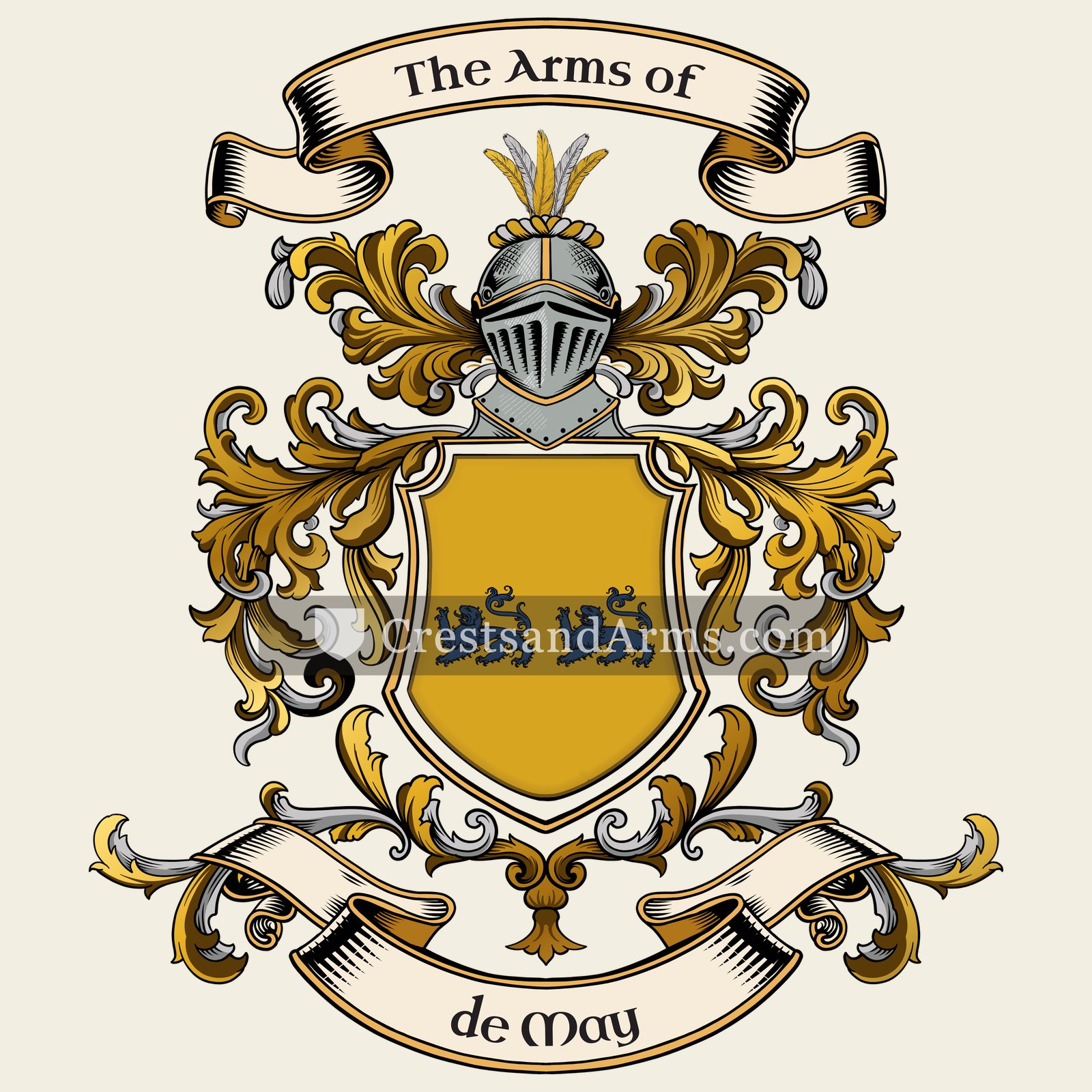
paleMilitary strength, and a fortified defence
lionCourage, strength and royalty
Colours
Gold (Or)Means: Generosity
Blue (Azure)Means: Loyalty and truth
Historical info
Source
J. B. Rietstap, Armorial Général, Gouda: G. B. van Goor Zonen, 1884–87
Blazon (the actual original written record)
“Coupé: au 1 d'or à deux lions affr. d'azur; au 2 palé d'azur et d'or. C.: un lion iss. d'azur.”
SwitzerlandBerne, c. 1745
Digital archive packCoat of arms PNG, gold border print PDF, vector SVG and the certificate of authenticity. Sent to your email in minutes.
Map of Switzerland showing where the de May arms are recorded
The de May arms were recorded in Berne, c. 1745.
This is where the arms were entered in the register. Families often moved to other parts of the country, so the same name can turn up in more than one region.
The body that granted and recorded arms in Switzerland in this period.
How Arms Worked in Switzerland
In Switzerland, coats of arms were not restricted to the nobility and were often adopted by common citizens and families. These symbols were passed down through generations to show family identity. When branches of a family grew, they often changed small details of the design to distinguish their own line from the original group.
Granting authority
Cantonal and civic authorities managed the use of coats of arms within their specific regions and local jurisdictions.
How they got arms
Families typically assumed their own coats of arms based on local custom rather than receiving them from a central monarch.
Where arms were recorded
Arms were recorded in various cantonal and civic registers starting from the fourteenth century throughout the Swiss region.
The family's standing
Recorded among the armigerous families of Switzerland.
Origin & History of the de May Family in Switzerland
The family name de May holds a significant place in the historical records of the Swiss city of Berne, where members of the family were firmly established by 1745. The name itself reflects the linguistic traditions of the region, often associated with the French-speaking influences that permeated Swiss administrative and social circles during the eighteenth century. Families bearing this name in Berne were typically integrated into the professional and civic life of the city, frequently serving in roles that required literacy, legal knowledge, or administrative skill. By the mid-1700s, the de May family was part of a stable urban class that helped shape the governance and cultural identity of the Swiss Confederation. Their presence in the city archives suggests they were deeply involved in the local economy and the complex social hierarchies that defined life in the old Swiss republic.
de May Meaning & Related Branches
Root word
Maius
Latin term referring to the month of May or the goddess Maia.
This name
de MayA habitational or occupational surname indicating someone born in May or associated with May festivities.
also spelled
Demai
Related arms
de Maivariant spelling
Dumayvariant spelling
Documented Sources
J. B. Rietstap, Armorial Général, Gouda: G. B. van Goor Zonen, 1884–87
Archives de la Ville de Bruxelles, Registres paroissiaux (baptêmes, mariages, sépultures), 1737
Archives générales du Royaume, Papiers d’État et de l’Audience, 1737
Despy, Georges, Histoire de Bruxelles, 1976
Digital archive packCoat of arms PNG, gold border print PDF, vector SVG and the certificate of authenticity. Sent to your email in minutes.


 fessThe military belt, and readiness to serve
 boars headA fierce fighter who battles to the end
 fessThe military belt, and readiness to serve
 boars headA fierce fighter who battles to the end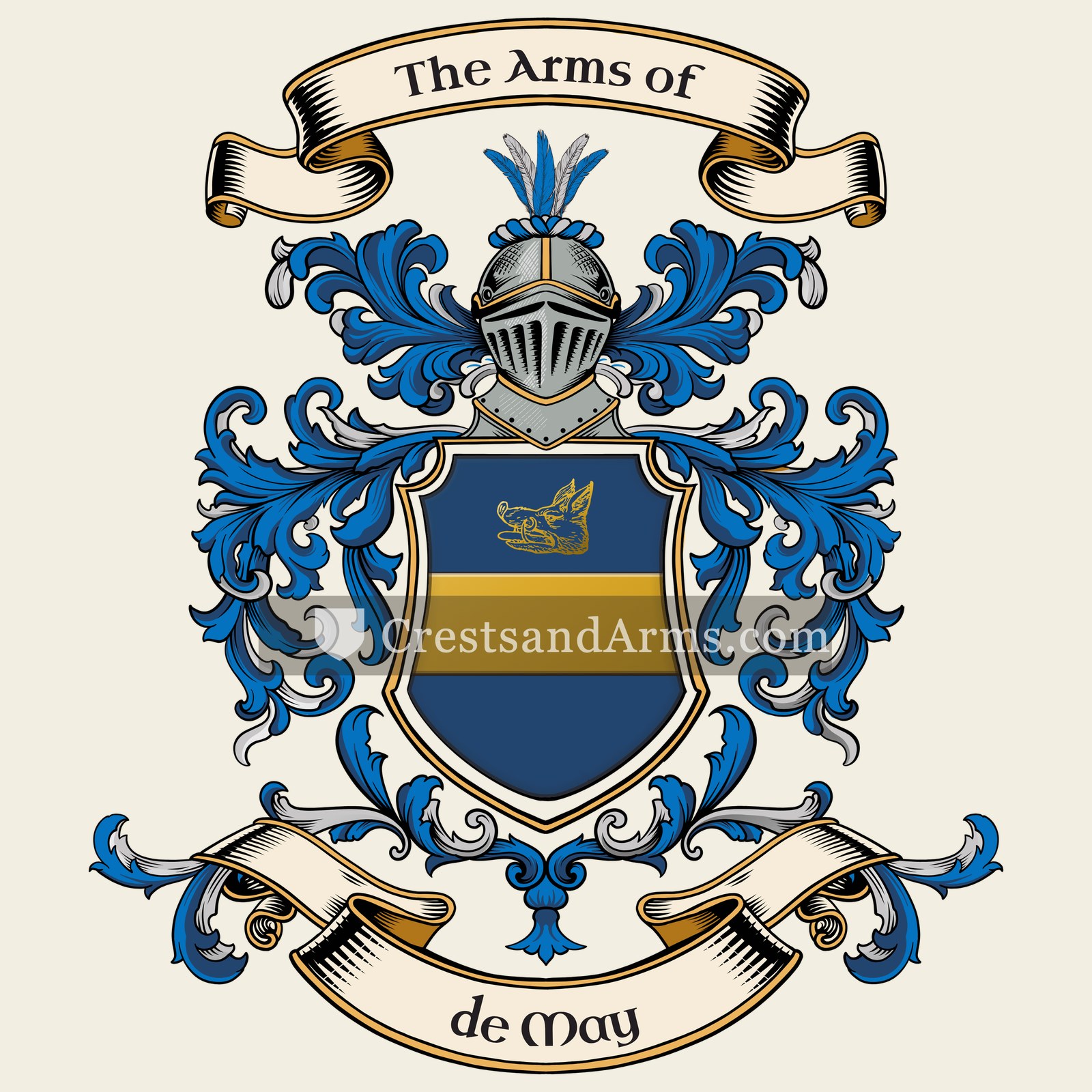


 chevronProtection, and faithful service completed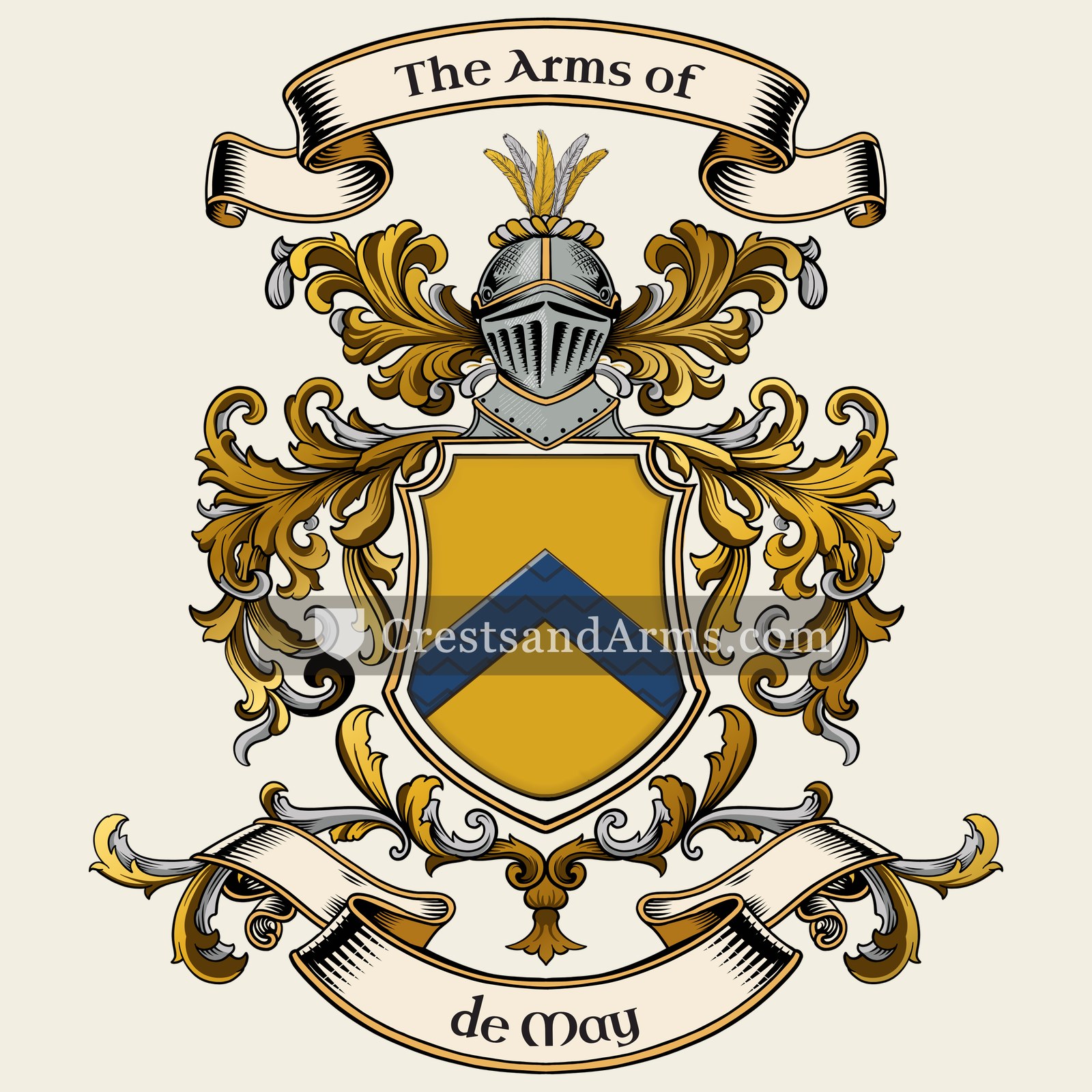


 paleMilitary strength, and a fortified defence
 lionCourage, strength and royalty