Map of France showing where the Denner arms are recorded
The Denner arms were recorded in Strasbourg, c. 1663.
This is where the arms were entered in the register. Families often moved to other parts of the country, so the same name can turn up in more than one region.
The body that granted and recorded arms in France in this period.
Louis XIV of France
Sovereign of the period
Louis XIV of France
1643–1715
Reigning in France when the Denner arms are first recorded.
How Arms Worked in France
In France, a coat of arms was a mark of honor that passed down through the male line to all legitimate descendants. Families often used the same shield without changes to show their shared heritage. If a branch wanted to stand out, they could add a small mark to their shield to show their specific place in the family tree.
Granting authority
The Juge d'armes de France acted as the official authority that regulated and verified coats of arms across the country.
How they got arms
Families typically inherited their arms from ancestors, though they could also receive them through royal grants or by proving their noble status.
Where arms were recorded
Coats of arms were officially recorded in the Armorial Général de France, which began its main collection in the year 1696.
The family's standing
Recorded among the armigerous families of France.
Origin & History of the Denner Family in France
The family name Denner has deep roots in the Alsace region, specifically within the city of Strasbourg, where records confirm their presence as early as 1663. During this period, Strasbourg was a unique cultural crossroads where French and German influences blended together. The name likely originated as a descriptive term for someone who lived near a valley or a specific woodland area, as the root word often relates to the landscape. Families like the Denners were often part of the growing urban middle class, working as skilled tradespeople or merchants who helped the city thrive during the seventeenth century. Because Strasbourg was a center for printing and trade, the Denner family would have been positioned in a bustling environment that valued education and craftsmanship. By living in this strategic border territory, they experienced the shifting political landscape of the era while maintaining their identity within the local community.
Coat of Arms & Family Crest Details
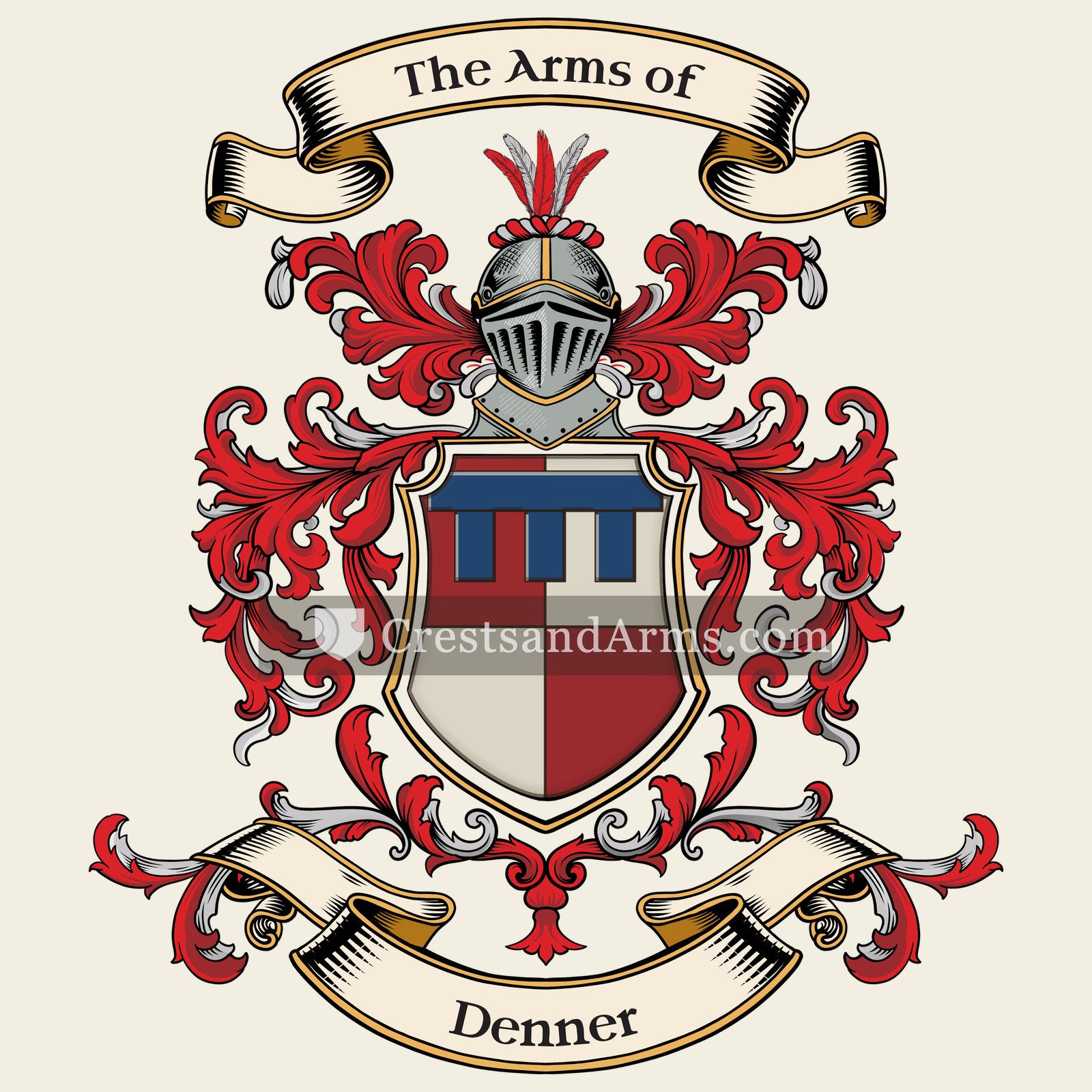
Symbols on this shield
axeThe execution of military duty
Colours
Silver (Argent)Means: Peace and sincerity
Gold (Or)Means: Generosity
Historical info
Source
J. B. Rietstap, Armorial Général, Gouda: G. B. van Goor Zonen, 1884–87
Blazon (the actual original written record)
“Parti: au 1 d'arg. à une hache d'or, posée en pal; au 2 d'azur à une hache d'or, posée en pal. Cq. cour. C.: une hache d'or, entre un vol du même, les plumes ext. de l'aile dextre d'arg., celles de l'aile sen. d'azur. L.: d'or et d'azur.”
GermanyRothenburg Bav, c. 1765
Digital archive packCoat of arms PNG, gold border print PDF, vector SVG and the certificate of authenticity. Sent to your email in minutes.
Map of Germany showing where the Denner arms are recorded
The Denner arms were recorded in Rothenburg Bav, c. 1765.
This is where the arms were entered in the register. Families often moved to other parts of the country, so the same name can turn up in more than one region.
The body that granted and recorded arms in Germany in this period.
Francis I, Holy Roman Emperor
Sovereign of the period
Francis I, Holy Roman Emperor
1745–1765
Reigning in France when the Denner arms are first recorded.
How Arms Worked in Germany
In the Holy Roman Empire, coats of arms were often granted to individuals by the Emperor or his representatives. These arms were then passed down through the generations to all legitimate descendants of the original holder. Younger branches of a family usually kept the same shield design without needing to change it, as the arms belonged to the entire lineage.
Granting authority
The Holy Roman Emperor held the sole power to grant new coats of arms throughout his vast imperial territories.
How they got arms
Families typically obtained their coats of arms through a formal imperial grant or by proving their noble status to the authorities.
Where arms were recorded
These grants were officially recorded in the Imperial Chancery registers, which began keeping formal records of such honors during the Middle Ages.
The family's standing
Recorded among the armigerous families of Germany.
Origin & History of the Denner Family in Germany
The surname Denner has deep roots in the German-speaking regions of Europe, where it likely originated as a descriptive name for someone who lived in a valley or near a specific type of woodland. By the middle of the 18th century, the family had established a notable presence in the historic town of Rothenburg ob der Tauber. Records from 1765 confirm that members of the Denner family were active participants in the social and economic life of this medieval walled city. During this era, families with this name were often integrated into the local craft guilds or agricultural communities that defined the Bavarian landscape. As the family grew, they moved through the changing political borders of the Holy Roman Empire, carrying their name across various German states while maintaining their connection to the traditions of their ancestral home.
Coat of Arms & Family Crest Details
Symbols on this shield
labelThe eldest son, during his father's life
Colours
Red (Gules)Means: Military strength
Silver (Argent)Means: Peace and sincerity
Blue (Azure)Means: Loyalty and truth
Historical info
Source
Sir Bernard Burke, The General Armory of England, Scotland, Ireland and Wales, London: Harrison & Sons, 1884
Blazon (the actual original written record)
“Quarterly, gu and ar. a label az”
Englandc. 1620
Digital archive packCoat of arms PNG, gold border print PDF, vector SVG and the certificate of authenticity. Sent to your email in minutes.
Map of England showing where the Denner arms are recorded
The Denner arms were recorded in England, c. 1620.
Arms such as these were typically recorded in York.
Yorkshire is the largest of the English counties, and it held more gentry families than any other. Land there was split among a great many households rather than a few, so a great many of them carried arms.
This is where the arms were entered in the register. Families often moved to other parts of the country, so the same name can turn up in more than one region.
The body that granted and recorded arms in England in this period.
James VI and I
Sovereign of the period
James VI and I
1603–1625
Reigning in France when the Denner arms are first recorded.
How Arms Worked in England
English heraldry allowed arms to be shared by all legitimate descendants of the original owner. These symbols were treated as personal property that moved through the generations to all children. While the eldest son kept the original design, other family members could use the same shield without needing to change it or register their own unique versions.
Granting authority
The College of Arms in London has regulated the use of coats of arms throughout England and Wales since 1484.
How they got arms
Families typically obtained their coats of arms through a formal grant from the Crown or by proving their ancient right to them.
Where arms were recorded
All official coats of arms are recorded in the registers kept at the College of Arms, which date back to the fifteenth century.
The family's standing
Recorded among the armigerous families of England.
Origin & History of the Denner Family in England
The family name Denner has roots that stretch back into the social landscape of northern England, with documented evidence placing members of the family in the city of York by the year 1620. During this period, York served as a vital hub for trade and administration, and families like the Denners were often integrated into the local merchant or artisan classes that defined the city’s economy. The name itself likely evolved from a descriptive nickname or a reference to a specific geographic location, reflecting the common naming customs of the Middle Ages where surnames were adopted to distinguish individuals within growing urban populations. By establishing themselves in York during the early seventeenth century, the Denners became part of a resilient community that navigated the significant political and religious shifts of the Stuart era. Their presence in such a prominent historical center suggests they were active participants in the daily life and civic development of the region during a time of great transition in English history.
Denner Meaning & Related Branches
Root word
denier
A medieval silver coin or currency unit.
This name
DennerAn occupational name for a money changer or someone who dealt with currency.
also spelled
Dennerr
Dennere
Denneree
Dener
Denar
Documented Sources
J. B. Rietstap, Armorial Général, Gouda: G. B. van Goor Zonen, 1884–87
Archives: Archives de la ville et de l'Eurométropole de Strasbourg, Registres paroissiaux
Book: Sitzmann, Édouard, Dictionnaire de biographie des hommes célèbres de l'Alsace, 1909
Book: Livet, Georges, Histoire de Strasbourg des origines à nos jours, 1980
Digital archive packCoat of arms PNG, gold border print PDF, vector SVG and the certificate of authenticity. Sent to your email in minutes.


 mountThe ground held, and steadfastness upon it
 treeLife, endurance and deep roots
 roseThe seventh son, and beauty with grace
 mountThe ground held, and steadfastness upon it
 treeLife, endurance and deep roots
 roseThe seventh son, and beauty with grace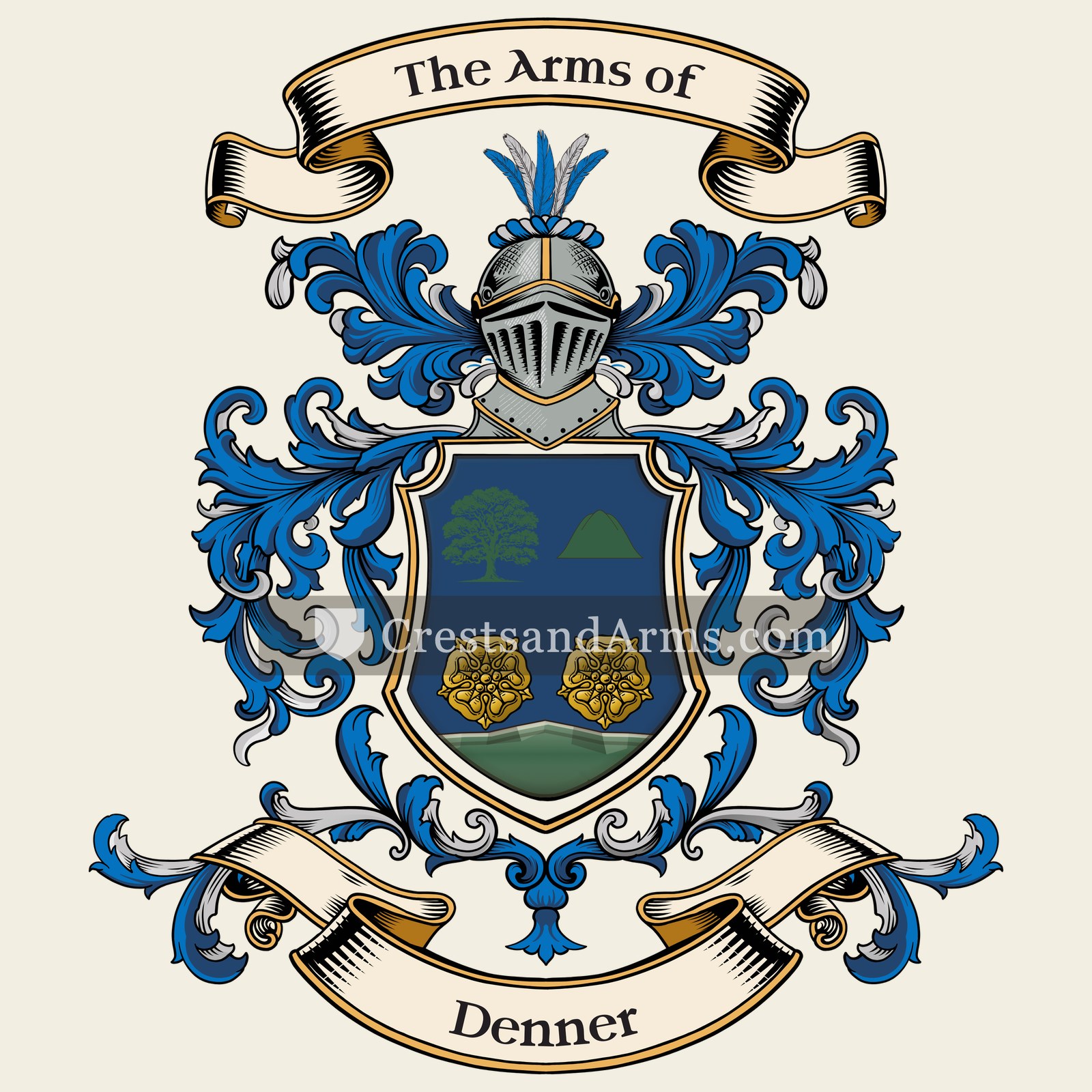


 axeThe execution of military duty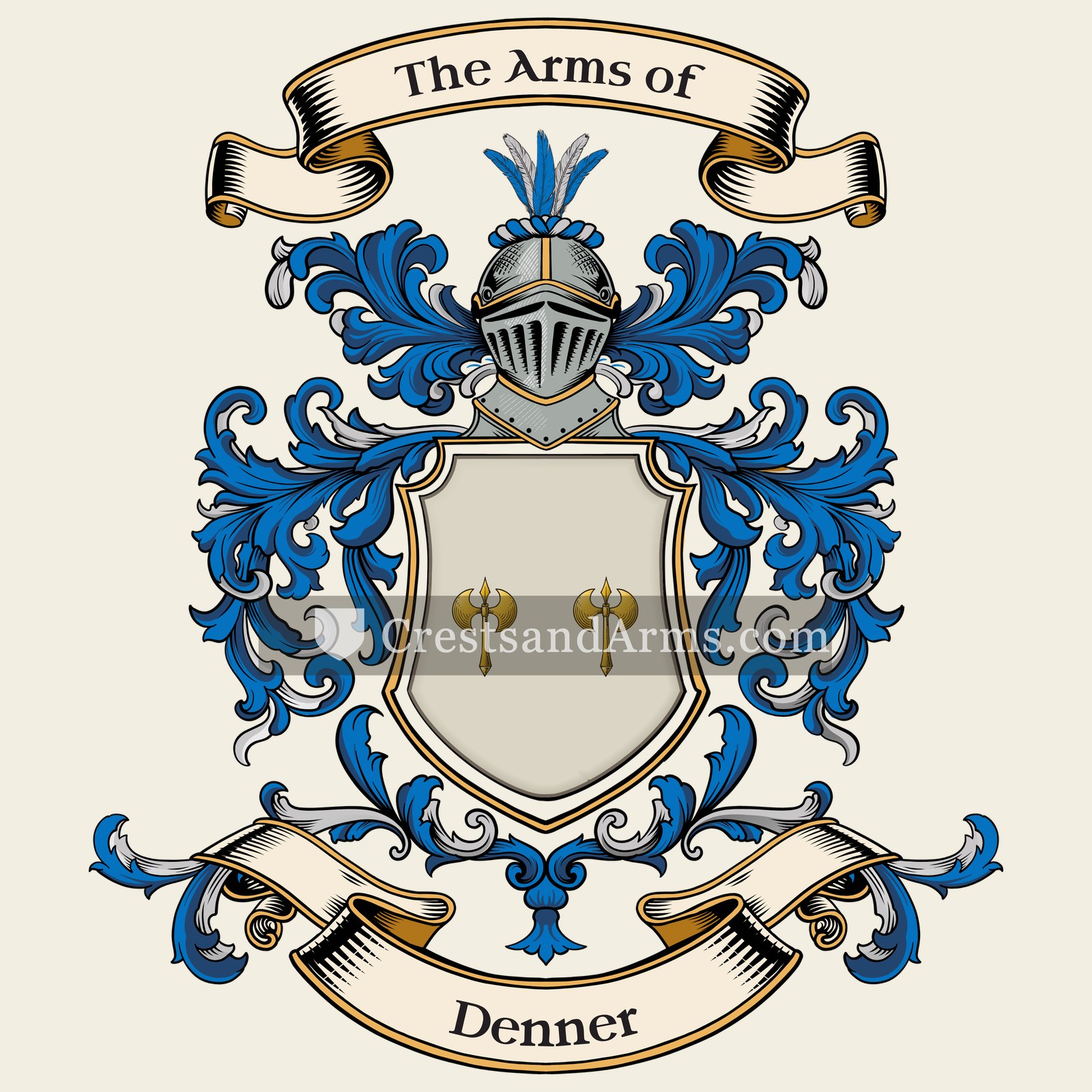


 labelThe eldest son, during his father's life