Map of Belgium showing where the Deschner arms are recorded
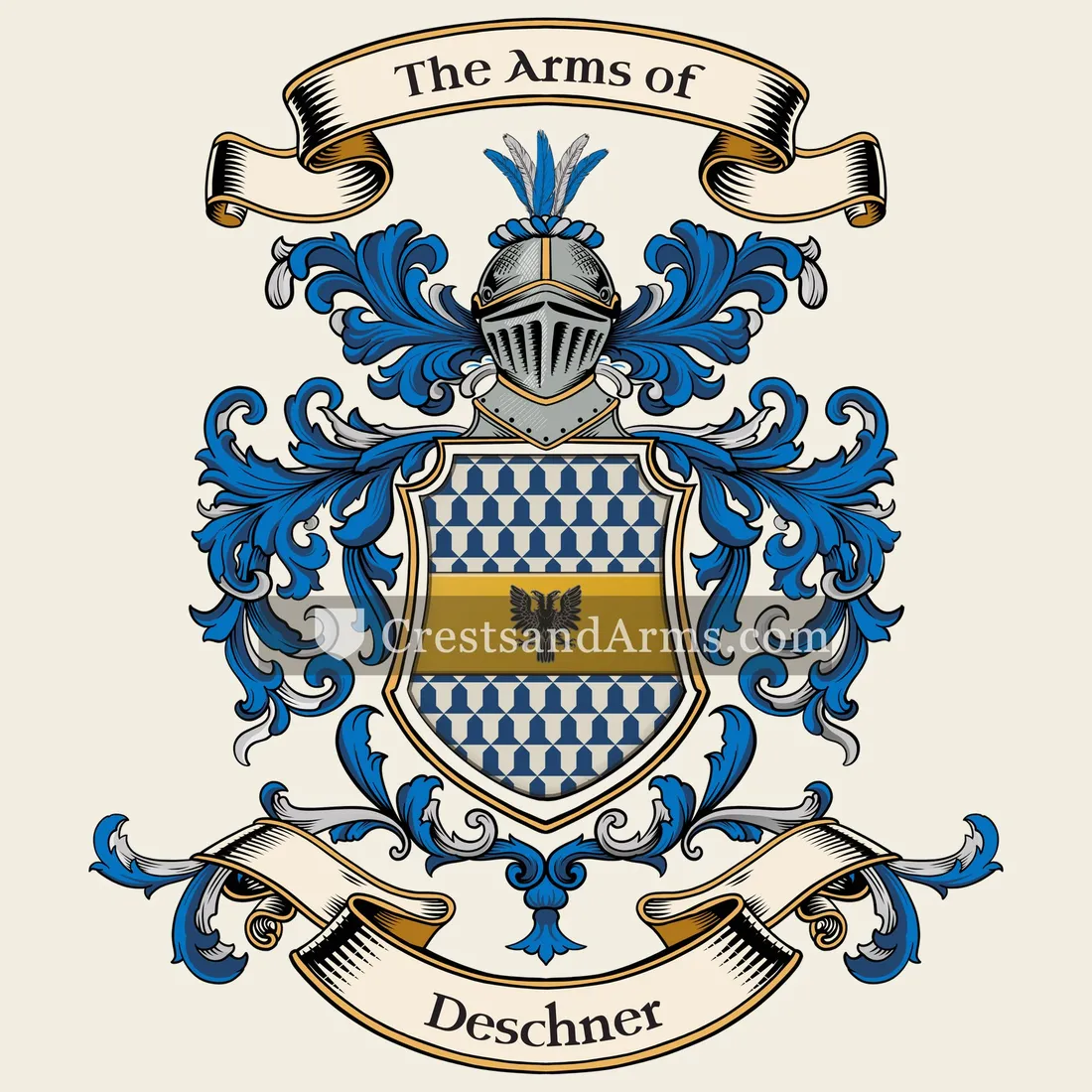
The Deschner arms were recorded in Belgium, c. 1737.
Arms such as these were typically recorded in Brabant.
Brabant lay at the heart of the Low Countries, where the trade routes met. Its towns were wealthy and its landowners many, and both kinds of family kept arms, which is why the region is so heavily represented.
This is where the arms were entered in the register. Families often moved to other parts of the country, so the same name can turn up in more than one region.
The body that granted and recorded arms in Belgium in this period.
Charles VI, Holy Roman Emperor
Sovereign of the period
Charles VI, Holy Roman Emperor
1711–1740
Reigning in Belgium when the Deschner arms are first recorded.
How Arms Worked in Belgium
In Belgium, a coat of arms is considered personal property that is passed down through the male line to legitimate descendants. Families often use the same shield design across generations to show their shared heritage. If a branch of the family wants to change the design, they must apply for an official update to their specific version of the arms.
Granting authority
The Conseil héraldique is the official body that regulates and approves all coats of arms in Belgium.
How they got arms
Families obtain their coats of arms through formal royal grants or by confirming their historical right to use existing designs.
Where arms were recorded
All approved coats of arms are officially recorded in the public registers of the Conseil héraldique since 1844.
The family's standing
Recorded among the armigerous families of Belgium.
Origin & History of the Deschner Family in Belgium
The surname Deschner is rooted in the linguistic traditions of German-speaking regions, where it likely functioned as a descriptive name for an individual’s occupation or place of residence. By the early 18th century, members of the family were established in the Duchy of Brabant, a region that spanned parts of modern-day Belgium and the Netherlands. During this period, Brabant served as a significant crossroads for trade and cultural exchange, which often prompted families to move across borders for economic opportunities. The presence of the Deschner name in these records suggests that early ancestors were likely integrated into the local agricultural or merchant communities of the Low Countries. As the family navigated the social landscape of the 1700s, they contributed to the local history of the region through their participation in the daily life and administrative systems of the era.
Deschner Meaning & Related Branches
Root word
Tischner
An occupational term for a carpenter or woodworker.
This name
DeschnerA surname derived from the Middle High German word for a joiner or cabinet maker.
also spelled
Dessenerr
Dessene
Desener
Documented Sources
J. B. Rietstap, Armorial Général, Gouda: G. B. van Goor Zonen, 1884–87
State Archives in Belgium (Rijksarchief te België), Parochieregisters van Brabant
City Archives of Leuven (Stadsarchief Leuven), Bevolkingsregisters en burgerlijke stand
Brepols, Geschiedenis van Brabant: van het hertogdom tot heden, 2004
De Smet, A., De Brabantse geschiedenis in de achttiende eeuw, 1972
Digital archive packCoat of arms PNG, gold border print PDF, vector SVG and the certificate of authenticity. Sent to your email in minutes.


 fessThe military belt, and readiness to serve
 eagleNobility, strength and a keen mind
 fessThe military belt, and readiness to serve
 eagleNobility, strength and a keen mind