Map of Belgium showing where the de Smidt arms are recorded
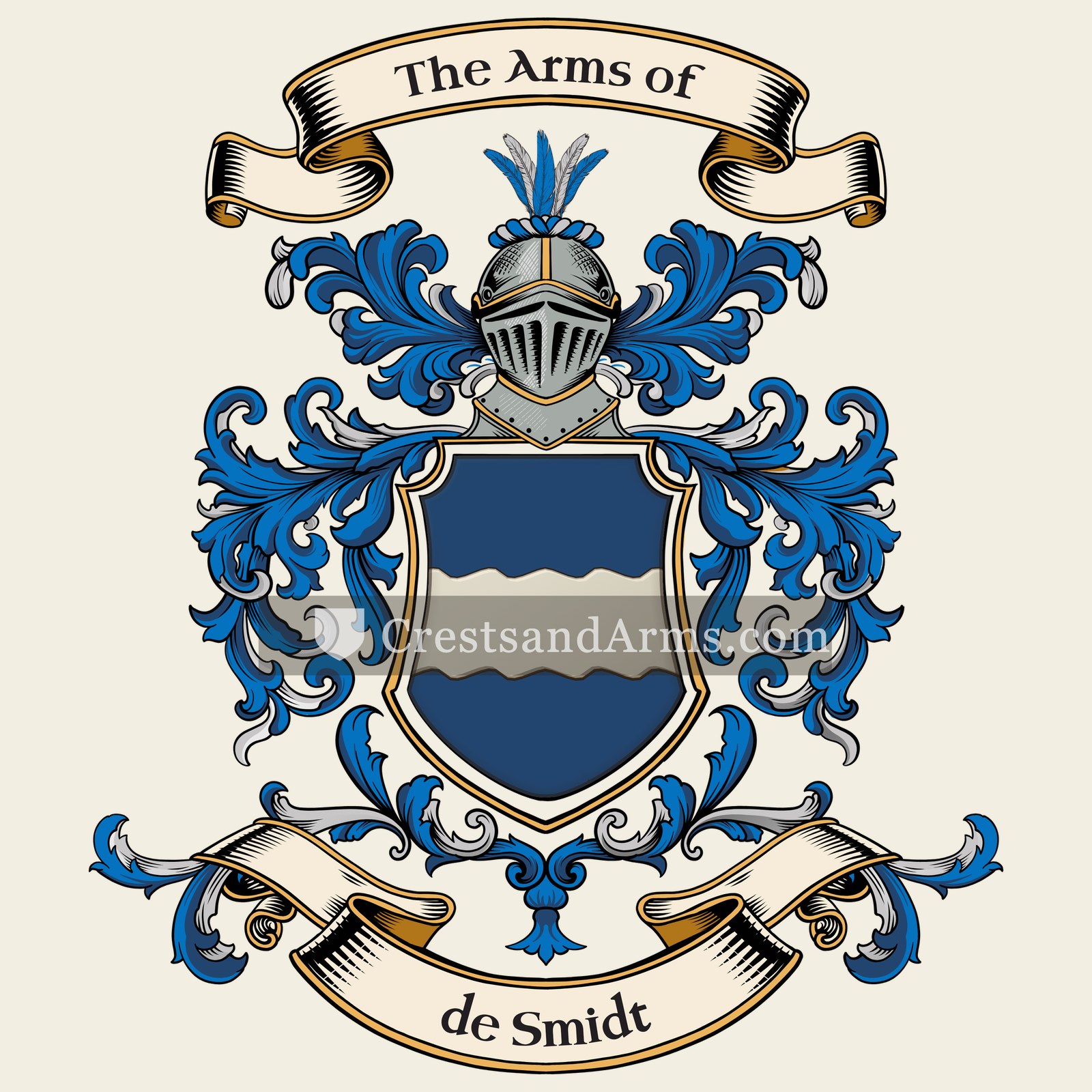
The de Smidt arms were recorded in Anvers, c. 1612.
This is where the arms were entered in the register. Families often moved to other parts of the country, so the same name can turn up in more than one region.
The body that granted and recorded arms in Belgium in this period.
Philip III of Spain
Sovereign of the period
Philip III of Spain
1598–1621
Reigning in Belgium when the de Smidt arms are first recorded.
How Arms Worked in Belgium
In Belgium, a coat of arms is considered personal property that is passed down through the male line to legitimate descendants. Families often use the same shield design across generations to show their shared heritage. If a branch of the family wants to change the design, they must apply for an official update to their specific version of the arms.
Granting authority
The Conseil héraldique is the official body that regulates and approves all coats of arms in Belgium.
How they got arms
Families obtain their coats of arms through formal royal grants or by confirming their historical right to use existing designs.
Where arms were recorded
All approved coats of arms are officially recorded in the public registers of the Conseil héraldique since 1844.
The family's standing
Recorded among the armigerous families of Belgium.
Origin & History of the de Smidt Family in Belgium
The family name de Smidt is a classic occupational surname that identifies the early ancestors as blacksmiths or metalworkers. During the seventeenth century, the name was well-established in the bustling commercial hub of Antwerp, which was then part of the Spanish Netherlands. Records confirm that members of the family were active in the city by 1612, a time when Antwerp served as a vital center for trade and craftsmanship in Europe. Because the name describes a trade, it suggests that the early de Smidts were likely skilled laborers who played an essential role in the local economy by forging tools, hardware, or weaponry. As the family grew, they became part of the urban fabric of the region, carrying a name that reflected their practical contributions to the daily life and industry of their community.
de Smidt Meaning & Related Branches
Root word
Smit
A person who works with metal by heating and hammering.
This name
de SmidtRefers to a descendant or employee of a blacksmith or metalworker.
also spelled
de Smid
de Smidte
De Smet
Related arms
Schmidtsame arms
Documented Sources
J. B. Rietstap, Armorial Général, Gouda: G. B. van Goor Zonen, 1884–87
P.J. Blok and P.C. Molhuysen, Nieuw Nederlandsch Biografisch Woordenboek, 1911


 fessThe military belt, and readiness to serve
 fessThe military belt, and readiness to serve