A record of documented arms, meaning and origin, researched for the Devaux family lines. Documented in 2 countries.
Reg. 3515 · French, D–F
Coat of Arms & Family Crest Details
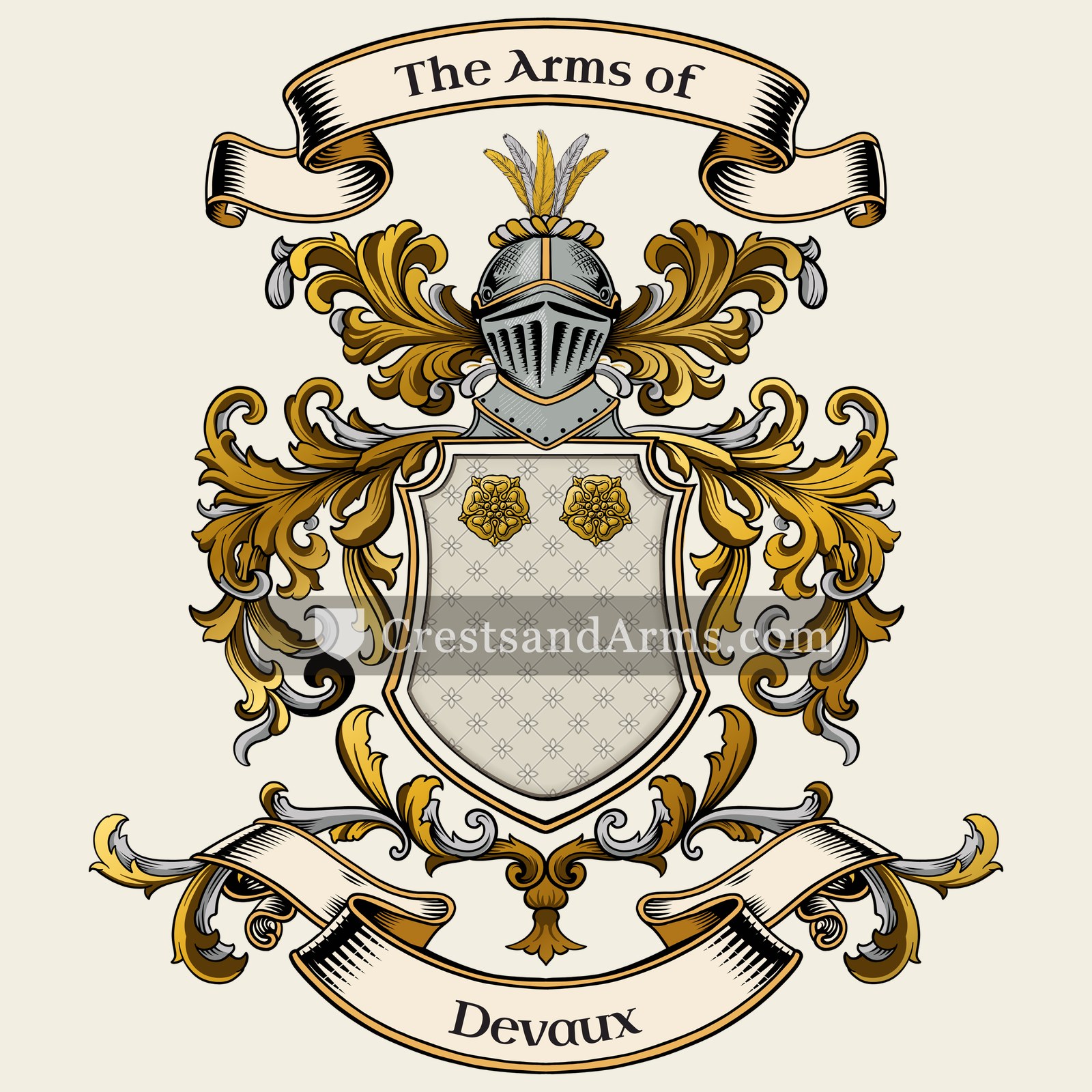
Symbols on this shield
roseThe seventh son, and beauty with grace
Colours
Silver (Argent)Means: Peace and sincerity
Gold (Or)Means: Generosity
Historical info
Source
J. B. Rietstap, Armorial Général, Gouda: G. B. van Goor Zonen, 1884–87
Blazon (the actual original written record)
“d'arg., acc. en chef de deux roses d'or.”
LorraineLorraine, c. 1609
Where the Devaux Arms Were Recorded
Lorraine
Map of France showing where the Devaux arms are recorded
The Devaux arms were recorded in Lorraine, c. 1609.
Lorraine sat on the border between France and the German lands, and border country bred soldiers. Families here held small estates and served in arms, and a fighting man was exactly the sort who carried a shield of his own.
This is where the arms were entered in the register. Families often moved to other parts of the country, so the same name can turn up in more than one region.
The body that granted and recorded arms in France in this period.
Henry IV of France
Sovereign of the period
Henry IV of France
1589–1610
Reigning in France when the Devaux arms are first recorded.
How Arms Worked in France
In France, a coat of arms was a mark of honor that passed down through the male line to all legitimate descendants. Families often used the same shield without changes to show their shared heritage. If a branch wanted to stand out, they could add a small mark to their shield to show their specific place in the family tree.
Granting authority
The Juge d'armes de France acted as the official authority that regulated and verified coats of arms across the country.
How they got arms
Families typically inherited their arms from ancestors, though they could also receive them through royal grants or by proving their noble status.
Where arms were recorded
Coats of arms were officially recorded in the Armorial Général de France, which began its main collection in the year 1696.
The family's standing
Recorded among the armigerous families of Lorraine.
Origin & History of the Devaux Family in France
The surname Devaux originates from the French language and translates literally to "of the valleys." This name likely served as a topographic identifier for families who lived in or near low-lying areas or river basins. By the early seventeenth century, historical records confirm that members of the Devaux family were well-established in the Lorraine region of northeastern France. During this period, Lorraine was a culturally distinct duchy that served as a crossroads between French and Germanic influences. Families in this area often navigated complex social changes as the region moved toward closer integration with the French crown. The presence of the Devaux name in 1609 suggests that these ancestors were part of the local landed or merchant classes who maintained deep roots in the rural landscapes of the Meuse or Moselle river valleys. Over time, the name spread across France as families moved for trade, marriage, or military service, yet it remains most closely tied to the geography of the eastern provinces.
Coat of Arms & Family Crest Details
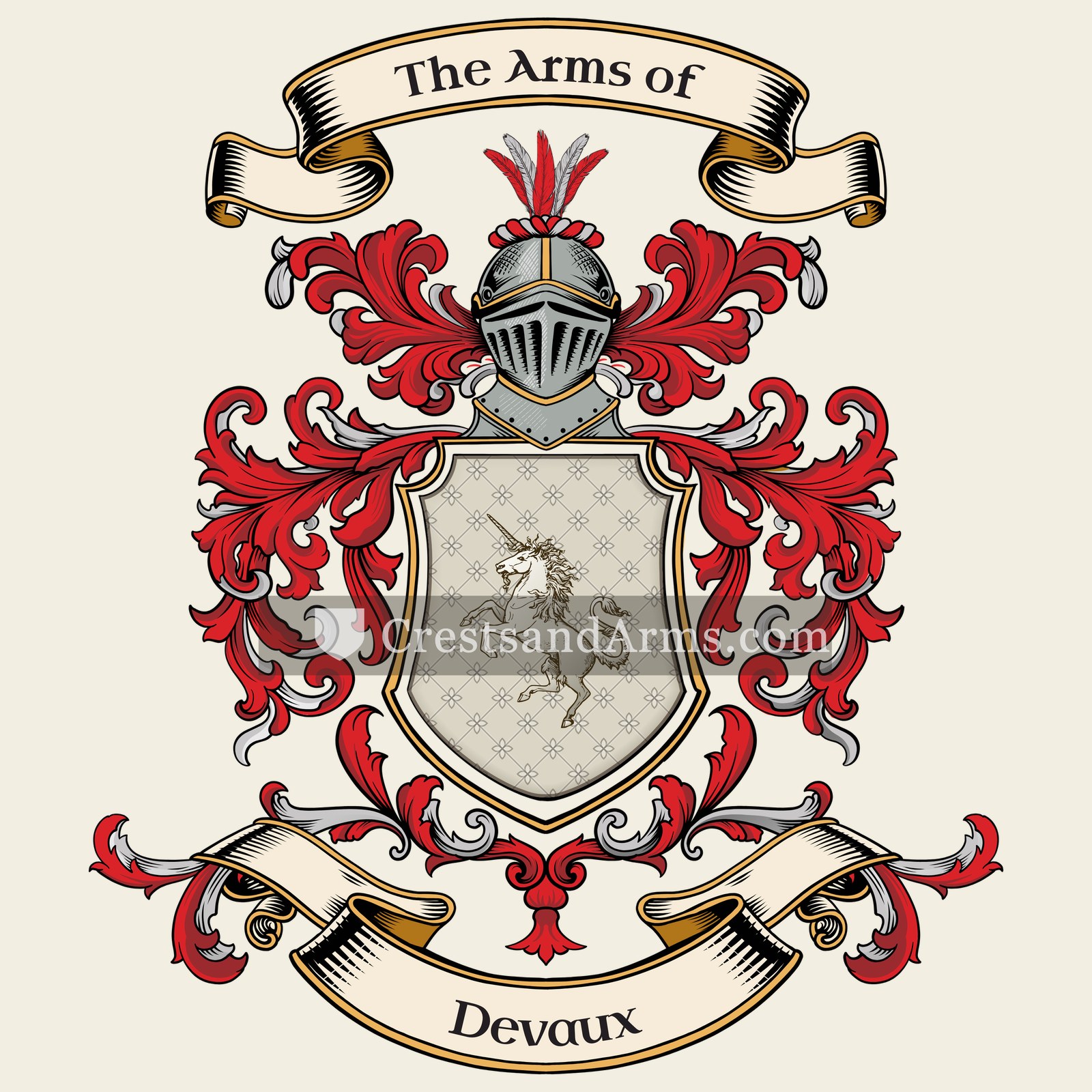
Symbols on this shield
unicornPurity, and extreme courage in defence of honour
Colours
Silver (Argent)Means: Peace and sincerity
Historical info
Source
J. B. Rietstap, Armorial Général, Gouda: G. B. van Goor Zonen, 1884–87
Blazon (the actual original written record)
“D'arg. à cinq fusées de gu., accolées en fasce et touchant les bords de l'écu. Sur le tout un écusson d'azur, ch. d'une tête et col de licorne d'arg.”
LiegeLiege, c. 1737
Where the Devaux Arms Were Recorded
Liege
Map of Belgium showing where the Devaux arms are recorded
The Devaux arms were recorded in Liege, c. 1737.
Liege was a prosperous town and its surrounding country, living on metalworking and trade. Merchant families grew rich, bought land outside the walls, and took arms as landowners rather than tradesmen.
This is where the arms were entered in the register. Families often moved to other parts of the country, so the same name can turn up in more than one region.
The body that granted and recorded arms in Belgium in this period.
Charles VI, Holy Roman Emperor
Sovereign of the period
Charles VI, Holy Roman Emperor
1711–1740
Reigning in France when the Devaux arms are first recorded.
How Arms Worked in Belgium
In Belgium, a coat of arms is considered personal property that is passed down through the male line to legitimate descendants. Families often use the same shield design across generations to show their shared heritage. If a branch of the family wants to change the design, they must apply for an official update to their specific version of the arms.
Granting authority
The Conseil héraldique is the official body that regulates and approves all coats of arms in Belgium.
How they got arms
Families obtain their coats of arms through formal royal grants or by confirming their historical right to use existing designs.
Where arms were recorded
All approved coats of arms are officially recorded in the public registers of the Conseil héraldique since 1844.
The family's standing
Recorded among the armigerous families of Liege.
Origin & History of the Devaux Family in Belgium
The surname Devaux is a classic example of a topographic name, which means it was originally used to identify people based on the landscape where they lived. In French, the name translates to "from the valley," suggesting that the earliest ancestors of the family resided in a low-lying area near a river or between hills. By the time the family was firmly established in the city of Liège in 1737, the name had become a stable identifier for a lineage deeply integrated into the local urban community. During this period, Liège was a major center for trade and craftsmanship within the Prince-Bishopric of Liège. Families like the Devaux often played active roles in the local economy, working as merchants or skilled artisans who helped shape the industrial character of the region. As the family grew, they moved through the social structures of the city, leaving behind records in parish registers and municipal documents that track their transition from rural origins to established city dwellers.
Related Branches & Arms
Root word
de vaux
derived from the old French word for valley
This name
Devauxindicates a person who originated from a valley or a specific place named Vaux
also spelled
Devaulx
Devau
de Vo
Related arms
Boisrot de la Coursimilar arms
de Feriersimilar arms
Laggersimilar arms
Desvauxvariant spelling
Documented Sources
J. B. Rietstap, Armorial Général, Gouda: G. B. van Goor Zonen, 1884–87
Bouteiller, Ernest de. Dictionnaire topographique de l'ancien département de la Moselle. 1874
Lepage, Henri. Les communes de la Meurthe: journal historique des villes, bourgs, villages, hameaux et censes de ce département. 1853
Digital archive packCoat of arms PNG, gold border print PDF, vector SVG and the certificate of authenticity. Sent to your email in minutes.


 roseThe seventh son, and beauty with grace
 roseThe seventh son, and beauty with grace

 unicornPurity, and extreme courage in defence of honour