Map of France showing where the Devillier arms are recorded
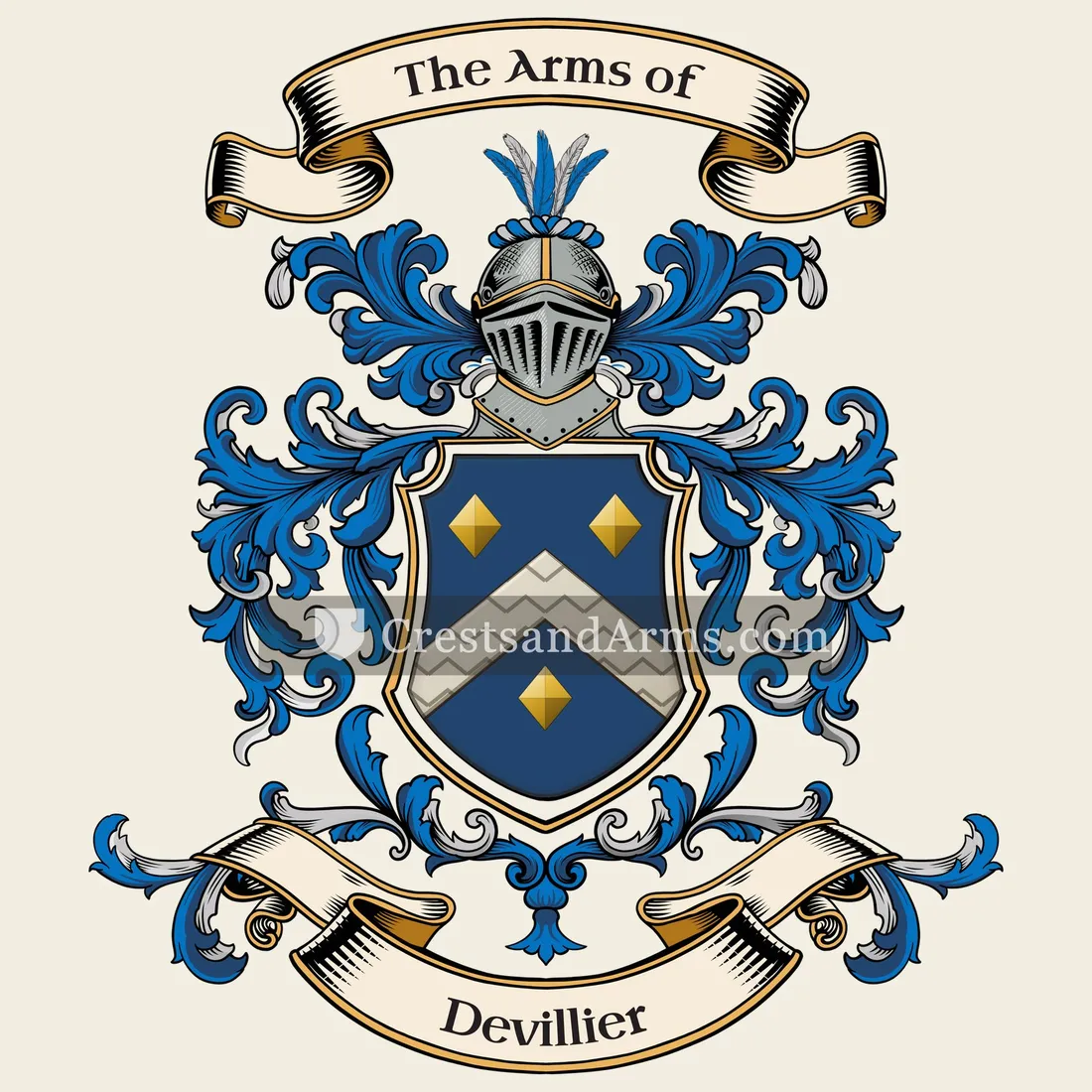
The Devillier arms were recorded in Lorraine, c. 1480.
Lorraine sat on the border between France and the German lands, and border country bred soldiers. Families here held small estates and served in arms, and a fighting man was exactly the sort who carried a shield of his own.
This is where the arms were entered in the register. Families often moved to other parts of the country, so the same name can turn up in more than one region.
The body that granted and recorded arms in France in this period.
Louis XI of France
Sovereign of the period
Louis XI of France
1461–1483
Reigning in France when the Devillier arms are first recorded.
How Arms Worked in France
In France, a coat of arms was a mark of honor that passed down through the male line to all legitimate descendants. Families often used the same shield without changes to show their shared heritage. If a branch wanted to stand out, they could add a small mark to their shield to show their specific place in the family tree.
Granting authority
The Juge d'armes de France acted as the official authority that regulated and verified coats of arms across the country.
How they got arms
Families typically inherited their arms from ancestors, though they could also receive them through royal grants or by proving their noble status.
Where arms were recorded
Coats of arms were officially recorded in the Armorial Général de France, which began its main collection in the year 1696.
The family's standing
Recorded among the armigerous families of Lorraine.
Origin & History of the Devillier Family in France
The surname Devillier originated in the historical region of Lorraine, France, where records confirm the presence of the family as early as 1480. The name is topographical in nature, meaning it was likely derived from the French word villier, which refers to a small village or a rural settlement. During the late fifteenth century, the Lorraine region was a crossroads of European culture and trade, situated between the French Kingdom and the Holy Roman Empire. Families with this name were typically associated with the land and local agricultural life, often serving as stewards or residents of small farming communities. As the family grew, they became deeply rooted in the social and economic fabric of the region, eventually spreading across northeastern France as they adapted to the changing political borders of the era.
Devillier Meaning & Related Branches
Root word
villa
Latin term for a country house, farm, or estate.
This name
DevillierRefers to someone who lived at or worked on a small village or country estate.
also spelled
Devillier
Deveelyay
Desvillier
Documented Sources
J. B. Rietstap, Armorial Général, Gouda: G. B. van Goor Zonen, 1884–87
Albert Dauzat, Dictionnaire étymologique des noms de famille et prénoms de France, 1951
Marianne Mulon, Origine et histoire des noms de famille: Essais d'anthroponymie, 2002
Archives départementales de Meurthe-et-Moselle, Série B: Cours et juridictions
Archives départementales de la Moselle, Série G: Clergé séculier
Digital archive packCoat of arms PNG, gold border print PDF, vector SVG and the certificate of authenticity. Sent to your email in minutes.


 chevronProtection, and faithful service completed
 lozengeHonour and nobility, and the arms of a woman
 chevronProtection, and faithful service completed
 lozengeHonour and nobility, and the arms of a woman