Map of Spain showing where the Diez arms are recorded
The Diez arms were recorded in Spain, c. 1722.
Arms such as these were typically recorded in Castile.
Castile was the heart of Spain and the source of most of its noble families. Land won in the long wars against the Moors was granted out to fighting men, and a man granted land was granted arms along with it.
This is where the arms were entered in the register. Families often moved to other parts of the country, so the same name can turn up in more than one region.
The body that granted and recorded arms in Spain in this period.
Philip V of Spain
Sovereign of the period
Philip V of Spain
1714–1724
Reigning in Spain when the Diez arms are first recorded.
How Arms Worked in Spain
In Spain, a coat of arms was considered a form of property that belonged to the entire family line. These arms were passed down from a father to all his children equally. Younger branches of the family usually kept the original design without needing to add any special marks to distinguish their specific line.
Granting authority
The Cronista Rey de Armas was the official body that regulated and granted coats of arms throughout Spain.
How they got arms
Families often obtained their arms through royal grants or by proving their noble status to the official heraldic authority.
Where arms were recorded
Coats of arms were officially recorded in the registers of the Cronista Rey de Armas starting in 1496.
The family's standing
Recorded among the armigerous families of Spain.
Origin & History of the Diez Family in Spain
The surname Diez originated as a patronymic, meaning it was derived from the given name of a father or ancestor. In the Spanish language, the suffix "ez" indicates "son of," and Diez is a shortened form of the name Diego. During the Middle Ages, families in the region of Castile frequently used these types of names to track lineage and property rights. By the early 18th century, the Diez family was well-established within the social and administrative fabric of Castile. Records from 1722 confirm that members of the family were active participants in the local economy and community life of this central Spanish kingdom. As the family grew, they moved through the various towns and villages of the region, helping to shape the cultural identity of Castile during a time of significant transition for the Spanish monarchy.
Coat of Arms & Family Crest Details
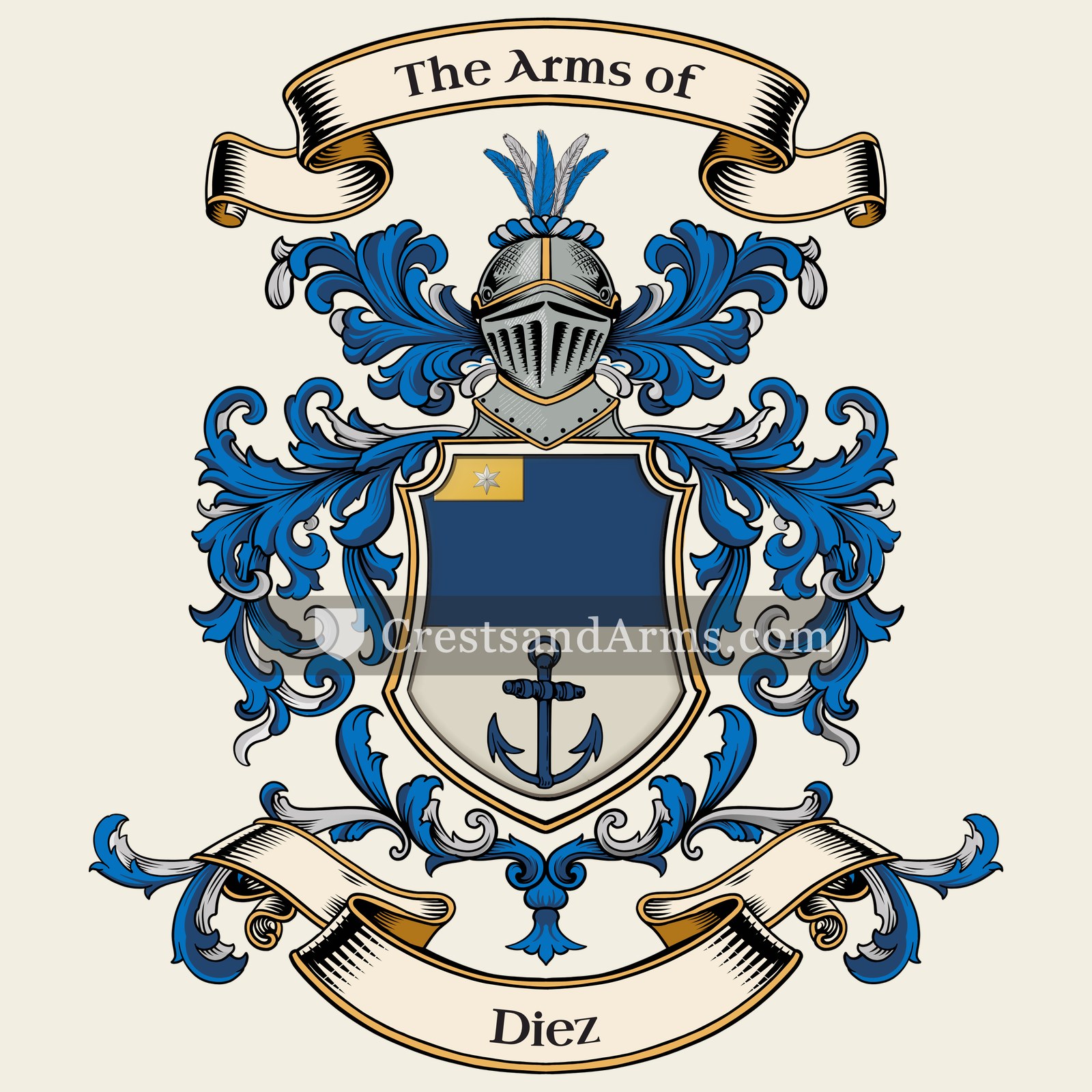
Symbols on this shield
cantonA mark of honour granted by the sovereign
starThe celestial goddess, and nobility
anchorHope, and steadfastness in trouble
Colours
Blue (Azure)Means: Loyalty and truth
Silver (Argent)Means: Peace and sincerity
Gold (Or)Means: Generosity
Historical info
Source
J. B. Rietstap, Armorial Général, Gouda: G. B. van Goor Zonen, 1884–87
Blazon (the actual original written record)
“Coupé: au 1 d'azur à une boussole d'or, acc. d'une étoile d'arg., posée au canton dextre du chef; au 2 d'arg. à une ancre d'azur.”
LorraineLorraine, c. 1641
Digital archive packCoat of arms PNG, gold border print PDF, vector SVG and the certificate of authenticity. Sent to your email in minutes.
Map of France showing where the Diez arms are recorded
The Diez arms were recorded in Lorraine, c. 1641.
Lorraine sat on the border between France and the German lands, and border country bred soldiers. Families here held small estates and served in arms, and a fighting man was exactly the sort who carried a shield of his own.
This is where the arms were entered in the register. Families often moved to other parts of the country, so the same name can turn up in more than one region.
The body that granted and recorded arms in France in this period.
Louis XIII of France
Sovereign of the period
Louis XIII of France
1617–1643
Reigning in Spain when the Diez arms are first recorded.
How Arms Worked in France
In France, a coat of arms was a mark of honor that passed down through the male line to all legitimate descendants. Families often used the same shield without changes to show their shared heritage. If a branch wanted to stand out, they could add a small mark to their shield to show their specific place in the family tree.
Granting authority
The Juge d'armes de France acted as the official authority that regulated and verified coats of arms across the country.
How they got arms
Families typically inherited their arms from ancestors, though they could also receive them through royal grants or by proving their noble status.
Where arms were recorded
Coats of arms were officially recorded in the Armorial Général de France, which began its main collection in the year 1696.
The family's standing
Recorded among the armigerous families of Lorraine.
Origin & History of the Diez Family in France
The family name Diez has deep roots that trace back to the border regions of Europe, with a documented presence in the Lorraine province of France by 1641. During the seventeenth century, Lorraine was a crossroads of culture and conflict, situated between the French Kingdom and the Holy Roman Empire. Families living in this area often navigated a complex landscape of shifting borders and changing political loyalties. The name itself is thought to be a variation of the Germanic name Diet, which is derived from a word meaning people or nation. By settling in Lorraine, the early members of the Diez family became part of a resilient population that maintained its identity despite the frequent wars and social upheavals that defined the region during the Thirty Years' War. This era required families to be highly adaptable, and the survival of the Diez name in local records from this period suggests a stable and established presence within the rural communities of eastern France.
Diez Meaning & Related Branches
Root word
decem
The Latin word for the number ten.
This name
DiezA patronymic or descriptive surname historically given to the tenth child or a tax collector.
also spelled
Dieze
Dyez
Diezz
Deets
Documented Sources
J. B. Rietstap, Armorial Général, Gouda: G. B. van Goor Zonen, 1884–87
García de Cortázar, José Ángel, La sociedad rural en la España medieval, 1988
Menéndez Pidal, Ramón, Manual de gramática histórica española, 1941
Archivo General de Simancas, Registro del Sello de Corte
Digital archive packCoat of arms PNG, gold border print PDF, vector SVG and the certificate of authenticity. Sent to your email in minutes.


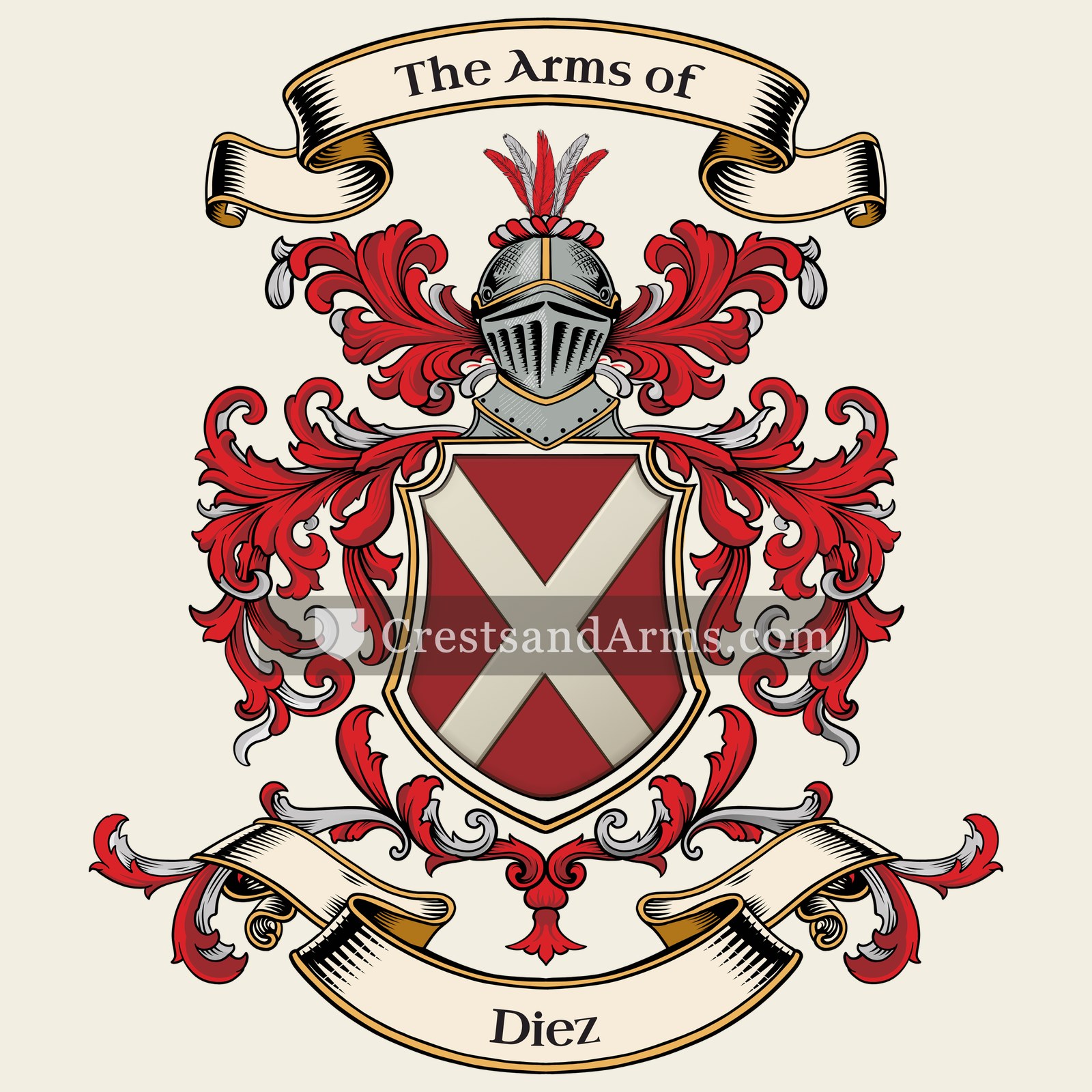


 cantonA mark of honour granted by the sovereign
 starThe celestial goddess, and nobility
 anchorHope, and steadfastness in trouble