Map of Netherlands showing where the Dillon arms are recorded
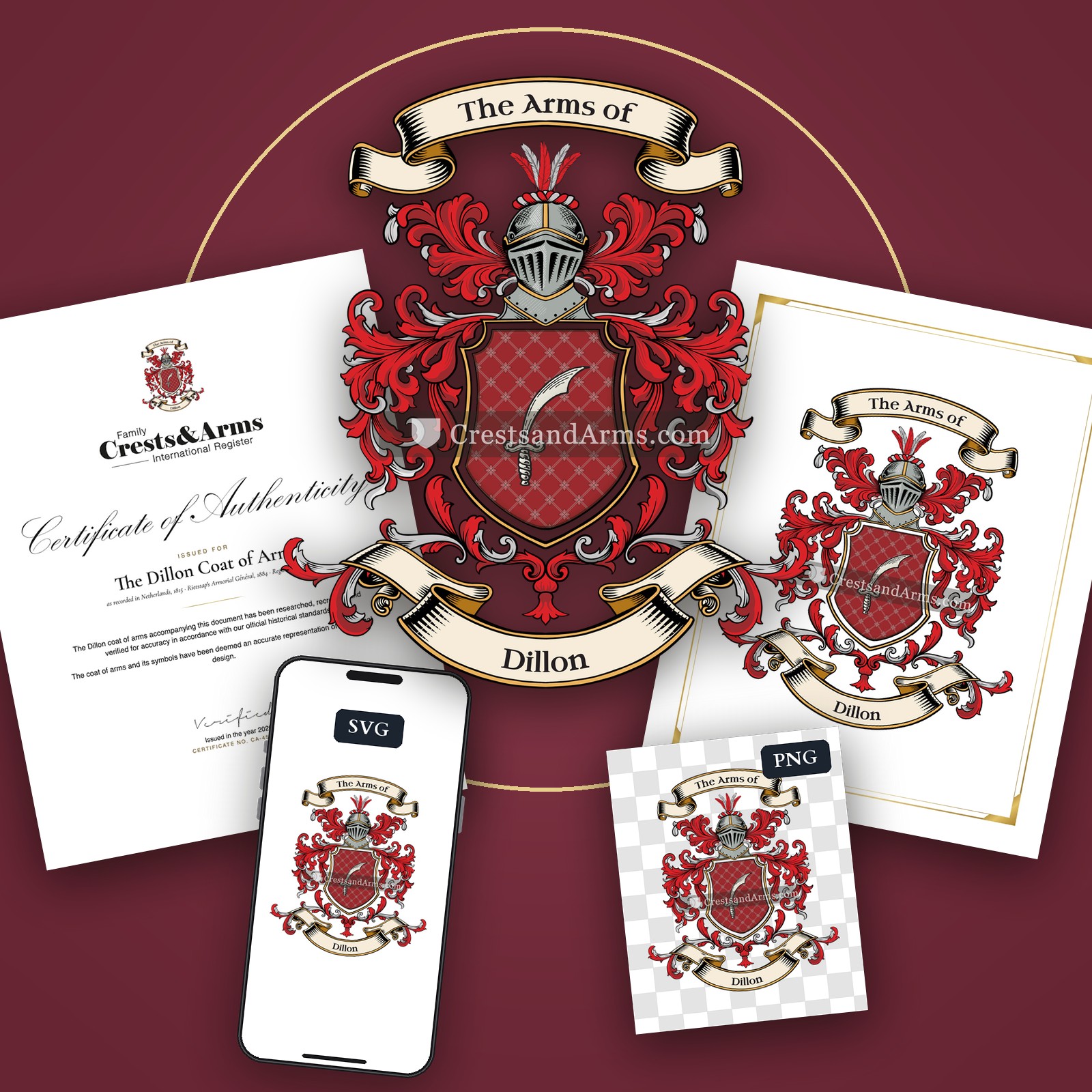
The Dillon arms were recorded in Netherlands, c. 1815.
Arms such as these were typically recorded in Friesland.
Friesland was low, wet country on the northern coast of the Netherlands, farmed by families who had held the same land for centuries. Free landholders were unusually common there, and a free landholder could carry arms.
This is where the arms were entered in the register. Families often moved to other parts of the country, so the same name can turn up in more than one region.
Region
Friesland
First recorded
1815
Granting Authority for the Dillon Arms
Hoge Raad van Adel
Photograph made by me · CC BY-SA 3.0
The body that granted and recorded arms in Netherlands in this period.
William I of the Netherlands
Sovereign of the period
William I of the Netherlands
1815–1840
Reigning in Netherlands when the Dillon arms are first recorded.
How Arms Worked in Netherlands
In the Netherlands, coats of arms were often used by noble families and those who held specific public offices. These arms were passed down through the generations to legitimate descendants. Younger branches of a family usually kept the original design without needing to add special marks. This system ensured that the family identity remained clear and consistent over many years.
Granting authority
The Hoge Raad van Adel is the official body that regulates and manages noble titles and coats of arms in the Netherlands.
How they got arms
Families typically obtained their coats of arms through official royal grants or by proving their long-standing historical use of the symbols.
Where arms were recorded
Coats of arms are officially recorded in the registers held by the Hoge Raad van Adel, which began its work in 1814.
The family's standing
Recorded among the armigerous families of Netherlands.
Origin & History of the Dillon Family in Netherlands
The history of the Dillon name in the Netherlands is closely tied to the shifting borders and social changes of the early nineteenth century. While the name is often associated with Irish roots, records confirm that families bearing the name were established in the province of Friesland by 1815. During this period, the Netherlands was transitioning into a new kingdom following the defeat of Napoleon, and the government began implementing more formal civil registration systems to track its citizens. Families living in northern regions like Friesland often integrated into local agricultural and trade communities during this era of national rebuilding. Because the name appears in official Dutch records during this time of modernization, it suggests that these early Dillons were part of the local population that helped define the region’s identity as the modern Dutch state took shape.
Meaning of the Dillon family crest colors & symbols
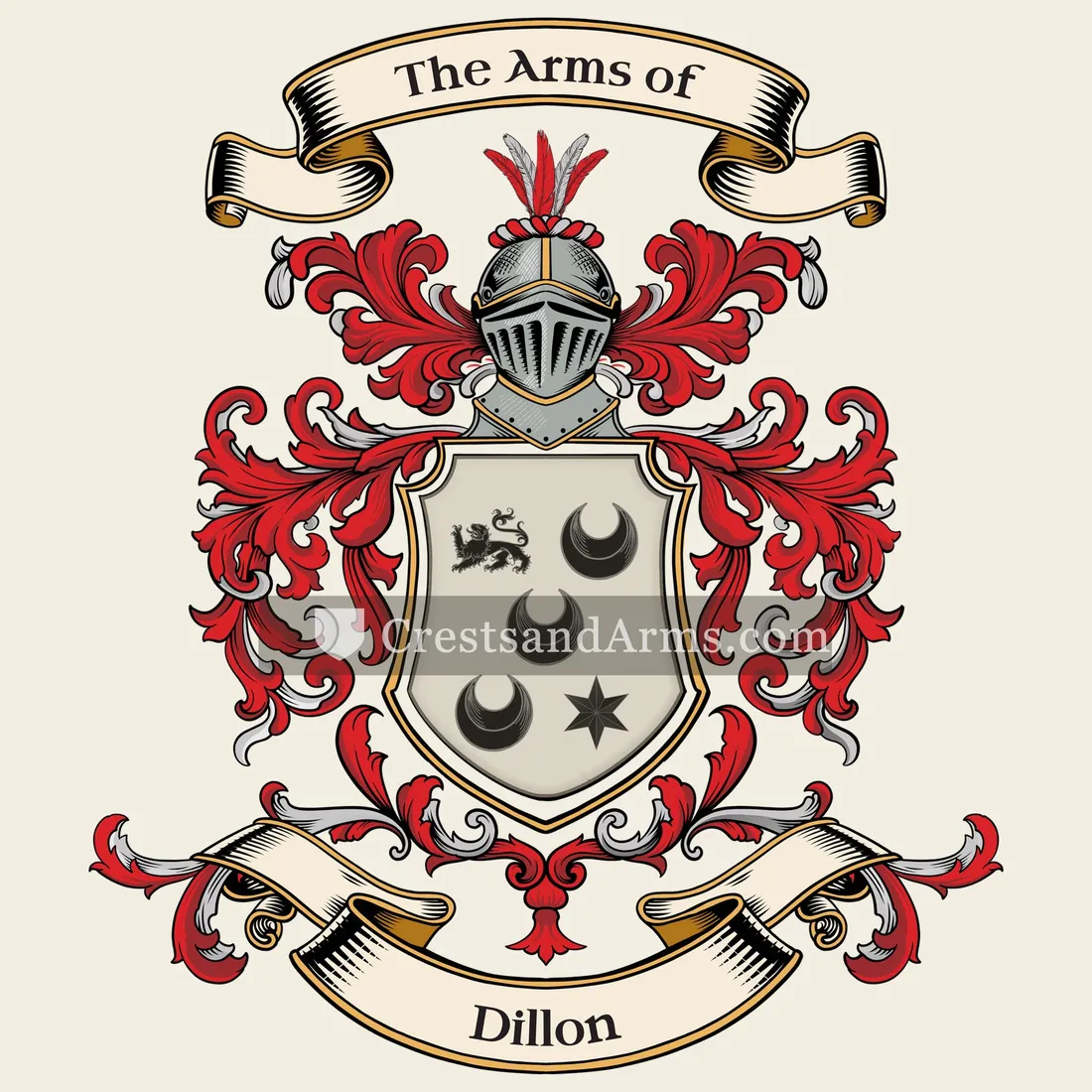
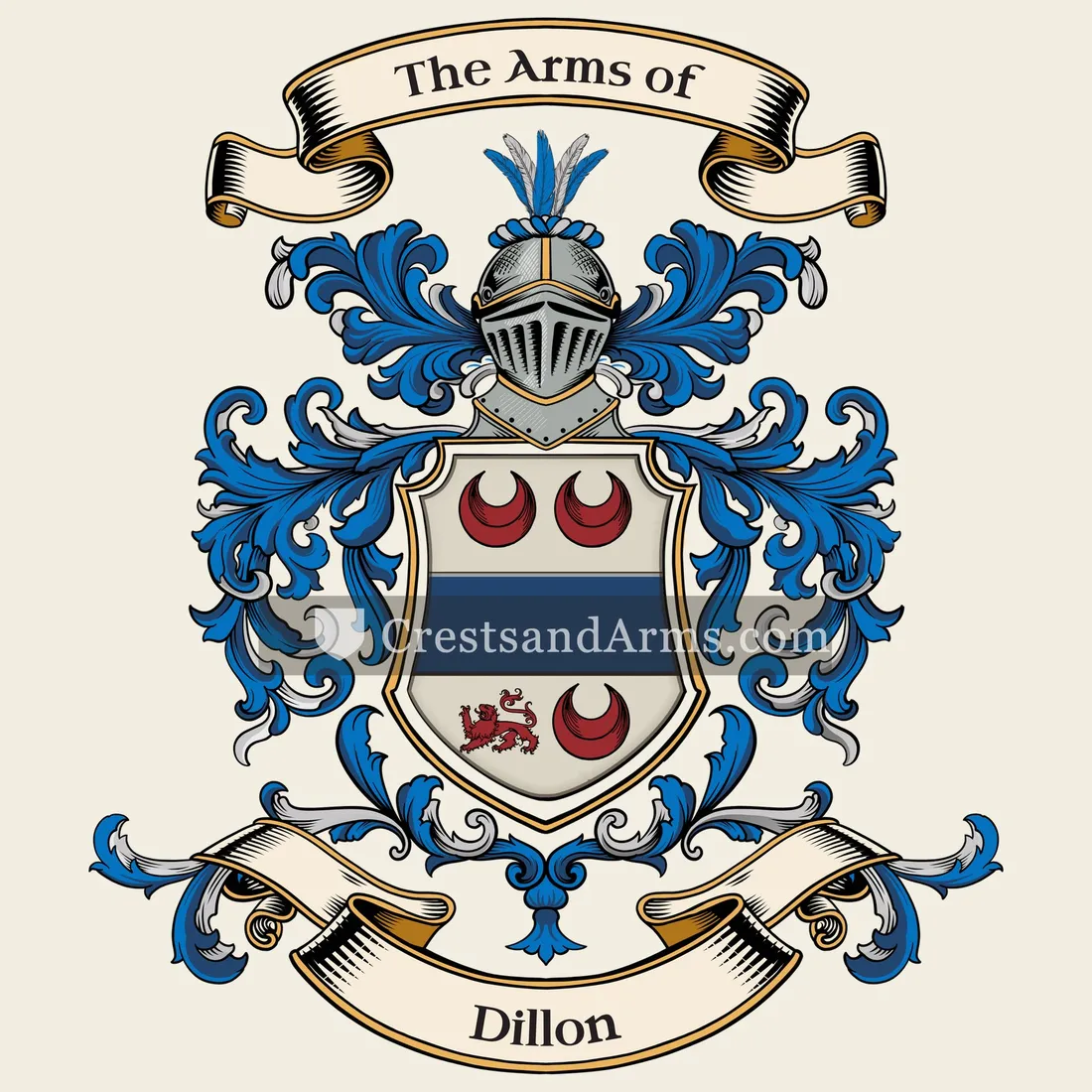
Symbols on this shield
fessThe military belt, and readiness to serve
lionCourage, strength and royalty
crescentHonour by the sovereign, and the second son
Colours
Silver (Argent)Means: Peace and sincerity
Blue (Azure)Means: Loyalty and truth
Red (Gules)Means: Military strength
Historical info
Source
J. B. Rietstap, Armorial Général, Gouda: G. B. van Goor Zonen, 1884–87
Blazon (the actual original written record)
“D'arg. au lion, acc. de trois croiss., surm. chacun d'une étoile rayonnante, le tout de gu.; à la fasce d'azur, br. sur le tout. C.: un faucon ess., au nat., soutenu d'un chapeau de tournoi de gu., retr. d'herm. S.: à dextre un griffon de sin., langué d'or; à sen. un faucon de gu., bq., m. et grilleté d'or. D.: AUXILIUM AB ALTO.”
Francec. 1619
Digital archive packCoat of arms PNG, gold border print PDF, vector SVG and the certificate of authenticity. Sent to your email in minutes.
Map of France showing where the Dillon arms are recorded
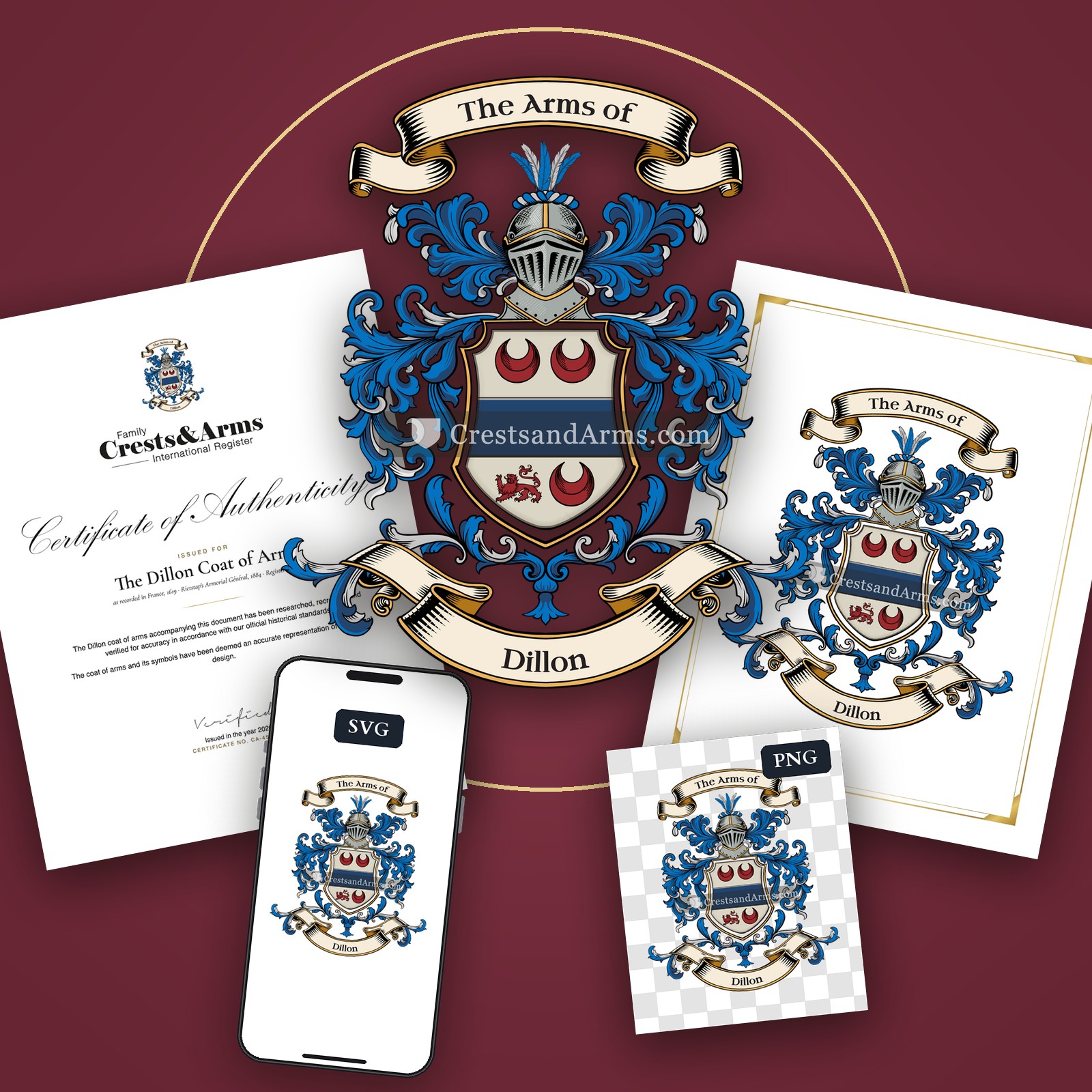
The Dillon arms were recorded in France, c. 1619.
Arms such as these were typically recorded in Bretagne.
More families held coats of arms in Bretagne than anywhere else in France. The land was divided into many small estates rather than a few large ones, so far more households counted as gentry, and each needed a shield of its own to be told apart.
This is where the arms were entered in the register. Families often moved to other parts of the country, so the same name can turn up in more than one region.
The body that granted and recorded arms in France in this period.
Louis XIII of France
Sovereign of the period
Louis XIII of France
1617–1643
Reigning in Netherlands when the Dillon arms are first recorded.
How Arms Worked in France
In France, a coat of arms was a mark of honor that passed down through the male line to all legitimate descendants. Families often used the same shield without changes to show their shared heritage. If a branch wanted to stand out, they could add a small mark to their shield to show their specific place in the family tree.
Granting authority
The Juge d'armes de France acted as the official authority that regulated and verified coats of arms across the country.
How they got arms
Families typically inherited their arms from ancestors, though they could also receive them through royal grants or by proving their noble status.
Where arms were recorded
Coats of arms were officially recorded in the Armorial Général de France, which began its main collection in the year 1696.
The family's standing
Recorded among the armigerous families of France.
Origin & History of the Dillon Family in France
The Dillon family name traces its roots to the region of Brittany in northwestern France, where members of the family were established by the early seventeenth century. While the name is often associated with later migrations to Ireland, its French origins are deeply tied to the social and political landscape of the Breton nobility. During the 1600s, the Dillons were integrated into the local administrative and military structures of the province. They lived during a time when Brittany functioned as a semi-autonomous duchy with its own distinct customs and legal traditions. By 1619, the family was well-positioned within the regional hierarchy, allowing them to participate in the complex networks of land ownership and local governance that defined life in western France. This period in Brittany provided the foundation for the family's later influence, as they navigated the shifting loyalties and cultural transitions of the French monarchy.
Meaning of the Dillon family crest colors & symbols
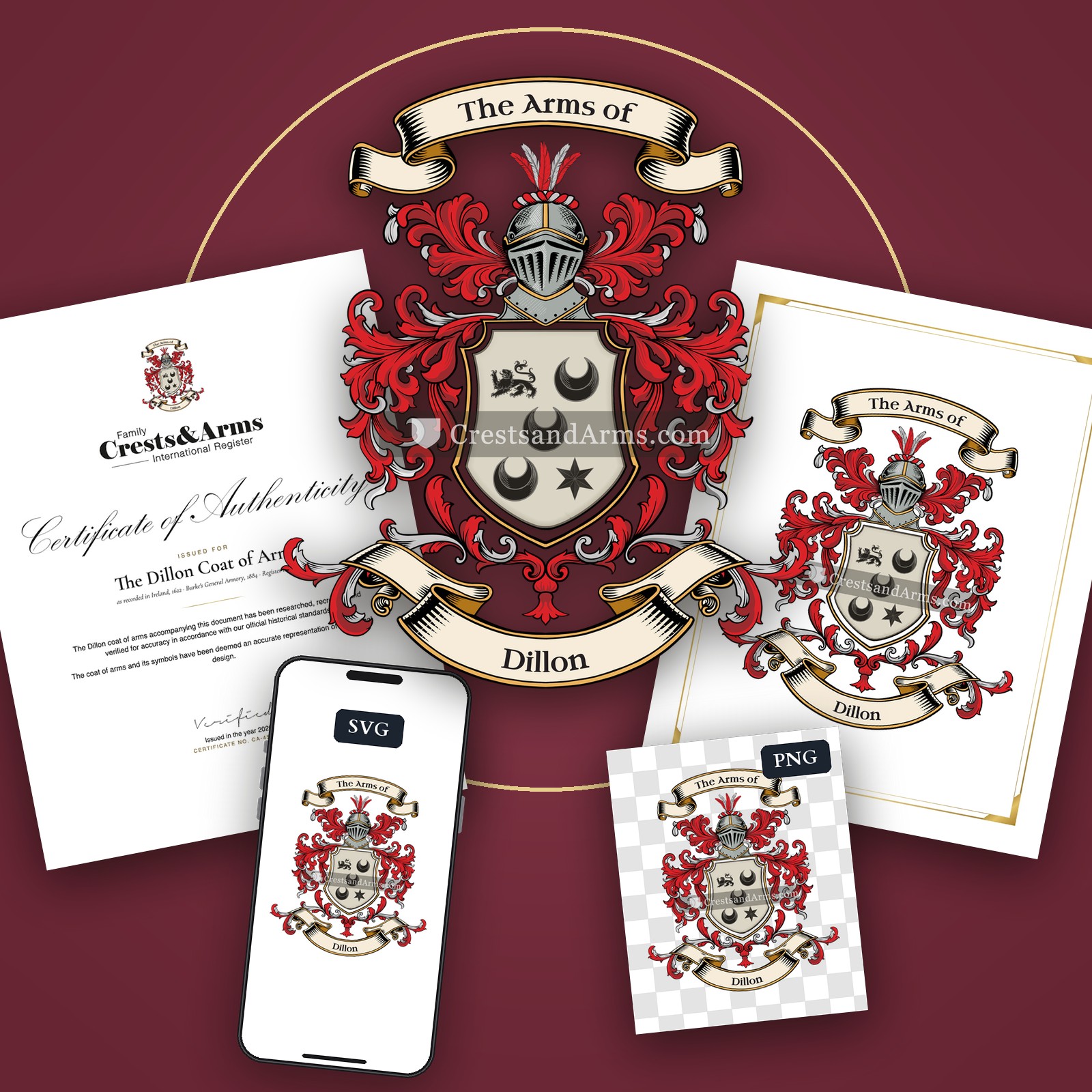
Symbols on this shield
lionCourage, strength and royalty
crescentHonour by the sovereign, and the second son
starThe celestial goddess, and nobility
Colours
Silver (Argent)Means: Peace and sincerity
Historical info
Source
Sir Bernard Burke, The General Armory of England, Scotland, Ireland and Wales, London: Harrison & Sons, 1884
Blazon (the actual original written record)
“Ar. a lion ramp. betw. three crescents an estoile issuant [?]”
MeathMeath, c. 1622
Digital archive packCoat of arms PNG, gold border print PDF, vector SVG and the certificate of authenticity. Sent to your email in minutes.
Map of Ireland showing where the Dillon arms are recorded
The Dillon arms were recorded in Meath, c. 1622.
Meath was the best farmland in Ireland and the old seat of its high kings. Norman families took it early and held it, and land of that quality kept the same families on it for centuries.
This is where the arms were entered in the register. Families often moved to other parts of the country, so the same name can turn up in more than one region.
The body that granted and recorded arms in Ireland in this period.
James VI and I
Sovereign of the period
James VI and I
1603–1625
Reigning in Netherlands when the Dillon arms are first recorded.
How Arms Worked in Ireland
The Ulster King of Arms granted coats of arms to individuals who proved their social standing and good character. These symbols were typically inherited by all legitimate descendants of the original holder. If a family branch wanted a unique look, they could apply for a specific change to their design through the office to ensure their identity remained distinct.
Granting authority
The Ulster King of Arms acted as the official body that regulated and issued all coats of arms throughout Ireland.
How they got arms
Families obtained their arms through formal grants issued by the office after proving their eligibility and paying the required fees.
Where arms were recorded
All official grants were recorded in the registers held by the Ulster King of Arms starting from the year 1552.
The family's standing
Recorded among the armigerous families of Meath.
Origin & History of the Dillon Family in Ireland
The Dillon family name has deep roots in Irish history, originating from the arrival of Sir Henry Dillon in the late twelfth century. He came to Ireland during the Norman invasion and was granted large areas of land in County Westmeath for his service to the Crown. Over the following centuries, the family became deeply integrated into the local culture and political landscape of the region. By the time of the 1622 survey of Ireland, the Dillons were well-established landowners in County Meath and the surrounding areas. They played a significant role in the administration of the country and maintained strong ties to the Irish nobility. Throughout their early history, the family successfully navigated the complex social changes of the era while solidifying their status as a prominent landed family in the Irish Midlands.
Dillon Meaning & Related Branches
Root word
Dill
A Germanic personal name derived from the word for faithful or loyal.
This name
DillonA patronymic surname signifying the son of the loyal or faithful one.
also spelled
Dillone
Dyllon
Dillonh
Dilon
Related arms
Naperrecorded with Dillon, same area
Documented Sources
J. B. Rietstap, Armorial Général, Gouda: G. B. van Goor Zonen, 1884–87
Tresoar (Fries Historisch en Letterkundig Centrum), Burgerlijke Stand van Friesland
Netherlands National Archives (Nationaal Archief), Registers van de Burgerlijke Stand
Digital archive packCoat of arms PNG, gold border print PDF, vector SVG and the certificate of authenticity. Sent to your email in minutes.


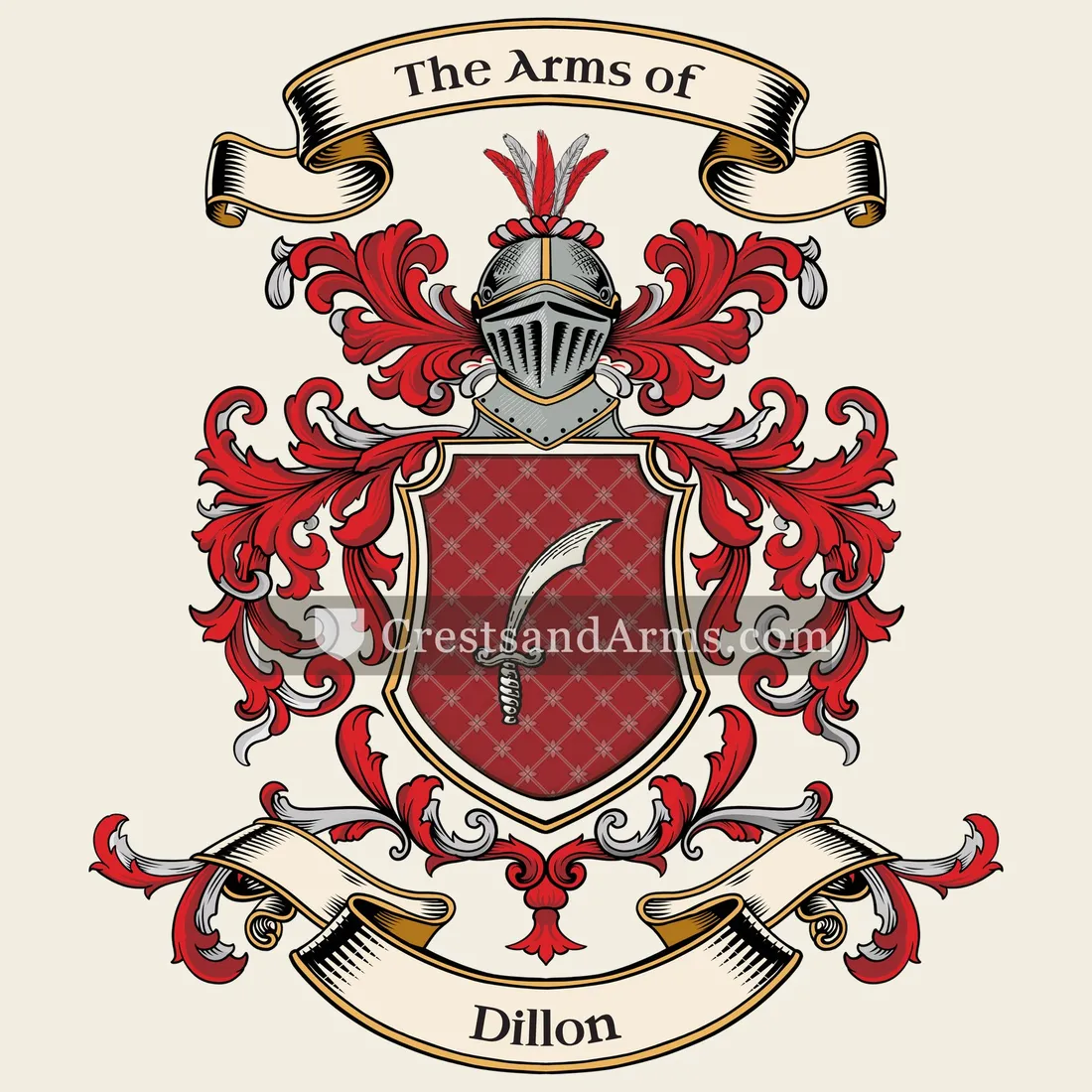
 swordJustice, and military honour
 swordJustice, and military honour


 fessThe military belt, and readiness to serve
 lionCourage, strength and royalty
 crescentHonour by the sovereign, and the second son


 starThe celestial goddess, and nobility