Map of Germany showing where the Diner arms are recorded
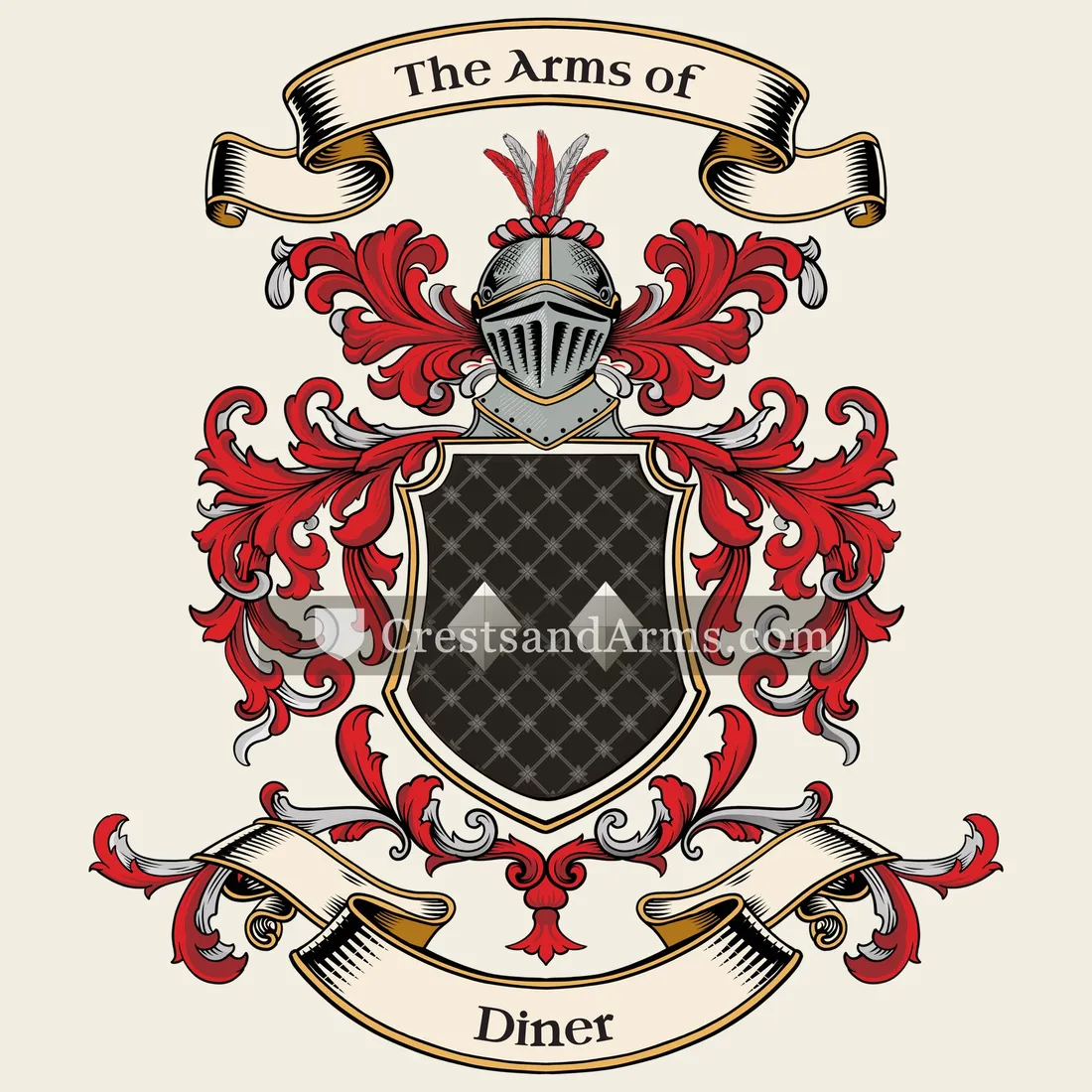
The Diner arms were recorded in Bavaria, c. 1420.
Bavaria was a country of old landed families and walled market towns. Estates passed down the same line for centuries, and both the landowners and the leading townsmen kept arms, which is why so many Bavarian names sit in the registers.
This is where the arms were entered in the register. Families often moved to other parts of the country, so the same name can turn up in more than one region.
The body that granted and recorded arms in Germany in this period.
Sigismund
Sovereign of the period
Sigismund
1411–1437
Reigning in Germany when the Diner arms are first recorded.
How Arms Worked in Germany
In the Holy Roman Empire, coats of arms were often granted to individuals by the Emperor or his representatives. These arms were then passed down through the generations to all legitimate descendants of the original holder. Younger branches of a family usually kept the same shield design without needing to change it, as the arms belonged to the entire lineage.
Granting authority
The Holy Roman Emperor held the sole power to grant new coats of arms throughout his vast imperial territories.
How they got arms
Families typically obtained their coats of arms through a formal imperial grant or by proving their noble status to the authorities.
Where arms were recorded
These grants were officially recorded in the Imperial Chancery registers, which began keeping formal records of such honors during the Middle Ages.
The family's standing
Recorded among the armigerous families of Bavaria.
Origin & History of the Diner Family in Germany
The family name Diner traces its roots back to the southern regions of Germany, with documented evidence placing members of the family in Bavaria as early as 1420. During the fifteenth century, surnames often evolved from a person's occupation, location, or a specific personal trait. In the context of Middle High German, the name is closely linked to the term "diener," which translates to a servant or a person who serves in a household or administrative capacity. As the family established itself in the Bavarian landscape, they likely functioned as skilled workers or minor officials within the local feudal structure. Over time, the spelling shifted to the form recognized today as the family moved through different villages and towns. This transition reflects the broader patterns of migration and linguistic change that shaped many German surnames during the late Middle Ages.
Diner Meaning & Related Branches
Root word
Dienen
To serve or perform a service for another person.
This name
DinerAn occupational surname for a servant or someone who performed domestic duties.
also spelled
Deener
Documented Sources
J. B. Rietstap, Armorial Général, Gouda: G. B. van Goor Zonen, 1884–87
Bahlow, Hans, Deutsches Namenlexikon: Familien- und Vornamen nach Ursprung und Sinn erklärt, 1967
Heintze, Albert, Die deutschen Familien-Namen: geschichtlich, geographisch, sprachlich, 1903
Bayerisches Hauptstaatsarchiv, Urkunden und Akten der bayerischen Landesverwaltung, 1420
Digital archive packCoat of arms PNG, gold border print PDF, vector SVG and the certificate of authenticity. Sent to your email in minutes.


 lozengeHonour and nobility, and the arms of a woman
 lozengeHonour and nobility, and the arms of a woman