Map of Germany showing where the Dishner arms are recorded
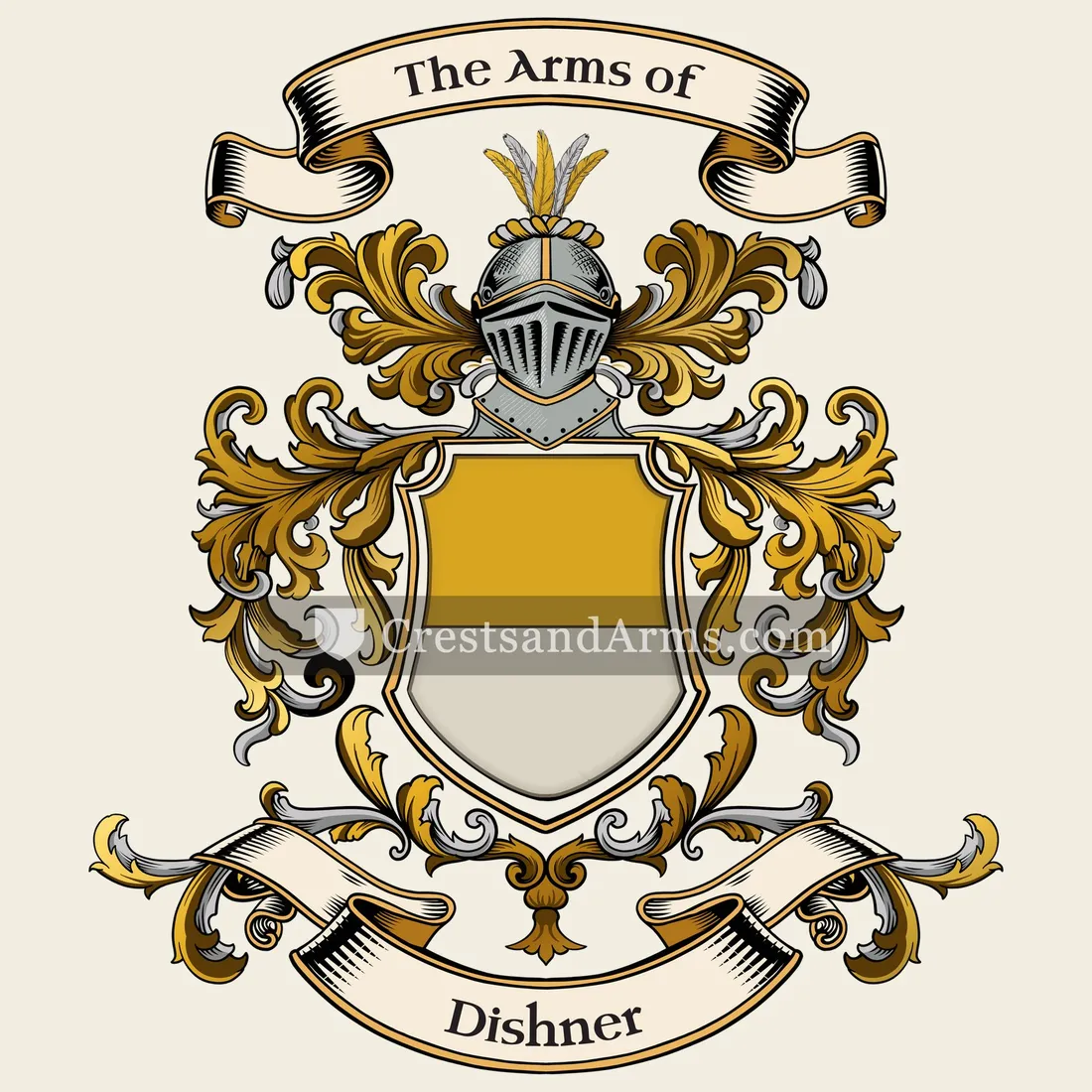
The Dishner arms were recorded in Pomerania, c. 1765.
Pomerania was flat farming country on the Baltic coast, held in large estates by a small number of families. They kept their land for generations, and generations of landholding is what fills the registers.
This is where the arms were entered in the register. Families often moved to other parts of the country, so the same name can turn up in more than one region.
The body that granted and recorded arms in Germany in this period.
Francis I, Holy Roman Emperor
Sovereign of the period
Francis I, Holy Roman Emperor
1745–1765
Reigning in Germany when the Dishner arms are first recorded.
How Arms Worked in Germany
In the Holy Roman Empire, coats of arms were often granted to individuals by the Emperor or his representatives. These arms were then passed down through the generations to all legitimate descendants of the original holder. Younger branches of a family usually kept the same shield design without needing to change it, as the arms belonged to the entire lineage.
Granting authority
The Holy Roman Emperor held the sole power to grant new coats of arms throughout his vast imperial territories.
How they got arms
Families typically obtained their coats of arms through a formal imperial grant or by proving their noble status to the authorities.
Where arms were recorded
These grants were officially recorded in the Imperial Chancery registers, which began keeping formal records of such honors during the Middle Ages.
The family's standing
Recorded among the armigerous families of Pomerania.
Origin & History of the Dishner Family in Germany
The Dishner family name finds its historical roots in the region of Pomerania, a coastal area along the Baltic Sea that has been shaped by centuries of shifting borders between Germany and Poland. By 1765, records confirm that families bearing this name were well-established in the local landscape, likely living as farmers or tradespeople within the rural villages of the Prussian province. During this era, the social structure of Pomerania was heavily influenced by the agricultural economy and the strict administrative control of the Prussian state. Families like the Dishners were often tied to the land, moving through generations within the same parishes and local districts. As the region experienced political changes and economic pressures, the name became a marker of this specific northern heritage, representing a lineage deeply connected to the development of the Baltic frontier.
Dishner Meaning & Related Branches
Root word
Tischner
A person who works with wood or makes tables.
This name
DishnerAn occupational surname for a carpenter or cabinet maker.
also spelled
Duesner
Dusener
Documented Sources
J. B. Rietstap, Armorial Général, Gouda: G. B. van Goor Zonen, 1884–87
Landesarchiv Greifswald, Kirchenbücher der Provinz Pommern
Geheimes Staatsarchiv Preußischer Kulturbesitz, General-Tabellen der Provinz Pommern
Brüggemann, Ludwig Wilhelm, Ausführliche Beschreibung des gegenwärtigen Zustandes des Königl. Preußischen Herzogthums Vor- und Hinter-Pommern, 1779
Heitz, Gerhard, Die ländliche Leibeigenschaft in Mecklenburg und Pommern, 1954
Digital archive packCoat of arms PNG, gold border print PDF, vector SVG and the certificate of authenticity. Sent to your email in minutes.