Map of Netherlands showing where the Doe arms are recorded
The Doe arms were recorded in Leyde, c. 1815.
This is where the arms were entered in the register. Families often moved to other parts of the country, so the same name can turn up in more than one region.
Region
Leyde
Town
Leyde
First recorded
1815
Granting Authority for the Doe Arms
Hoge Raad van Adel
Photograph made by me · CC BY-SA 3.0
The body that granted and recorded arms in Netherlands in this period.
William I of the Netherlands
Sovereign of the period
William I of the Netherlands
1815–1840
Reigning in Netherlands when the Doe arms are first recorded.
How Arms Worked in Netherlands
In the Netherlands, coats of arms were often used by noble families and those who held specific public offices. These arms were passed down through the generations to legitimate descendants. Younger branches of a family usually kept the original design without needing to add special marks. This system ensured that the family identity remained clear and consistent over many years.
Granting authority
The Hoge Raad van Adel is the official body that regulates and manages noble titles and coats of arms in the Netherlands.
How they got arms
Families typically obtained their coats of arms through official royal grants or by proving their long-standing historical use of the symbols.
Where arms were recorded
Coats of arms are officially recorded in the registers held by the Hoge Raad van Adel, which began its work in 1814.
The family's standing
Recorded among the armigerous families of Netherlands.
Origin & History of the Doe Family in Netherlands
The surname Doe, while often associated with English origins, appears in the historical records of the Netherlands as a distinct family line rooted in the city of Leiden. By the early nineteenth century, the family was well-established in this historic university town, which served as a major center for textile manufacturing and trade. The presence of the Doe family in Leiden by 1815 coincides with a period of significant administrative change in the Netherlands, as the country transitioned into the United Kingdom of the Netherlands following the Napoleonic era. During this time, families in Leiden often worked in the city’s famous cloth industry or participated in the local merchant guilds that defined the regional economy. Because Leiden was a hub for international scholars and tradespeople, the family likely integrated into a diverse urban environment where surnames were increasingly formalized through official civil registration. This transition helped solidify the Doe name within the local records of the city, marking their place in the social fabric of the Dutch province of South Holland.
Coat of Arms & Family Crest Details
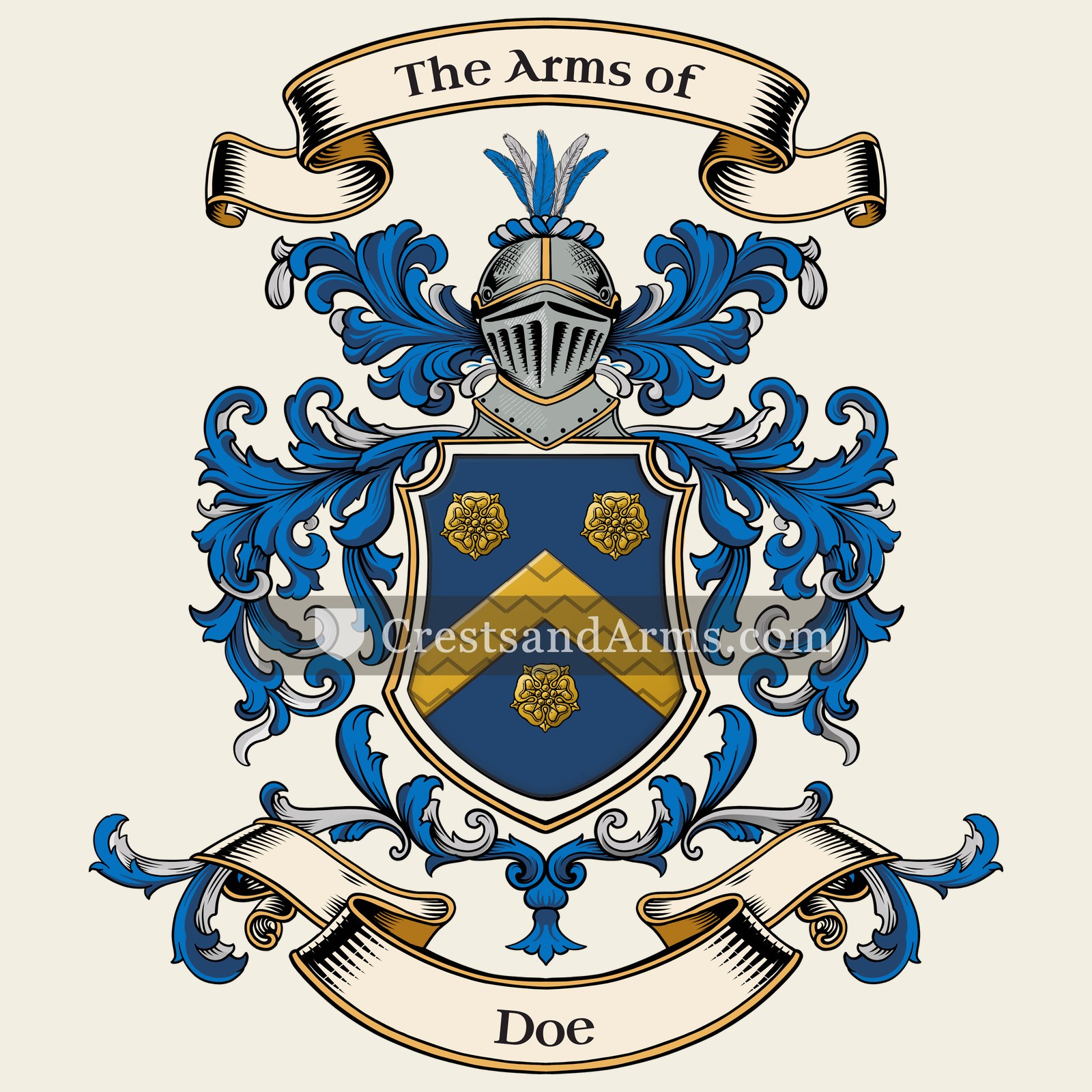
Symbols on this shield
chevronProtection, and faithful service completed
roseThe seventh son, and beauty with grace
Colours
Blue (Azure)Means: Loyalty and truth
Gold (Or)Means: Generosity
Historical info
Source
J. B. Rietstap, Armorial Général, Gouda: G. B. van Goor Zonen, 1884–87
Blazon (the actual original written record)
“D'azur au chev. d'or, acc. de trois roses du même.”
FranceParis, c. 1663
Digital archive packCoat of arms PNG, gold border print PDF, vector SVG and the certificate of authenticity. Sent to your email in minutes.
Map of France showing where the Doe arms are recorded
The Doe arms were recorded in Paris, c. 1663.
This is where the arms were entered in the register. Families often moved to other parts of the country, so the same name can turn up in more than one region.
The body that granted and recorded arms in France in this period.
Louis XIV of France
Sovereign of the period
Louis XIV of France
1643–1715
Reigning in Netherlands when the Doe arms are first recorded.
How Arms Worked in France
In France, a coat of arms was a mark of honor that passed down through the male line to all legitimate descendants. Families often used the same shield without changes to show their shared heritage. If a branch wanted to stand out, they could add a small mark to their shield to show their specific place in the family tree.
Granting authority
The Juge d'armes de France acted as the official authority that regulated and verified coats of arms across the country.
How they got arms
Families typically inherited their arms from ancestors, though they could also receive them through royal grants or by proving their noble status.
Where arms were recorded
Coats of arms were officially recorded in the Armorial Général de France, which began its main collection in the year 1696.
The family's standing
Recorded among the armigerous families of France.
Origin & History of the Doe Family in France
The family name Doe, while often associated with English origins, has a documented presence in the heart of Paris during the mid-seventeenth century. By 1663, records indicate that individuals bearing this name were integrated into the social and professional fabric of the French capital. During this period, Paris was a bustling center of trade and intellectual growth under the reign of Louis XIV. Families living in the city at this time were often subject to strict tax rolls and parish registration requirements, which helped historians trace their movements through the narrow, crowded streets of the old city. These early members of the Doe family likely navigated a society defined by the rigid guild systems and the rising influence of the royal court. Their presence in the city suggests they were part of the urban middle class, contributing to the daily operations of a rapidly modernizing French society.
Coat of Arms & Family Crest Details
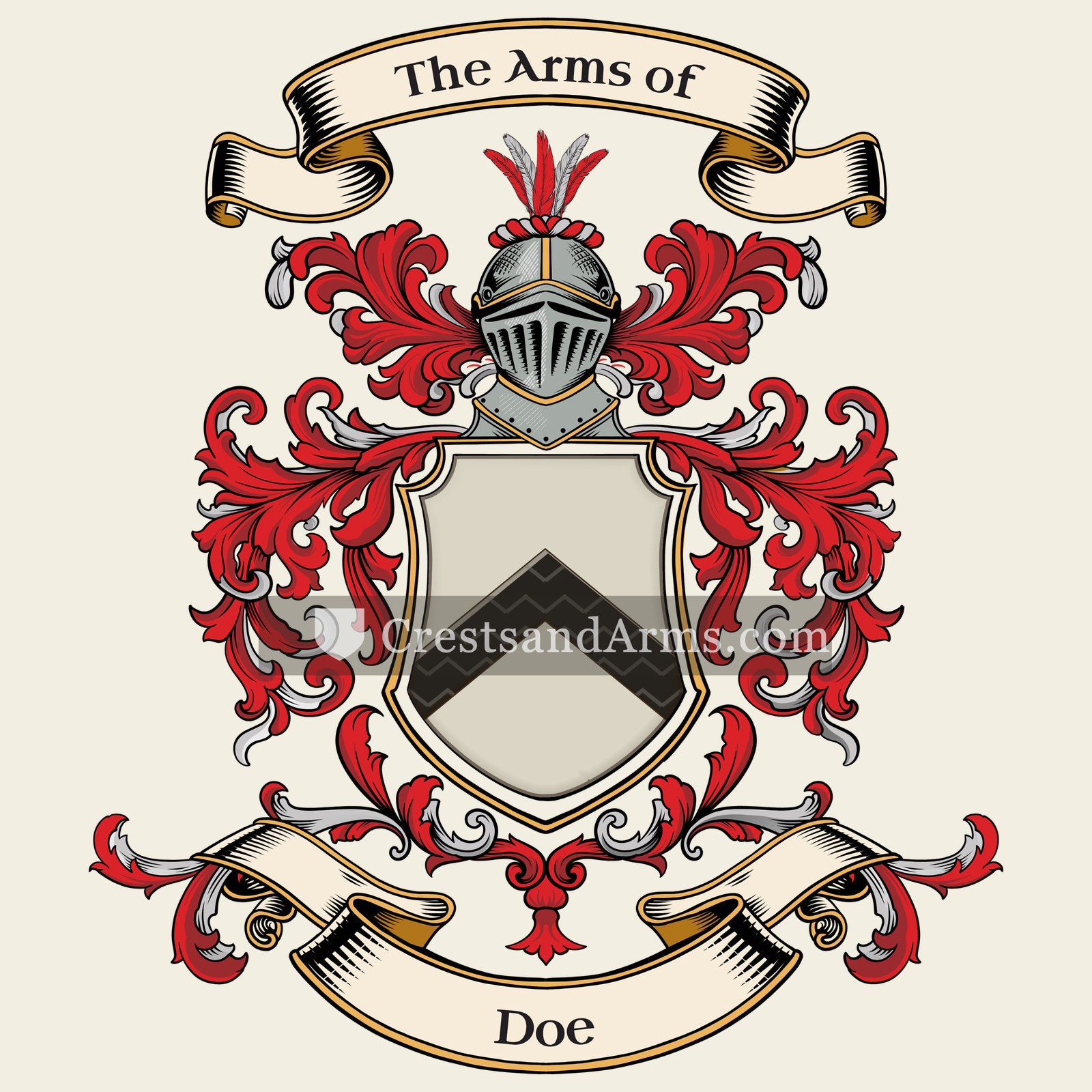
Symbols on this shield
chevronProtection, and faithful service completed
Colours
Silver (Argent)Means: Peace and sincerity
Black (Sable)Means: Constancy
Historical info
Source
Sir Bernard Burke, The General Armory of England, Scotland, Ireland and Wales, London: Harrison & Sons, 1884
Blazon (the actual original written record)
“Ar. a chev. betw. three coulters sa”
LancasterSanghall · Lancaster, c. 1749
Digital archive packCoat of arms PNG, gold border print PDF, vector SVG and the certificate of authenticity. Sent to your email in minutes.
Map of England showing where the Doe arms are recorded
The Doe arms were recorded in Lancaster, c. 1749.
Lancashire was divided among a great many small landed families, more than most northern counties. Estates were passed down whole rather than split up, so the same names hold the same ground for centuries in the records.
This is where the arms were entered in the register. Families often moved to other parts of the country, so the same name can turn up in more than one region.
The body that granted and recorded arms in England in this period.
George II of Great Britain
Sovereign of the period
George II of Great Britain
1727–1760
Reigning in Netherlands when the Doe arms are first recorded.
How Arms Worked in England
English heraldry allowed arms to be shared by all legitimate descendants of the original owner. These symbols were treated as personal property that moved through the generations to all children. While the eldest son kept the original design, other family members could use the same shield without needing to change it or register their own unique versions.
Granting authority
The College of Arms in London has regulated the use of coats of arms throughout England and Wales since 1484.
How they got arms
Families typically obtained their coats of arms through a formal grant from the Crown or by proving their ancient right to them.
Where arms were recorded
All official coats of arms are recorded in the registers kept at the College of Arms, which date back to the fifteenth century.
The family's standing
Recorded among the armigerous families of Lancaster.
Origin & History of the Doe Family in England
The surname Doe is a classic example of an English occupational or descriptive name that likely originated as a nickname. In medieval times, names were often taken from the natural world, and Doe was frequently used to describe someone who possessed the gentle or swift qualities of a female deer. While the name appears in various parts of England throughout history, the branch of the family settled in Lancaster by 1749 reflects the broader movement of families during the eighteenth century. During this period, Lancaster was a bustling port and a center for trade, which attracted many families looking for new opportunities in commerce and industry. By establishing themselves in this region, the Doe family became part of the local social fabric, participating in the daily life and economic growth of a town that was rapidly expanding due to its maritime connections.
Doe Meaning & Related Branches
Root word
Dode
An ancient Germanic personal name derived from the word for dead.
This name
DoeA patronymic surname indicating descent from a person originally named Dode.
also spelled
Doee
Dohay
Doo
Dowe
Related arms
Metssame arms
Doovariant spelling
Documented Sources
J. B. Rietstap, Armorial Général, Gouda: G. B. van Goor Zonen, 1884–87
Erfgoed Leiden en Omstre, Bevolkingsregister van de gemeente Leiden
Nationaal Archief, Burgerlijke Stand van de provincie Zuid-Holland
Blok, P.J., Geschiedenis eener Hollandsche stad: Eene bijdrage tot de kennis van de middeleeuwsche maatschappij, 1910
Janssen, G.M., De geschiedenis van Leiden: Een overzicht van de stadshistorie, 1995
Digital archive packCoat of arms PNG, gold border print PDF, vector SVG and the certificate of authenticity. Sent to your email in minutes.


 fleur de lisPurity, light, and the sixth son
 fleur de lisPurity, light, and the sixth son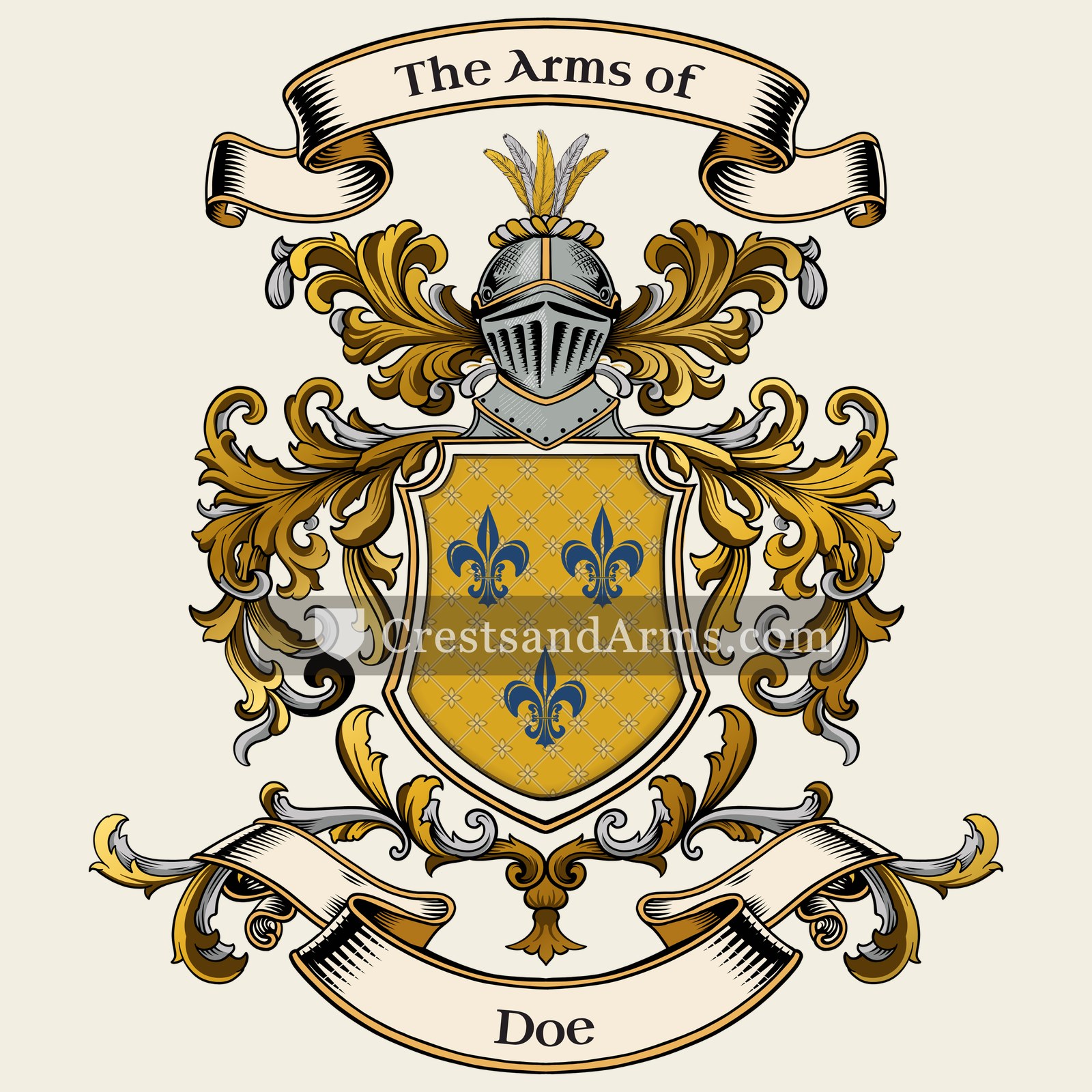


 chevronProtection, and faithful service completed
 roseThe seventh son, and beauty with grace