A record of documented arms, meaning and origin, researched for the Doiron family lines. Documented in 2 countries.
Reg. 6414 · German, D–F
Meaning of the Doiron family crest colors & symbols
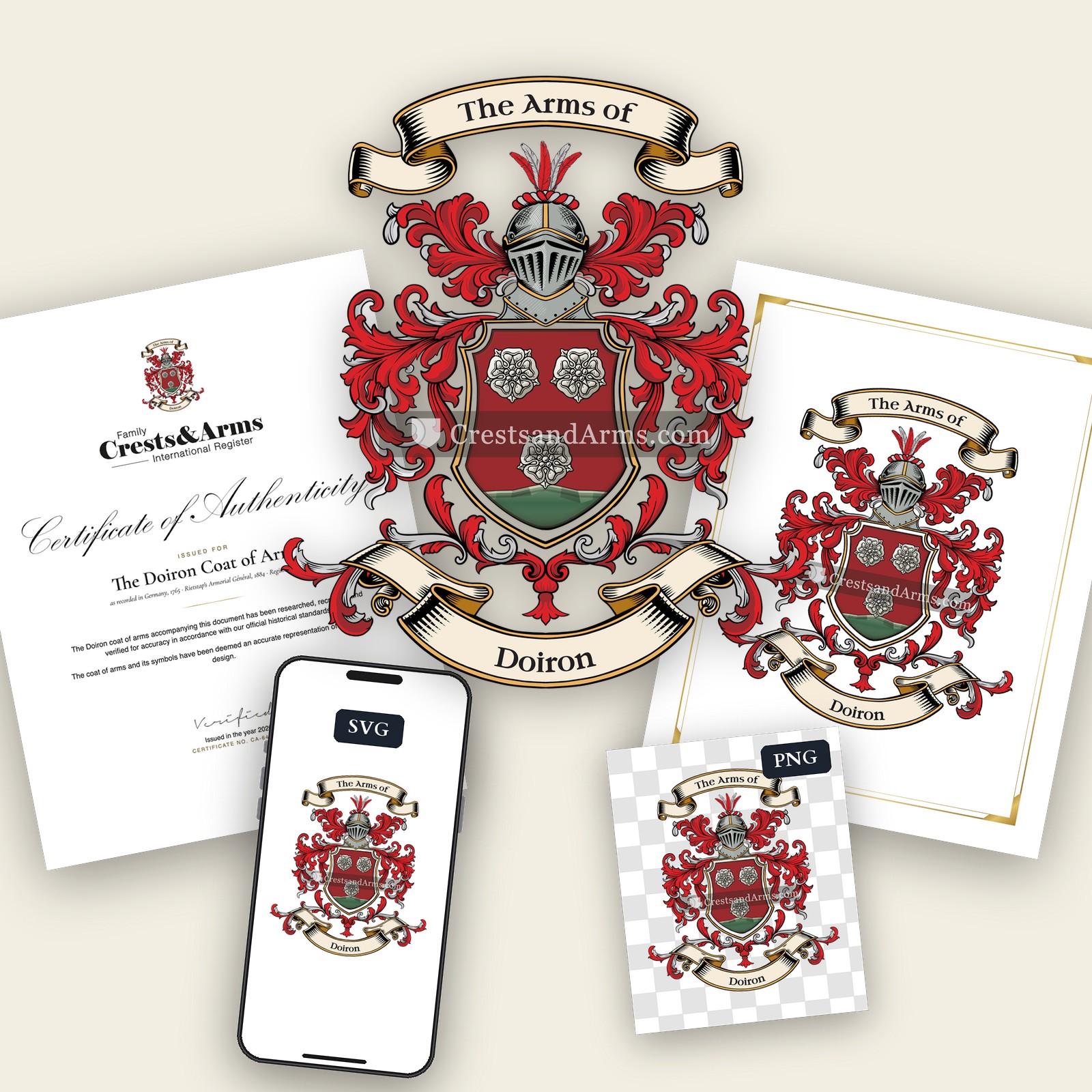
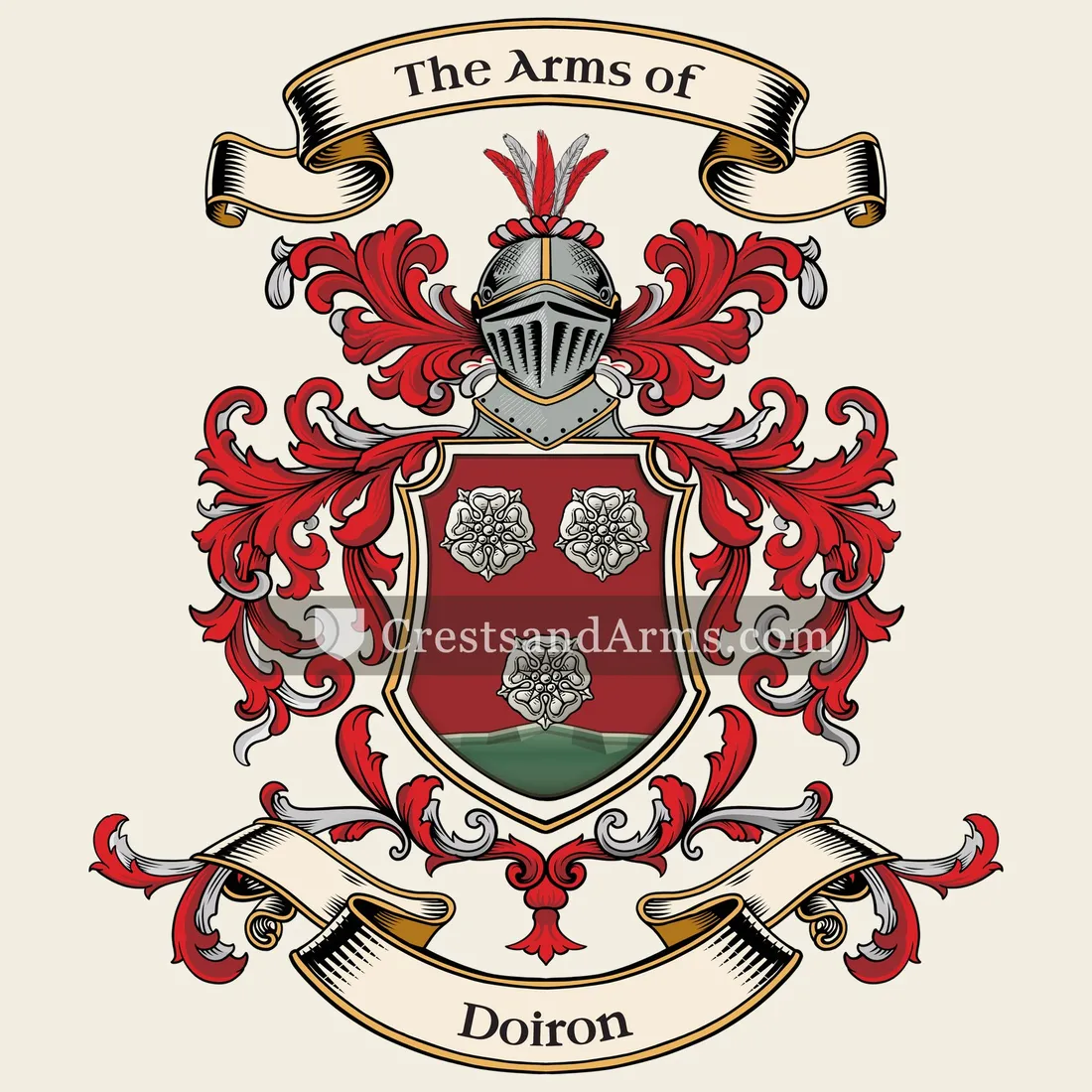
Symbols on this shield
mountThe ground held, and steadfastness upon it
roseThe seventh son, and beauty with grace
Colours
Red (Gules)Means: Military strength
Green (Vert)Means: Hope
Silver (Argent)Means: Peace and sincerity
Historical info
Source
J. B. Rietstap, Armorial Général, Gouda: G. B. van Goor Zonen, 1884–87
Blazon (the actual original written record)
“De gu. à trois roses d'arg., rangées sur une terrasse de sin., les tiges du même, garnies d'épines, et sans feuilles. C.: une rose de l'écu; entre deux prob., coupées alt. de gu. et de sin. L. d'arg. et de gu.”
MecklenburgMecklenburg, c. 1765
Digital archive packCoat of arms PNG, gold border print PDF, vector SVG and the certificate of authenticity. Sent to your email in minutes.
Map of Germany showing where the Doiron arms are recorded
The Doiron arms were recorded in Mecklenburg, c. 1765.
Mecklenburg was farming country in the north of Germany, held by a small number of families who kept their estates for generations. Owning land was what entitled a family to arms, so a great many Mecklenburg names ended up in the registers.
This is where the arms were entered in the register. Families often moved to other parts of the country, so the same name can turn up in more than one region.
The body that granted and recorded arms in Germany in this period.
Francis I, Holy Roman Emperor
Sovereign of the period
Francis I, Holy Roman Emperor
1745–1765
Reigning in Germany when the Doiron arms are first recorded.
How Arms Worked in Germany
In the Holy Roman Empire, coats of arms were often granted to individuals by the Emperor or his representatives. These arms were then passed down through the generations to all legitimate descendants of the original holder. Younger branches of a family usually kept the same shield design without needing to change it, as the arms belonged to the entire lineage.
Granting authority
The Holy Roman Emperor held the sole power to grant new coats of arms throughout his vast imperial territories.
How they got arms
Families typically obtained their coats of arms through a formal imperial grant or by proving their noble status to the authorities.
Where arms were recorded
These grants were officially recorded in the Imperial Chancery registers, which began keeping formal records of such honors during the Middle Ages.
The family's standing
Recorded among the armigerous families of Mecklenburg.
Origin & History of the Doiron Family in Germany
The history of the Doiron family in the region of Mecklenburg during the eighteenth century reflects the complex social landscape of northern Germany. By 1765, records indicate that members of the family were established within this territory, which was then characterized by a rigid manorial system and a strong reliance on agriculture. During this period, families often lived in small rural communities where their daily lives were tied to the seasonal cycles of the land and the administrative oversight of local landowners. The name itself likely evolved through regional dialects, as naming conventions in Mecklenburg were frequently influenced by the Low German language spoken by the local population. As the family navigated the economic and political shifts of the mid-1700s, they participated in the typical life of the era, which included local church registration and participation in the labor structures that defined the Mecklenburg countryside.
Meaning of the Doiron family crest colors & symbols
Symbols on this shield
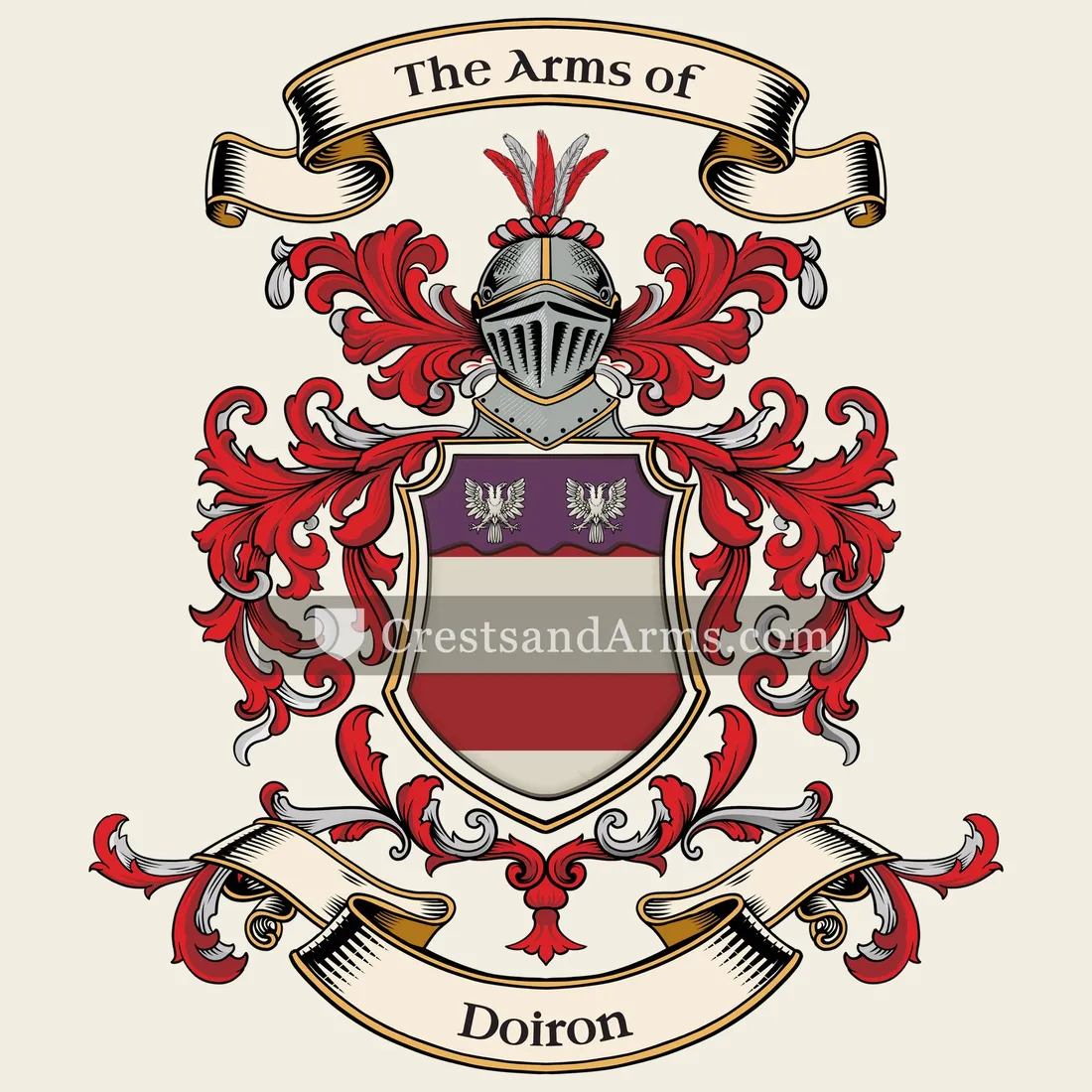
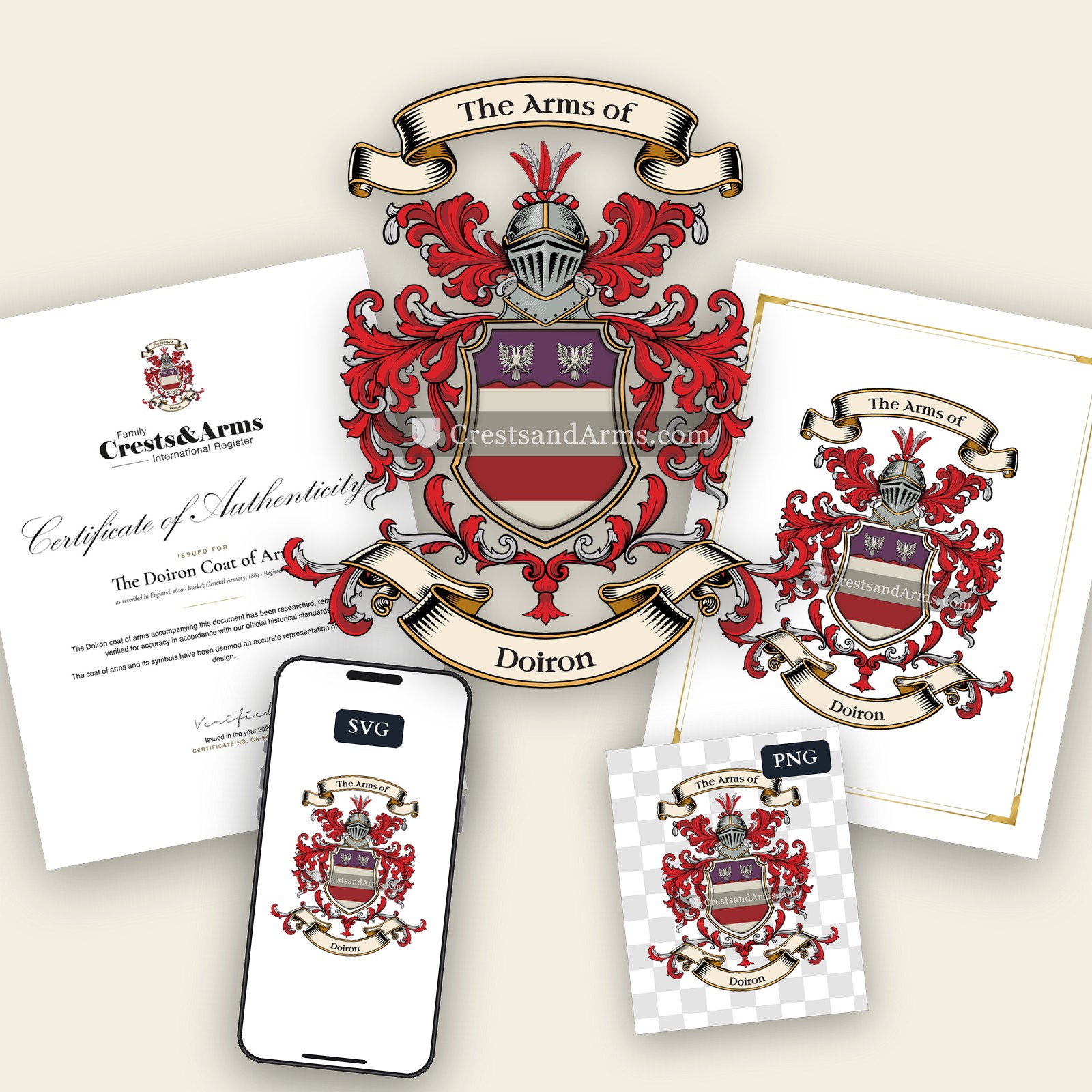
chiefAuthority, wisdom and dominion
eagleNobility, strength and a keen mind
Colours
Silver (Argent)Means: Peace and sincerity
Red (Gules)Means: Military strength
Purple (Purpure)Means: Royal majesty
Historical info
Source
Sir Bernard Burke, The General Armory of England, Scotland, Ireland and Wales, London: Harrison & Sons, 1884
Blazon (the actual original written record)
“Ar. two bars wavy gu. on a chief purp. as many eagles' heads erased ppr”
EnglandLondon, c. 1620
Digital archive packCoat of arms PNG, gold border print PDF, vector SVG and the certificate of authenticity. Sent to your email in minutes.
Map of England showing where the Doiron arms are recorded
The Doiron arms were recorded in London, c. 1620.
This is where the arms were entered in the register. Families often moved to other parts of the country, so the same name can turn up in more than one region.
The body that granted and recorded arms in England in this period.
James VI and I
Sovereign of the period
James VI and I
1603–1625
Reigning in Germany when the Doiron arms are first recorded.
How Arms Worked in England
English heraldry allowed arms to be shared by all legitimate descendants of the original owner. These symbols were treated as personal property that moved through the generations to all children. While the eldest son kept the original design, other family members could use the same shield without needing to change it or register their own unique versions.
Granting authority
The College of Arms in London has regulated the use of coats of arms throughout England and Wales since 1484.
How they got arms
Families typically obtained their coats of arms through a formal grant from the Crown or by proving their ancient right to them.
Where arms were recorded
All official coats of arms are recorded in the registers kept at the College of Arms, which date back to the fifteenth century.
The family's standing
Recorded among the armigerous families of England.
Origin & History of the Doiron Family in England
The history of the Doiron family in England begins with records of individuals living in London as early as 1620. During this period, London was a bustling center of trade and migration, drawing people from across the continent who sought new opportunities in a rapidly growing city. The name itself is rooted in the French language, likely originating as a descriptive term for someone who lived near a specific landmark or possessed a particular physical trait. While many families with similar names eventually migrated to North America, those present in London during the seventeenth century were part of a diverse urban population that helped shape the city’s social fabric. These early residents navigated a time of significant religious and political change, establishing a presence that predates the later, more famous migrations of the family to regions like Acadia. By settling in a major hub like London, these early Doirons became part of the complex history of movement and cultural exchange that defined the seventeenth century.
Doiron Meaning & Related Branches
Root word
Durand
Derived from the Old French word durer meaning to endure or last.
This name
DoironAn occupational or descriptive name for a person who is steadfast, enduring, or hardy.
also spelled
Dornn
Dorne
Dorns
Dornne
Documented Sources
J. B. Rietstap, Armorial Général, Gouda: G. B. van Goor Zonen, 1884–87
Landeshauptarchiv Schwerin, Kirchenbücher der mecklenburgischen Landeskirche (1765)
Marten, Ernst, Die mecklenburgische Agrarverfassung im 18. Jahrhundert (1972)
Schlie, Friedrich, Die Kunst- und Geschichts-Denkmäler des Grossherzogthums Mecklenburg-Schwerin (1896)
Digital archive packCoat of arms PNG, gold border print PDF, vector SVG and the certificate of authenticity. Sent to your email in minutes.


 mountThe ground held, and steadfastness upon it
 roseThe seventh son, and beauty with grace
 mountThe ground held, and steadfastness upon it
 roseThe seventh son, and beauty with grace


 chiefAuthority, wisdom and dominion
 eagleNobility, strength and a keen mind