A record of documented arms, meaning and origin, researched for the Dolphin family lines. Documented in 3 countries.
Reg. 3677 · Belgian, D–F
Coat of Arms & Family Crest Details
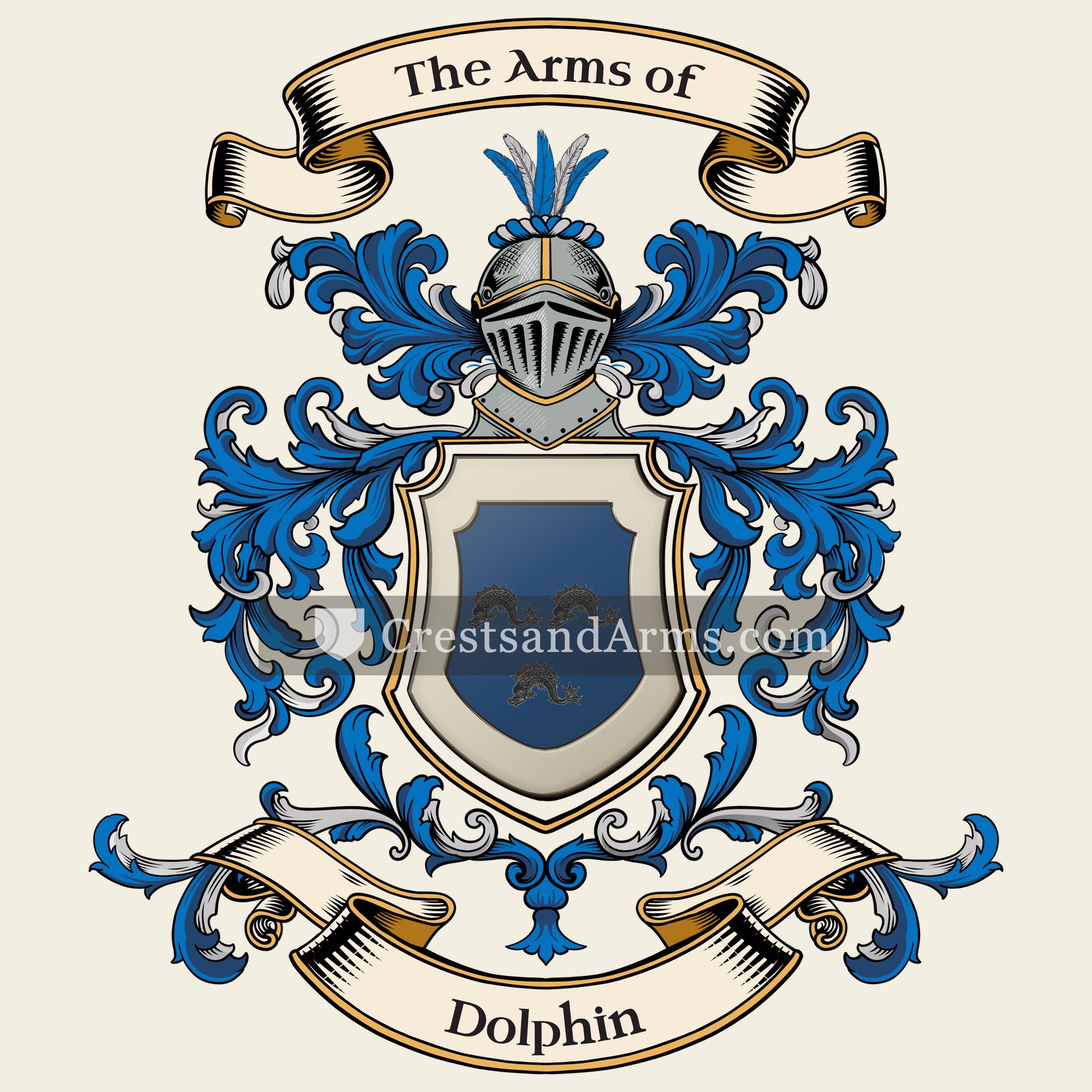
Symbols on this shield
dolphinSwiftness, charity and love
Colours
Blue (Azure)Means: Loyalty and truth
Silver (Argent)Means: Peace and sincerity
Historical info
Source
J. B. Rietstap, Armorial Général, Gouda: G. B. van Goor Zonen, 1884–87
Blazon (the actual original written record)
“Parti l'au ur et d'arg.; à trois dauphins nageants de l'un en d'optre, barbés de gu., posés l'un sur l'autre; à la bord. un autour de l'azur, et d'azur autour de l'arg. C.: dauphin d'azur, barbé de gu.”
BelgiumBruges, c. 1737
Digital archive packCoat of arms PNG, gold border print PDF, vector SVG and the certificate of authenticity. Sent to your email in minutes.
Map of Belgium showing where the Dolphin arms are recorded
The Dolphin arms were recorded in Bruges, c. 1737.
This is where the arms were entered in the register. Families often moved to other parts of the country, so the same name can turn up in more than one region.
The body that granted and recorded arms in Belgium in this period.
Charles VI, Holy Roman Emperor
Sovereign of the period
Charles VI, Holy Roman Emperor
1711–1740
Reigning in Belgium when the Dolphin arms are first recorded.
How Arms Worked in Belgium
In Belgium, a coat of arms is considered personal property that is passed down through the male line to legitimate descendants. Families often use the same shield design across generations to show their shared heritage. If a branch of the family wants to change the design, they must apply for an official update to their specific version of the arms.
Granting authority
The Conseil héraldique is the official body that regulates and approves all coats of arms in Belgium.
How they got arms
Families obtain their coats of arms through formal royal grants or by confirming their historical right to use existing designs.
Where arms were recorded
All approved coats of arms are officially recorded in the public registers of the Conseil héraldique since 1844.
The family's standing
Recorded among the armigerous families of Belgium.
Origin & History of the Dolphin Family in Belgium
The history of the Dolphin family in Belgium is deeply rooted in the bustling urban landscape of Bruges during the eighteenth century. By 1737, records confirm that members of the family were already established residents within this historic city, which served as a major center for trade and craftsmanship. During this era, families often settled in Bruges to take advantage of its thriving markets and its connection to international commerce. The name itself likely functioned as a descriptor or a nickname that eventually became a permanent family identifier as the members integrated into the local community. These early residents would have navigated a society defined by guild regulations and strict civic record-keeping, which helped preserve their presence in the city archives for future generations to discover. Their transition from newcomers to established citizens reflects the broader patterns of movement and social stability that characterized the lives of many families in the Low Countries during the Enlightenment period.
Coat of Arms & Family Crest Details
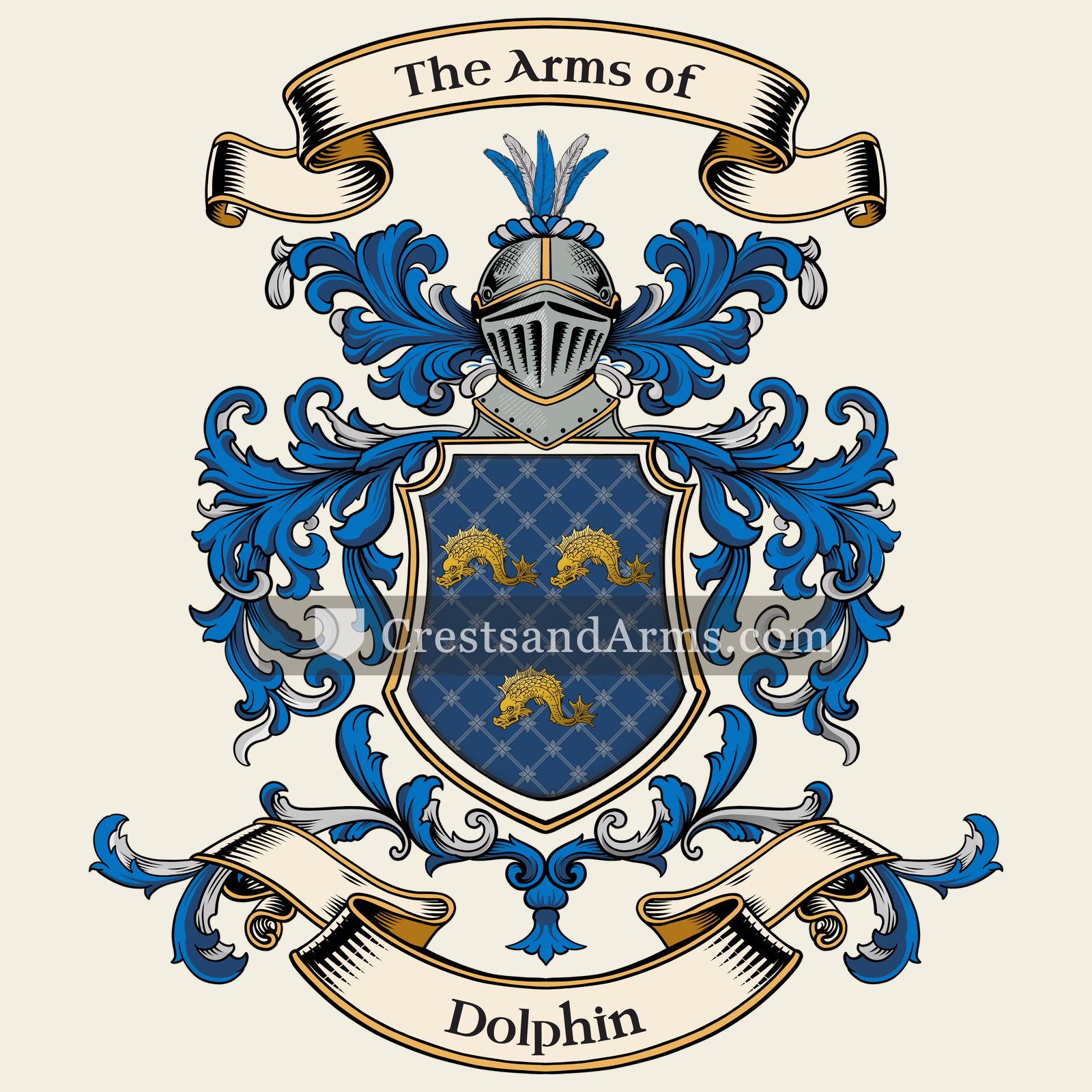
Symbols on this shield
dolphinSwiftness, charity and love
Colours
Blue (Azure)Means: Loyalty and truth
Gold (Or)Means: Generosity
Historical info
Source
Sir Bernard Burke, The General Armory of England, Scotland, Ireland and Wales, London: Harrison & Sons, 1884
Blazon (the actual original written record)
“Az. three dolphins naiant fesseways in pale or”
GloucesterEyford · Gloucester, c. 1620
Digital archive packCoat of arms PNG, gold border print PDF, vector SVG and the certificate of authenticity. Sent to your email in minutes.
Map of England showing where the Dolphin arms are recorded
The Dolphin arms were recorded in Gloucester, c. 1620.
Gloucestershire had good farmland, a cloth trade in its valleys and a river carrying goods to Bristol. All three made money, and money bought the estates that brought arms with them.
This is where the arms were entered in the register. Families often moved to other parts of the country, so the same name can turn up in more than one region.
The body that granted and recorded arms in England in this period.
James VI and I
Sovereign of the period
James VI and I
1603–1625
Reigning in Belgium when the Dolphin arms are first recorded.
How Arms Worked in England
English heraldry allowed arms to be shared by all legitimate descendants of the original owner. These symbols were treated as personal property that moved through the generations to all children. While the eldest son kept the original design, other family members could use the same shield without needing to change it or register their own unique versions.
Granting authority
The College of Arms in London has regulated the use of coats of arms throughout England and Wales since 1484.
How they got arms
Families typically obtained their coats of arms through a formal grant from the Crown or by proving their ancient right to them.
Where arms were recorded
All official coats of arms are recorded in the registers kept at the College of Arms, which date back to the fifteenth century.
The family's standing
Recorded among the armigerous families of Gloucester.
Origin & History of the Dolphin Family in England
The surname Dolphin has deep roots in the English landscape, serving as a classic example of a name derived from a personal moniker rather than a specific trade or location. In the medieval period, the name was often used as a given name before it eventually transitioned into a hereditary surname. By the early 17th century, the family had established a notable presence in the city of Gloucester. Records from 1620 confirm that members of the Dolphin family were active participants in the social and economic life of this region. During this era, families with this name were often integrated into the local merchant or landowning classes, which allowed them to leave behind clear paper trails in parish registers and legal documents. These early settlers helped shape the local community, and their documented presence in Gloucester provides a vital link to the family's long-standing history in the West of England.
Coat of Arms & Family Crest Details
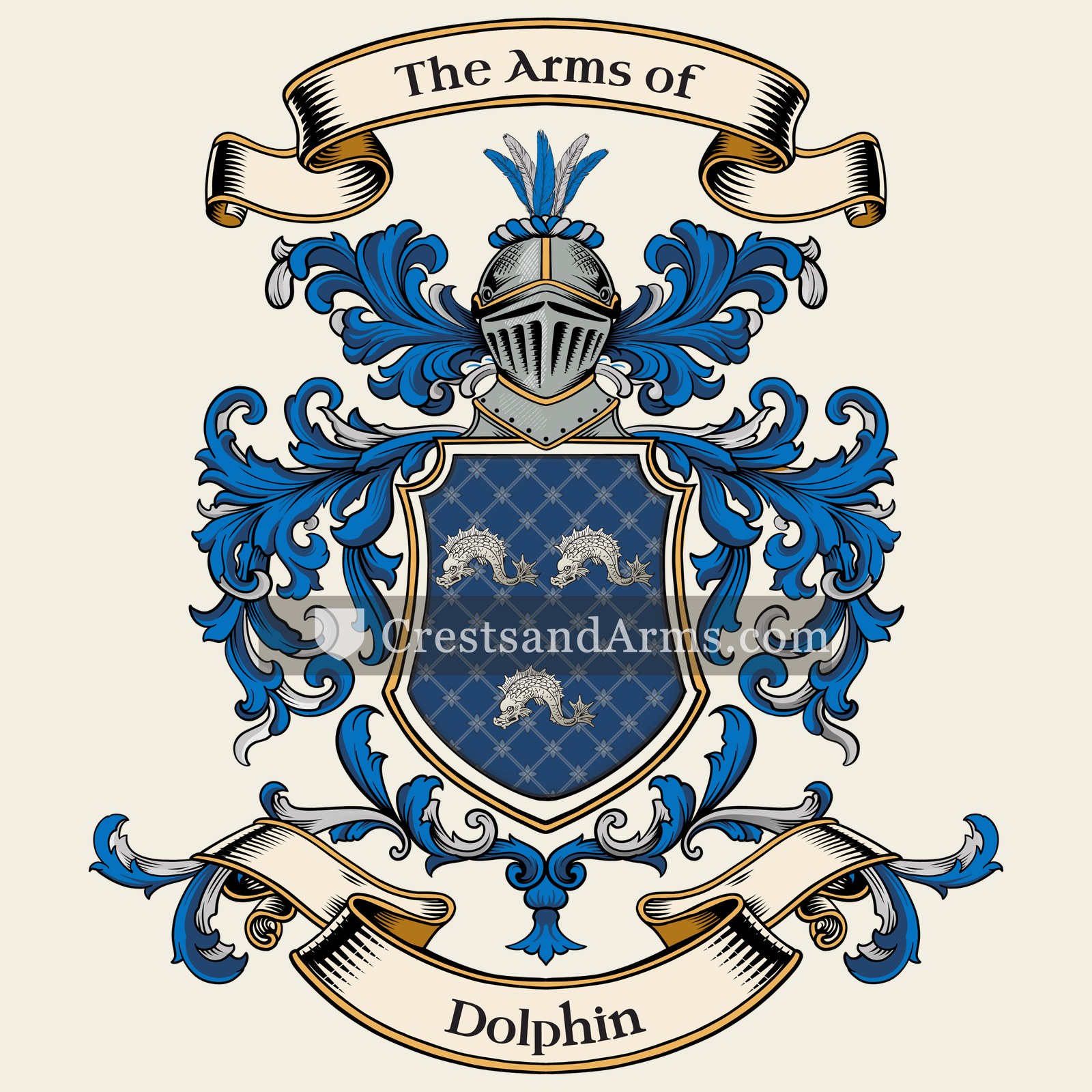
Symbols on this shield
dolphinSwiftness, charity and love
Colours
Blue (Azure)Means: Loyalty and truth
Historical info
Source
Sir Bernard Burke, The General Armory of England, Scotland, Ireland and Wales, London: Harrison & Sons, 1884
Blazon (the actual original written record)
“Az. three dolphins naiant ppr”
GalwayTuroe · Galway, c. 1645
Digital archive packCoat of arms PNG, gold border print PDF, vector SVG and the certificate of authenticity. Sent to your email in minutes.
Map of Ireland showing where the Dolphin arms are recorded
The Dolphin arms were recorded in Galway, c. 1645.
Galway was western Irish country of poor land and a rich port. A small group of merchant families ran the town for centuries and held estates around it, and both kinds of property carried arms.
This is where the arms were entered in the register. Families often moved to other parts of the country, so the same name can turn up in more than one region.
The body that granted and recorded arms in Ireland in this period.
Charles I of England
Sovereign of the period
Charles I of England
1625–1649
Reigning in Belgium when the Dolphin arms are first recorded.
How Arms Worked in Ireland
The Ulster King of Arms granted coats of arms to individuals who proved their social standing and good character. These symbols were typically inherited by all legitimate descendants of the original holder. If a family branch wanted a unique look, they could apply for a specific change to their design through the office to ensure their identity remained distinct.
Granting authority
The Ulster King of Arms acted as the official body that regulated and issued all coats of arms throughout Ireland.
How they got arms
Families obtained their arms through formal grants issued by the office after proving their eligibility and paying the required fees.
Where arms were recorded
All official grants were recorded in the registers held by the Ulster King of Arms starting from the year 1552.
The family's standing
Recorded among the armigerous families of Galway.
Origin & History of the Dolphin Family in Ireland
The Dolphin family name has a long and established history in County Galway, where members of the family were documented as prominent landowners by 1645. While the name is often associated with the sea, its roots in Ireland are tied to the Anglo-Norman expansion into the western territories during the medieval period. The family successfully integrated into the local social structure, eventually becoming part of the landed gentry in the region surrounding Loughrea. Throughout the seventeenth century, the Dolphins navigated the complex political landscape of Ireland, maintaining their status despite the significant upheavals caused by land confiscations and shifting loyalties. Their presence in Galway reflects a broader pattern of families who settled in the west, adopted the local customs, and remained deeply connected to the development of the province of Connacht for several centuries.
Dolphin Meaning & Related Branches
Root word
Delphinus
Latin term for the marine mammal known as a dolphin.
This name
DolphinA topographic or habitational name referring to someone who lived at a house marked by a dolphin sign.
also spelled
Dolphyn
Dolphine
Dolphinn
Dolfin
Dolfyn
Documented Sources
J. B. Rietstap, Armorial Général, Gouda: G. B. van Goor Zonen, 1884–87
Stadsarchief Brugge, Registers van de Burgerlijke Stand en Bevolking
Vannieuwenhuyse, Jan, Brugge en zijn inwoners in de 18e eeuw, 2005
Digital archive packCoat of arms PNG, gold border print PDF, vector SVG and the certificate of authenticity. Sent to your email in minutes.


 dolphinSwiftness, charity and love
 dolphinSwiftness, charity and love