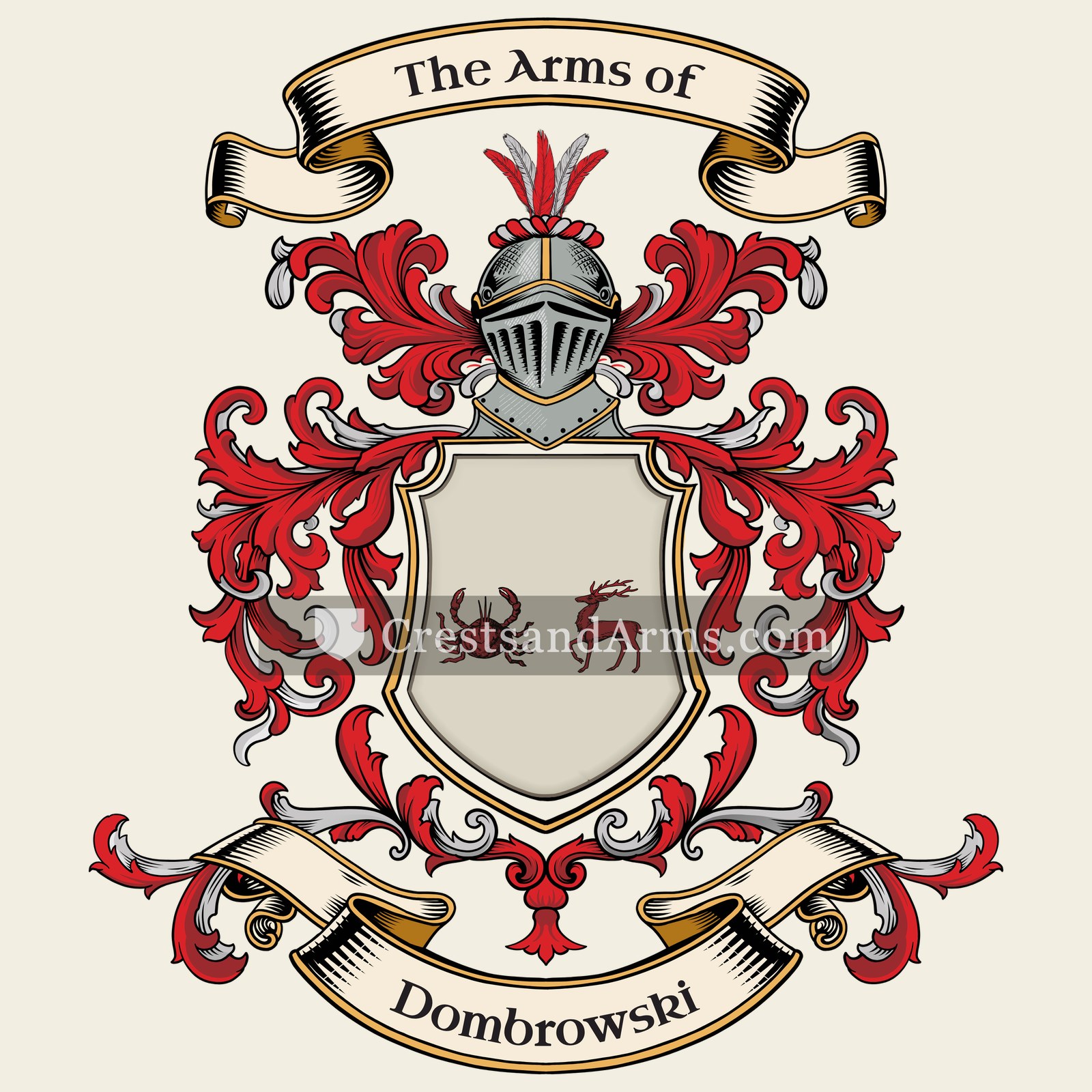
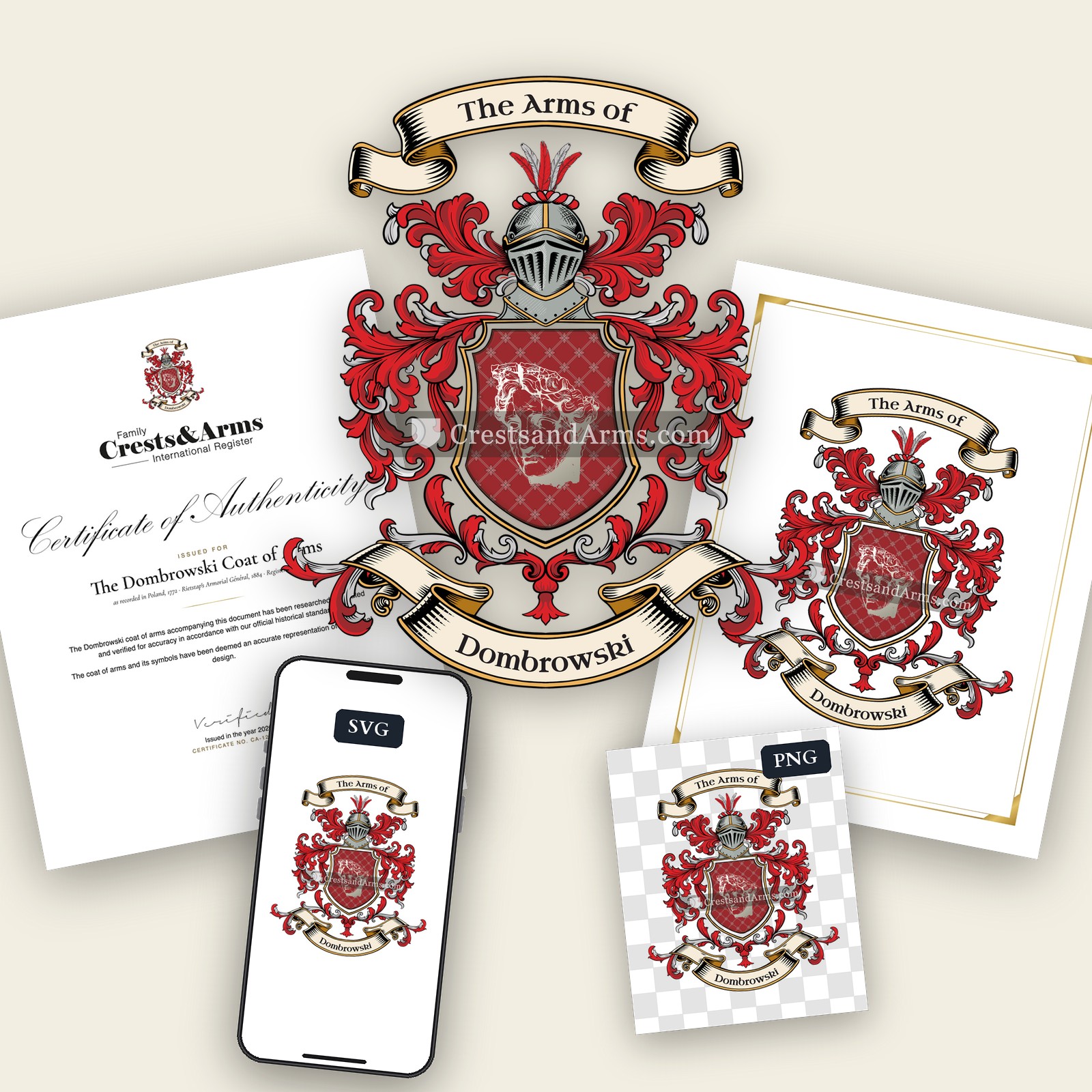
A record of documented arms, meaning and origin, researched for the Dombrowski family lines. Documented in 2 countries.
Reg. 1268 · Polish, D–F
Coat of Arms & Family Crest Details
Symbols on this shield
womanGrace, and the founding of a house
Colours
Red (Gules)Means: Military strength
Silver (Argent)Means: Peace and sincerity
Historical info
Source
J. B. Rietstap, Armorial Général, Gouda: G. B. van Goor Zonen, 1884–87
Blazon (the actual original written record)
“De gu. à une femme, posée de face, hab. d'arg., cour. d'or, les cheveux épars, donnant deux trompes d'or, dirigées vers dextre et sen. Cq. cour. C.: la femme iss., sans trompes, posée entre deux prob. d'or qu'elle embrasse. L.: à dextre d'arg. et de gu., à sen. d'or et de gu.”
Polandc. 1772
Digital archive packCoat of arms PNG, gold border print PDF, vector SVG and the certificate of authenticity. Sent to your email in minutes.
Map of Poland showing where the Dombrowski arms are recorded
The Dombrowski arms were recorded in Poland, c. 1772.
Arms such as these were typically recorded in Mazovia.
Mazovia held Warsaw, the Polish court and the assemblies where the szlachta met. Poland's nobles were unusually numerous and every one of them bore arms, and Warsaw is where those arms were argued over and recorded.
This is where the arms were entered in the register. Families often moved to other parts of the country, so the same name can turn up in more than one region.
Region
Mazovia
First recorded
1772
Granting Authority for the Dombrowski Arms
Ennoblement by the Sejm
Author: Olek Remesz · CC BY-SA 3.0
The body that granted and recorded arms in Poland in this period.
Stanisław August Poniatowski
Sovereign of the period
Stanisław August Poniatowski
1764–1795
Reigning in Poland when the Dombrowski arms are first recorded.
How Arms Worked in Poland
Polish noble families shared a single coat of arms across many different surnames, creating large clans rather than individual designs. These symbols were held collectively by all members of the clan regardless of their specific family name. When a new family joined the nobility, they were adopted into an existing clan and began using that group's established shield.
Granting authority
The Sejm, which was the Polish parliament, held the power to grant noble status and the right to bear arms.
How they got arms
Families typically received their coat of arms through a formal act of ennoblement granted by the Sejm for distinguished service.
Where arms were recorded
These grants were officially recorded in the Crown Metrica, which served as the central archive for state documents starting in the sixteenth century.
The family's standing
Recorded among the armigerous families of Poland.
Origin & History of the Dombrowski Family in Poland
The surname Dombrowski is a classic example of a Polish topographical name, derived from the word "dąbrowa," which refers to an oak forest. By the time the family was firmly established in the Mazovia region in 1772, the name served as a way to identify individuals based on the landscape where they lived or held land. During this period, Mazovia was a central hub of Polish social and political life, and families with this name were often part of the landed gentry or local agricultural communities. Because the name is tied to the geography of the Polish plains, it reflects a deep connection to the rural environment that defined the lives of many families in the eighteenth century. As the family grew and moved across the region, the name became a permanent marker of their ancestral ties to the forests and fields of central Poland.
Coat of Arms & Family Crest Details
Symbols on this shield
crabSteadfast defence that yields no ground
stagPeace and harmony, and one who will not fight unprovoked
Colours
Silver (Argent)Means: Peace and sincerity
Red (Gules)Means: Military strength
Historical info
Source
J. B. Rietstap, Armorial Général, Gouda: G. B. van Goor Zonen, 1884–87
Blazon (the actual original written record)
“Parti: au 1 d'arg. à un scorpion de gu., posé en pal; au 2 de gu. à une demi-ramure de cerf d'arg. Cq. cour. C.: cinq pl. d'aut. d'arg.; ou, le scorpion et la demi-ramure.”
SilesiaSilesia, c. 1765
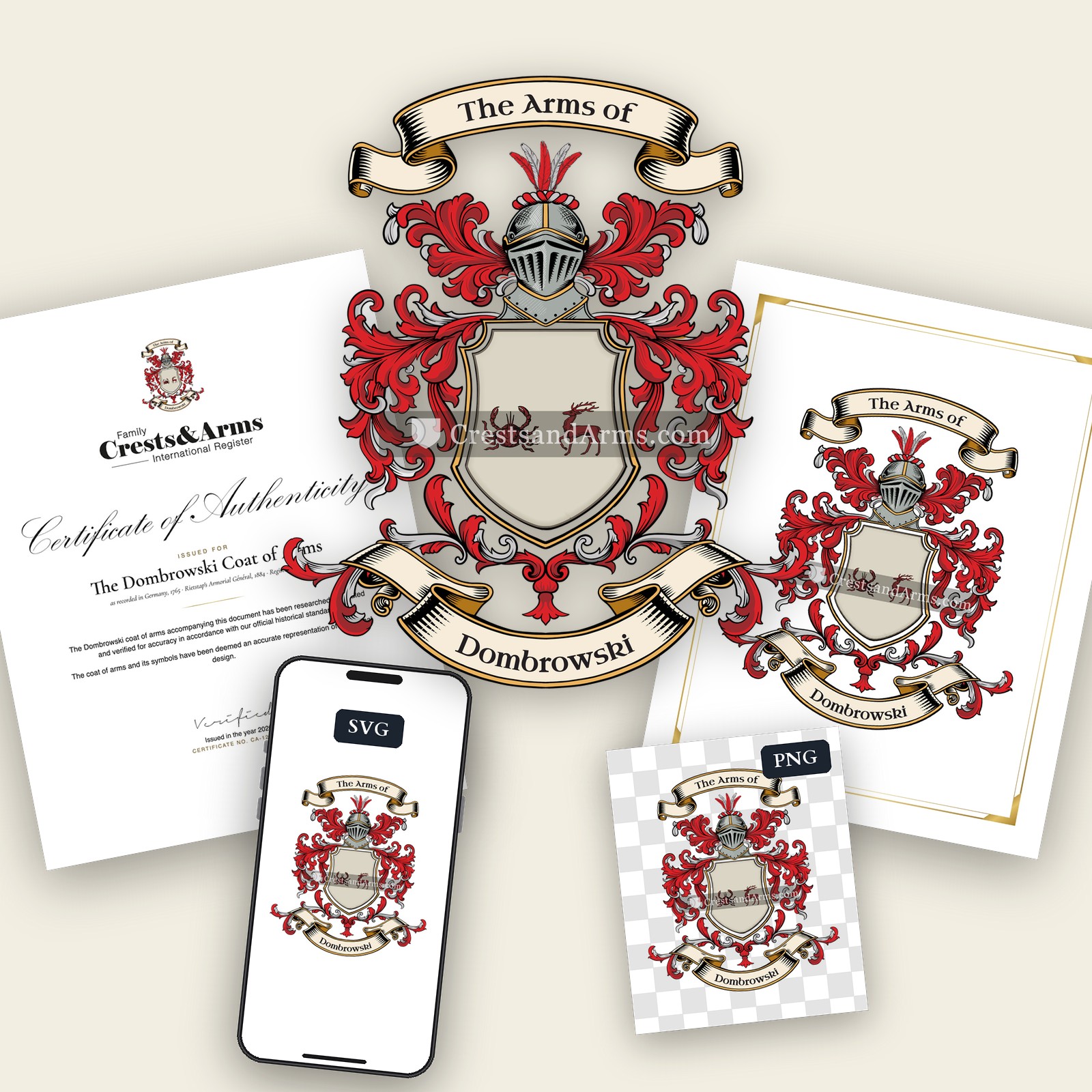
Digital archive packCoat of arms PNG, gold border print PDF, vector SVG and the certificate of authenticity. Sent to your email in minutes.
Map of Germany showing where the Dombrowski arms are recorded
The Dombrowski arms were recorded in Silesia, c. 1765.
Silesia was farming country in the east of the German lands, held in large estates by families who stayed put for generations. Owning land was what entitled a family to arms, so the region fills a good deal of the register.
This is where the arms were entered in the register. Families often moved to other parts of the country, so the same name can turn up in more than one region.
The body that granted and recorded arms in Germany in this period.
Francis I, Holy Roman Emperor
Sovereign of the period
Francis I, Holy Roman Emperor
1745–1765
Reigning in Poland when the Dombrowski arms are first recorded.
How Arms Worked in Germany
In the Holy Roman Empire, coats of arms were often granted to individuals by the Emperor or his representatives. These arms were then passed down through the generations to all legitimate descendants of the original holder. Younger branches of a family usually kept the same shield design without needing to change it, as the arms belonged to the entire lineage.
Granting authority
The Holy Roman Emperor held the sole power to grant new coats of arms throughout his vast imperial territories.
How they got arms
Families typically obtained their coats of arms through a formal imperial grant or by proving their noble status to the authorities.
Where arms were recorded
These grants were officially recorded in the Imperial Chancery registers, which began keeping formal records of such honors during the Middle Ages.
The family's standing
Recorded among the armigerous families of Silesia.
Origin & History of the Dombrowski Family in Germany
The family name Dombrowski originates from the Slavic word "dąb," which translates to "oak tree." In the context of early German history, the name functioned as a topographic surname, identifying families who lived near or worked within oak forests. By 1765, records confirm that members of the family were established in the region of Silesia. At that time, Silesia was a territory under the control of the Kingdom of Prussia, which was then led by Frederick the Great. Because the region was a crossroads of cultures, the name underwent linguistic shifts as it moved between Polish and German administrative systems. Families bearing this name were often involved in agriculture or forestry, reflecting the deep connection between their surname and the landscape of the Prussian frontier. Over time, the name became a permanent fixture in the local records of the region, marking the family as part of the long history of settlement in the eastern German territories.
Dombrowski Meaning & Related Branches
Root word
Dąb
A deciduous tree known as an oak.
This name
DombrowskiA topographic name for someone who lived near an oak forest or oak grove.
also spelled
Dombrowsky
Dombrowskie
Dombrowsk
Dombrovski
Related arms
Dambrowski de Suckowekesimilar arms
Documented Sources
J. B. Rietstap, Armorial Général, Gouda: G. B. van Goor Zonen, 1884–87
Krzysztof Górski, Historia Polski, 1988
Aleksander Brückner, Słownik etymologiczny języka polskiego, 1927
Archiwum Główne Akt Dawnych, Księgi grodzkie warszawskie
Digital archive packCoat of arms PNG, gold border print PDF, vector SVG and the certificate of authenticity. Sent to your email in minutes.


 womanGrace, and the founding of a house
 womanGrace, and the founding of a house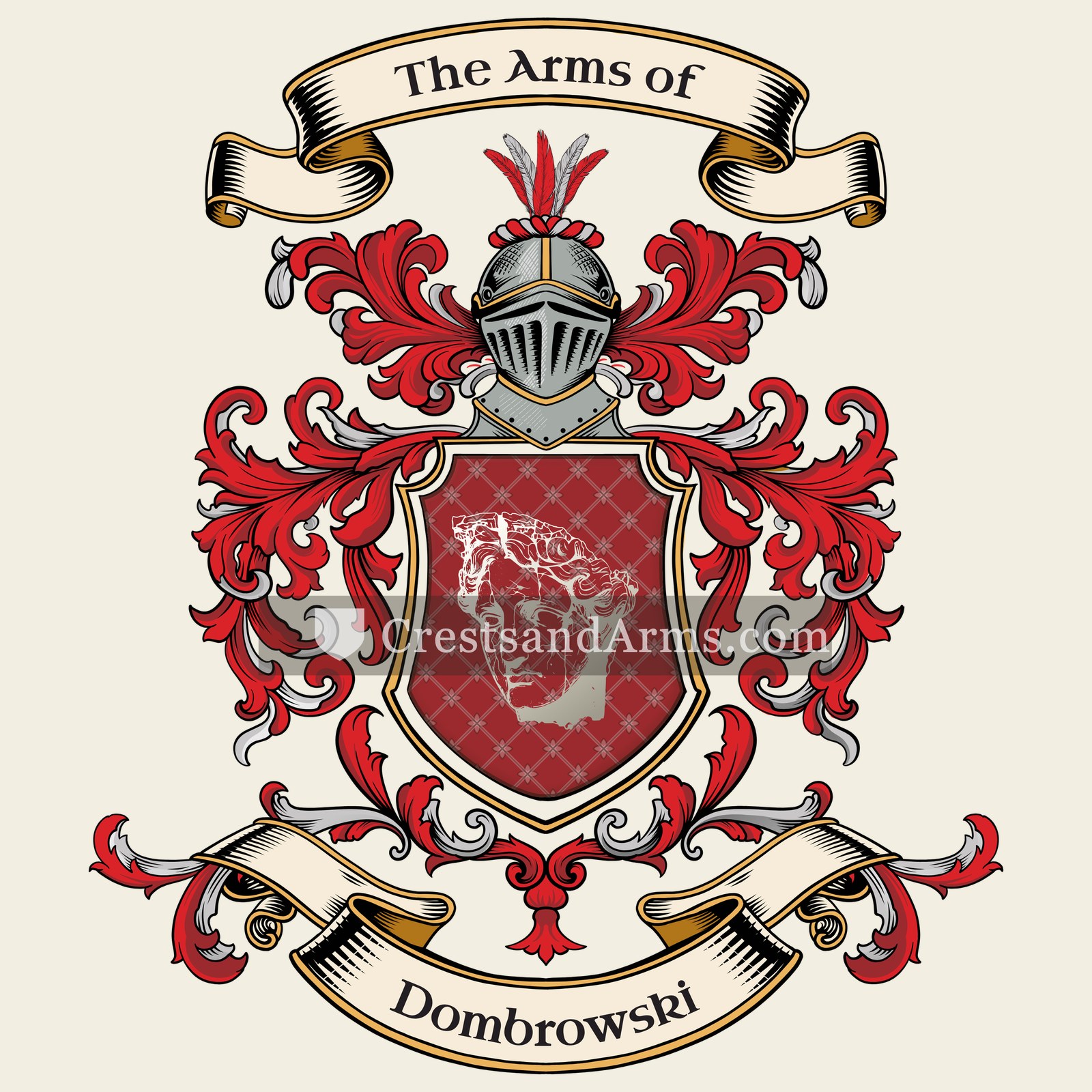


 crabSteadfast defence that yields no ground
 stagPeace and harmony, and one who will not fight unprovoked