Map of Spain showing where the Domecq arms are recorded
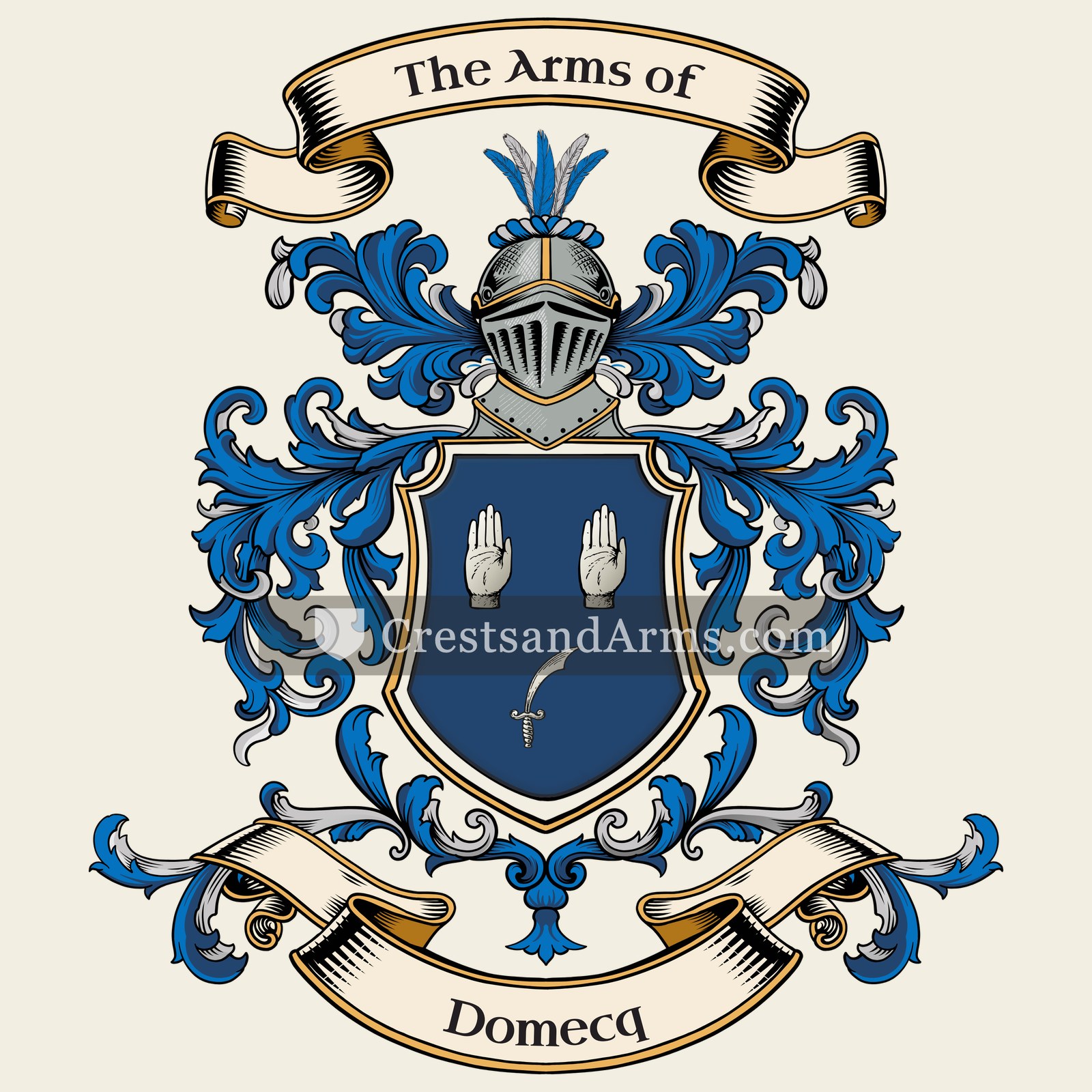
The Domecq arms were recorded in Spain, c. 1722.
Arms such as these were typically recorded in Castile.
Castile was the heart of Spain and the source of most of its noble families. Land won in the long wars against the Moors was granted out to fighting men, and a man granted land was granted arms along with it.
This is where the arms were entered in the register. Families often moved to other parts of the country, so the same name can turn up in more than one region.
The body that granted and recorded arms in Spain in this period.
Philip V of Spain
Sovereign of the period
Philip V of Spain
1714–1724
Reigning in Spain when the Domecq arms are first recorded.
How Arms Worked in Spain
In Spain, a coat of arms was considered a form of property that belonged to the entire family line. These arms were passed down from a father to all his children equally. Younger branches of the family usually kept the original design without needing to add any special marks to distinguish their specific line.
Granting authority
The Cronista Rey de Armas was the official body that regulated and granted coats of arms throughout Spain.
How they got arms
Families often obtained their arms through royal grants or by proving their noble status to the official heraldic authority.
Where arms were recorded
Coats of arms were officially recorded in the registers of the Cronista Rey de Armas starting in 1496.
The family's standing
Recorded among the armigerous families of Spain.
Origin & History of the Domecq Family in Spain
The Domecq family name has deep roots that trace back to the mountainous regions of the western Pyrenees before establishing a significant presence in Castile by 1722. The name itself is of Basque origin, derived from the words "domec" or "domenge," which historically referred to someone who lived near a church or was born on a Sunday. As the family moved from their ancestral lands into the heart of Spain, they became known for their adaptability and influence in regional commerce. By the early 18th century, members of the family were already integrated into the social and economic fabric of Castile, where they began to build the reputation for industry that would later define their legacy. This migration marked a turning point for the family as they transitioned from their traditional roots into the broader landscape of Spanish history.
Domecq Meaning & Related Branches
Root word
Domus
Latin term meaning a house, home, or dwelling place.
This name
DomecqDerived from a topographic location referring to someone living near a specific house or estate.
also spelled
Domec
Domecque
Domek
Related arms
Domecvariant spelling
Documented Sources
J. B. Rietstap, Armorial Général, Gouda: G. B. van Goor Zonen, 1884–87


 swordJustice, and military honour
 handFaith, sincerity and justice
 swordJustice, and military honour
 handFaith, sincerity and justice