A record of documented arms, meaning and origin, researched for the Drabble family lines. Documented in 2 countries.
Reg. 3673 · Dutch, D–F
Coat of Arms & Family Crest Details
Symbols on this shield
escallopThe pilgrim's shell, and a long journey made
fleur de lisPurity, light, and the sixth son
pawStrength held ready, the beast's power in a single limb
Colours
Gold (Or)Means: Generosity
Red (Gules)Means: Military strength
Silver (Argent)Means: Peace and sincerity
Historical info
Source
J. B. Rietstap, Armorial Général, Gouda: G. B. van Goor Zonen, 1884–87
Blazon (the actual original written record)
“D'or à une coquille d'or, posée en chef à sen., et une fleur-de-lis du même en p.; au fr.-q. de gu. ayant une champagne d'arg., le gu. ch. de trois ongles de butor d'or, rangées en fasce. C.: une ongle de butor d'or, posée en pal; entre un vol à l'antique de gu. et d'arg. L. d'arg., de gu., d'or et d'azur [V. Tollius-Drabbe.]”
NetherlandsBreda, c. 1815
Digital archive packCoat of arms PNG, gold border print PDF, vector SVG and the certificate of authenticity. Sent to your email in minutes.
Map of Netherlands showing where the Drabble arms are recorded
The Drabble arms were recorded in Breda, c. 1815.
This is where the arms were entered in the register. Families often moved to other parts of the country, so the same name can turn up in more than one region.
Region
Breda
Town
Breda
First recorded
1815
Granting Authority for the Drabble Arms
Hoge Raad van Adel
Photograph made by me · CC BY-SA 3.0
The body that granted and recorded arms in Netherlands in this period.
William I of the Netherlands
Sovereign of the period
William I of the Netherlands
1815–1840
Reigning in Netherlands when the Drabble arms are first recorded.
How Arms Worked in Netherlands
In the Netherlands, coats of arms were often used by noble families and those who held specific public offices. These arms were passed down through the generations to legitimate descendants. Younger branches of a family usually kept the original design without needing to add special marks. This system ensured that the family identity remained clear and consistent over many years.
Granting authority
The Hoge Raad van Adel is the official body that regulates and manages noble titles and coats of arms in the Netherlands.
How they got arms
Families typically obtained their coats of arms through official royal grants or by proving their long-standing historical use of the symbols.
Where arms were recorded
Coats of arms are officially recorded in the registers held by the Hoge Raad van Adel, which began its work in 1814.
The family's standing
Recorded among the armigerous families of Netherlands.
Origin & History of the Drabble Family in Netherlands
The history of the Drabble family in the Netherlands is rooted in the strategic city of Breda, where records confirm their presence by 1815. During this period, Breda served as a vital garrison town and a center for trade, placing the family at the heart of a region undergoing significant political transition following the Napoleonic Wars. The name likely evolved as a localized variation of occupational or descriptive surnames common in the Low Countries, reflecting the linguistic shifts occurring in the border regions between Dutch and Flemish dialects. As the family established themselves in Breda, they became part of the local urban fabric, likely engaging in the merchant or artisanal activities that defined the city’s economy during the nineteenth century. Their early documentation in civil registries suggests a family that was well-integrated into the administrative life of the city, marking the beginning of their long-standing connection to the Dutch landscape.
Coat of Arms & Family Crest Details
Symbols on this shield
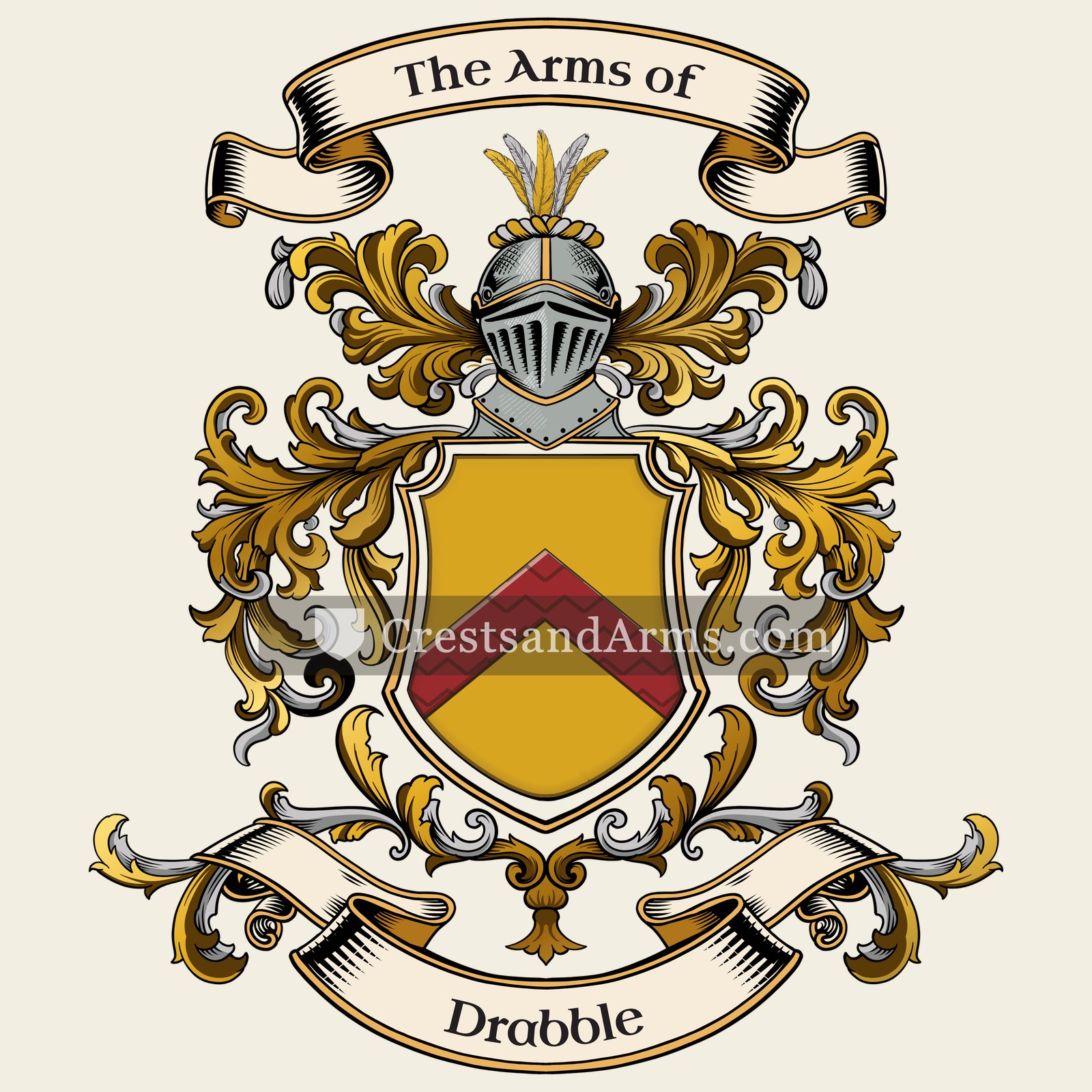
chevronProtection, and faithful service completed
Colours
Gold (Or)Means: Generosity
Red (Gules)Means: Military strength
Historical info
Source
J. B. Rietstap, Armorial Général, Gouda: G. B. van Goor Zonen, 1884–87
Blazon (the actual original written record)
“D'or au chev. de gu.”
FlandreFlandre, c. 1663
Digital archive packCoat of arms PNG, gold border print PDF, vector SVG and the certificate of authenticity. Sent to your email in minutes.
Map of Belgium showing where the Drabble arms are recorded
The Drabble arms were recorded in Flandre, c. 1663.
Flandre grew rich on cloth, and its towns were among the busiest in Europe. Merchant families bought land with their profits and took arms to go with it, so trade put as many names in the registers here as land did.
This is where the arms were entered in the register. Families often moved to other parts of the country, so the same name can turn up in more than one region.
The body that granted and recorded arms in Belgium in this period.
Philip IV of Spain
Sovereign of the period
Philip IV of Spain
1621–1665
Reigning in Netherlands when the Drabble arms are first recorded.
How Arms Worked in Belgium
In Belgium, a coat of arms is considered personal property that is passed down through the male line to legitimate descendants. Families often use the same shield design across generations to show their shared heritage. If a branch of the family wants to change the design, they must apply for an official update to their specific version of the arms.
Granting authority
The Conseil héraldique is the official body that regulates and approves all coats of arms in Belgium.
How they got arms
Families obtain their coats of arms through formal royal grants or by confirming their historical right to use existing designs.
Where arms were recorded
All approved coats of arms are officially recorded in the public registers of the Conseil héraldique since 1844.
The family's standing
Recorded among the armigerous families of Flandre.
Origin & History of the Drabble Family in Belgium
The history of the Drabble family in the region of Flanders begins with documented evidence of their presence in 1663. During this period, the Low Countries were a bustling center of trade and agriculture, which likely influenced the daily lives of early family members. The name itself is thought to have roots in the local linguistic traditions of the area, where surnames often evolved from nicknames or descriptions of a person’s trade or physical traits. Living in Flanders during the seventeenth century meant navigating a landscape shaped by both Spanish rule and the rise of local merchant classes. Families like the Drabbles were part of a society that valued craftsmanship and community ties, which helped them establish a lasting footprint in the region. By settling in this specific part of Belgium, the early Drabbles became part of the long and complex history of the Flemish people, contributing to the cultural fabric of a territory known for its resilience and economic growth.
Related Branches & Arms
Root word
Drabbelen
To splash, dabble, or move through mud or water.
This name
DrabbleA descriptive occupational or nickname for someone who worked in wet, muddy conditions or lived near marshland.
also spelled
Drabe
Documented Sources
J. B. Rietstap, Armorial Général, Gouda: G. B. van Goor Zonen, 1884–87
Stadsarchief Breda, Burgerlijke Stand Breda (Birth, marriage, and death registers)
Nationaal Archief, Bevolkingsregisters van Breda
Beekman, A.A., Geschiedenis van de Nederlanden, 1928
Van Ditzhuyzen, R.E.D., Breda: stad van grenzen en garnizoenen, 1988
Digital archive packCoat of arms PNG, gold border print PDF, vector SVG and the certificate of authenticity. Sent to your email in minutes.


 escallopThe pilgrim's shell, and a long journey made
 fleur de lisPurity, light, and the sixth son
 pawStrength held ready, the beast's power in a single limb
 escallopThe pilgrim's shell, and a long journey made
 fleur de lisPurity, light, and the sixth son
 pawStrength held ready, the beast's power in a single limb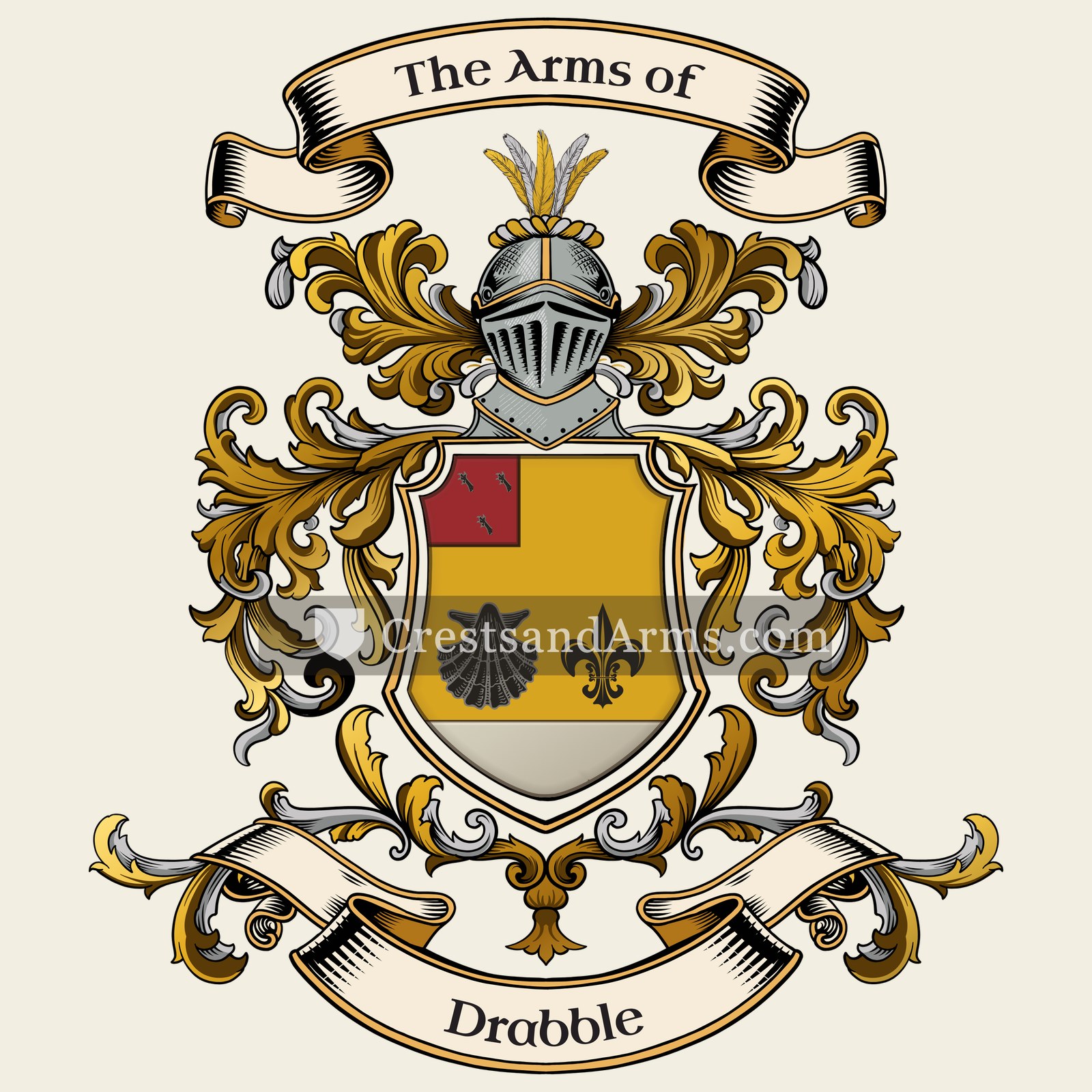


 chevronProtection, and faithful service completed