Map of France showing where the Dragan arms are recorded
The Dragan arms were recorded in Flandre, c. 1640.
Flandre grew rich on cloth, and its towns were among the busiest in Europe. Merchant families bought land with their profits and took arms to go with it, so trade put as many names in the registers here as land did.
This is where the arms were entered in the register. Families often moved to other parts of the country, so the same name can turn up in more than one region.
The body that granted and recorded arms in France in this period.
Louis XIII of France
Sovereign of the period
Louis XIII of France
1617–1643
Reigning in France when the Dragan arms are first recorded.
How Arms Worked in France
In France, a coat of arms was a mark of honor that passed down through the male line to all legitimate descendants. Families often used the same shield without changes to show their shared heritage. If a branch wanted to stand out, they could add a small mark to their shield to show their specific place in the family tree.
Granting authority
The Juge d'armes de France acted as the official authority that regulated and verified coats of arms across the country.
How they got arms
Families typically inherited their arms from ancestors, though they could also receive them through royal grants or by proving their noble status.
Where arms were recorded
Coats of arms were officially recorded in the Armorial Général de France, which began its main collection in the year 1696.
The family's standing
Recorded among the armigerous families of Flandre.
Origin & History of the Dragan Family in France
The history of the Dragan family in France is deeply rooted in the northern region of Flandre, where records confirm their presence as early as 1640. During the seventeenth century, this area was a complex crossroads of cultural and linguistic exchange between French and Flemish populations. The name Dragan likely emerged from these local linguistic traditions, potentially serving as a descriptive term or a nickname that identified early family members within their community. As residents of Flandre, the family lived through a period of significant political transition as the region shifted between various European powers. By establishing themselves in this borderland, the early Dragan ancestors were part of a resilient population that maintained strong local ties while adapting to the changing administrative landscape of the French kingdom. Their survival and documentation in the mid-1600s suggest they were likely involved in the agricultural or artisanal trades that defined the economy of northern France at the time.
Coat of Arms & Family Crest Details
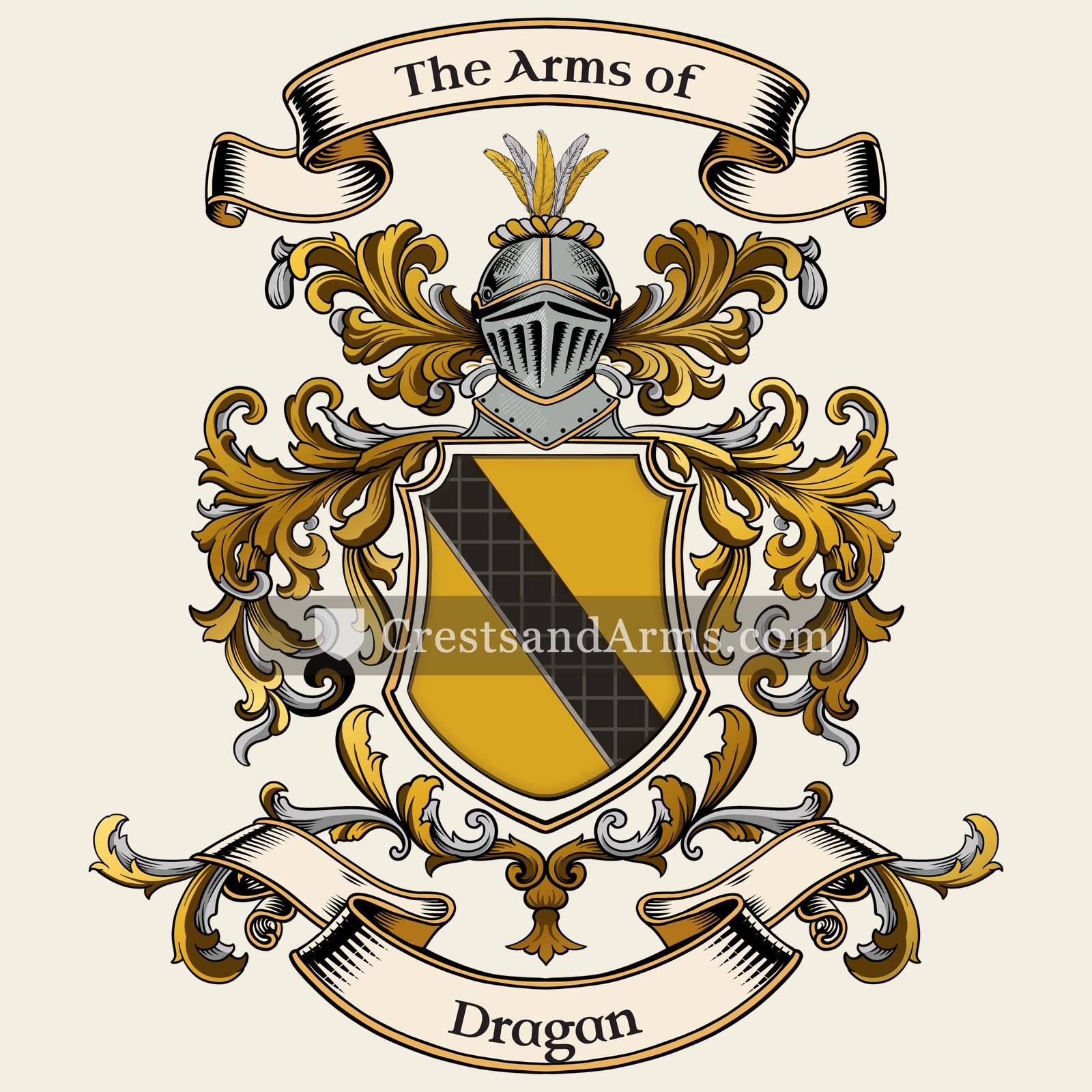
Symbols on this shield
bendDefence, and the scarf of a commander
Colours
Gold (Or)Means: Generosity
Black (Sable)Means: Constancy
Historical info
Source
J. B. Rietstap, Armorial Général, Gouda: G. B. van Goor Zonen, 1884–87
Blazon (the actual original written record)
“D'or à la bande de sa. Cq. cour. C.: un dragon iss. d'or. S.: deux dragons d'or.”
BrabantBrabant, c. 1737
Digital archive packCoat of arms PNG, gold border print PDF, vector SVG and the certificate of authenticity. Sent to your email in minutes.
Map of Belgium showing where the Dragan arms are recorded
The Dragan arms were recorded in Brabant, c. 1737.
Brabant lay at the heart of the Low Countries, where the trade routes met. Its towns were wealthy and its landowners many, and both kinds of family kept arms, which is why the region is so heavily represented.
This is where the arms were entered in the register. Families often moved to other parts of the country, so the same name can turn up in more than one region.
The body that granted and recorded arms in Belgium in this period.
Charles VI, Holy Roman Emperor
Sovereign of the period
Charles VI, Holy Roman Emperor
1711–1740
Reigning in France when the Dragan arms are first recorded.
How Arms Worked in Belgium
In Belgium, a coat of arms is considered personal property that is passed down through the male line to legitimate descendants. Families often use the same shield design across generations to show their shared heritage. If a branch of the family wants to change the design, they must apply for an official update to their specific version of the arms.
Granting authority
The Conseil héraldique is the official body that regulates and approves all coats of arms in Belgium.
How they got arms
Families obtain their coats of arms through formal royal grants or by confirming their historical right to use existing designs.
Where arms were recorded
All approved coats of arms are officially recorded in the public registers of the Conseil héraldique since 1844.
The family's standing
Recorded among the armigerous families of Brabant.
Origin & History of the Dragan Family in Belgium
The history of the Dragan family in Belgium finds its earliest documented roots in the Brabant region during the mid-eighteenth century. By 1737, records indicate that family members were already established within this historically significant territory, which served as a central hub for trade and administration in the Low Countries. The name itself likely originated as a descriptive term or a nickname, as was common practice for surnames developing in European communities during that era. Life in Brabant at this time was defined by agricultural growth and the influence of local guilds, providing a stable environment for families to put down permanent roots. As the Dragan family integrated into the local social fabric, they participated in the daily rhythms of village and town life that characterized the region before the major industrial shifts of the following century. Their presence in the official registers of the time serves as a testament to their long-standing connection to the Belgian landscape.
Dragan Meaning & Related Branches
Root word
drago
Derived from the Latin word for dragon or serpent.
This name
DraganA Slavic-origin name meaning precious, dear, or beloved.
also spelled
Dragone
Dragons
Documented Sources
J. B. Rietstap, Armorial Général, Gouda: G. B. van Goor Zonen, 1884–87
Archives départementales du Nord, Série G: Clergé séculier et paroisses
Lottin, Alain, Histoire des provinces françaises du Nord, 1988
Pirenne, Henri, Histoire de Belgique, 1900
Digital archive packCoat of arms PNG, gold border print PDF, vector SVG and the certificate of authenticity. Sent to your email in minutes.


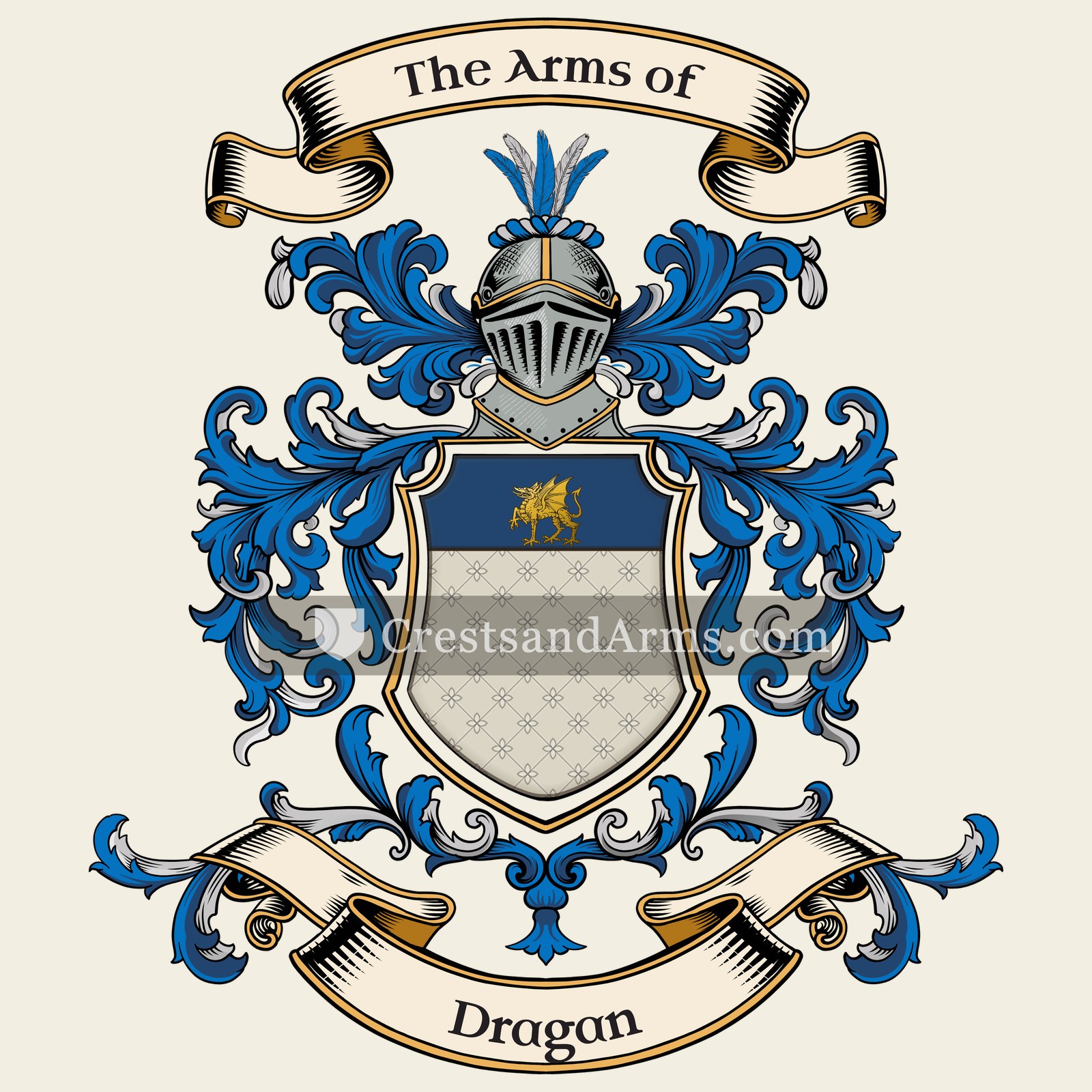
 chiefAuthority, wisdom and dominion
 dragonA most valiant defender of treasure
 chiefAuthority, wisdom and dominion
 dragonA most valiant defender of treasure


 bendDefence, and the scarf of a commander