Map of France showing where the Dragonfly arms are recorded
The Dragonfly arms were recorded in Flandre, c. 1640.
Flandre grew rich on cloth, and its towns were among the busiest in Europe. Merchant families bought land with their profits and took arms to go with it, so trade put as many names in the registers here as land did.
This is where the arms were entered in the register. Families often moved to other parts of the country, so the same name can turn up in more than one region.
The body that granted and recorded arms in France in this period.
Louis XIII of France
Sovereign of the period
Louis XIII of France
1617–1643
Reigning in France when the Dragonfly arms are first recorded.
How Arms Worked in France
In France, a coat of arms was a mark of honor that passed down through the male line to all legitimate descendants. Families often used the same shield without changes to show their shared heritage. If a branch wanted to stand out, they could add a small mark to their shield to show their specific place in the family tree.
Granting authority
The Juge d'armes de France acted as the official authority that regulated and verified coats of arms across the country.
How they got arms
Families typically inherited their arms from ancestors, though they could also receive them through royal grants or by proving their noble status.
Where arms were recorded
Coats of arms were officially recorded in the Armorial Général de France, which began its main collection in the year 1696.
The family's standing
Recorded among the armigerous families of Flandre.
Origin & History of the Dragonfly Family in France
The history of the Dragonfly family name in France begins within the complex cultural landscape of the Flanders region during the seventeenth century. By 1640, members of the family were firmly established in this area, which served as a vital crossroads for trade and movement between French and Dutch influences. During this period, families often adopted surnames based on local landmarks, natural surroundings, or specific traits observed by their neighbors. The name likely emerged as a descriptive identifier for individuals living near the marshy wetlands that defined the Flemish landscape, where the dragonfly was a common and recognizable inhabitant. As the family grew, they integrated into the local economy, likely participating in the agricultural or textile industries that supported the prosperity of the region. This early presence in Flanders suggests that the family was part of a resilient community that navigated the shifting political borders of the time while maintaining deep roots in the local environment.
Meaning of the Dragonfly family crest colors & symbols
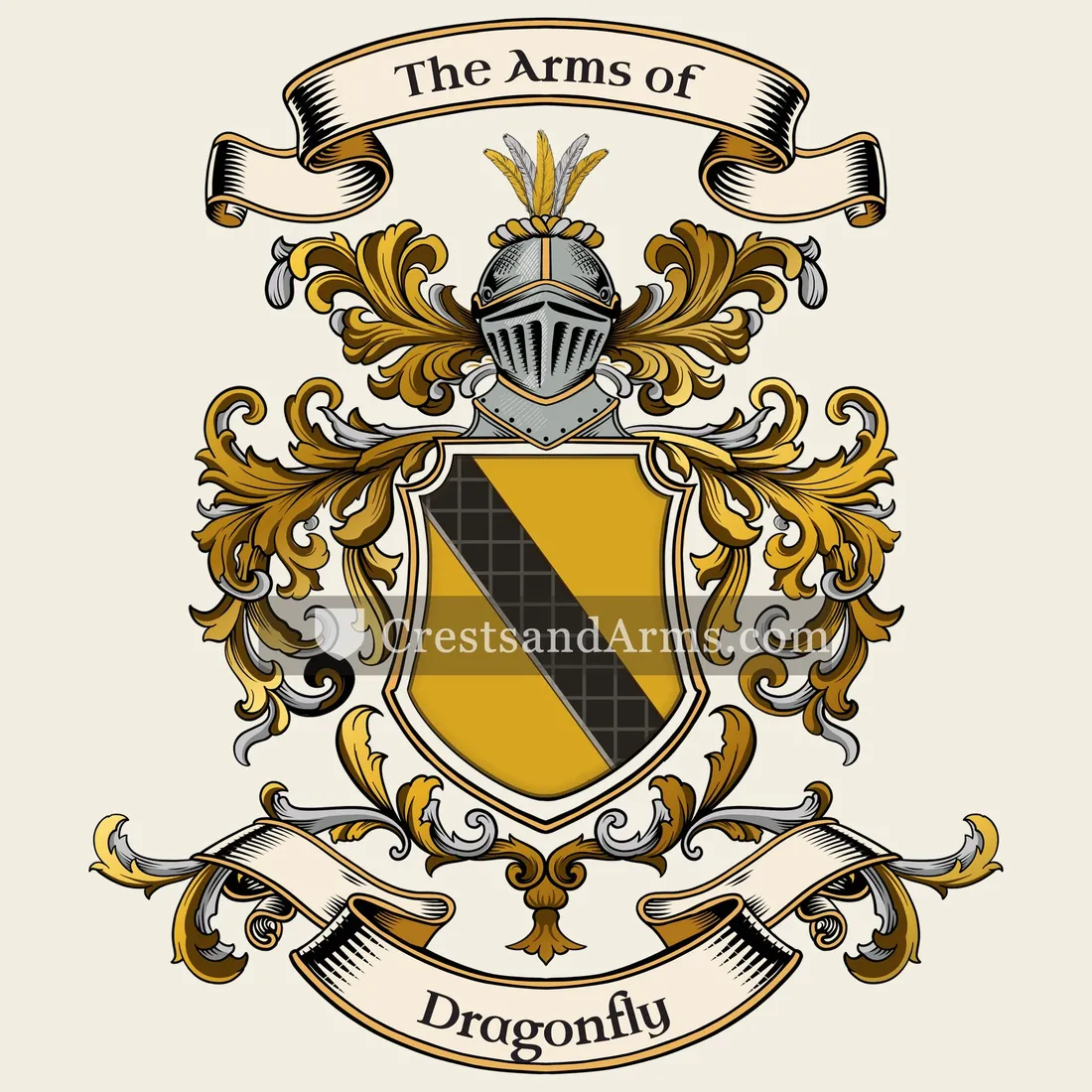
Symbols on this shield
bendDefence, and the scarf of a commander
Colours
Gold (Or)Means: Generosity
Black (Sable)Means: Constancy
Historical info
Source
J. B. Rietstap, Armorial Général, Gouda: G. B. van Goor Zonen, 1884–87
Blazon (the actual original written record)
“D'or à la bande de sa. Cq. cour. C.: un dragon iss. d'or. S.: deux dragons d'or.”
BrabantBrabant, c. 1737
Digital archive packCoat of arms PNG, gold border print PDF, vector SVG and the certificate of authenticity. Sent to your email in minutes.
Map of Belgium showing where the Dragonfly arms are recorded
The Dragonfly arms were recorded in Brabant, c. 1737.
Brabant lay at the heart of the Low Countries, where the trade routes met. Its towns were wealthy and its landowners many, and both kinds of family kept arms, which is why the region is so heavily represented.
This is where the arms were entered in the register. Families often moved to other parts of the country, so the same name can turn up in more than one region.
The body that granted and recorded arms in Belgium in this period.
Charles VI, Holy Roman Emperor
Sovereign of the period
Charles VI, Holy Roman Emperor
1711–1740
Reigning in France when the Dragonfly arms are first recorded.
How Arms Worked in Belgium
In Belgium, a coat of arms is considered personal property that is passed down through the male line to legitimate descendants. Families often use the same shield design across generations to show their shared heritage. If a branch of the family wants to change the design, they must apply for an official update to their specific version of the arms.
Granting authority
The Conseil héraldique is the official body that regulates and approves all coats of arms in Belgium.
How they got arms
Families obtain their coats of arms through formal royal grants or by confirming their historical right to use existing designs.
Where arms were recorded
All approved coats of arms are officially recorded in the public registers of the Conseil héraldique since 1844.
The family's standing
Recorded among the armigerous families of Brabant.
Origin & History of the Dragonfly Family in Belgium
The Dragonfly family name first appears in the historical record within the Duchy of Brabant during the year 1737. At this time, the region was a center of agricultural innovation and trade, which likely influenced the daily lives of these early ancestors. The name itself suggests a strong connection to the local landscape, as the marshy lowlands of Brabant provided a perfect habitat for the insects that inspired the moniker. Families in this area often adopted names based on the natural world to distinguish themselves in growing village communities. By the mid-18th century, the Dragonfly family was established among the local population, contributing to the rural economy through farming and small-scale craftsmanship. Their presence in the parish registers of the time confirms that they were active members of the community who participated in the social and religious traditions of the Brabant region.
Dragonfly Meaning & Related Branches
Root word
Libellula
Latin term for a small balance or level.
This name
DragonflyAn English translation of the French surname Demoiselle, referring to the insect.
also spelled
Dragone
Dragons
Documented Sources
J. B. Rietstap, Armorial Général, Gouda: G. B. van Goor Zonen, 1884–87
Braudel, Fernand. La Méditerranée et le monde méditerranéen à l'époque de Philippe II. 1949
Le Roy Ladurie, Emmanuel. Histoire de France des régions: La périphérie française des origines à nos jours. 2001
Archives départementales du Nord, Série E: Familles et seigneuries
Archives nationales de France, Minutier central des notaires de Paris
Digital archive packCoat of arms PNG, gold border print PDF, vector SVG and the certificate of authenticity. Sent to your email in minutes.


 chiefAuthority, wisdom and dominion
 dragonA most valiant defender of treasure
 chiefAuthority, wisdom and dominion
 dragonA most valiant defender of treasure
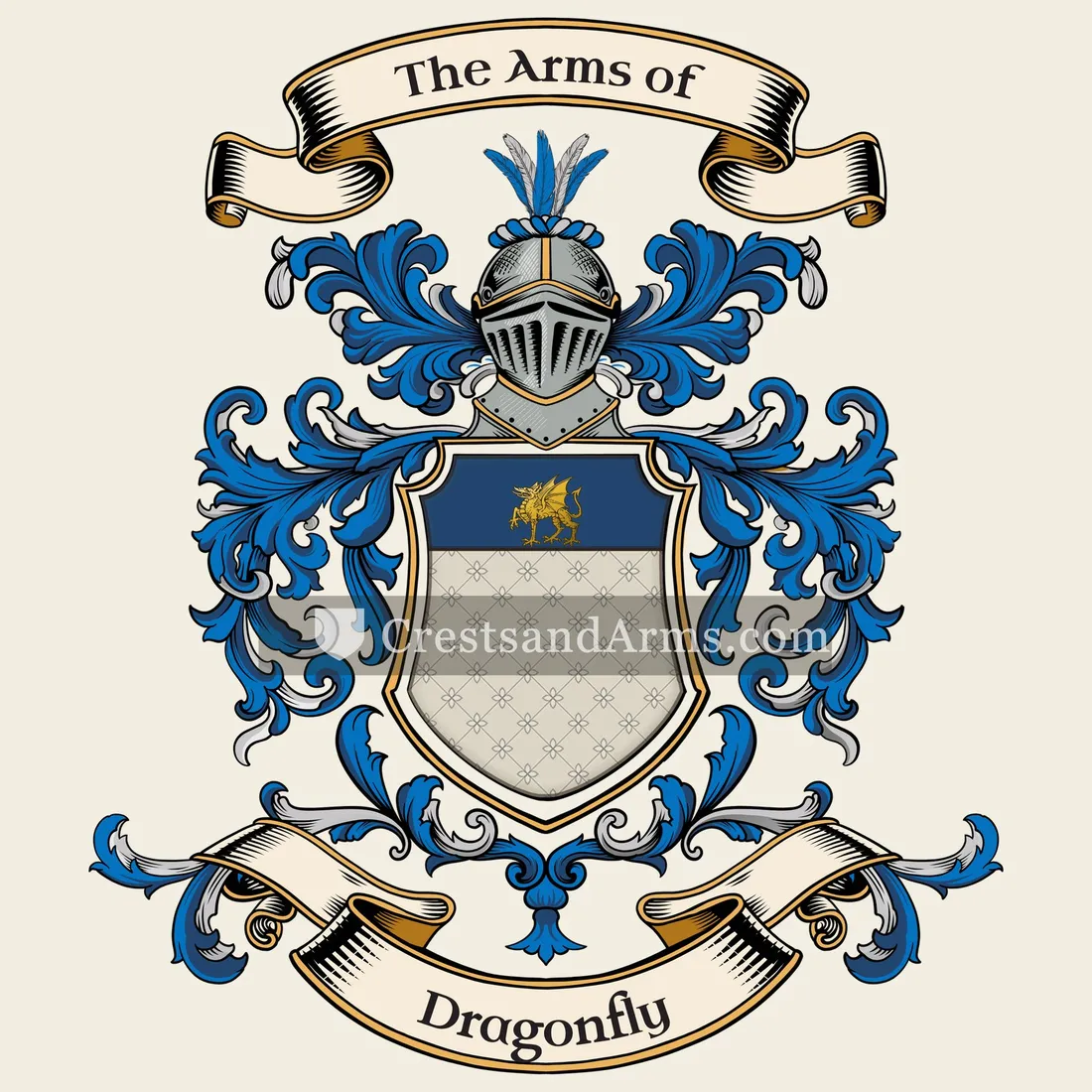


 bendDefence, and the scarf of a commander