Map of Belgium showing where the Dubuisson arms are recorded
The Dubuisson arms were recorded in Brabant, c. 1737.
Brabant lay at the heart of the Low Countries, where the trade routes met. Its towns were wealthy and its landowners many, and both kinds of family kept arms, which is why the region is so heavily represented.
This is where the arms were entered in the register. Families often moved to other parts of the country, so the same name can turn up in more than one region.
The body that granted and recorded arms in Belgium in this period.
Charles VI, Holy Roman Emperor
Sovereign of the period
Charles VI, Holy Roman Emperor
1711–1740
Reigning in Belgium when the Dubuisson arms are first recorded.
How Arms Worked in Belgium
In Belgium, a coat of arms is considered personal property that is passed down through the male line to legitimate descendants. Families often use the same shield design across generations to show their shared heritage. If a branch of the family wants to change the design, they must apply for an official update to their specific version of the arms.
Granting authority
The Conseil héraldique is the official body that regulates and approves all coats of arms in Belgium.
How they got arms
Families obtain their coats of arms through formal royal grants or by confirming their historical right to use existing designs.
Where arms were recorded
All approved coats of arms are officially recorded in the public registers of the Conseil héraldique since 1844.
The family's standing
Recorded among the armigerous families of Brabant.
Origin & History of the Dubuisson Family in Belgium
The family name Dubuisson is a classic example of a topographic surname, which means it was originally used to identify people based on where they lived. In the French language, the name translates to "of the bush" or "from the thicket," suggesting that the earliest ancestors likely resided near a prominent cluster of shrubs or a wooded area. By 1737, historical records confirm that members of the family were well-established in the Brabant region of present-day Belgium. During this era, Brabant was a central hub for trade and agriculture, and families like the Dubuissons were often tied to the local land or involved in the bustling commerce of the nearby towns. As the family grew, they moved throughout the region, adapting to the changing political landscape of the Low Countries while maintaining their connection to the rural traditions that first defined their name.
Coat of Arms & Family Crest Details
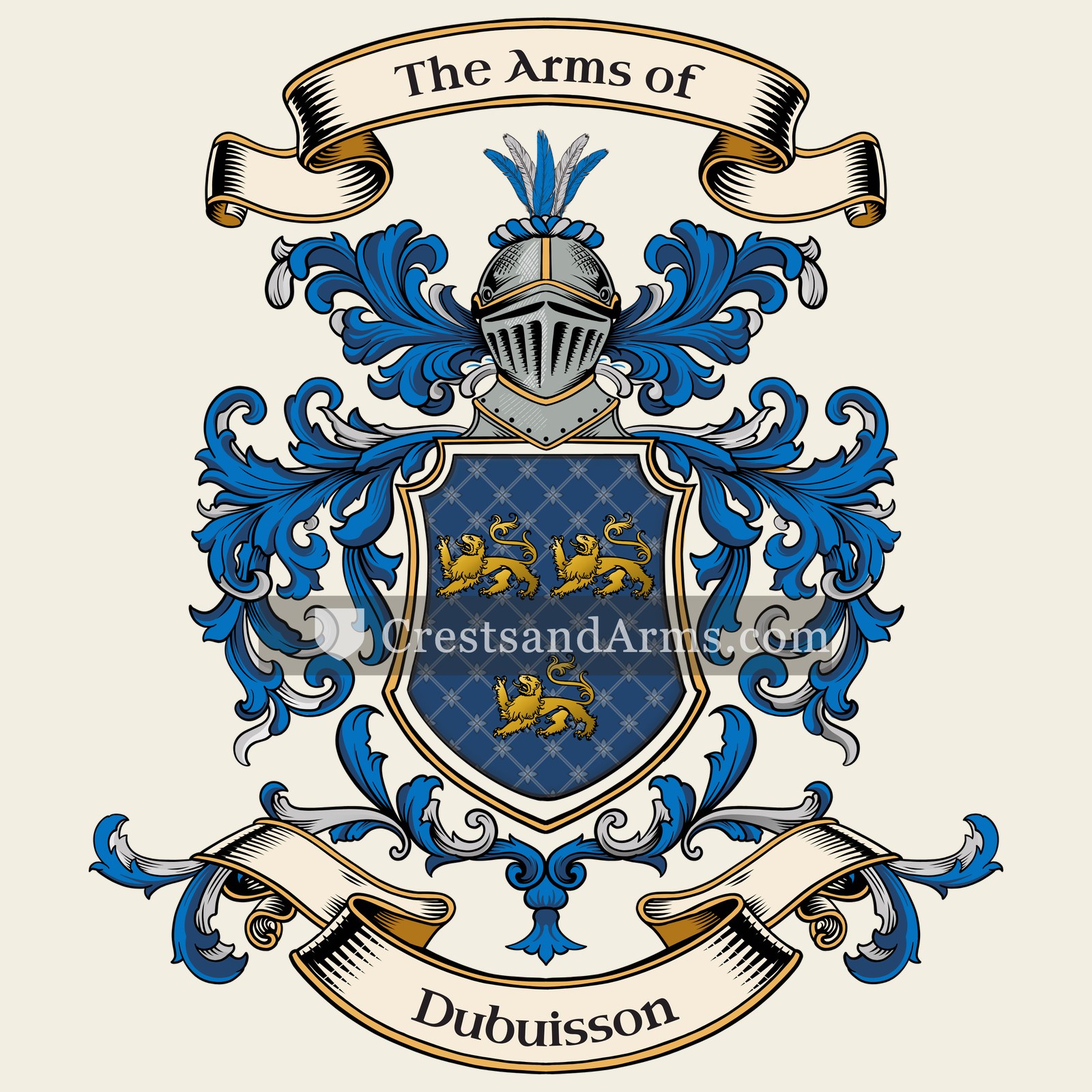
Symbols on this shield
lionCourage, strength and royalty
Colours
Blue (Azure)Means: Loyalty and truth
Gold (Or)Means: Generosity
Historical info
Source
J. B. Rietstap, Armorial Général, Gouda: G. B. van Goor Zonen, 1884–87
Blazon (the actual original written record)
“D'azur à trois léopards naiss. d'or. C.: un léopard iss. d'or.”
LorraineLorraine, c. 1660
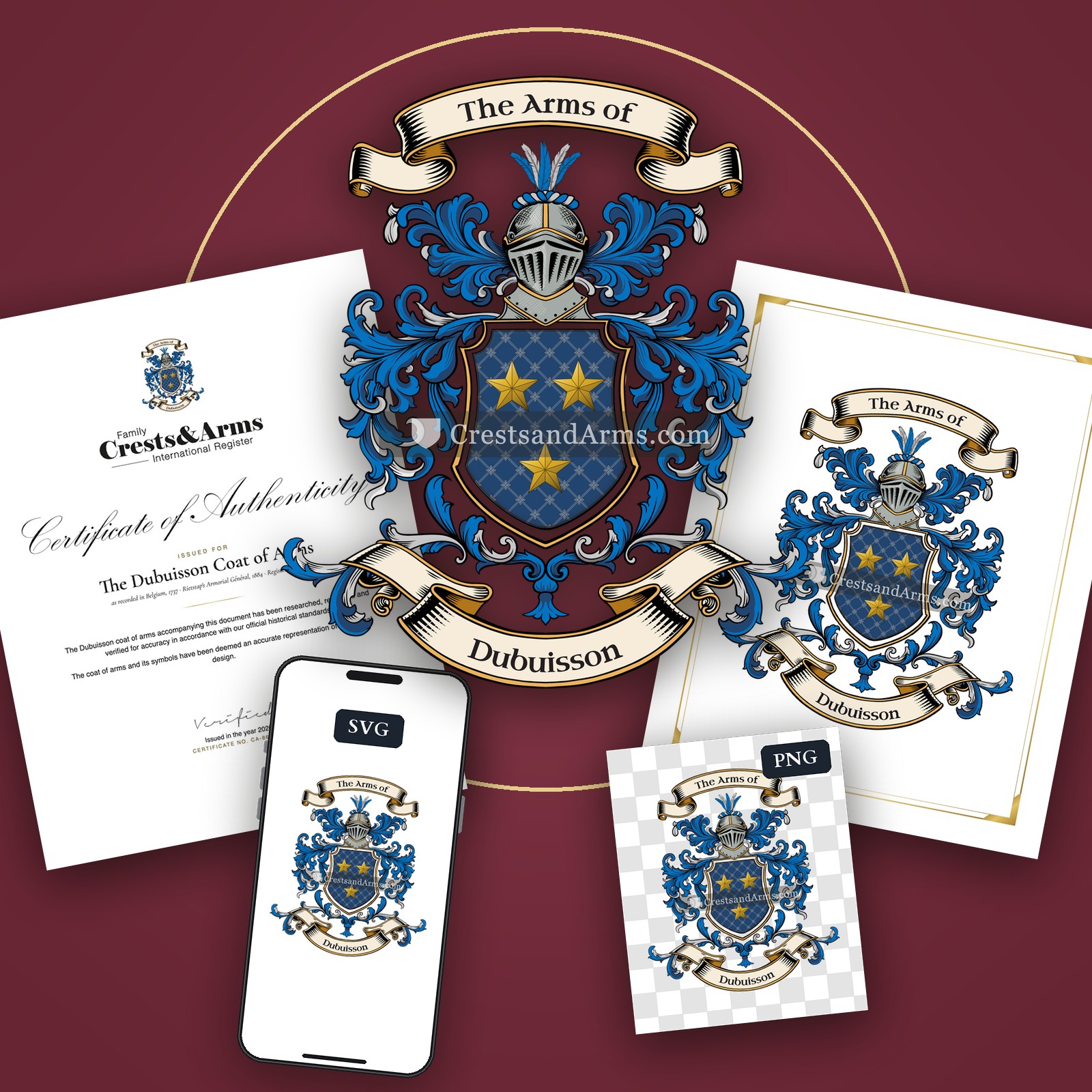
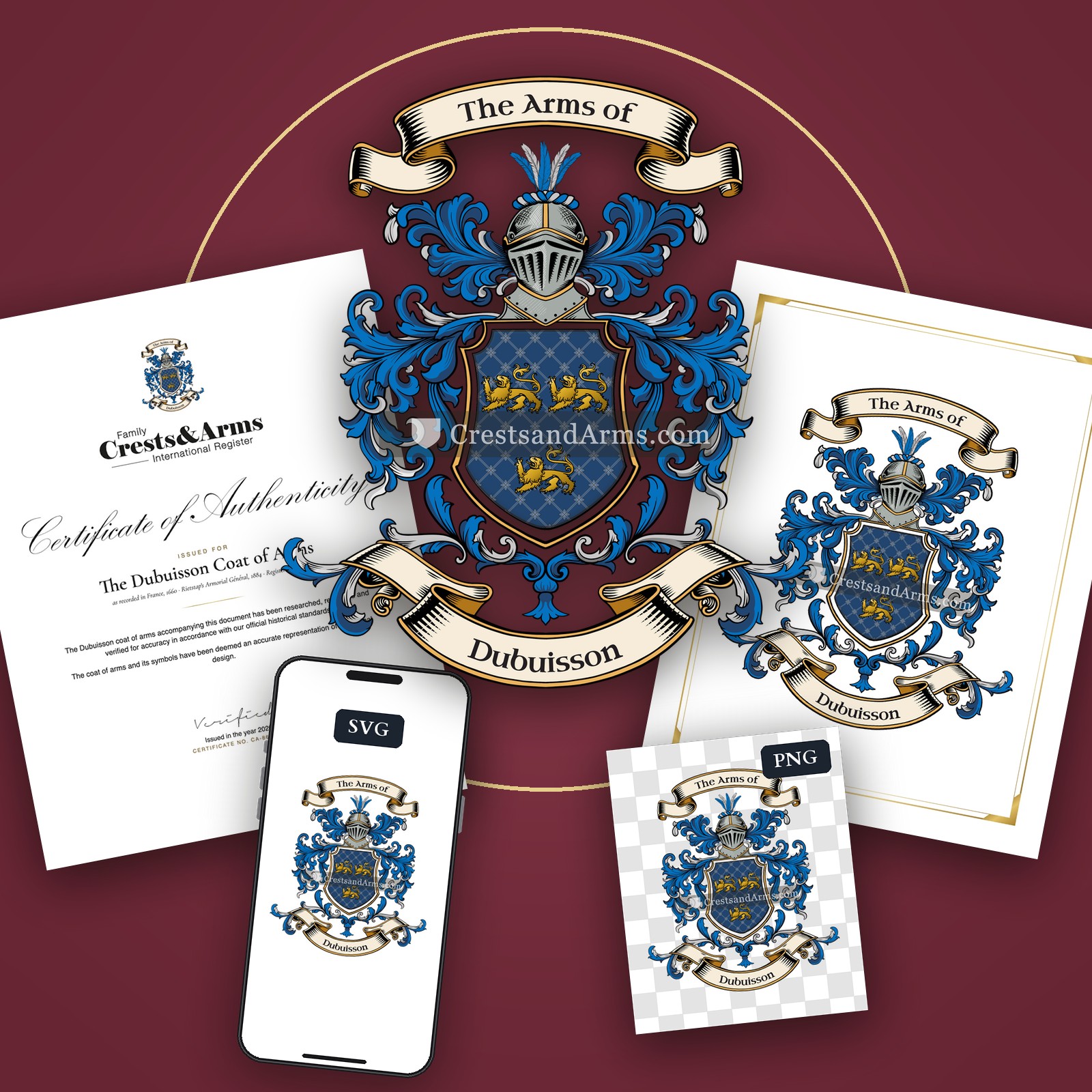
Digital archive packCoat of arms PNG, gold border print PDF, vector SVG and the certificate of authenticity. Sent to your email in minutes.
Map of France showing where the Dubuisson arms are recorded
The Dubuisson arms were recorded in Lorraine, c. 1660.
Lorraine sat on the border between France and the German lands, and border country bred soldiers. Families here held small estates and served in arms, and a fighting man was exactly the sort who carried a shield of his own.
This is where the arms were entered in the register. Families often moved to other parts of the country, so the same name can turn up in more than one region.
The body that granted and recorded arms in France in this period.
Louis XIV of France
Sovereign of the period
Louis XIV of France
1643–1715
Reigning in Belgium when the Dubuisson arms are first recorded.
How Arms Worked in France
In France, a coat of arms was a mark of honor that passed down through the male line to all legitimate descendants. Families often used the same shield without changes to show their shared heritage. If a branch wanted to stand out, they could add a small mark to their shield to show their specific place in the family tree.
Granting authority
The Juge d'armes de France acted as the official authority that regulated and verified coats of arms across the country.
How they got arms
Families typically inherited their arms from ancestors, though they could also receive them through royal grants or by proving their noble status.
Where arms were recorded
Coats of arms were officially recorded in the Armorial Général de France, which began its main collection in the year 1696.
The family's standing
Recorded among the armigerous families of Lorraine.
Origin & History of the Dubuisson Family in France
The surname Dubuisson is a classic example of a topographic name, which means it was originally used to identify people based on where they lived. In French, the name translates literally to "of the bush" or "from the thicket," suggesting that the earliest ancestors bearing this name likely resided near a prominent cluster of shrubs or a wooded area. By the mid-seventeenth century, the family was well-established in the Lorraine region of northeastern France. This area was a historical crossroads of culture and trade, often caught between the shifting borders of the French Kingdom and the Holy Roman Empire. Families living in Lorraine during the 1660s frequently navigated a landscape marked by both rural agricultural life and the influence of regional nobility. As the name spread, it became a marker of those who lived on the edges of cultivated land, grounding the family identity in the geography of the French countryside.
Dubuisson Meaning & Related Branches
Root word
buisson
A French term referring to a bush or a thicket.
This name
DubuissonDerived from a topographic location indicating someone who lived near a bush or thicket.
also spelled
Dubuissonn
Dubuissone
Dubuissont
Dubuissons
Dubeeson
Related arms
Baliquerecorded with Dubuisson, same area
Boucq (le) de la Mouzellerecorded with Dubuisson, same area
Druardrecorded with Dubuisson, same area
Hennerecorded with Dubuisson, same area
Documented Sources
J. B. Rietstap, Armorial Général, Gouda: G. B. van Goor Zonen, 1884–87
Archives: State Archives in Belgium (Rijksarchief in België), Parochieregisters van Brabant
Debrabandere, Frans, Woordenboek van de familienamen in België en Noord-Frankrijk, 2003
Herbillon, Jules and Germain, Jean, Dictionnaire des noms de famille en Belgique romane et dans les régions limitrophes, 1996
Digital archive packCoat of arms PNG, gold border print PDF, vector SVG and the certificate of authenticity. Sent to your email in minutes.


 mulletThe third son, and a divine quality from above
 mulletThe third son, and a divine quality from above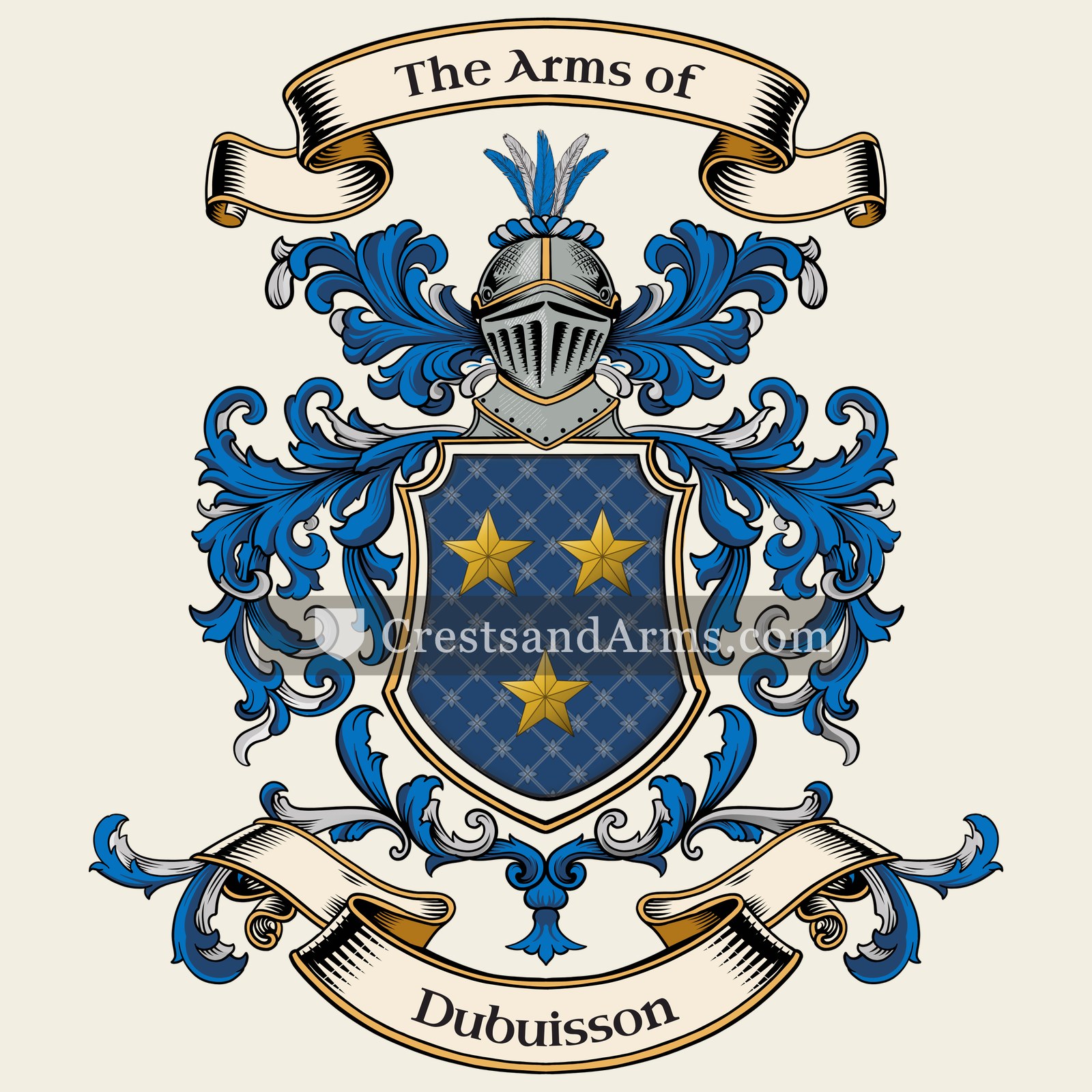


 lionCourage, strength and royalty