A record of documented arms, meaning and origin, researched for the Duc family lines. Documented in 2 countries.
Reg. 3580 · French, D–F
Coat of Arms & Family Crest Details
Symbols on this shield
fessThe military belt, and readiness to serve
saltireResolution, and St Andrew's cross
chiefAuthority, wisdom and dominion
labelThe eldest son, during his father's life
mulletThe third son, and a divine quality from above
masclePersuasion and the mail of a knight's coat
lionCourage, strength and royalty
hammerHonest labour, and the smith's craft
fleur de lisPurity, light, and the sixth son
lozengeHonour and nobility, and the arms of a woman
Colours
Silver (Argent)Means: Peace and sincerity
Red (Gules)Means: Military strength
Gold (Or)Means: Generosity
Black (Sable)Means: Constancy
Blue (Azure)Means: Loyalty and truth
Historical info
Source
J. B. Rietstap, Armorial Général, Gouda: G. B. van Goor Zonen, 1884–87
Blazon (the actual original written record)
“Ec.: au 1 d'arg. à trois lions de sa., cour. d'or, arm. et lamp. de gu. (Miche); au 2 de sin. à la fasce d'arg., acc. en chef de deux maillets d'or; au 3 d'or au saut. de gu., ch. d'une fleur-de-lis d'arg.; au 4 d'arg. à sept los. d'azur, 3, 3 et 1; au chef de gu., ch. d'un lambel d'or. Sur le tout de gu. à une étoile d'or, acc. de trois mâcles d'arg. S.: deux griffons d'or, tenant chacun une bannière, celle à dextre aux armes du surtout, celle à sen. aux armes du 1.”
FlandreFlandre, c. 1663
Digital archive packCoat of arms PNG, gold border print PDF, vector SVG and the certificate of authenticity. Sent to your email in minutes.
Map of France showing where the Duc arms are recorded
The Duc arms were recorded in Flandre, c. 1663.
Flandre grew rich on cloth, and its towns were among the busiest in Europe. Merchant families bought land with their profits and took arms to go with it, so trade put as many names in the registers here as land did.
This is where the arms were entered in the register. Families often moved to other parts of the country, so the same name can turn up in more than one region.
The body that granted and recorded arms in France in this period.
Louis XIV of France
Sovereign of the period
Louis XIV of France
1643–1715
Reigning in France when the Duc arms are first recorded.
How Arms Worked in France
In France, a coat of arms was a mark of honor that passed down through the male line to all legitimate descendants. Families often used the same shield without changes to show their shared heritage. If a branch wanted to stand out, they could add a small mark to their shield to show their specific place in the family tree.
Granting authority
The Juge d'armes de France acted as the official authority that regulated and verified coats of arms across the country.
How they got arms
Families typically inherited their arms from ancestors, though they could also receive them through royal grants or by proving their noble status.
Where arms were recorded
Coats of arms were officially recorded in the Armorial Général de France, which began its main collection in the year 1696.
The family's standing
Recorded among the armigerous families of Flandre.
Origin & History of the Duc Family in France
The surname Duc carries a rich historical legacy rooted in the social structures of northern France and the surrounding regions. By the mid-17th century, the family was firmly established in the territory of Flandre, a region known for its complex history of shifting borders between the French crown and the Spanish Netherlands. During this era, names like Duc often functioned as descriptive identifiers that linked individuals to their social standing or their professional relationship to local nobility. Because the region was a bustling hub of trade and agricultural development, families with this name were frequently integrated into the local administrative and merchant classes. This allowed them to maintain a stable presence in the area throughout the late 1600s, surviving the various political upheavals that defined the borderlands of the period. Their documented presence in 1663 suggests they were part of a resilient population that helped shape the local culture and economy of the French Flemish provinces.
Coat of Arms & Family Crest Details
Symbols on this shield
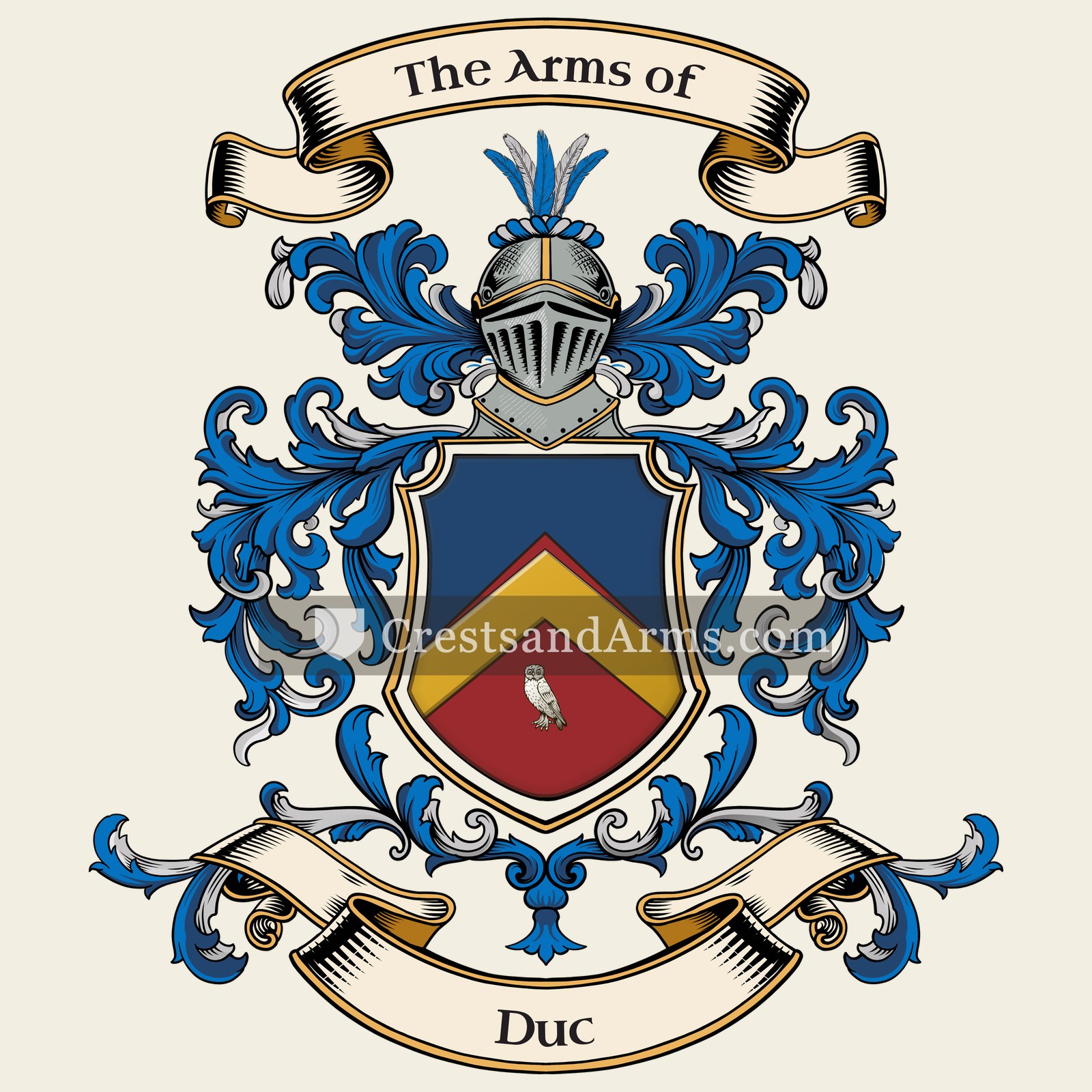
chevronProtection, and faithful service completed
owlWisdom and vigilance by night
Colours
Blue (Azure)Means: Loyalty and truth
Red (Gules)Means: Military strength
Gold (Or)Means: Generosity
Historical info
Source
J. B. Rietstap, Armorial Général, Gouda: G. B. van Goor Zonen, 1884–87
Blazon (the actual original written record)
“D'azur chapé de gu.; au chev. d'or, br. sur la division; l'azur ch. d'une chouette (duc) au nat.”
SwitzerlandValais, c. 1745
Digital archive packCoat of arms PNG, gold border print PDF, vector SVG and the certificate of authenticity. Sent to your email in minutes.
Map of Switzerland showing where the Duc arms are recorded
The Duc arms were recorded in Valais, c. 1745.
This is where the arms were entered in the register. Families often moved to other parts of the country, so the same name can turn up in more than one region.
The body that granted and recorded arms in Switzerland in this period.
How Arms Worked in Switzerland
In Switzerland, coats of arms were not restricted to the nobility and were often adopted by common citizens and families. These symbols were passed down through generations to show family identity. When branches of a family grew, they often changed small details of the design to distinguish their own line from the original group.
Granting authority
Cantonal and civic authorities managed the use of coats of arms within their specific regions and local jurisdictions.
How they got arms
Families typically assumed their own coats of arms based on local custom rather than receiving them from a central monarch.
Where arms were recorded
Arms were recorded in various cantonal and civic registers starting from the fourteenth century throughout the Swiss region.
The family's standing
Recorded among the armigerous families of Switzerland.
Origin & History of the Duc Family in Switzerland
The family name Duc has deep roots in the rugged landscape of the Swiss canton of Valais. By the year 1745, records confirm that members of the Duc family were well-established residents in this mountainous region. The name itself is derived from the French word for a duke, which often suggests that the original ancestors held a position of local authority or served in the household of a nobleman during the Middle Ages. Life for the Duc family in the eighteenth century was likely centered around the challenging demands of alpine agriculture and the communal traditions of their specific village. As the family grew, they became an integral part of the social fabric of Valais, contributing to the development of the local economy and the preservation of regional customs. Their presence in the historical records of the mid-1700s serves as a testament to their long-standing endurance and their role in shaping the heritage of the Swiss Alps.
Duc Meaning & Related Branches
Root word
dux
Latin term for a leader, commander, or military guide.
This name
DucA title-based surname denoting someone who served a duke or held a high-ranking noble position.
also spelled
Duk
Documented Sources
J. B. Rietstap, Armorial Général, Gouda: G. B. van Goor Zonen, 1884–87
Archives Départementales du Nord, Série G: Clergé séculier et paroisses
Archives Départementales du Nord, Série E: Familles et seigneuries
Léon Vanderkindere, La Formation territoriale des principautés belges au Moyen Âge, 1902
Albert Dauzat, Dictionnaire étymologique des noms et prénoms de France, 1951
Digital archive packCoat of arms PNG, gold border print PDF, vector SVG and the certificate of authenticity. Sent to your email in minutes.


 fessThe military belt, and readiness to serve
 saltireResolution, and St Andrew's cross
 chiefAuthority, wisdom and dominion
 labelThe eldest son, during his father's life
 mulletThe third son, and a divine quality from above
 masclePersuasion and the mail of a knight's coat
 lionCourage, strength and royalty
 hammerHonest labour, and the smith's craft
 fleur de lisPurity, light, and the sixth son
 lozengeHonour and nobility, and the arms of a woman
 fessThe military belt, and readiness to serve
 saltireResolution, and St Andrew's cross
 chiefAuthority, wisdom and dominion
 labelThe eldest son, during his father's life
 mulletThe third son, and a divine quality from above
 masclePersuasion and the mail of a knight's coat
 lionCourage, strength and royalty
 hammerHonest labour, and the smith's craft
 fleur de lisPurity, light, and the sixth son
 lozengeHonour and nobility, and the arms of a woman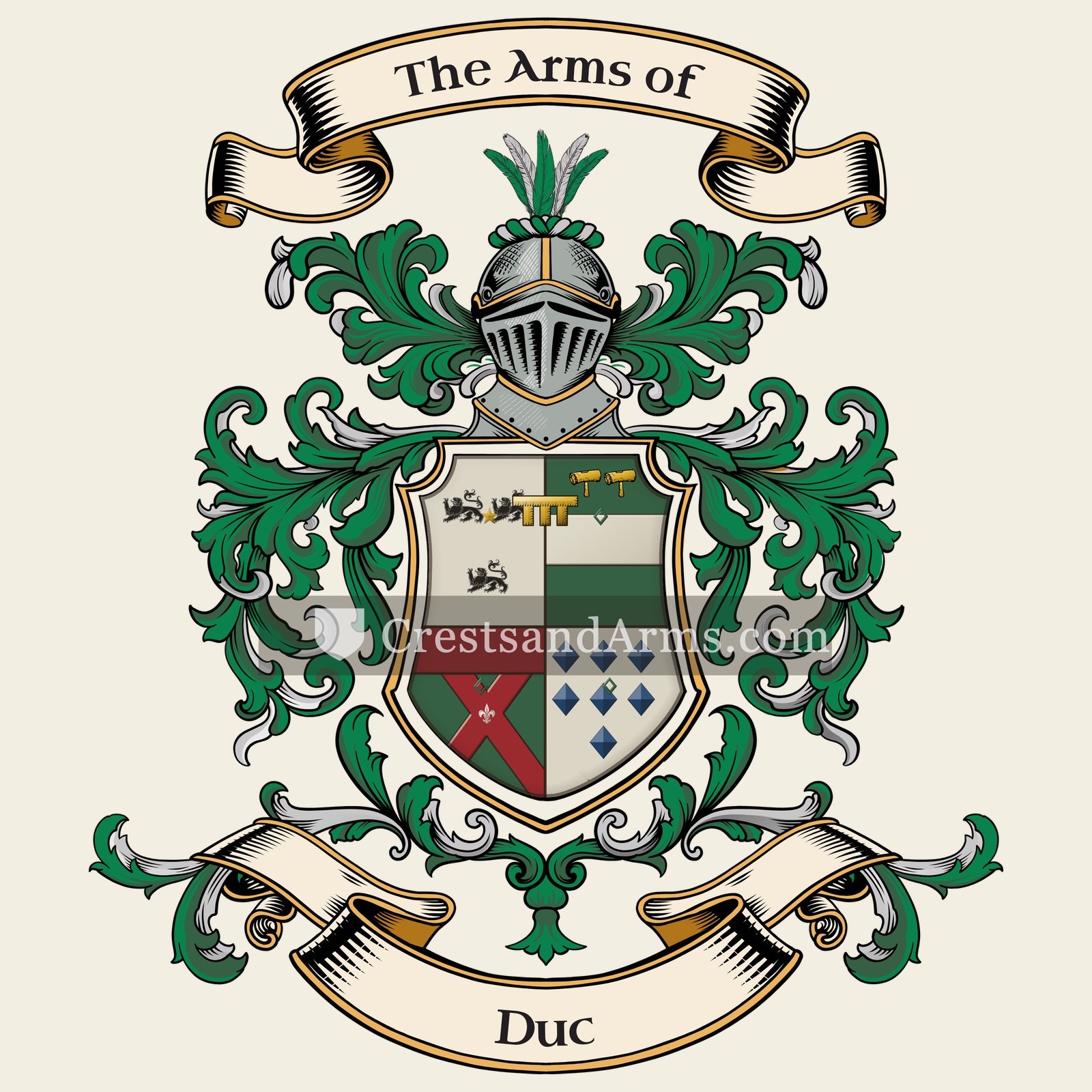


 chevronProtection, and faithful service completed
 owlWisdom and vigilance by night