Map of France showing where the Dudley arms are recorded
The Dudley arms were recorded in France, c. 1547.
Arms such as these were typically recorded in Bretagne.
More families held coats of arms in Bretagne than anywhere else in France. The land was divided into many small estates rather than a few large ones, so far more households counted as gentry, and each needed a shield of its own to be told apart.
This is where the arms were entered in the register. Families often moved to other parts of the country, so the same name can turn up in more than one region.
The body that granted and recorded arms in France in this period.
Francis I of France
Sovereign of the period
Francis I of France
1515–1547
Reigning in France when the Dudley arms are first recorded.
How Arms Worked in France
In France, a coat of arms was a mark of honor that passed down through the male line to all legitimate descendants. Families often used the same shield without changes to show their shared heritage. If a branch wanted to stand out, they could add a small mark to their shield to show their specific place in the family tree.
Granting authority
The Juge d'armes de France acted as the official authority that regulated and verified coats of arms across the country.
How they got arms
Families typically inherited their arms from ancestors, though they could also receive them through royal grants or by proving their noble status.
Where arms were recorded
Coats of arms were officially recorded in the Armorial Général de France, which began its main collection in the year 1696.
The family's standing
Recorded among the armigerous families of France.
Origin & History of the Dudley Family in France
The origins of the Dudley name in France are closely tied to the region of Bretagne during the mid-sixteenth century. While the name is often associated with English nobility, historical records confirm that members of the family were established in this French province by 1547. During this era, the movement of families across the English Channel was common due to shifting political alliances and trade connections between the two nations. These early settlers likely integrated into the local social structure by serving in administrative roles or through marriage into regional families. Their presence in Bretagne suggests that the family maintained a flexible identity that allowed them to navigate the cultural differences between England and France. By settling in this coastal area, they became part of a long tradition of cross-cultural exchange that defined the history of the region.
Coat of Arms & Family Crest Details
Symbols on this shield
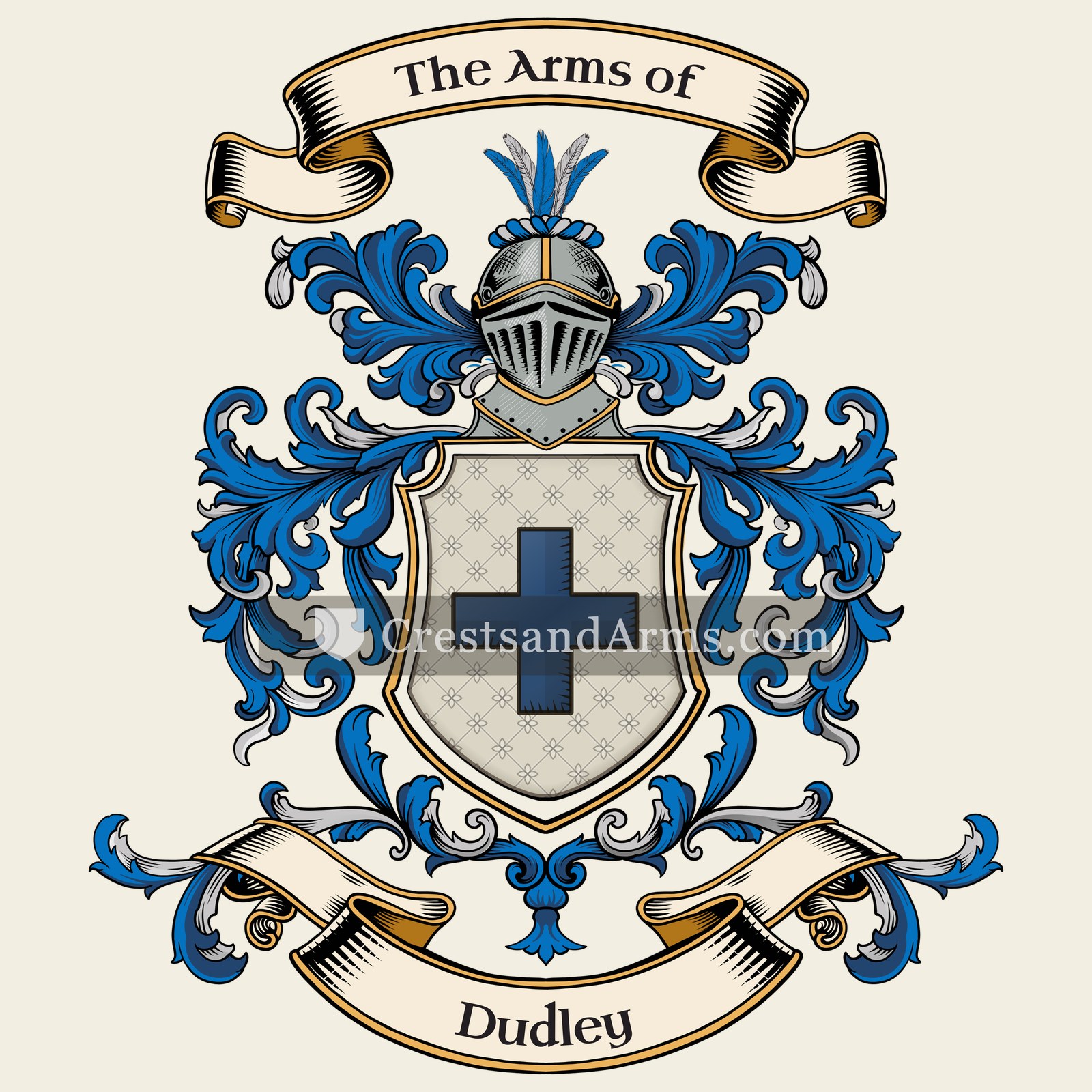
cross symbolChristian faith and service
Colours
Silver (Argent)Means: Peace and sincerity
Blue (Azure)Means: Loyalty and truth
Historical info
Source
Sir Bernard Burke, The General Armory of England, Scotland, Ireland and Wales, London: Harrison & Sons, 1884
Blazon (the actual original written record)
“Ar. a cross formée az”
DurhamDurham, c. 1476
Digital archive packCoat of arms PNG, gold border print PDF, vector SVG and the certificate of authenticity. Sent to your email in minutes.
Map of England showing where the Dudley arms are recorded
The Dudley arms were recorded in Durham, c. 1476.
Durham was governed by its bishop rather than the crown for most of its history, with its own courts and its own landed class. That separate world produced a tight group of families, nearly all of whom held arms.
This is where the arms were entered in the register. Families often moved to other parts of the country, so the same name can turn up in more than one region.
The body that granted and recorded arms in England in this period.
Edward IV of England
Sovereign of the period
Edward IV of England
1471–1483
Reigning in France when the Dudley arms are first recorded.
How Arms Worked in England
English heraldry allowed arms to be shared by all legitimate descendants of the original owner. These symbols were treated as personal property that moved through the generations to all children. While the eldest son kept the original design, other family members could use the same shield without needing to change it or register their own unique versions.
Granting authority
The College of Arms in London has regulated the use of coats of arms throughout England and Wales since 1484.
How they got arms
Families typically obtained their coats of arms through a formal grant from the Crown or by proving their ancient right to them.
Where arms were recorded
All official coats of arms are recorded in the registers kept at the College of Arms, which date back to the fifteenth century.
The family's standing
Recorded among the armigerous families of Durham.
Origin & History of the Dudley Family in England
The family name Dudley originated as a locative surname, meaning it was taken from a specific place rather than a trade or a nickname. The name is derived from the town of Dudley in the West Midlands, which was historically recorded as Duddeley in the Domesday Book of 1086. While the name is tied to this town, the family expanded their influence across England over several centuries. By 1476, records confirm that members of the family were well-established in the northern county of Durham. During this period, the family began to rise in social standing through strategic marriages and service to the English Crown. Their presence in Durham highlights how the family moved from their ancestral roots in the Midlands to become significant landowners and political figures in the north of England. This migration helped the name transition from a simple geographic identifier to a recognized family line with deep ties to the English nobility.
Dudley Meaning & Related Branches
Root word
Dudda
An Old English personal name of uncertain origin.
This name
DudleyDerived from a place name meaning Dudda's clearing or meadow.
also spelled
Dudly
Dudlay
Dudlie
Related arms
Thornburghrecorded with Dudley, same area
Documented Sources
J. B. Rietstap, Armorial Général, Gouda: G. B. van Goor Zonen, 1884–87
Archives départementales d'Ille-et-Vilaine, Série B, Fonds de la Chambre des comptes de Bretagne
Du Paz, Augustin, Histoire généalogique de plusieurs maisons illustres de Bretagne, 1619
Potier de Courcy, Pol, Nobiliaire et armorial de Bretagne, 1846
Digital archive packCoat of arms PNG, gold border print PDF, vector SVG and the certificate of authenticity. Sent to your email in minutes.


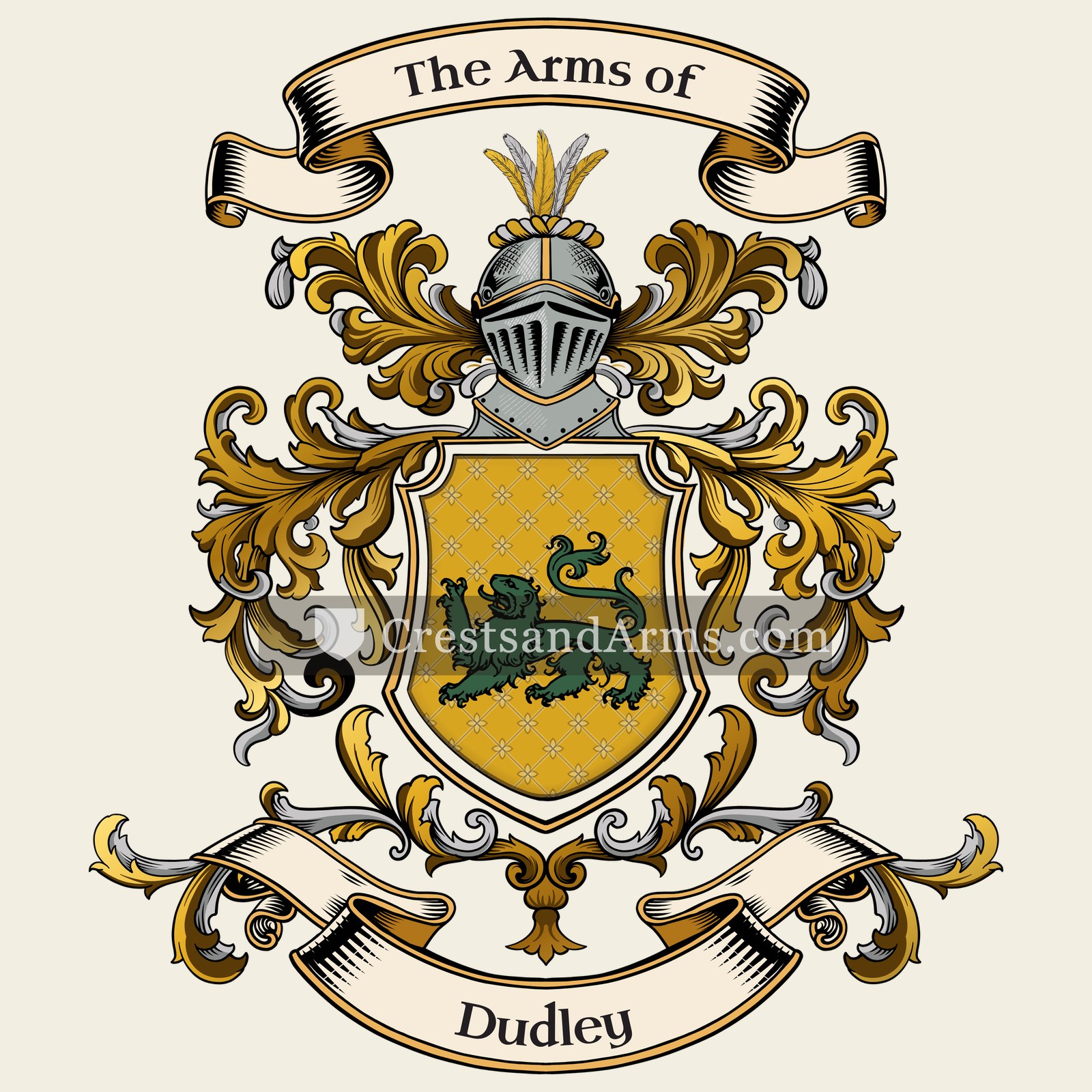
 lionCourage, strength and royalty
 lionCourage, strength and royalty


 cross symbolChristian faith and service