Map of France showing where the Dungca arms are recorded
The Dungca arms were recorded in Lorraine, c. 1663.
Lorraine sat on the border between France and the German lands, and border country bred soldiers. Families here held small estates and served in arms, and a fighting man was exactly the sort who carried a shield of his own.
This is where the arms were entered in the register. Families often moved to other parts of the country, so the same name can turn up in more than one region.
The body that granted and recorded arms in France in this period.
Louis XIV of France
Sovereign of the period
Louis XIV of France
1643–1715
Reigning in France when the Dungca arms are first recorded.
How Arms Worked in France
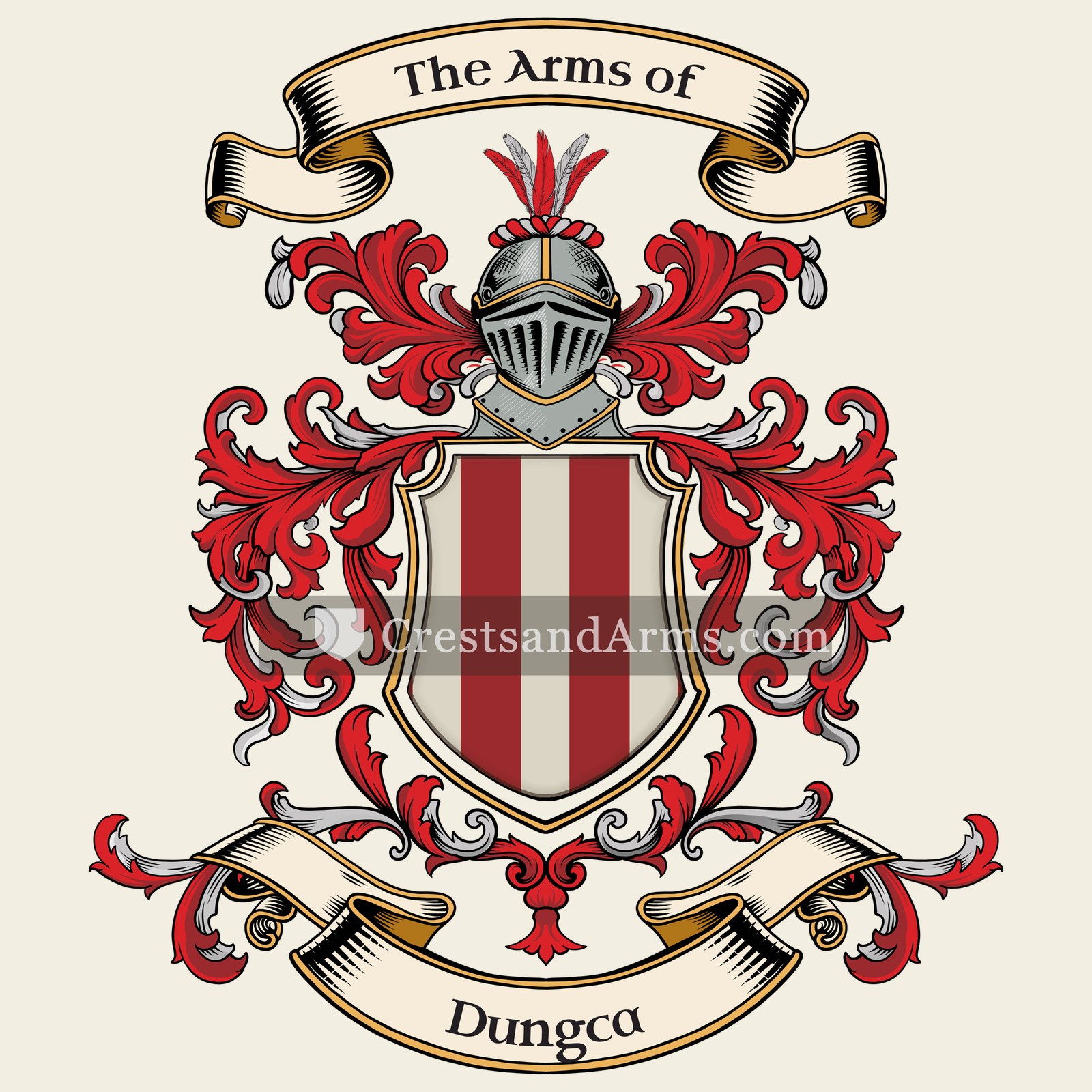
In France, a coat of arms was a mark of honor that passed down through the male line to all legitimate descendants. Families often used the same shield without changes to show their shared heritage. If a branch wanted to stand out, they could add a small mark to their shield to show their specific place in the family tree.
Granting authority
The Juge d'armes de France acted as the official authority that regulated and verified coats of arms across the country.
How they got arms
Families typically inherited their arms from ancestors, though they could also receive them through royal grants or by proving their noble status.
Where arms were recorded
Coats of arms were officially recorded in the Armorial Général de France, which began its main collection in the year 1696.
The family's standing
Recorded among the armigerous families of Lorraine.
Origin & History of the Dungca Family in France
The family name Dungca has deep roots that trace back to the region of Lorraine in eastern France during the mid-seventeenth century. Historical records confirm that members of the family were established in this area by 1663, living in a landscape shaped by the aftermath of the Thirty Years' War. During this period, Lorraine was a crossroads of European culture and politics, often caught between the influence of the French crown and the Holy Roman Empire. Families living in this territory were frequently involved in local agriculture or skilled trades, which allowed them to maintain a stable presence despite the shifting borders of the time. As the family grew, their history became intertwined with the social and economic changes occurring across the provinces of northeastern France. This early foundation in Lorraine provided the base from which the family name would eventually spread to other parts of the world.
Related Branches & Arms
Root word
Dung
Old French term for a person of dark or swarthy complexion.
This name
DungcaA locative or descriptive surname likely referring to an individual with dark features or origins.
also spelled
Dunge
Dungue
Dunghe
Documented Sources
J. B. Rietstap, Armorial Général, Gouda: G. B. van Goor Zonen, 1884–87
Archives départementales de Meurthe-et-Moselle, Série B (Cours et juridictions)
Cabourdin, Guy, Terres et hommes en Lorraine 1648-1789, 1977
Lepage, Henri, Les communes de la Meurthe: journal historique des villes, bourgs, villages, hameaux et censes de ce département, 1853
Digital archive packCoat of arms PNG, gold border print PDF, vector SVG and the certificate of authenticity. Sent to your email in minutes.


 paleMilitary strength, and a fortified defence
 paleMilitary strength, and a fortified defence