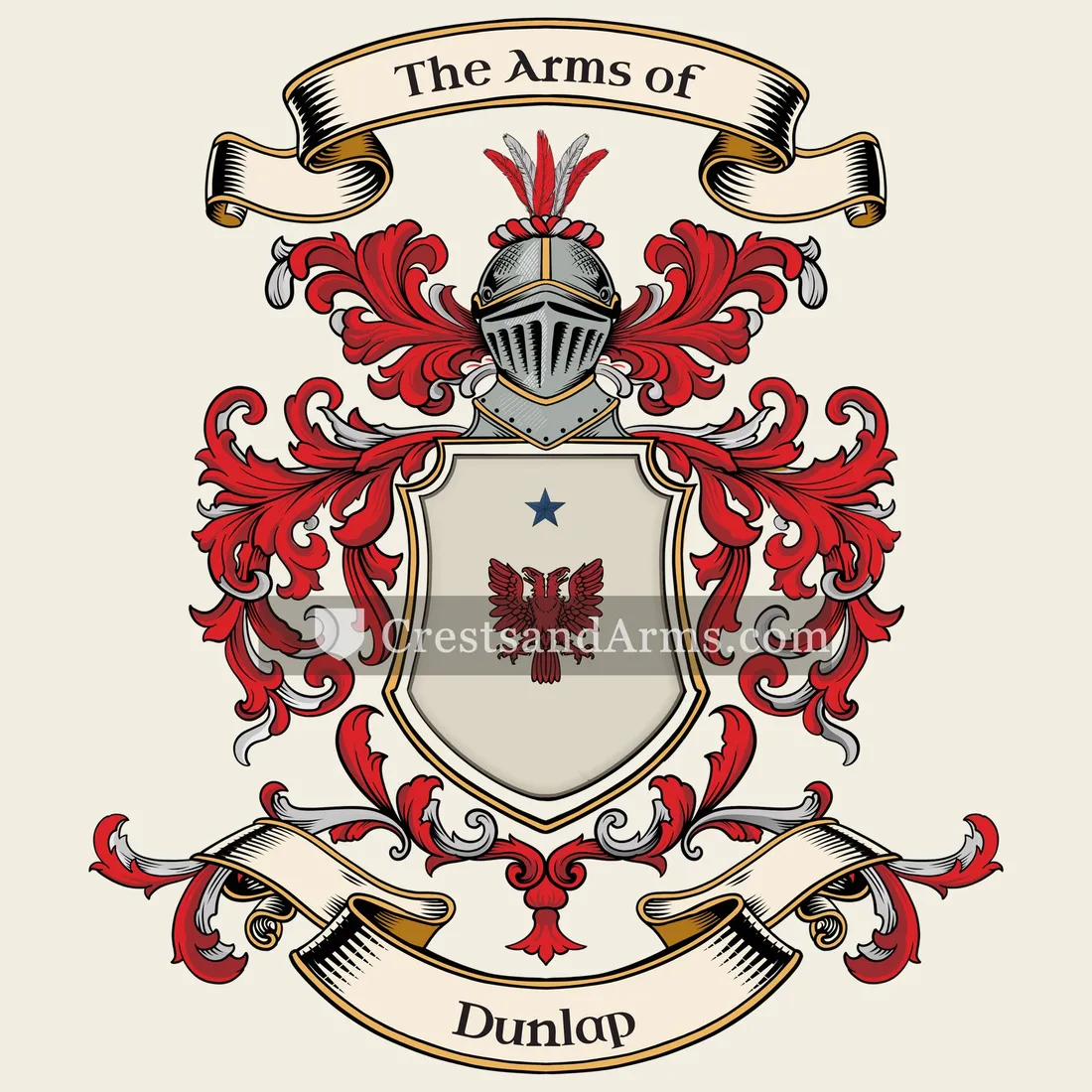
A record of documented arms, meaning and origin, researched for the Dunlap family lines. Documented in 2 countries.
Reg. 3074 · Dutch, D–F
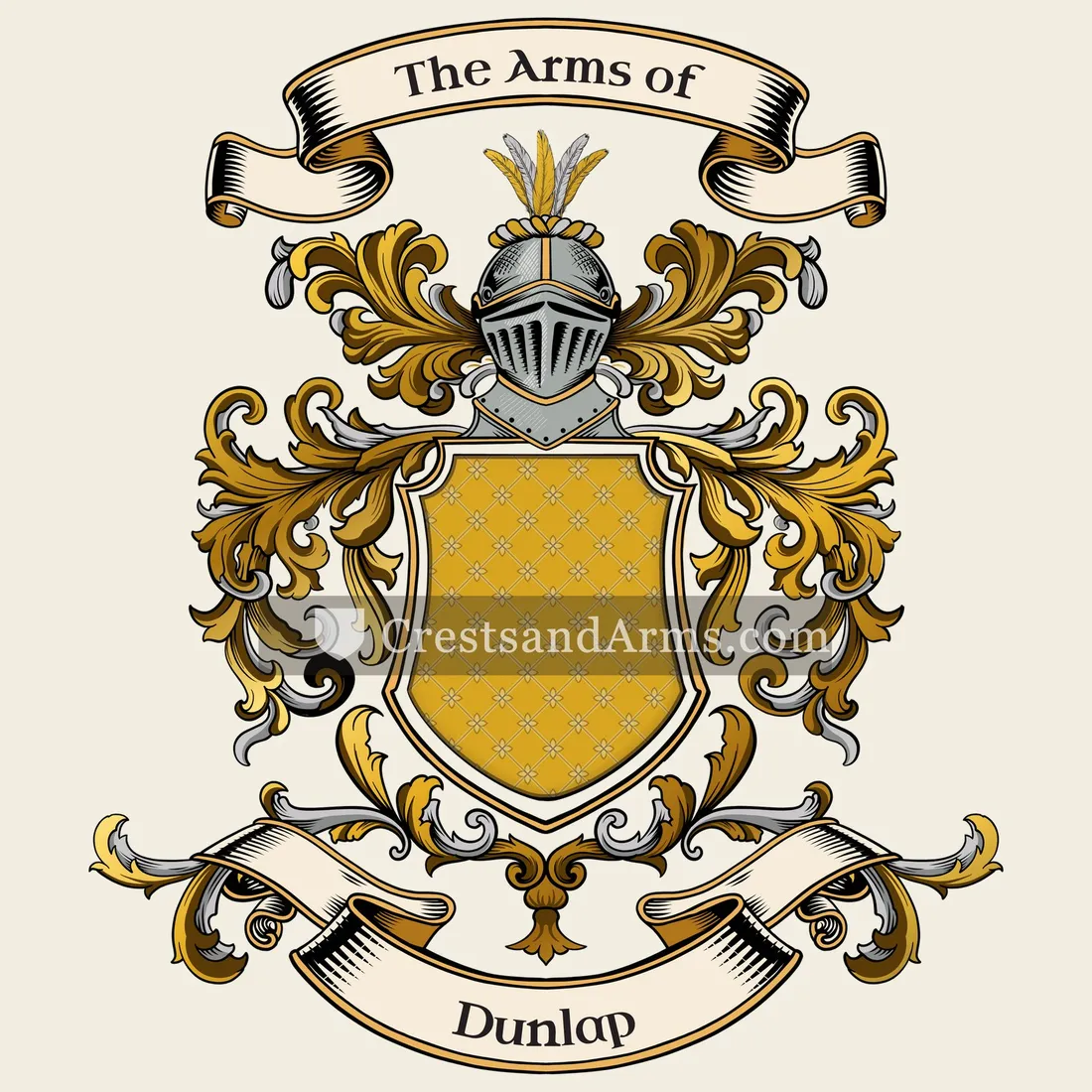
Meaning of the Dunlap family crest colors & symbols
Colours
Gold (Or)Means: Generosity
Historical info
Source
J. B. Rietstap, Armorial Général, Gouda: G. B. van Goor Zonen, 1884–87
Blazon (the actual original written record)
“d'or. S.: deux lions au nat., cour. à l'antique d'or, coll. chacun d'une couronne de chêne de sin., englantée d'or, portant chacun suspendu au collier un écusson. celui à dextre d'arg. au chef-sautoir de gu., et au canton d'arg. ch. d'un lion de sa. (Bruce), celui à sen. losangé d'arg. et de gu. (Fitzwilliam). D.: ESSAYEZ.”
Netherlandsc. 1815
Digital archive packCoat of arms PNG, gold border print PDF, vector SVG and the certificate of authenticity. Sent to your email in minutes.
Map of Netherlands showing where the Dunlap arms are recorded
The Dunlap arms were recorded in Netherlands, c. 1815.
Arms such as these were typically recorded in Friesland.
Friesland was low, wet country on the northern coast of the Netherlands, farmed by families who had held the same land for centuries. Free landholders were unusually common there, and a free landholder could carry arms.
This is where the arms were entered in the register. Families often moved to other parts of the country, so the same name can turn up in more than one region.
Region
Friesland
First recorded
1815
Granting Authority for the Dunlap Arms
Hoge Raad van Adel
Photograph made by me · CC BY-SA 3.0
The body that granted and recorded arms in Netherlands in this period.
William I of the Netherlands
Sovereign of the period
William I of the Netherlands
1815–1840
Reigning in Netherlands when the Dunlap arms are first recorded.
How Arms Worked in Netherlands
In the Netherlands, coats of arms were often used by noble families and those who held specific public offices. These arms were passed down through the generations to legitimate descendants. Younger branches of a family usually kept the original design without needing to add special marks. This system ensured that the family identity remained clear and consistent over many years.
Granting authority
The Hoge Raad van Adel is the official body that regulates and manages noble titles and coats of arms in the Netherlands.
How they got arms
Families typically obtained their coats of arms through official royal grants or by proving their long-standing historical use of the symbols.
Where arms were recorded
Coats of arms are officially recorded in the registers held by the Hoge Raad van Adel, which began its work in 1814.
The family's standing
Recorded among the armigerous families of Netherlands.
Origin & History of the Dunlap Family in Netherlands
The history of the Dunlap name in the Netherlands is deeply connected to the unique cultural landscape of the Friesland province during the early nineteenth century. While the name is often associated with Scottish roots, records confirm that families bearing this name were established in Friesland by 1815. During this period, the Netherlands underwent a significant transition as the Napoleonic Wars concluded and the United Kingdom of the Netherlands was formed. Many families in the northern regions were required to formalize their surnames for civil registration purposes under new government mandates. The presence of the Dunlap name in this specific region suggests that these early members were likely integrated into the local agricultural or maritime communities that defined Frisian life. These individuals navigated a time of great social change, helping to shape the local identity of the province as it transitioned into the modern Dutch state.
Meaning of the Dunlap family crest colors & symbols
Symbols on this shield
eagleNobility, strength and a keen mind
mulletThe third son, and a divine quality from above
Colours
Silver (Argent)Means: Peace and sincerity
Red (Gules)Means: Military strength
Blue (Azure)Means: Loyalty and truth
Historical info
Source
Sir Bernard Burke, The General Armory of England, Scotland, Ireland and Wales, London: Harrison & Sons, 1884
Blazon (the actual original written record)
“Ar. a two-headed eagle displ. gu. in dexter chief point a mullet az. for diff”
AyrGarnkirk · Ayr, c. 1672
Digital archive packCoat of arms PNG, gold border print PDF, vector SVG and the certificate of authenticity. Sent to your email in minutes.
Map of Scotland showing where the Dunlap arms are recorded
The Dunlap arms were recorded in Ayr, c. 1672.
Ayrshire was farming country along Scotland's south-west coast, held in a great many small estates. Its lairds were numerous rather than rich, and each holding brought its own claim to arms.
This is where the arms were entered in the register. Families often moved to other parts of the country, so the same name can turn up in more than one region.
The body that granted and recorded arms in Scotland in this period.
Charles II of England
Sovereign of the period
Charles II of England
1660–1685
Reigning in Netherlands when the Dunlap arms are first recorded.
How Arms Worked in Scotland
Scottish heraldry is unique because it treats a coat of arms as a piece of personal property protected by law. Only one person can own a specific design at any given time. When a family grows, the head keeps the original shield while other relatives must apply for their own distinct version with slight changes to prove their specific identity.
Granting authority
The Court of the Lord Lyon acts as the official body that regulates and controls all heraldic matters throughout Scotland.
How they got arms
Individuals obtain a legal right to their arms through a formal petition process that confirms their identity and family connection.
Where arms were recorded
All valid coats of arms are officially entered into the Public Register of All Arms and Bearings starting from 1672.
The family's standing
Recorded among the armigerous families of Ayr.
Origin & History of the Dunlap Family in Scotland
The surname Dunlap originates from the Cunninghame district of Ayrshire in southwest Scotland. The name itself is derived from the Gaelic words *dun*, meaning a fort or hill, and *lab*, which refers to a bend or a hollow. This suggests that the earliest members of the family were likely associated with a specific landscape feature near a fortified settlement. By the late 17th century, the family had established a firm presence in the town of Ayr, as evidenced by records from 1672 that place them within the local community. During this period, families in the region were often deeply tied to the land and the shifting political landscape of the Scottish Lowlands. The Dunlaps were part of the broader social fabric of Ayrshire, living through a time of significant religious and civil transition in Scotland. Their history reflects the typical movement and settlement patterns of families who built their lives around the market towns and rural estates of the west coast.
Dunlap Meaning & Related Branches
Root word
Dun-Laba
Gaelic for fort or hill and a muddy river bank.
This name
DunlapRefers to a person living near a fort situated by a muddy river.
also spelled
Dunlopp
Dunlope
Dunloppe
Documented Sources
J. B. Rietstap, Armorial Général, Gouda: G. B. van Goor Zonen, 1884–87
Tresoar (Fries Historisch en Letterkundig Centrum), Burgerlijke Stand van Friesland (1811-1950)
H.K. Schippers, De invoering van de burgerlijke stand in Nederland, 1999
Digital archive packCoat of arms PNG, gold border print PDF, vector SVG and the certificate of authenticity. Sent to your email in minutes.




 eagleNobility, strength and a keen mind
 mulletThe third son, and a divine quality from above