A record of documented arms, meaning and origin, researched for the du Quesne family lines. Documented in 2 countries.
Reg. 7627 · Belgian, D–F
Coat of Arms & Family Crest Details
Symbols on this shield
chevronProtection, and faithful service completed
acornAntiquity and strength from small beginnings
leafHappiness and abundance
Colours
Silver (Argent)Means: Peace and sincerity
Blue (Azure)Means: Loyalty and truth
Gold (Or)Means: Generosity
Green (Vert)Means: Hope
Historical info
Source
J. B. Rietstap, Armorial Général, Gouda: G. B. van Goor Zonen, 1884–87
Blazon (the actual original written record)
“D'arg. au chev. d'azur, acc. en chef de deux glands d'or, tigés et feuillés de sin., les tiges en bas, et en p. d'une feuille de chêne de sin., la tige en bas.”
BelgiumBruges, c. 1737
Digital archive packCoat of arms PNG, gold border print PDF, vector SVG and the certificate of authenticity. Sent to your email in minutes.
Map of Belgium showing where the du Quesne arms are recorded
The du Quesne arms were recorded in Bruges, c. 1737.
This is where the arms were entered in the register. Families often moved to other parts of the country, so the same name can turn up in more than one region.
The body that granted and recorded arms in Belgium in this period.
Charles VI, Holy Roman Emperor
Sovereign of the period
Charles VI, Holy Roman Emperor
1711–1740
Reigning in Belgium when the du Quesne arms are first recorded.
How Arms Worked in Belgium
In Belgium, a coat of arms is considered personal property that is passed down through the male line to legitimate descendants. Families often use the same shield design across generations to show their shared heritage. If a branch of the family wants to change the design, they must apply for an official update to their specific version of the arms.
Granting authority
The Conseil héraldique is the official body that regulates and approves all coats of arms in Belgium.
How they got arms
Families obtain their coats of arms through formal royal grants or by confirming their historical right to use existing designs.
Where arms were recorded
All approved coats of arms are officially recorded in the public registers of the Conseil héraldique since 1844.
The family's standing
Recorded among the armigerous families of Belgium.
Origin & History of the du Quesne Family in Belgium
The family name du Quesne carries a rich history rooted in the landscape of the Low Countries, where it emerged as a descriptor of place and origin. The name itself is derived from the French word for an oak tree, suggesting that the earliest ancestors likely lived near a prominent forest or a specific landmark defined by these trees. By the time the family was firmly established in Bruges in 1737, they were part of a vibrant urban culture known for its international trade and craftsmanship. During this era, Bruges served as a vital hub for merchants and skilled professionals, and the du Quesne family integrated into this society as the city underwent significant economic shifts. Their presence in the city records from the eighteenth century highlights a transition from rural origins toward a more settled life in one of Belgium’s most historic urban centers. This evolution reflects the broader movement of families across the region as they sought new opportunities within the growing commercial networks of the time.
Coat of Arms & Family Crest Details
Symbols on this shield
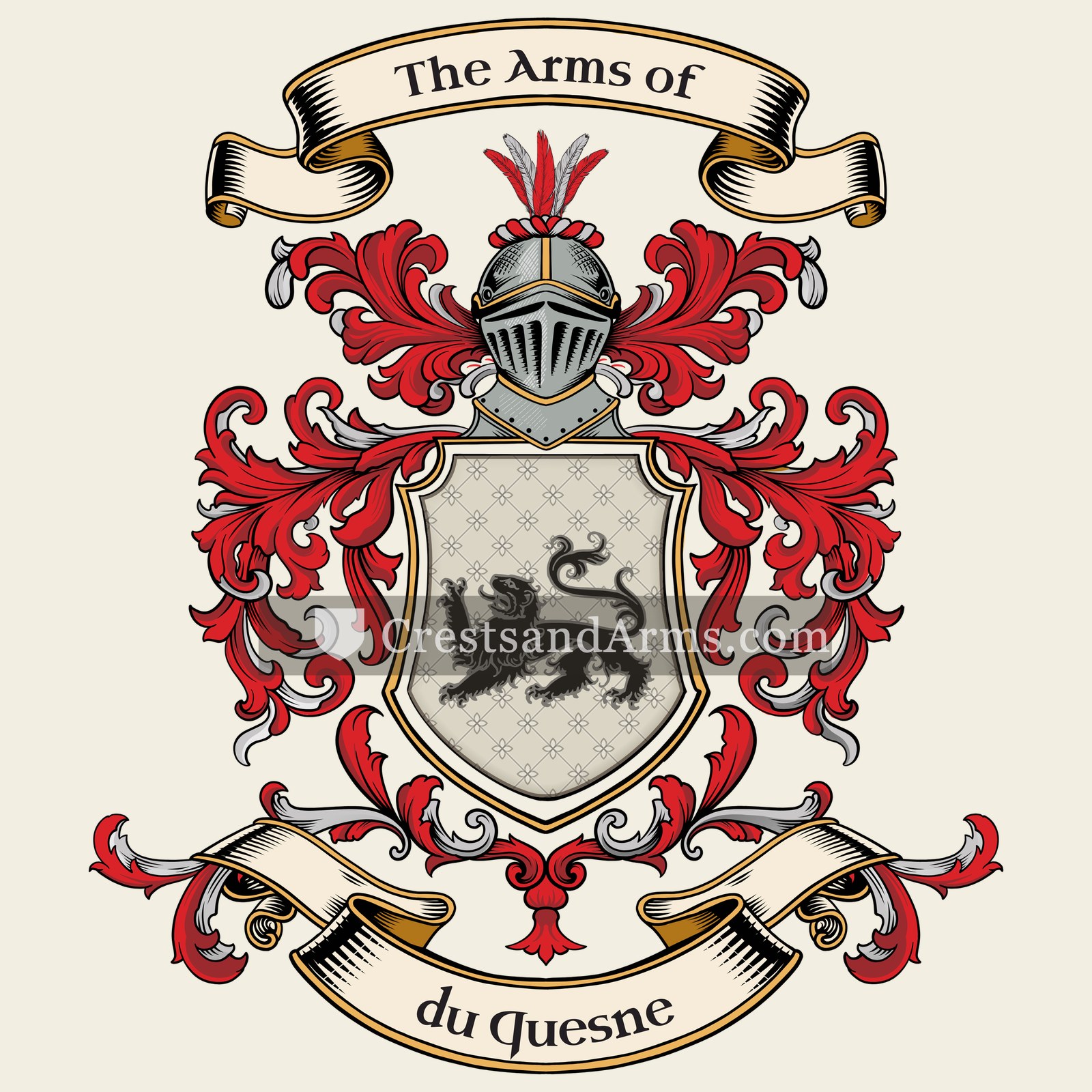
lionCourage, strength and royalty
Colours
Silver (Argent)Means: Peace and sincerity
Black (Sable)Means: Constancy
Historical info
Source
J. B. Rietstap, Armorial Général, Gouda: G. B. van Goor Zonen, 1884–87
Blazon (the actual original written record)
“D'arg. au lion de sa., arm. et lamp. de gu. Cq. cour. C.: le lion iss. - Ou: Ec.: aux 1 et 4 le lion; aux 2 et 3 parti d'arg. et de gu. [Armes du célèbre héros marin, ABRAHAM du Quesne.]”
NormandieNormandie, c. 1682
Digital archive packCoat of arms PNG, gold border print PDF, vector SVG and the certificate of authenticity. Sent to your email in minutes.
Map of France showing where the du Quesne arms are recorded
The du Quesne arms were recorded in Normandie, c. 1682.
Normandie held a dense crowd of knightly families on some of the best farmland in France. Its men had fought and settled abroad for generations, and a family that sent sons to war needed a shield they could be recognised by.
This is where the arms were entered in the register. Families often moved to other parts of the country, so the same name can turn up in more than one region.
The body that granted and recorded arms in France in this period.
Louis XIV of France
Sovereign of the period
Louis XIV of France
1643–1715
Reigning in Belgium when the du Quesne arms are first recorded.
How Arms Worked in France
In France, a coat of arms was a mark of honor that passed down through the male line to all legitimate descendants. Families often used the same shield without changes to show their shared heritage. If a branch wanted to stand out, they could add a small mark to their shield to show their specific place in the family tree.
Granting authority
The Juge d'armes de France acted as the official authority that regulated and verified coats of arms across the country.
How they got arms
Families typically inherited their arms from ancestors, though they could also receive them through royal grants or by proving their noble status.
Where arms were recorded
Coats of arms were officially recorded in the Armorial Général de France, which began its main collection in the year 1696.
The family's standing
Recorded among the armigerous families of Normandie.
Origin & History of the du Quesne Family in France
The surname du Quesne originates from the northern regions of France, specifically within the historic province of Normandy. The name is topographical, meaning it was derived from the landscape, as it translates to "of the oak" or "from the oak tree." This suggests that the earliest ancestors likely lived near a prominent or landmark oak tree that served as a local point of reference for the community. By the late 17th century, the family was firmly established in the Norman countryside. Records from 1682 confirm their presence in the region during a time when the French monarchy was centralizing power and documenting the lives of its subjects through parish registers and tax rolls. The family name reflects the deep connection between rural French families and the specific geography of their ancestral lands, marking them as people rooted in the fertile soil of northern France for generations.
Related Branches & Arms
Root word
quercus
Latin term referring to an oak tree.
This name
du QuesneDerived from a topographic location characterized by the presence of oak trees.
also spelled
Duquenne
Du Ken
Related arms
Bois (du) de Houseecksimilar arms
Hughes de Gwerclassimilar arms
van Boekhorstsimilar arms
Equesnevariant spelling
Documented Sources
J. B. Rietstap, Armorial Général, Gouda: G. B. van Goor Zonen, 1884–87
Deneckere, M., Geschiedenis van de Nederlandse taal in België, 1974
State Archives in Belgium (Rijksarchief te Brugge), Parochieregisters van de stad Brugge, 1737
Vandenbroucke, L., Brugge: Een geschiedenis van de stad, 1998
Digital archive packCoat of arms PNG, gold border print PDF, vector SVG and the certificate of authenticity. Sent to your email in minutes.


 chevronProtection, and faithful service completed
 acornAntiquity and strength from small beginnings
 leafHappiness and abundance
 chevronProtection, and faithful service completed
 acornAntiquity and strength from small beginnings
 leafHappiness and abundance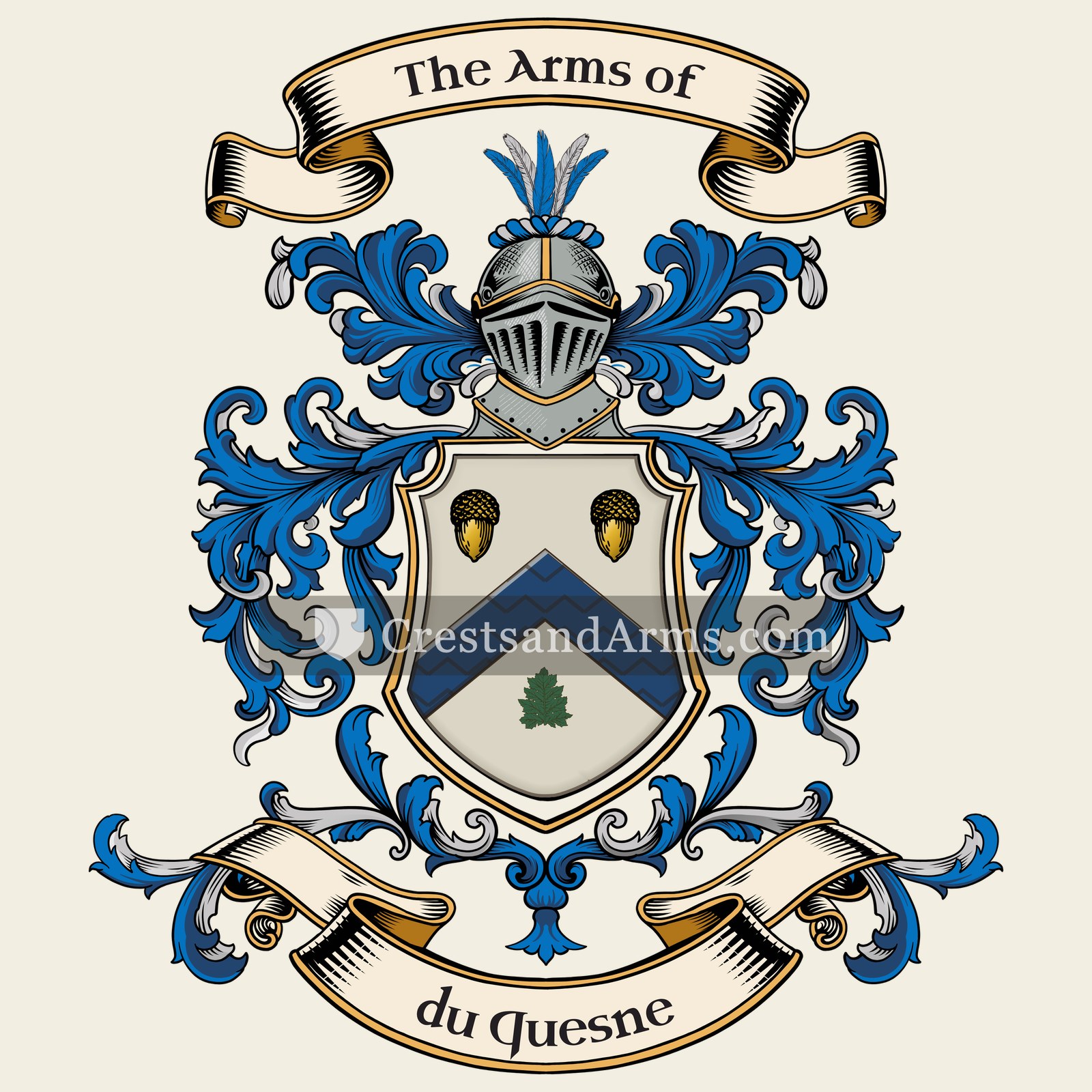


 lionCourage, strength and royalty