Map of France showing where the Durant arms are recorded
The Durant arms were recorded in Paris, c. 1663.
This is where the arms were entered in the register. Families often moved to other parts of the country, so the same name can turn up in more than one region.
The body that granted and recorded arms in France in this period.
Louis XIV of France
Sovereign of the period
Louis XIV of France
1643–1715
Reigning in France when the Durant arms are first recorded.
How Arms Worked in France
In France, a coat of arms was a mark of honor that passed down through the male line to all legitimate descendants. Families often used the same shield without changes to show their shared heritage. If a branch wanted to stand out, they could add a small mark to their shield to show their specific place in the family tree.
Granting authority
The Juge d'armes de France acted as the official authority that regulated and verified coats of arms across the country.
How they got arms
Families typically inherited their arms from ancestors, though they could also receive them through royal grants or by proving their noble status.
Where arms were recorded
Coats of arms were officially recorded in the Armorial Général de France, which began its main collection in the year 1696.
The family's standing
Recorded among the armigerous families of France.
Origin & History of the Durant Family in France
The surname Durant has deep roots in the French language, evolving from the Old French word *durant*, which means enduring or steadfast. This name was often given to individuals who were known for their patience or their strong character. By the time members of the family were documented living in Paris in 1663, the name was already well-established across various regions of France. During the seventeenth century, families with this name were often part of the growing urban middle class, working as skilled tradespeople, merchants, or minor officials within the royal administration. As the family navigated life in the bustling capital, they became part of a larger social movement where people began to settle permanently in cities to pursue new economic opportunities. This period of history highlights how the Durant name transitioned from a simple descriptive nickname into a permanent family identity that helped define their place in French society.
Meaning of the Durant family crest colors & symbols
Symbols on this shield
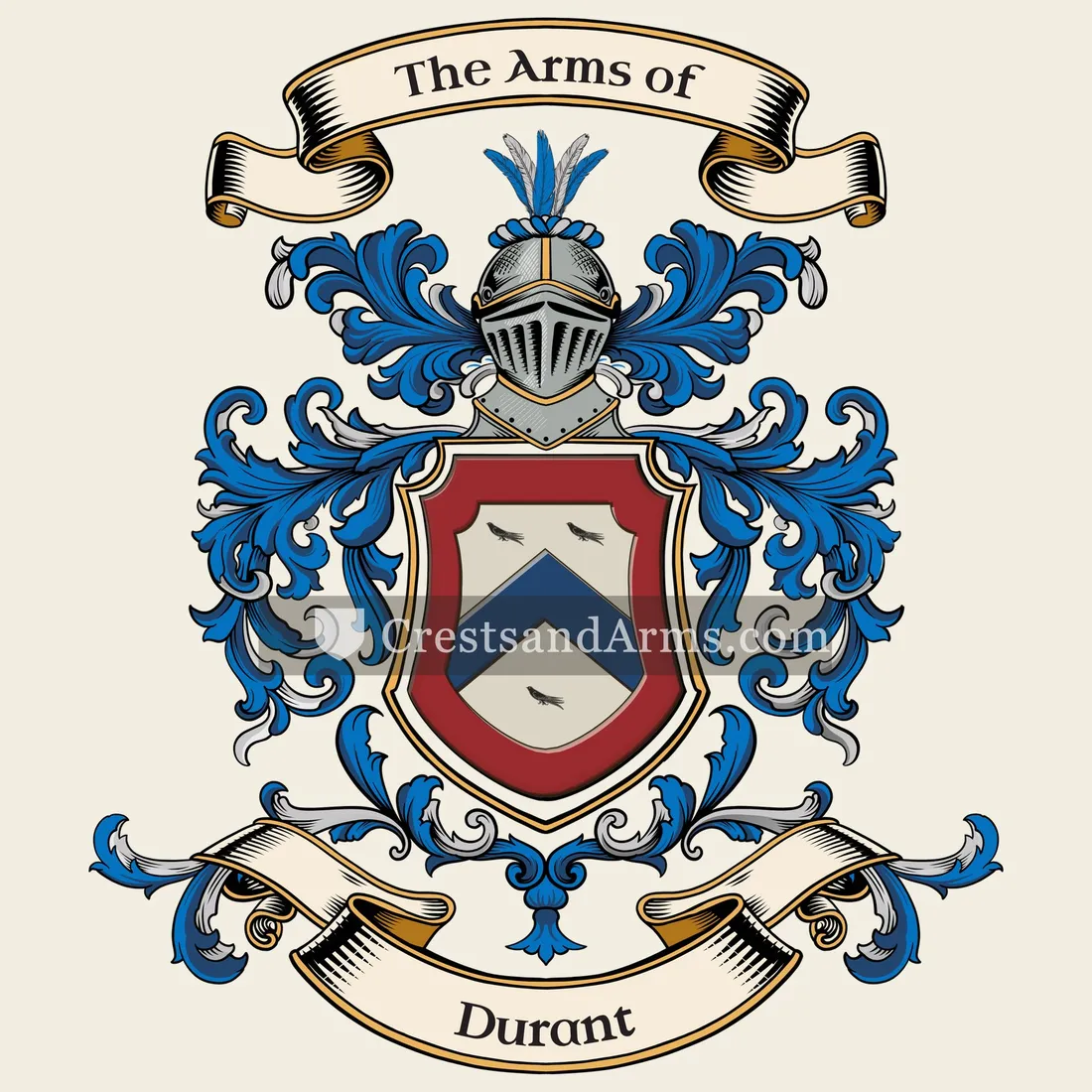
saltireResolution, and St Andrew's cross
palm treeVictory, and righteousness that flourishes
eagleNobility, strength and a keen mind
Colours
Black (Sable)Means: Constancy
Gold (Or)Means: Generosity
Silver (Argent)Means: Peace and sincerity
Green (Vert)Means: Hope
Historical info
Source
J. B. Rietstap, Armorial Général, Gouda: G. B. van Goor Zonen, 1884–87
Blazon (the actual original written record)
“Parti: au 1 de sa. au saut. d'arg.; au 2 coupé: a. d'or à l'aigle de sa., bq. et m. du champ; b. d'arg. à une palme de sin., en barre. Cq. cour. C.: cinq pl. d'aut., alt. de sa. et d'arg. L.: à dextre d'arg. et de sa., à sen. d'or et de sa. D.: FAIS CE QUE DOYS.”
SilesiaSilesia, c. 1743
Digital archive packCoat of arms PNG, gold border print PDF, vector SVG and the certificate of authenticity. Sent to your email in minutes.
Map of Germany showing where the Durant arms are recorded
The Durant arms were recorded in Silesia, c. 1743.
Silesia was farming country in the east of the German lands, held in large estates by families who stayed put for generations. Owning land was what entitled a family to arms, so the region fills a good deal of the register.
This is where the arms were entered in the register. Families often moved to other parts of the country, so the same name can turn up in more than one region.
The body that granted and recorded arms in Germany in this period.
Charles VII, Holy Roman Emperor
Sovereign of the period
Charles VII, Holy Roman Emperor
1742–1745
Reigning in France when the Durant arms are first recorded.
How Arms Worked in Germany
In the Holy Roman Empire, coats of arms were often granted to individuals by the Emperor or his representatives. These arms were then passed down through the generations to all legitimate descendants of the original holder. Younger branches of a family usually kept the same shield design without needing to change it, as the arms belonged to the entire lineage.
Granting authority
The Holy Roman Emperor held the sole power to grant new coats of arms throughout his vast imperial territories.
How they got arms
Families typically obtained their coats of arms through a formal imperial grant or by proving their noble status to the authorities.
Where arms were recorded
These grants were officially recorded in the Imperial Chancery registers, which began keeping formal records of such honors during the Middle Ages.
The family's standing
Recorded among the armigerous families of Silesia.
Origin & History of the Durant Family in Germany
The family name Durant carries a deep history that connects to the shifting borders and cultural exchanges of Central Europe. While the name is often associated with French origins, the presence of the family in the region of Silesia by 1743 highlights their integration into the Prussian administrative and social landscape during the eighteenth century. At this time, Silesia was a melting pot of German, Polish, and Czech influences following its transition into the Kingdom of Prussia. Families like the Durants often served as skilled professionals, landowners, or local officials who helped stabilize these newly acquired territories. By settling in this region, the family became part of a complex network of migration that defined the era, moving through the German-speaking lands to establish deep roots in the local economy and community. This early documented presence in Silesia serves as a vital anchor point for understanding how the family name evolved and persisted within the German cultural sphere over the last three centuries.
Meaning of the Durant family crest colors & symbols
Symbols on this shield
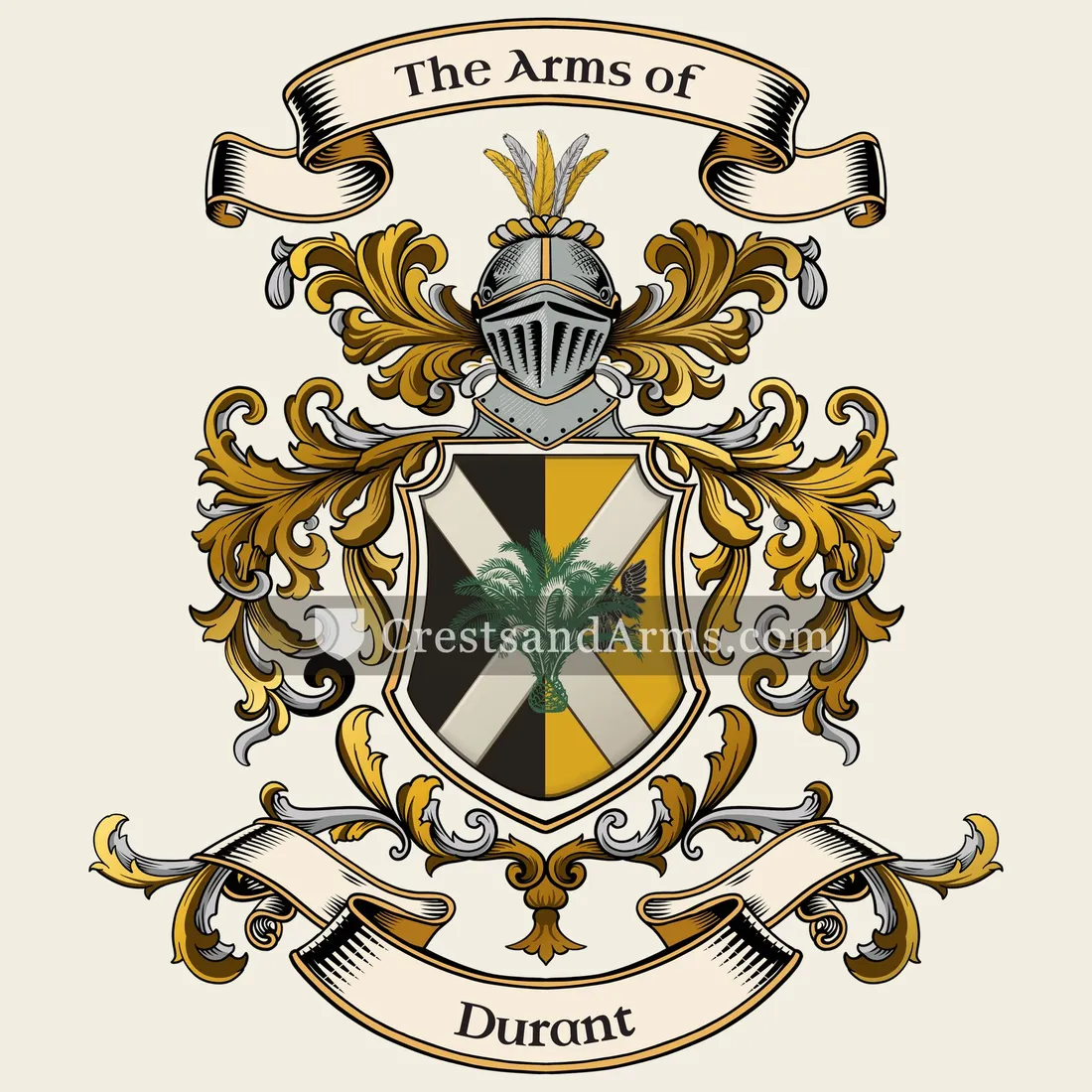
cross symbolChristian faith and service
crescentHonour by the sovereign, and the second son
Colours
Black (Sable)Means: Constancy
ErmineMeans: Dignity
Gold (Or)Means: Generosity
Historical info
Source
Sir Bernard Burke, The General Armory of England, Scotland, Ireland and Wales, London: Harrison & Sons, 1884
Blazon (the actual original written record)
“Sa. a cross crosslet erm. a crescent or, for diff”
DerbyDerby, c. 1606
Digital archive packCoat of arms PNG, gold border print PDF, vector SVG and the certificate of authenticity. Sent to your email in minutes.
Map of England showing where the Durant arms are recorded
The Durant arms were recorded in Derby, c. 1606.
Derbyshire had lead mines in its hills and good grazing in its valleys. Both made steady money, and families who made it bought manors, which is what put their names into the heraldic records.
This is where the arms were entered in the register. Families often moved to other parts of the country, so the same name can turn up in more than one region.
The body that granted and recorded arms in England in this period.
James VI and I
Sovereign of the period
James VI and I
1603–1625
Reigning in France when the Durant arms are first recorded.
How Arms Worked in England
English heraldry allowed arms to be shared by all legitimate descendants of the original owner. These symbols were treated as personal property that moved through the generations to all children. While the eldest son kept the original design, other family members could use the same shield without needing to change it or register their own unique versions.
Granting authority
The College of Arms in London has regulated the use of coats of arms throughout England and Wales since 1484.
How they got arms
Families typically obtained their coats of arms through a formal grant from the Crown or by proving their ancient right to them.
Where arms were recorded
All official coats of arms are recorded in the registers kept at the College of Arms, which date back to the fifteenth century.
The family's standing
Recorded among the armigerous families of Derby.
Origin & History of the Durant Family in England
The family name Durant has deep roots in England, where it emerged as a descriptive surname during the Middle Ages. The name is derived from the Old French word "durant," which means steadfast, enduring, or lasting. It was likely used as a nickname for a person who possessed a strong or patient personality. By the time the family was firmly established in Derby in 1606, the name had already been in use for several centuries across various English counties. Families with this name were often involved in local trade and community life, helping to shape the social fabric of the towns where they settled. Because the name was tied to a personal quality rather than a specific location, it allowed the family to integrate into different regions while maintaining a shared identity rooted in their historical reputation for resilience.
Durant Meaning & Related Branches
Root word
durus
Latin term meaning hard, tough, or enduring.
This name
DurantA nickname for a person who is steadfast, hardy, or physically resilient.
also spelled
Durand
Related arms
Christophesimilar arms
Durrantsimilar arms
Durandvariant spelling
Documented Sources
J. B. Rietstap, Armorial Général, Gouda: G. B. van Goor Zonen, 1884–87
Dauzat, Albert. Dictionnaire étymologique des noms et prénoms de France. 1951
Morlet, Marie-Thérèse. Dictionnaire étymologique des noms de famille. 1991
Archives Nationales de France, Minutier central des notaires de Paris
Digital archive packCoat of arms PNG, gold border print PDF, vector SVG and the certificate of authenticity. Sent to your email in minutes.


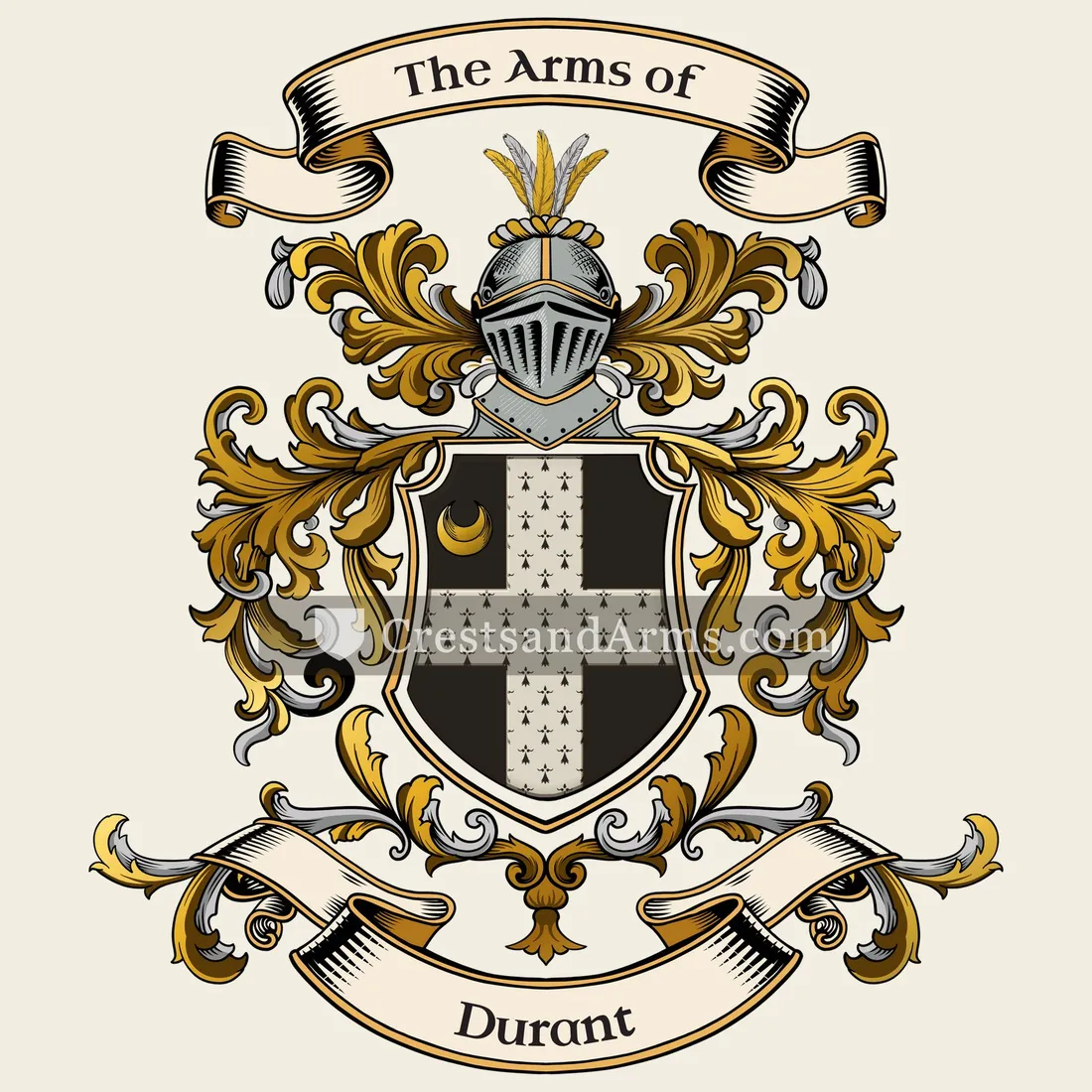
 chevronProtection, and faithful service completed
 martletA younger son, who must win his own land
 chevronProtection, and faithful service completed
 martletA younger son, who must win his own land


 saltireResolution, and St Andrew's cross
 palm treeVictory, and righteousness that flourishes
 eagleNobility, strength and a keen mind


 cross symbolChristian faith and service
 crescentHonour by the sovereign, and the second son