Map of Belgium showing where the Duru arms are recorded
The Duru arms were recorded in Tournais, c. 1737.
This is where the arms were entered in the register. Families often moved to other parts of the country, so the same name can turn up in more than one region.
The body that granted and recorded arms in Belgium in this period.
Charles VI, Holy Roman Emperor
Sovereign of the period
Charles VI, Holy Roman Emperor
1711–1740
Reigning in Belgium when the Duru arms are first recorded.
How Arms Worked in Belgium
In Belgium, a coat of arms is considered personal property that is passed down through the male line to legitimate descendants. Families often use the same shield design across generations to show their shared heritage. If a branch of the family wants to change the design, they must apply for an official update to their specific version of the arms.
Granting authority
The Conseil héraldique is the official body that regulates and approves all coats of arms in Belgium.
How they got arms
Families obtain their coats of arms through formal royal grants or by confirming their historical right to use existing designs.
Where arms were recorded
All approved coats of arms are officially recorded in the public registers of the Conseil héraldique since 1844.
The family's standing
Recorded among the armigerous families of Belgium.
Origin & History of the Duru Family in Belgium
The history of the Duru family in Belgium is firmly rooted in the city of Tournai, where records confirm their presence as early as 1737. During the eighteenth century, Tournai was a bustling center of trade and craftsmanship located near the border of modern-day France. Families like the Durus often lived in these urban hubs to take advantage of the local guilds and the active marketplace. The name itself likely evolved from regional dialects, reflecting the way people identified themselves by their trade or their proximity to specific local landmarks. As the family established their roots in this historic city, they became part of the social fabric that defined the region during the transition from the Austrian Netherlands period to the later industrial era. By maintaining a steady presence in Tournai, the early members of the Duru family contributed to the long-term demographic history of this ancient Belgian city.
Meaning of the Duru family crest colors & symbols
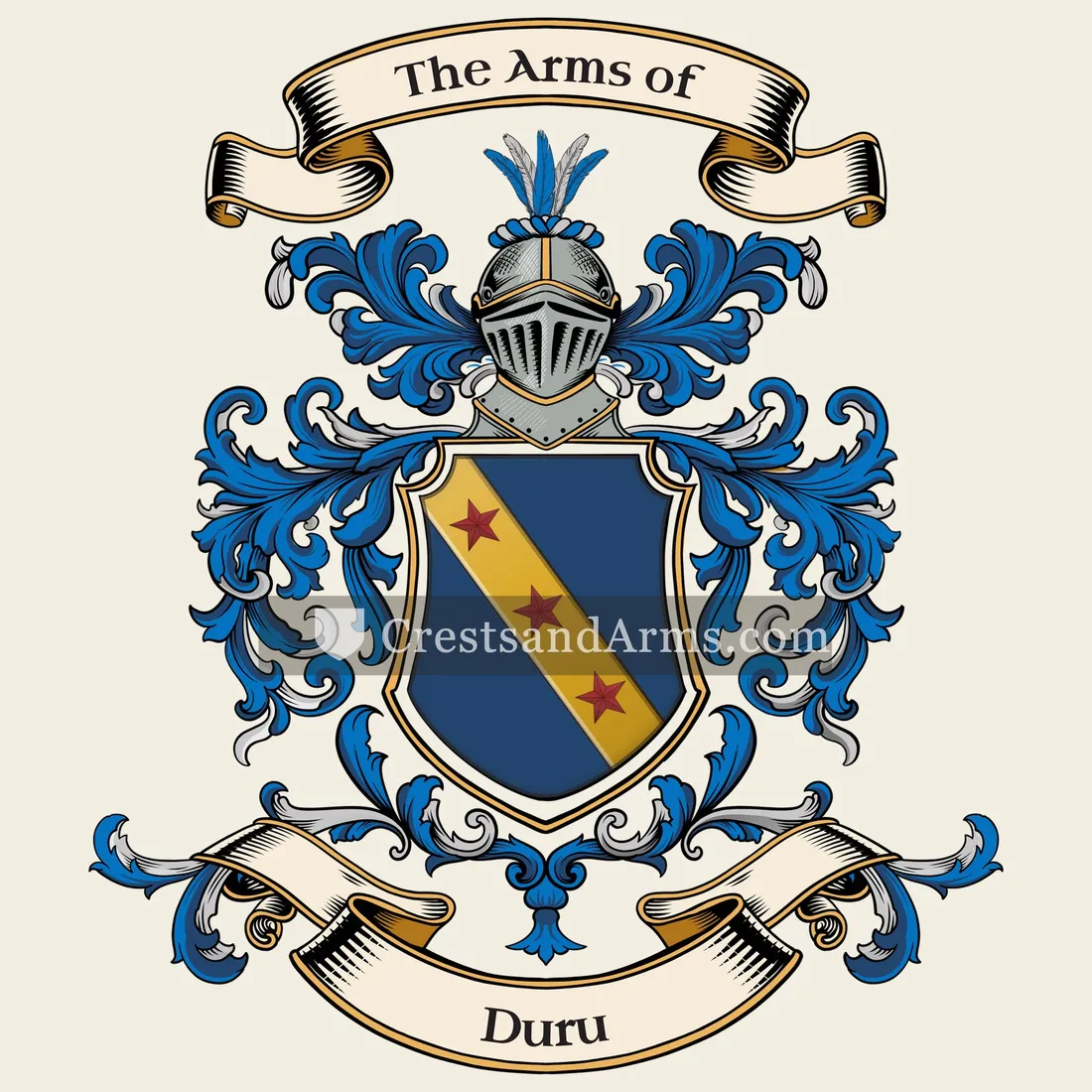
Symbols on this shield
bendDefence, and the scarf of a commander
mulletThe third son, and a divine quality from above
Colours
Blue (Azure)Means: Loyalty and truth
Gold (Or)Means: Generosity
Red (Gules)Means: Military strength
Historical info
Source
J. B. Rietstap, Armorial Général, Gouda: G. B. van Goor Zonen, 1884–87
Blazon (the actual original written record)
“D'azur à la bande d'or, ch. de trois molettes de gu.”
NetherlandsLeyde, c. 1815
Digital archive packCoat of arms PNG, gold border print PDF, vector SVG and the certificate of authenticity. Sent to your email in minutes.
Map of Netherlands showing where the Duru arms are recorded
The Duru arms were recorded in Leyde, c. 1815.
This is where the arms were entered in the register. Families often moved to other parts of the country, so the same name can turn up in more than one region.
Region
Leyde
Town
Leyde
First recorded
1815
Granting Authority for the Duru Arms
Hoge Raad van Adel
Photograph made by me · CC BY-SA 3.0
The body that granted and recorded arms in Netherlands in this period.
William I of the Netherlands
Sovereign of the period
William I of the Netherlands
1815–1840
Reigning in Belgium when the Duru arms are first recorded.
How Arms Worked in Netherlands
In the Netherlands, coats of arms were often used by noble families and those who held specific public offices. These arms were passed down through the generations to legitimate descendants. Younger branches of a family usually kept the original design without needing to add special marks. This system ensured that the family identity remained clear and consistent over many years.
Granting authority
The Hoge Raad van Adel is the official body that regulates and manages noble titles and coats of arms in the Netherlands.
How they got arms
Families typically obtained their coats of arms through official royal grants or by proving their long-standing historical use of the symbols.
Where arms were recorded
Coats of arms are officially recorded in the registers held by the Hoge Raad van Adel, which began its work in 1814.
The family's standing
Recorded among the armigerous families of Netherlands.
Origin & History of the Duru Family in Netherlands
The history of the Duru family in the Netherlands begins to emerge clearly in the early nineteenth century within the city of Leiden. By 1815, records show that members of the family were established in this historic university town, which was a major center for trade and industry at the time. The name itself is often associated with French linguistic roots, suggesting that the family may have migrated to the Netherlands during a period of significant European movement. As they settled in Leiden, the Duru family became part of the local urban fabric, participating in the daily life and economic activities of a city known for its textile production and academic prestige. Their presence in the Dutch civil registries from this era highlights how the family integrated into the administrative systems of the newly formed Kingdom of the Netherlands, marking the start of their documented lineage in the region.
Duru Meaning & Related Branches
Root word
durus
Latin term meaning hard, tough, or enduring.
This name
DuruA topographic name for someone living near a hard or stony area.
also spelled
du Rieux
Du Ryo
Documented Sources
J. B. Rietstap, Armorial Général, Gouda: G. B. van Goor Zonen, 1884–87
State Archives in Tournai (Archives de l'État à Tournai), Parish Registers (Registres paroissiaux), 1737
Digital archive packCoat of arms PNG, gold border print PDF, vector SVG and the certificate of authenticity. Sent to your email in minutes.


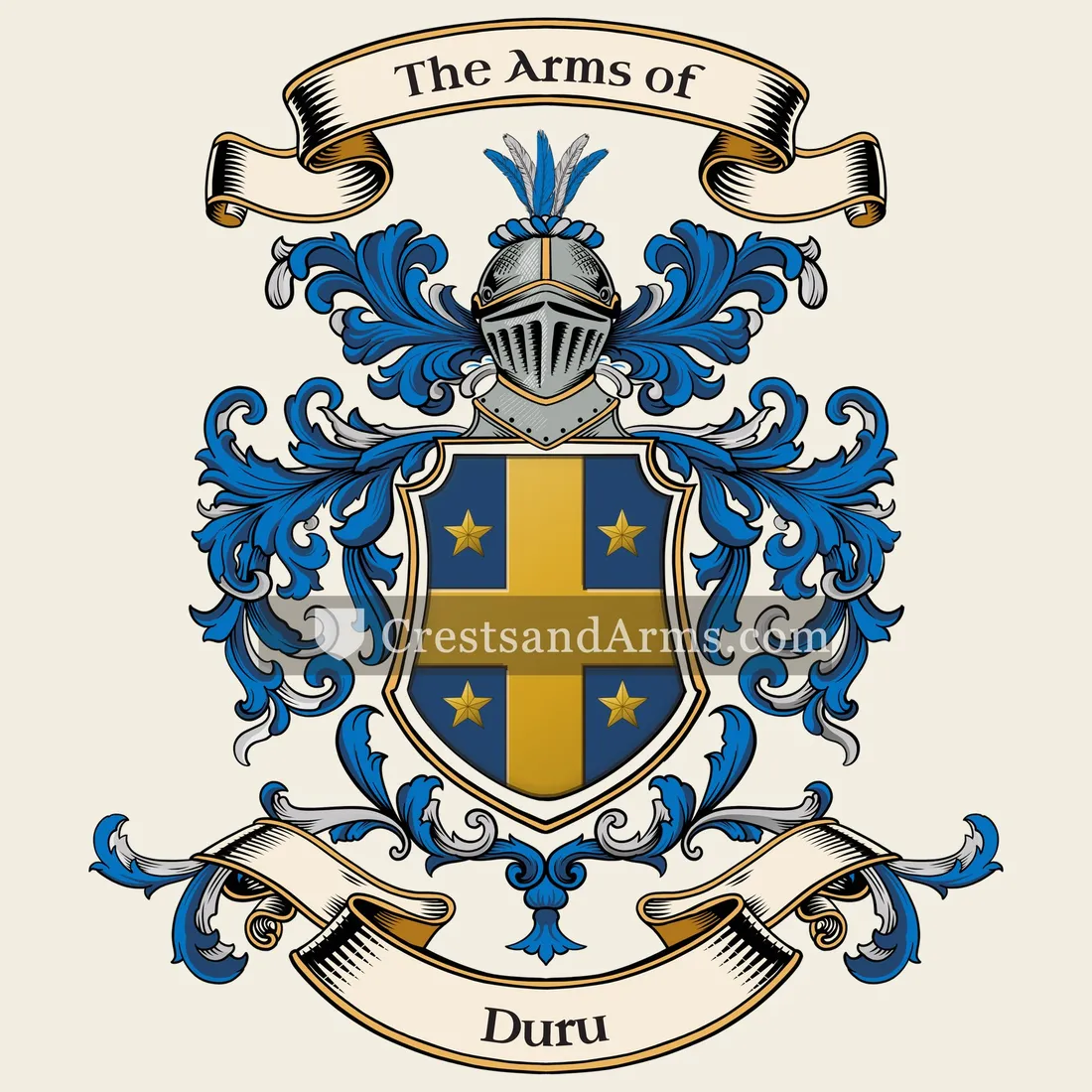
 cross symbolChristian faith and service
 mulletThe third son, and a divine quality from above
 cross symbolChristian faith and service
 mulletThe third son, and a divine quality from above


 bendDefence, and the scarf of a commander