A record of documented arms, meaning and origin, researched for the Eckart family lines. Documented in 2 countries.
Reg. 8781 · Belgian, D–F
Coat of Arms & Family Crest Details
Symbols on this shield
mountThe ground held, and steadfastness upon it
treeLife, endurance and deep roots
hunting horn stringedOne who delights in the chase
stagPeace and harmony, and one who will not fight unprovoked
Colours
Silver (Argent)Means: Peace and sincerity
Green (Vert)Means: Hope
Black (Sable)Means: Constancy
Red (Gules)Means: Military strength
Historical info
Source
J. B. Rietstap, Armorial Général, Gouda: G. B. van Goor Zonen, 1884–87
Blazon (the actual original written record)
“D'arg. à un arbre de sin., accosté de deux cors-de-chasse de sa., vir. et eng. d'or, et acc. en p. d'un cerf couché de gu., br. sur le fût; le tout soutenu d'une terrasse du sec.”
BrabantBrabant, c. 1737
Digital archive packCoat of arms PNG, gold border print PDF, vector SVG and the certificate of authenticity. Sent to your email in minutes.
Map of Belgium showing where the Eckart arms are recorded
The Eckart arms were recorded in Brabant, c. 1737.
Brabant lay at the heart of the Low Countries, where the trade routes met. Its towns were wealthy and its landowners many, and both kinds of family kept arms, which is why the region is so heavily represented.
This is where the arms were entered in the register. Families often moved to other parts of the country, so the same name can turn up in more than one region.
The body that granted and recorded arms in Belgium in this period.
Charles VI, Holy Roman Emperor
Sovereign of the period
Charles VI, Holy Roman Emperor
1711–1740
Reigning in Belgium when the Eckart arms are first recorded.
How Arms Worked in Belgium
In Belgium, a coat of arms is considered personal property that is passed down through the male line to legitimate descendants. Families often use the same shield design across generations to show their shared heritage. If a branch of the family wants to change the design, they must apply for an official update to their specific version of the arms.
Granting authority
The Conseil héraldique is the official body that regulates and approves all coats of arms in Belgium.
How they got arms
Families obtain their coats of arms through formal royal grants or by confirming their historical right to use existing designs.
Where arms were recorded
All approved coats of arms are officially recorded in the public registers of the Conseil héraldique since 1844.
The family's standing
Recorded among the armigerous families of Brabant.
Origin & History of the Eckart Family in Belgium
The history of the Eckart family in Belgium is rooted in the historical region of Brabant, where records confirm their presence as early as 1737. The name itself is of Germanic origin, derived from the Old High German elements *ekka*, meaning edge or sword, and *hard*, meaning brave or strong. Families bearing this name often moved across borders in Western Europe during the eighteenth century as trade and agricultural shifts drew people toward the growing urban centers of the Low Countries. In the context of Brabant, the Eckarts likely integrated into the local community as skilled laborers or merchants, taking advantage of the region’s status as a hub for commerce. Over time, the family name became a permanent fixture in the local population, reflecting the broader patterns of migration and settlement that defined the social landscape of the Belgian provinces during the Enlightenment era.
Coat of Arms & Family Crest Details
Symbols on this shield
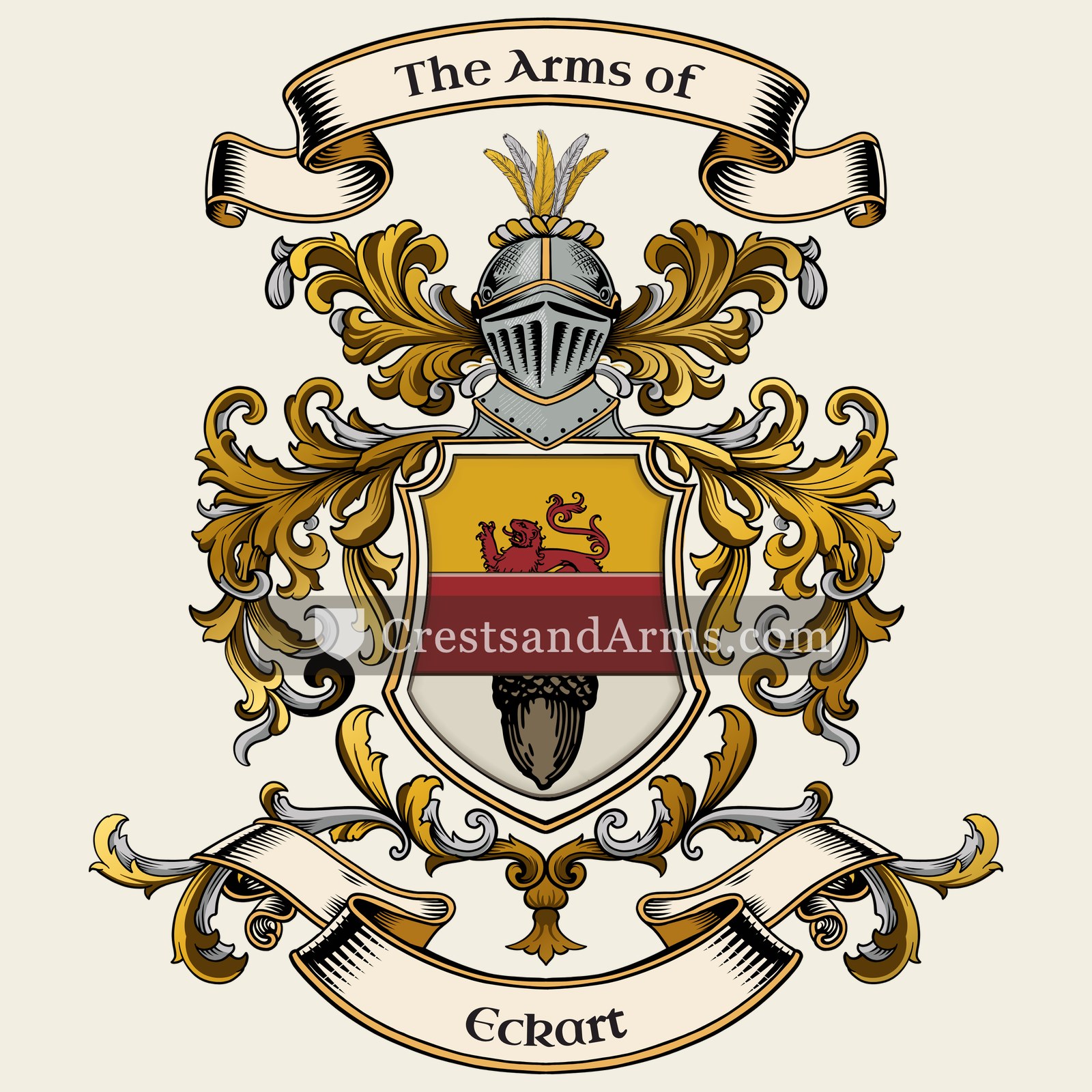
fessThe military belt, and readiness to serve
lionCourage, strength and royalty
acornAntiquity and strength from small beginnings
Colours
Gold (Or)Means: Generosity
Silver (Argent)Means: Peace and sincerity
Red (Gules)Means: Military strength
Historical info
Source
J. B. Rietstap, Armorial Général, Gouda: G. B. van Goor Zonen, 1884–87
Blazon (the actual original written record)
“Coupé, d'or au lion naiss. de gu., mouv. du coupé, sur arg. à un gland au nat., tigé et feuillé de deux pièces de sin., la queue en bas; à la fasce de gu., br. sur le coupé. Cq. cour. C.: le gland, entre deux prob. coupées, à dextre de gu. sur or, à sen. d'arg. sur gu. L. conformes aux émaux des prob.”
BavariaBrunswick · Bavaria, c. 1721
Digital archive packCoat of arms PNG, gold border print PDF, vector SVG and the certificate of authenticity. Sent to your email in minutes.
Map of Germany showing where the Eckart arms are recorded
The Eckart arms were recorded in Bavaria, c. 1721.
Bavaria was a country of old landed families and walled market towns. Estates passed down the same line for centuries, and both the landowners and the leading townsmen kept arms, which is why so many Bavarian names sit in the registers.
This is where the arms were entered in the register. Families often moved to other parts of the country, so the same name can turn up in more than one region.
The body that granted and recorded arms in Germany in this period.
Charles VI, Holy Roman Emperor
Sovereign of the period
Charles VI, Holy Roman Emperor
1711–1740
Reigning in Belgium when the Eckart arms are first recorded.
How Arms Worked in Germany
In the Holy Roman Empire, coats of arms were often granted to individuals by the Emperor or his representatives. These arms were then passed down through the generations to all legitimate descendants of the original holder. Younger branches of a family usually kept the same shield design without needing to change it, as the arms belonged to the entire lineage.
Granting authority
The Holy Roman Emperor held the sole power to grant new coats of arms throughout his vast imperial territories.
How they got arms
Families typically obtained their coats of arms through a formal imperial grant or by proving their noble status to the authorities.
Where arms were recorded
These grants were officially recorded in the Imperial Chancery registers, which began keeping formal records of such honors during the Middle Ages.
The family's standing
Recorded among the armigerous families of Bavaria.
Origin & History of the Eckart Family in Germany
The surname Eckart finds its roots in the Old High German language, where it evolved from the name Eckhard. This name is composed of two distinct parts: "eck," which refers to a sword edge or a sharp corner, and "hard," which means brave, strong, or hardy. Because of this combination, the name was historically associated with someone who was a fierce warrior or a courageous leader. By the time members of the family were documented in Bavaria in 1721, the name had become well-established across various German-speaking regions. Families carrying this name were typically part of the common citizenry, often working as farmers, craftsmen, or local officials who helped manage village life. Over the centuries, the name spread through the German countryside as families moved to find new land or better trade opportunities, eventually becoming a permanent fixture in the social history of the Bavarian landscape.
Eckart Meaning & Related Branches
Root word
Eckhart
Derived from the Germanic elements for edge or sword and hardy.
This name
EckartA name signifying a person who is strong, brave, or bold in battle.
also spelled
Eckard
Eckardt
Related arms
Eckardtvariant spelling
Documented Sources
J. B. Rietstap, Armorial Général, Gouda: G. B. van Goor Zonen, 1884–87
Algemeen Rijksarchief (General State Archives of Belgium), Parochieregisters van Brabant (Parish Registers of Brabant), 1737
Debrabandere, Frans, Woordenboek van de familienamen in België en Noord-Frankrijk (Dictionary of Family Names in Belgium and Northern France), 2003
Digital archive packCoat of arms PNG, gold border print PDF, vector SVG and the certificate of authenticity. Sent to your email in minutes.


 mountThe ground held, and steadfastness upon it
 treeLife, endurance and deep roots
 hunting horn stringedOne who delights in the chase
 stagPeace and harmony, and one who will not fight unprovoked
 mountThe ground held, and steadfastness upon it
 treeLife, endurance and deep roots
 hunting horn stringedOne who delights in the chase
 stagPeace and harmony, and one who will not fight unprovoked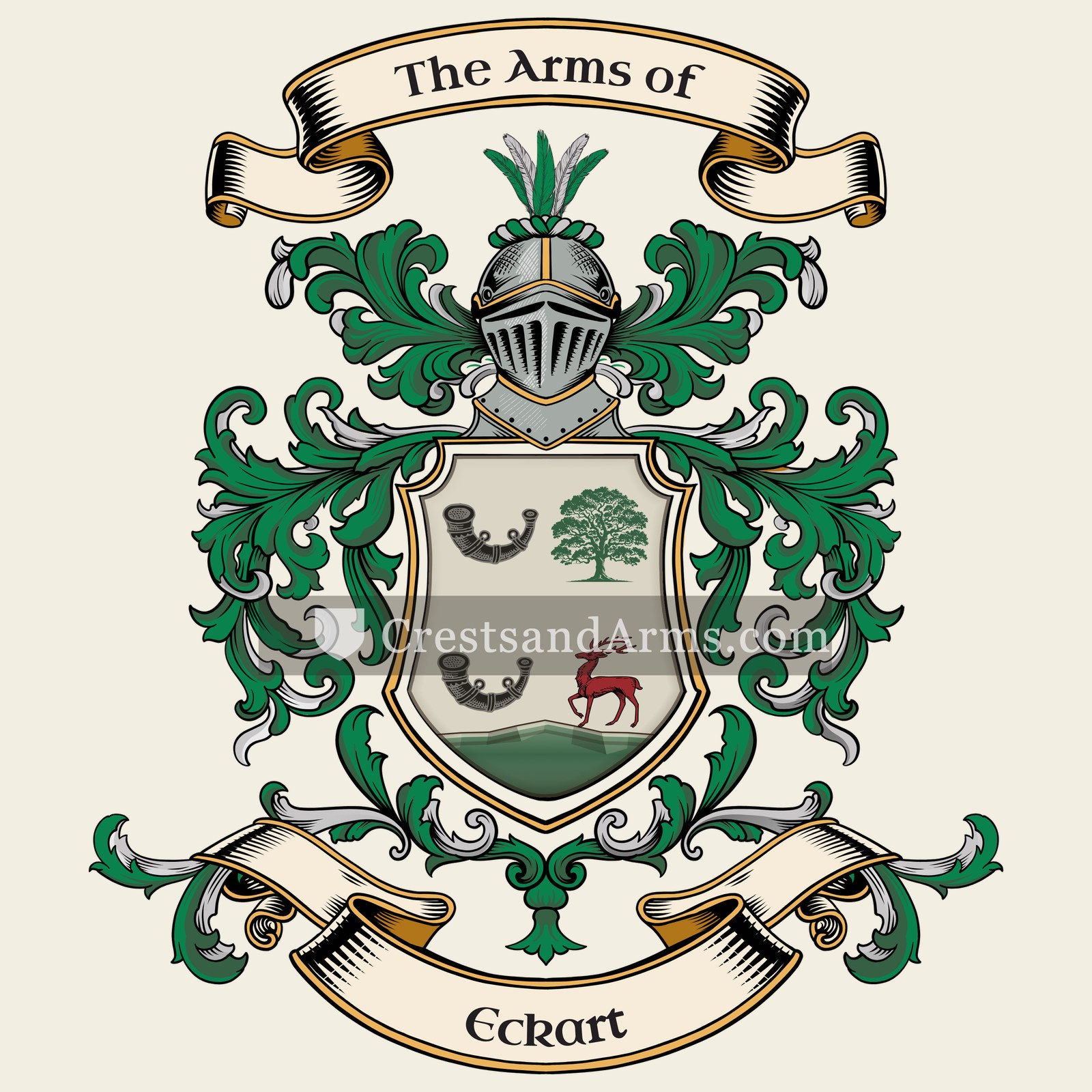


 fessThe military belt, and readiness to serve
 lionCourage, strength and royalty
 acornAntiquity and strength from small beginnings