A record of documented arms, meaning and origin, researched for the Eckstein family lines. Documented in 3 countries.
Reg. 6719 · Dutch, D–F
Coat of Arms & Family Crest Details
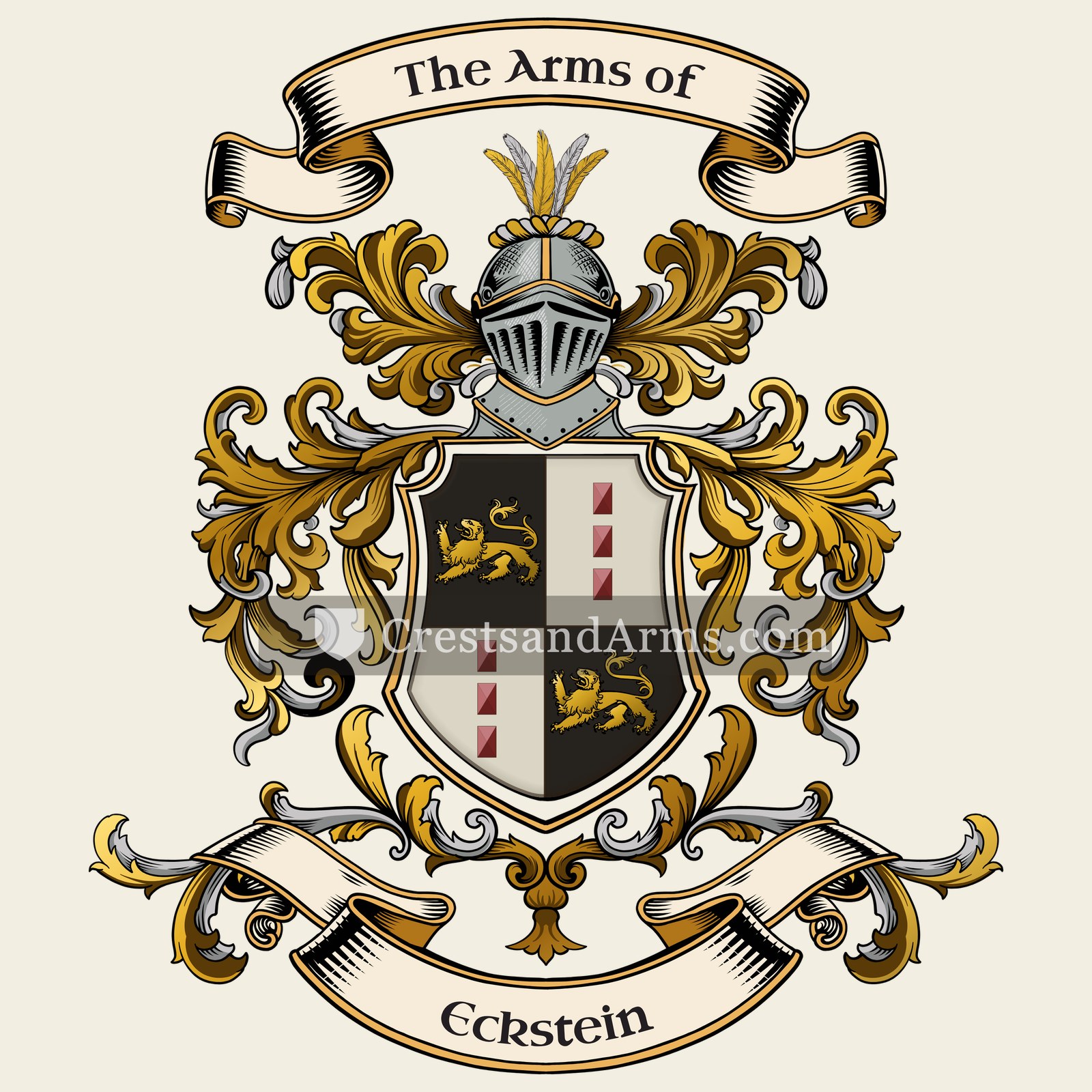
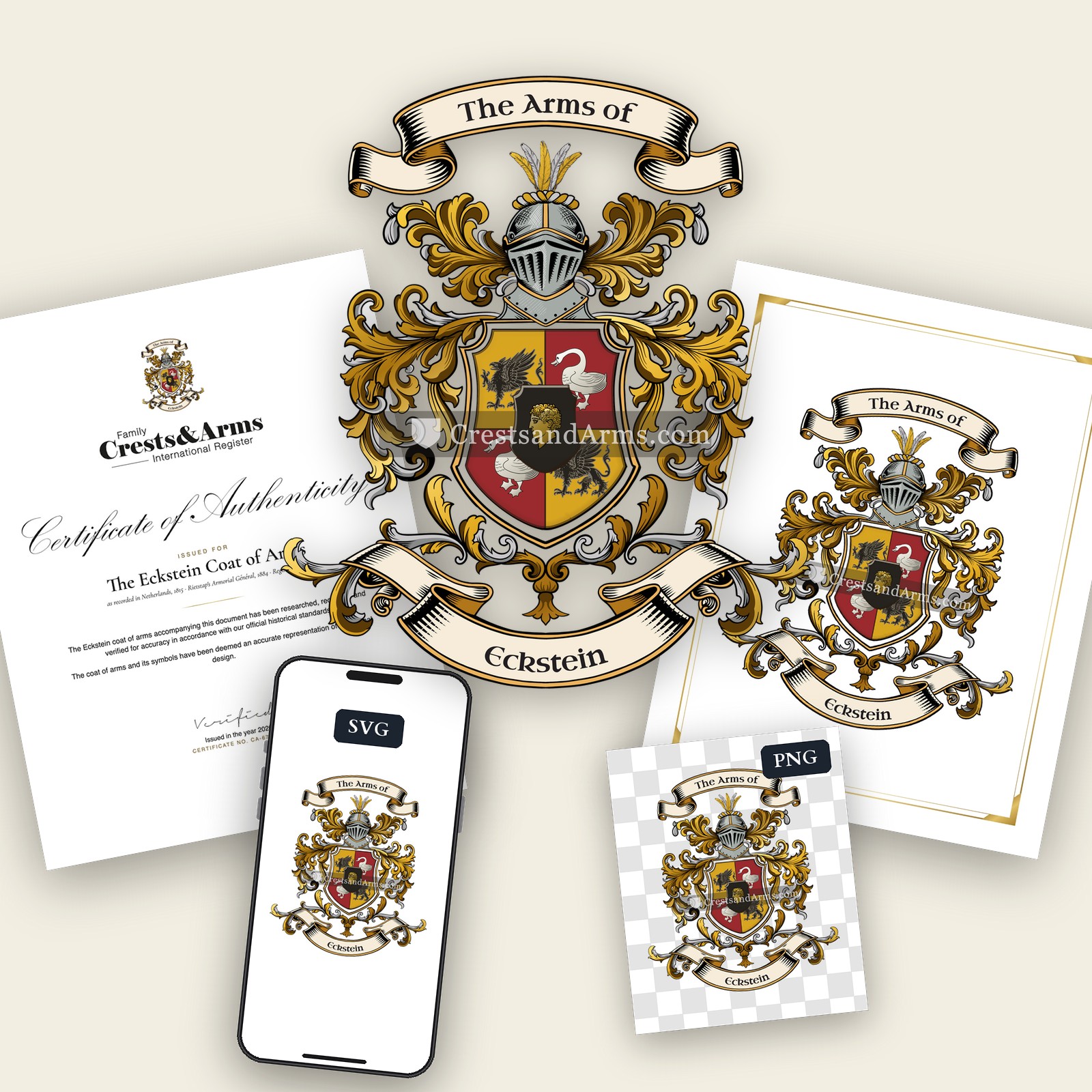
Symbols on this shield
savages head affrontyAn enemy overcome
griffinValour and vigilance, guarding great treasure
swanGrace, light and the poet's art
Colours
Gold (Or)Means: Generosity
Red (Gules)Means: Military strength
Black (Sable)Means: Constancy
Silver (Argent)Means: Peace and sincerity
Historical info
Source
J. B. Rietstap, Armorial Général, Gouda: G. B. van Goor Zonen, 1884–87
Blazon (the actual original written record)
“Ec.: aux 1 et 4 d'or à un griffon de sa., cour. d'or, lamp. de gu., celui du 1 cont.; aux 2 et 3 de gu. à un cygne d'arg., le vol ouvert, posé sur une pierre carrée d'arg., mouv. de la p., le cygne du 3 cont. Sur le tout d'or une tête de More, tort. d'arg. L'écu encadré d'un dragon de sin., em-poignant l'écu au flanc dextre, tenant sa queue entre ses dents. Cq. cour. C.: la tête de More, entre un vol à l'antique coupé, à dextre de gu. sur arg., à sen. d'or sur sa. L.: à dextre d'or et de sa., à sen. d'arg. et de gu.”
NetherlandsRotterdam, c. 1815
Digital archive packCoat of arms PNG, gold border print PDF, vector SVG and the certificate of authenticity. Sent to your email in minutes.
Map of Netherlands showing where the Eckstein arms are recorded
The Eckstein arms were recorded in Rotterdam, c. 1815.
This is where the arms were entered in the register. Families often moved to other parts of the country, so the same name can turn up in more than one region.
Region
Rotterdam
Town
Rotterdam
First recorded
1815
Granting Authority for the Eckstein Arms
Hoge Raad van Adel
Photograph made by me · CC BY-SA 3.0
The body that granted and recorded arms in Netherlands in this period.
William I of the Netherlands
Sovereign of the period
William I of the Netherlands
1815–1840
Reigning in Netherlands when the Eckstein arms are first recorded.
How Arms Worked in Netherlands
In the Netherlands, coats of arms were often used by noble families and those who held specific public offices. These arms were passed down through the generations to legitimate descendants. Younger branches of a family usually kept the original design without needing to add special marks. This system ensured that the family identity remained clear and consistent over many years.
Granting authority
The Hoge Raad van Adel is the official body that regulates and manages noble titles and coats of arms in the Netherlands.
How they got arms
Families typically obtained their coats of arms through official royal grants or by proving their long-standing historical use of the symbols.
Where arms were recorded
Coats of arms are officially recorded in the registers held by the Hoge Raad van Adel, which began its work in 1814.
The family's standing
Recorded among the armigerous families of Netherlands.
Origin & History of the Eckstein Family in Netherlands
The surname Eckstein, which translates from German to mean "cornerstone," first appeared in the official records of Rotterdam during the early nineteenth century. By 1815, members of the family were firmly established in this bustling port city, a time when the Netherlands was undergoing significant social changes following the end of the Napoleonic era. During this period, the Dutch government required citizens to formalize their family names in civil registries to improve tax collection and military conscription. As the family integrated into Dutch society, they likely moved through the city’s vibrant trade districts, where their name served as a marker of their German-speaking roots. While the name originated in central Europe, these early Rotterdam residents helped weave the family history into the maritime and commercial fabric of the Netherlands. Their presence in the city archives during this era reflects a broader trend of European migration that shaped the diverse population of Dutch urban centers at the start of the nineteenth century.
Coat of Arms & Family Crest Details
Symbols on this shield
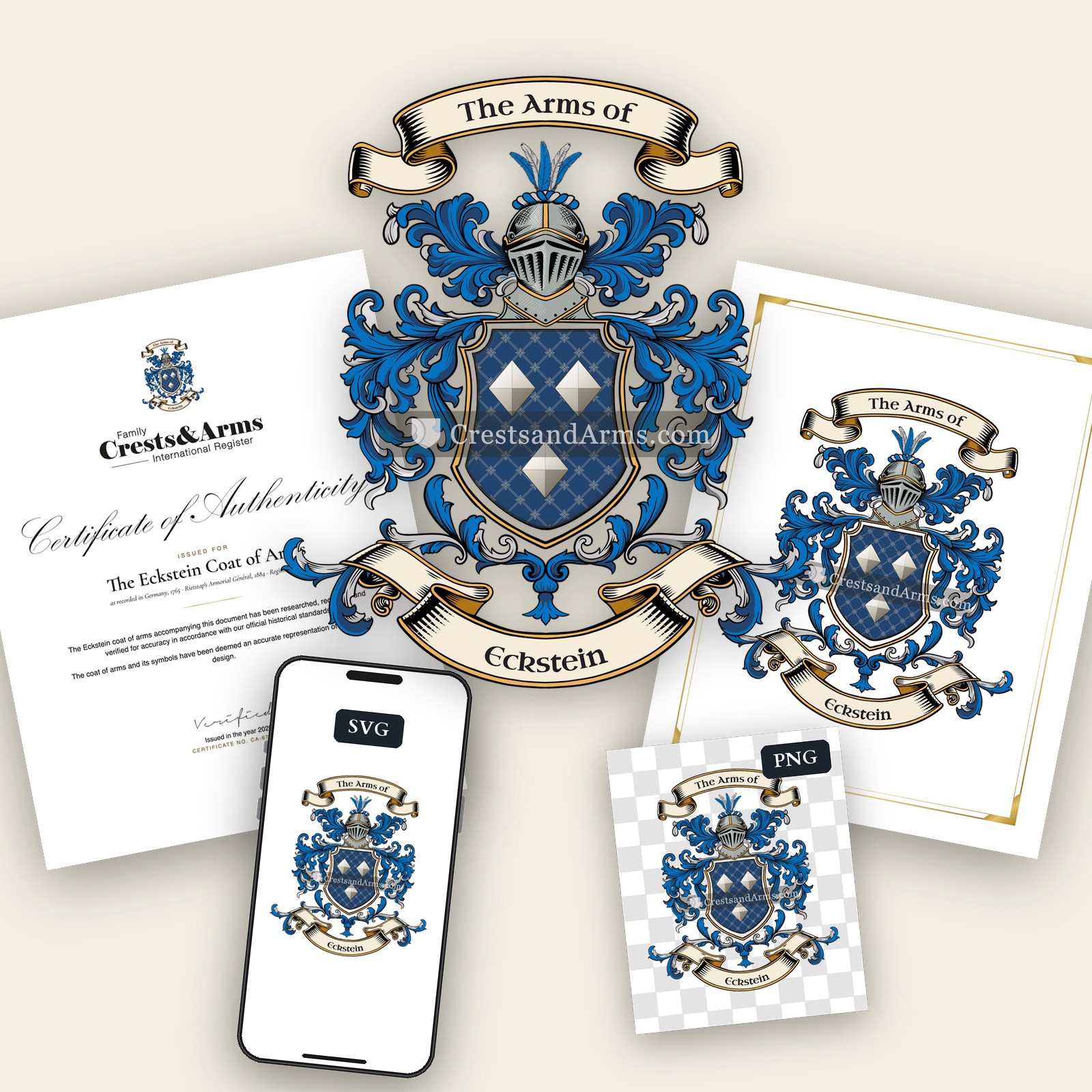
lozengeHonour and nobility, and the arms of a woman
Colours
Blue (Azure)Means: Loyalty and truth
Silver (Argent)Means: Peace and sincerity
Historical info
Source
J. B. Rietstap, Armorial Général, Gouda: G. B. van Goor Zonen, 1884–87
Blazon (the actual original written record)
“D'azur à trois los. d'arg. C.: un vol d'azur, chaque aile ch. d'une los. d'arg.”
GermanyGiessen, c. 1765
Digital archive packCoat of arms PNG, gold border print PDF, vector SVG and the certificate of authenticity. Sent to your email in minutes.
Map of Germany showing where the Eckstein arms are recorded
The Eckstein arms were recorded in Giessen, c. 1765.
This is where the arms were entered in the register. Families often moved to other parts of the country, so the same name can turn up in more than one region.
The body that granted and recorded arms in Germany in this period.
Francis I, Holy Roman Emperor
Sovereign of the period
Francis I, Holy Roman Emperor
1745–1765
Reigning in Netherlands when the Eckstein arms are first recorded.
How Arms Worked in Germany
In the Holy Roman Empire, coats of arms were often granted to individuals by the Emperor or his representatives. These arms were then passed down through the generations to all legitimate descendants of the original holder. Younger branches of a family usually kept the same shield design without needing to change it, as the arms belonged to the entire lineage.
Granting authority
The Holy Roman Emperor held the sole power to grant new coats of arms throughout his vast imperial territories.
How they got arms
Families typically obtained their coats of arms through a formal imperial grant or by proving their noble status to the authorities.
Where arms were recorded
These grants were officially recorded in the Imperial Chancery registers, which began keeping formal records of such honors during the Middle Ages.
The family's standing
Recorded among the armigerous families of Germany.
Origin & History of the Eckstein Family in Germany
The surname Eckstein is a topographic name that originated in the German-speaking regions of Central Europe. In the German language, the name literally translates to corner stone or edge stone, which likely identified an ancestor who lived near a prominent boundary marker, a stone wall, or the corner of a town square. By the mid-eighteenth century, the family had established a documented presence in the city of Giessen, located in the modern state of Hesse. During this period, Giessen was a significant hub for trade and academics, centered around the university founded in 1607. Families like the Ecksteins living in this region were often integrated into the local guild system or agricultural networks that defined the social structure of the Holy Roman Empire. As the family grew, they became part of the local fabric of the city, contributing to the civic and economic life of the Hessian region long before the modern unification of Germany.
Coat of Arms & Family Crest Details
Symbols on this shield
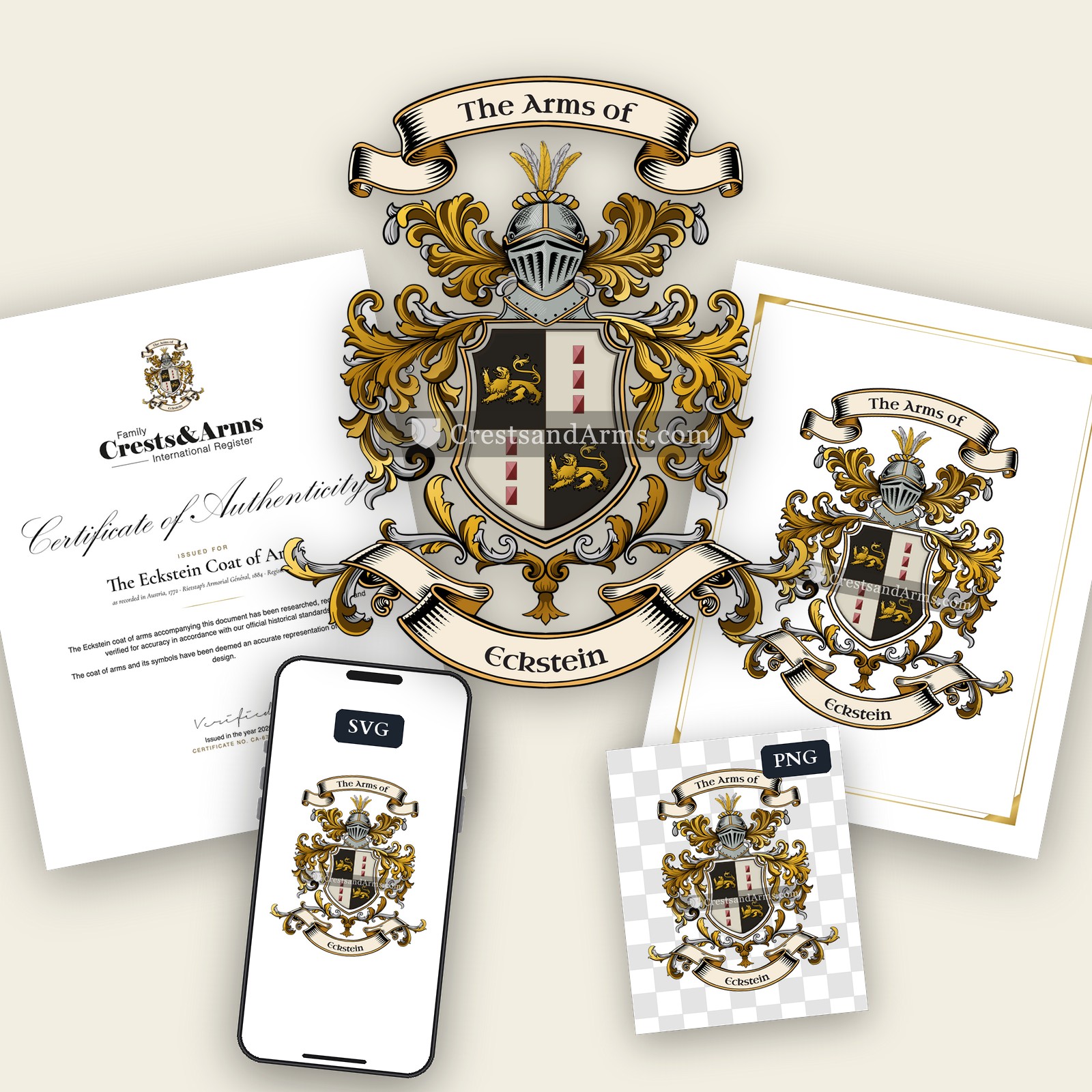
lionCourage, strength and royalty
billetThe sealed letter, and a message delivered
Colours
Black (Sable)Means: Constancy
Silver (Argent)Means: Peace and sincerity
Gold (Or)Means: Generosity
Red (Gules)Means: Military strength
Historical info
Source
J. B. Rietstap, Armorial Général, Gouda: G. B. van Goor Zonen, 1884–87
Blazon (the actual original written record)
“Ec.: aux 1 et 4 de sa. au lion d'or; aux 2 et 3 d'arg. à trois cubes de gu., vus de travers, rangés en pal. Cq. cour. C.: un vol coupé, à dextre de gu. sur arg., à sen. d'or sur sa. L. conformes aux émaux du vol.”
Austriac. 1772
Digital archive packCoat of arms PNG, gold border print PDF, vector SVG and the certificate of authenticity. Sent to your email in minutes.
Map of Austria showing where the Eckstein arms are recorded
The Eckstein arms were recorded in Austria, c. 1772.
Arms such as these were typically recorded in Tyrol.
Tyrol was mountain country in western Austria, where the valleys were held by families who had been there a very long time. Old tenure counted for more than money, and old families carried arms.
This is where the arms were entered in the register. Families often moved to other parts of the country, so the same name can turn up in more than one region.
Region
Tyrol
First recorded
1772
Granting Authority for the Eckstein Arms
Imperial and Royal chancery
Sodacan · CC BY-SA 3.0
The body that granted and recorded arms in Austria in this period.
Joseph II, Holy Roman Emperor
Sovereign of the period
Joseph II, Holy Roman Emperor
1765–1790
Reigning in Netherlands when the Eckstein arms are first recorded.
How Arms Worked in Austria
Austrian coats of arms were often linked directly to noble titles granted by the Emperor. These symbols belonged to the entire family line rather than just one individual. When a family grew, new branches kept the original design without needing to change it. This system allowed all members of a noble house to share the same identity across many generations.
Granting authority
The Imperial and Royal chancery managed all heraldic matters and controlled the official granting of arms throughout the Austrian lands.
How they got arms
Families typically received their arms through a formal imperial decree that often accompanied the elevation of a person to noble status.
Where arms were recorded
Official records of these grants were kept in the Imperial Register of Nobility which began its formal documentation process in 1453.
The family's standing
Recorded among the armigerous families of Austria.
Origin & History of the Eckstein Family in Austria
The family name Eckstein, which translates literally to "cornerstone," first emerged as a descriptive surname in the German-speaking regions of Europe. By the late 18th century, the family established a notable presence in the rugged landscape of Tyrol, Austria. Records from 1772 confirm that members of the family were settled in this mountainous region during a time when surnames were becoming increasingly formalized for tax and census purposes. In the context of Austrian history, the name likely originated as a topographical identifier for families living near a prominent stone marker or a corner building in a village. As the family integrated into the local Tyrolean society, they became part of the unique cultural fabric of the Alps, where they lived through the transition from the late Holy Roman Empire into the modern era of the Austrian state.
Eckstein Meaning & Related Branches
Root word
Eck-Stein
Corner or edge combined with stone or rock.
This name
EcksteinRefers to a person living near a corner stone or boundary marker.
also spelled
Ecksteen
Ekstein
Eckstine
Related arms
Ecksteenvariant spelling
Documented Sources
J. B. Rietstap, Armorial Général, Gouda: G. B. van Goor Zonen, 1884–87


 savages head affrontyAn enemy overcome
 griffinValour and vigilance, guarding great treasure
 swanGrace, light and the poet's art
 savages head affrontyAn enemy overcome
 griffinValour and vigilance, guarding great treasure
 swanGrace, light and the poet's art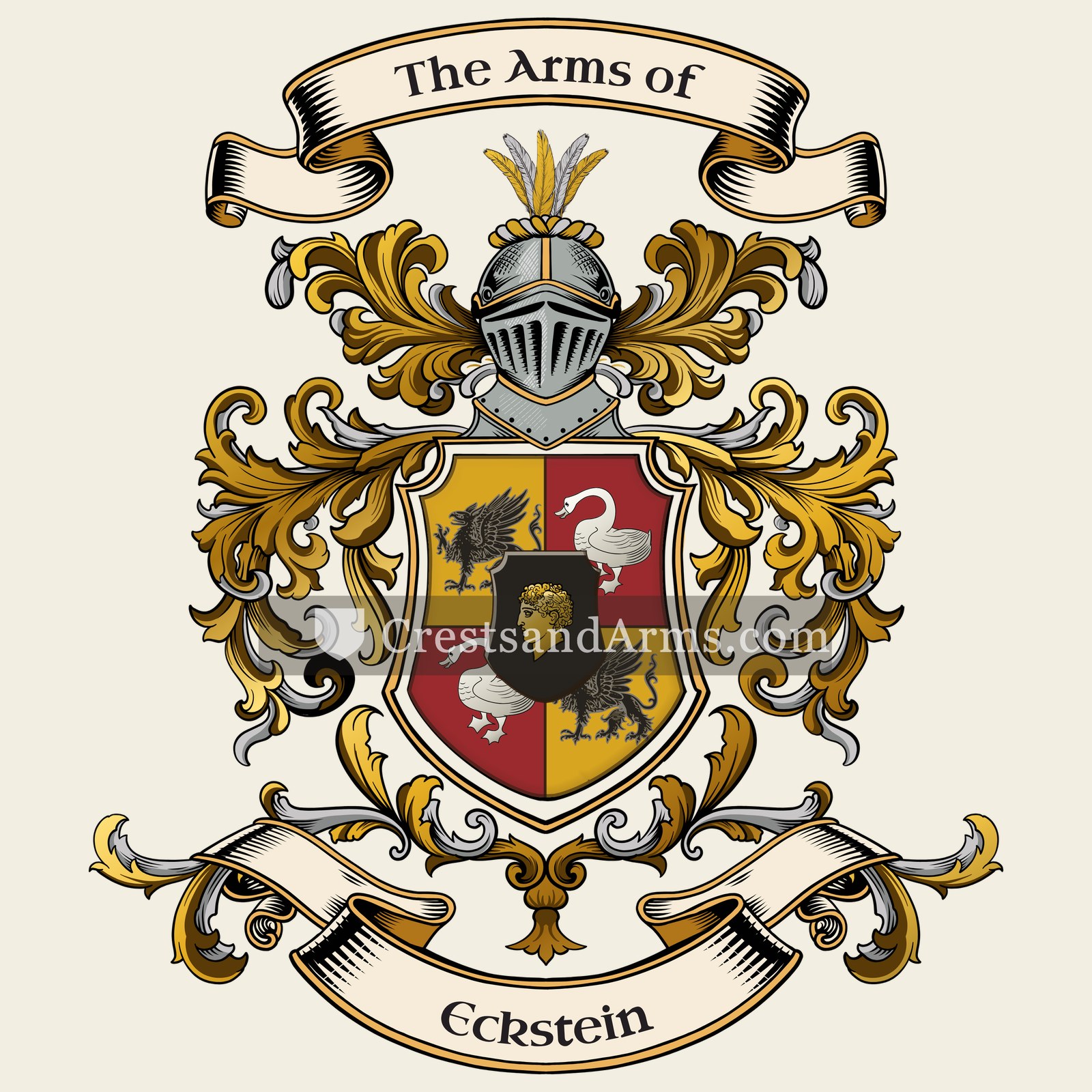


 lozengeHonour and nobility, and the arms of a woman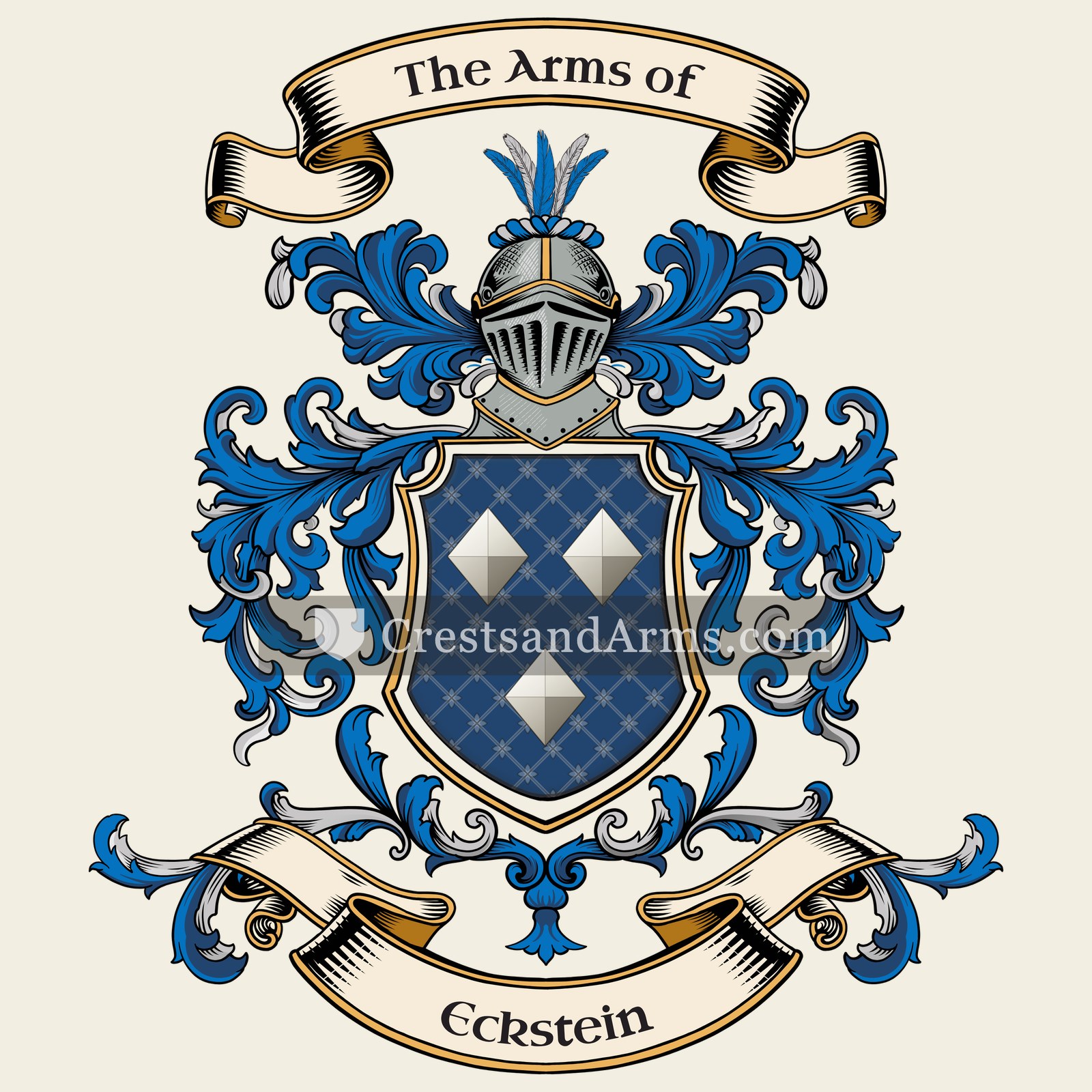


 lionCourage, strength and royalty
 billetThe sealed letter, and a message delivered