A record of documented arms, meaning and origin, researched for the Egger family lines. Documented in 3 countries.
Reg. 4591 · German, D–F
Coat of Arms & Family Crest Details
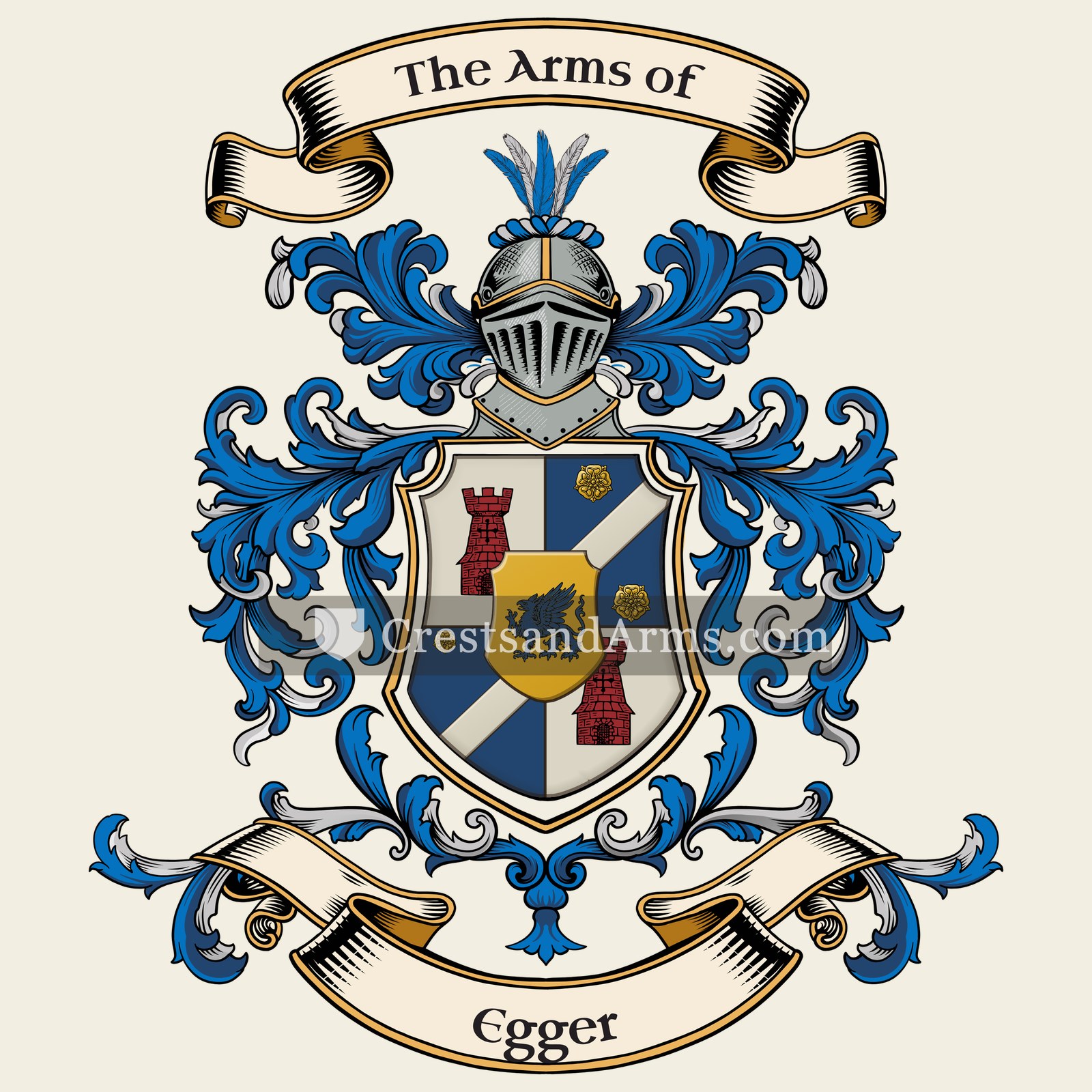
Symbols on this shield
cross symbolChristian faith and service
crescentHonour by the sovereign, and the second son
eagleNobility, strength and a keen mind
anchorHope, and steadfastness in trouble
wheelFortune's turning, and the carter's trade
Colours
Silver (Argent)Means: Peace and sincerity
Gold (Or)Means: Generosity
Historical info
Source
J. B. Rietstap, Armorial Général, Gouda: G. B. van Goor Zonen, 1884–87
Blazon (the actual original written record)
“d'arg. à cinq roses de gu., 2, 1 et 2 (Rosenberg); au 2 coupé d'or sur azur, à une croix ancrée d'arg., br. sur le coupé et soutenue d'un croiss. d'arg. (Gradisca); au 3 de gu. à l'aigle d'arg. (Aquileja); au 4 parti de gu. et d'azur, à une aigle d'arg., cour. d'or, br. sur le parti (Adelsberg); au 5 d'azur à une ancre d'or (Pettau); au 6 de gu. à une roue d'arg. (Radkersburg). Sur le tout les armes de 1469. Sept cq. cour. C.: 1° une aigle d'arg., ch. de cinq roses de gu., 2, 1 et 2; 2° la croix ancrée du 2; 3° une coupe d'or, devant un demi-vol d'azur; 4° une aigle ép. de sa., bq. d'or. ch. sur la poitrine d'un écusson de gu. à la fasce d'arg. surch. du chiffre F. III. d'or; 5° deux sceptres d'or, passés en saut., entre un vol de gu.; 1° un demi-vol d'azur, ch. d'une ancre d'or; 7° une roue d'arg. Manteau de gu., doublé d'herm., sommé de la couronne de prince du St.-Empire.”
Germanyc. 1765
Digital archive packCoat of arms PNG, gold border print PDF, vector SVG and the certificate of authenticity. Sent to your email in minutes.
Map of Germany showing where the Egger arms are recorded
The Egger arms were recorded in Germany, c. 1765.
Arms such as these were typically recorded in Bavaria.
Bavaria was a country of old landed families and walled market towns. Estates passed down the same line for centuries, and both the landowners and the leading townsmen kept arms, which is why so many Bavarian names sit in the registers.
This is where the arms were entered in the register. Families often moved to other parts of the country, so the same name can turn up in more than one region.
The body that granted and recorded arms in Germany in this period.
Francis I, Holy Roman Emperor
Sovereign of the period
Francis I, Holy Roman Emperor
1745–1765
Reigning in Germany when the Egger arms are first recorded.
How Arms Worked in Germany
In the Holy Roman Empire, coats of arms were often granted to individuals by the Emperor or his representatives. These arms were then passed down through the generations to all legitimate descendants of the original holder. Younger branches of a family usually kept the same shield design without needing to change it, as the arms belonged to the entire lineage.
Granting authority
The Holy Roman Emperor held the sole power to grant new coats of arms throughout his vast imperial territories.
How they got arms
Families typically obtained their coats of arms through a formal imperial grant or by proving their noble status to the authorities.
Where arms were recorded
These grants were officially recorded in the Imperial Chancery registers, which began keeping formal records of such honors during the Middle Ages.
The family's standing
Recorded among the armigerous families of Germany.
Origin & History of the Egger Family in Germany
The surname Egger is a topographic name that originated in the southern regions of Germany, particularly within the mountainous landscapes of Bavaria and the Tyrol. In the German language, the word "Egge" refers to a ridge, a corner, or a sharp edge of land. Families who adopted this name were likely identified by their neighbors because they lived near a prominent ridge or on a specific corner of a field. By the time records confirm the presence of the Egger family in Bavaria in 1765, the name had already been established for generations as a way to describe a person’s connection to the local geography. Because many people in rural areas did not travel far from their birthplaces during this era, the name remained concentrated in these hilly regions. It serves as a historical marker of how early German families often derived their identities from the distinct physical features of the land they cultivated and called home.
Coat of Arms & Family Crest Details
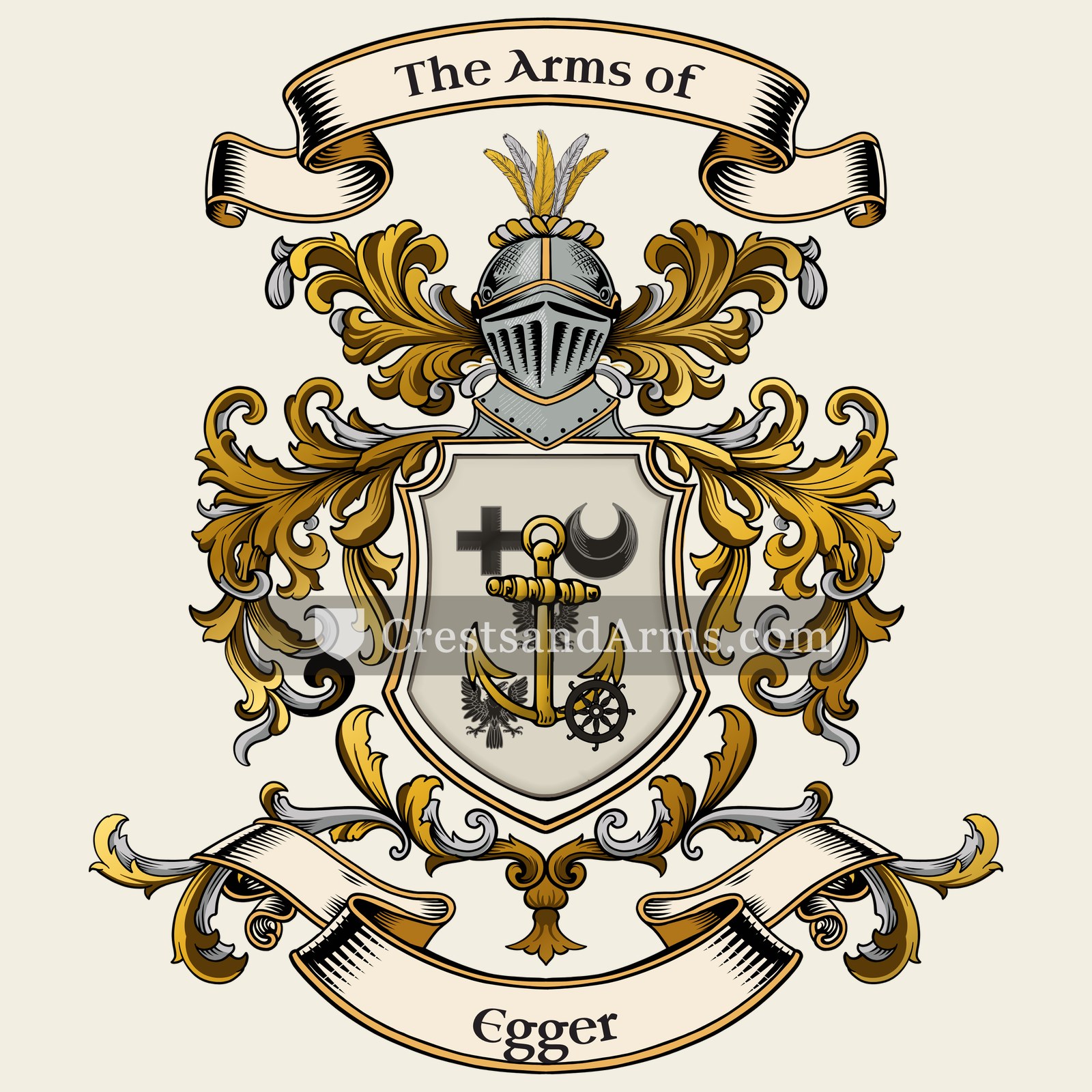
Symbols on this shield
mountThe ground held, and steadfastness upon it
armA person of action, industrious and laborious
mulletThe third son, and a divine quality from above
Colours
Silver (Argent)Means: Peace and sincerity
Green (Vert)Means: Hope
Gold (Or)Means: Generosity
Red (Gules)Means: Military strength
Historical info
Source
J. B. Rietstap, Armorial Général, Gouda: G. B. van Goor Zonen, 1884–87
Blazon (the actual original written record)
“D'arg. à un bras, paré d'or, mouv. d'un tertre de trois coupeaux de sin., tenant un fer-à-cheval de sa. et acc. en chef de deux étoiles de gu.”
FranceStrasbourg, c. 1663
Digital archive packCoat of arms PNG, gold border print PDF, vector SVG and the certificate of authenticity. Sent to your email in minutes.
Map of France showing where the Egger arms are recorded
The Egger arms were recorded in Strasbourg, c. 1663.
This is where the arms were entered in the register. Families often moved to other parts of the country, so the same name can turn up in more than one region.
The body that granted and recorded arms in France in this period.
Louis XIV of France
Sovereign of the period
Louis XIV of France
1643–1715
Reigning in Germany when the Egger arms are first recorded.
How Arms Worked in France
In France, a coat of arms was a mark of honor that passed down through the male line to all legitimate descendants. Families often used the same shield without changes to show their shared heritage. If a branch wanted to stand out, they could add a small mark to their shield to show their specific place in the family tree.
Granting authority
The Juge d'armes de France acted as the official authority that regulated and verified coats of arms across the country.
How they got arms
Families typically inherited their arms from ancestors, though they could also receive them through royal grants or by proving their noble status.
Where arms were recorded
Coats of arms were officially recorded in the Armorial Général de France, which began its main collection in the year 1696.
The family's standing
Recorded among the armigerous families of France.
Origin & History of the Egger Family in France
The family name Egger has deep roots in the Alsace region, which sits on the border of France and Germany. By 1663, records confirm that members of the Egger family were established residents of Strasbourg. During this period, the city was a crossroads for trade and culture, and the name likely originated from the Germanic word for a corner or a field edge. Families with this name often worked as farmers or landowners who lived on the outskirts of their local villages. Because Strasbourg changed hands between French and German control several times throughout history, the Egger family became accustomed to navigating different legal and social systems. This environment helped the family remain resilient as they integrated into the developing urban life of the city while maintaining their traditional ties to the surrounding countryside.
Coat of Arms & Family Crest Details
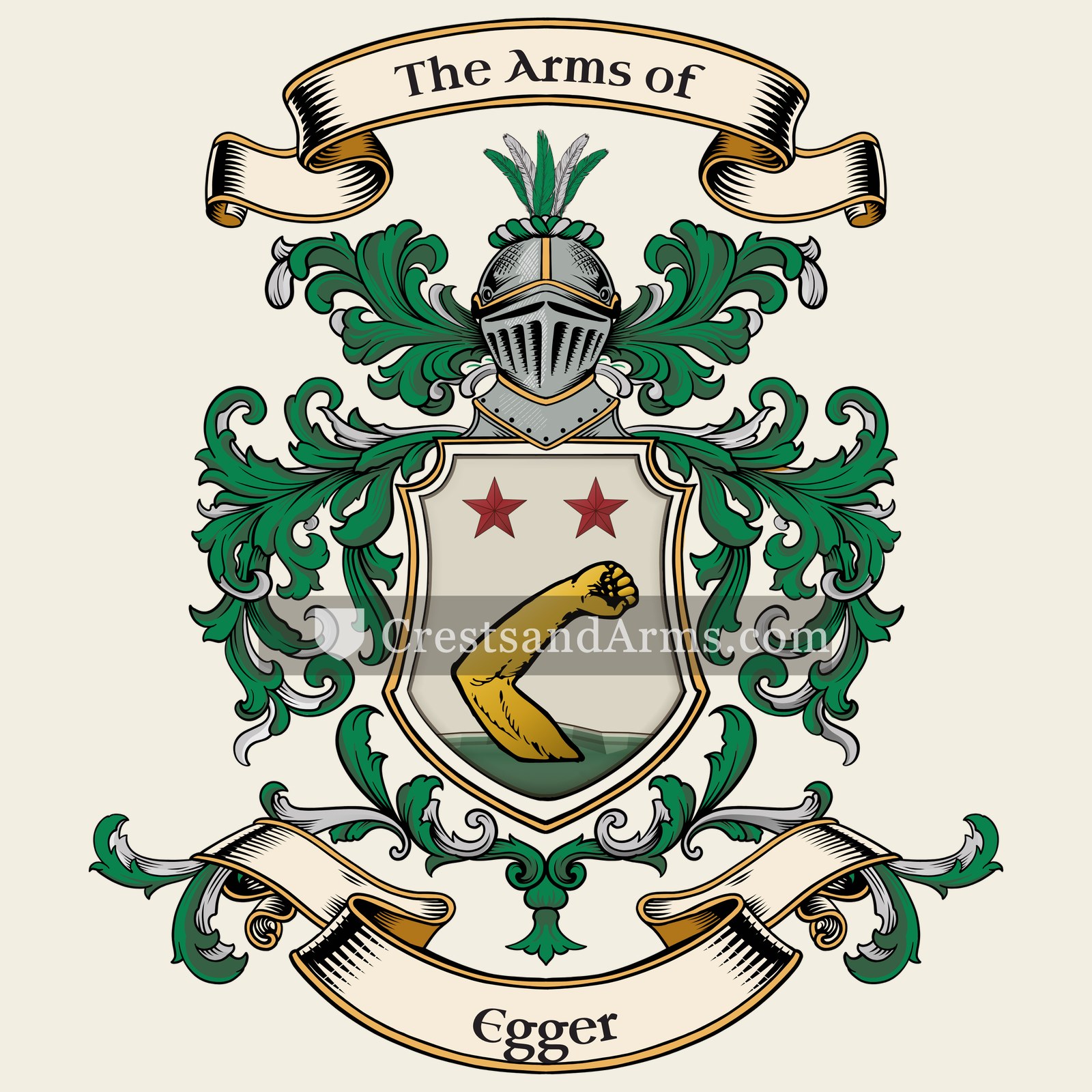
Symbols on this shield
griffinValour and vigilance, guarding great treasure
towerGrandeur and solidity, and a stronghold defended
roseThe seventh son, and beauty with grace
Colours
Silver (Argent)Means: Peace and sincerity
Blue (Azure)Means: Loyalty and truth
Gold (Or)Means: Generosity
Red (Gules)Means: Military strength
Historical info
Source
J. B. Rietstap, Armorial Général, Gouda: G. B. van Goor Zonen, 1884–87
Blazon (the actual original written record)
“Ec.: aux 1 et 4 d'arg. à une tour de gu., aj. de sa., ouv. du champ, sommée d'un toit pointu d'azur; aux 2 et 3 d'azur à la barre ondée d'arg., acc. de deux roses d'or. Sur le tout d'or au griffon d'azur.”
CarinthiaCarinthia, c. 1733
Digital archive packCoat of arms PNG, gold border print PDF, vector SVG and the certificate of authenticity. Sent to your email in minutes.
Map of Austria showing where the Egger arms are recorded
The Egger arms were recorded in Carinthia, c. 1733.
Carinthia was Alpine country in southern Austria with iron and lead in its mountains. Mining and landholding both made money, and families who held either kind of property took arms.
This is where the arms were entered in the register. Families often moved to other parts of the country, so the same name can turn up in more than one region.
Region
Carinthia
First recorded
1733
Granting Authority for the Egger Arms
Imperial and Royal chancery
Sodacan · CC BY-SA 3.0
The body that granted and recorded arms in Austria in this period.
Charles VI, Holy Roman Emperor
Sovereign of the period
Charles VI, Holy Roman Emperor
1711–1740
Reigning in Germany when the Egger arms are first recorded.
How Arms Worked in Austria
Austrian coats of arms were often linked directly to noble titles granted by the Emperor. These symbols belonged to the entire family line rather than just one individual. When a family grew, new branches kept the original design without needing to change it. This system allowed all members of a noble house to share the same identity across many generations.
Granting authority
The Imperial and Royal chancery managed all heraldic matters and controlled the official granting of arms throughout the Austrian lands.
How they got arms
Families typically received their arms through a formal imperial decree that often accompanied the elevation of a person to noble status.
Where arms were recorded
Official records of these grants were kept in the Imperial Register of Nobility which began its formal documentation process in 1453.
The family's standing
Recorded among the armigerous families of Carinthia.
Origin & History of the Egger Family in Austria
The surname Egger is a topographic name that originated in the mountainous regions of the Eastern Alps, specifically within the territory of modern-day Austria. The name is derived from the Middle High German word "egge," which refers to a corner, a ridge, or the edge of a field. In the rugged landscape of Carinthia, where the family was well-established by 1733, this name was likely given to individuals who lived on a sharp mountain ridge or at the boundary of a specific piece of farmland. Because the terrain in southern Austria was often difficult to navigate, families frequently identified themselves by their proximity to distinct natural landmarks. As the family grew, they became deeply integrated into the local agrarian society, often serving as farmers or mountain dwellers who managed the challenging alpine slopes. This connection to the land defined their early history and helped solidify the name as a common identifier for those living along the edges of the Carinthian valleys.
Egger Meaning & Related Branches
Root word
Egge
A corner, edge, or a ridge of land.
This name
EggerAn occupational name for someone who lived near a field boundary or a ridge.
also spelled
Eger
Related arms
Fribergsimilar arms
Documented Sources
J. B. Rietstap, Armorial Général, Gouda: G. B. van Goor Zonen, 1884–87
Bahlow, Hans, Deutsches Namenlexikon: Familien- und Vornamen nach Ursprung und Sinn erklärt, 1967
Heintze, Albert, Die deutschen Familien-Namen: geschichtlich, geographisch, sprachlich, 1903


 cross symbolChristian faith and service
 crescentHonour by the sovereign, and the second son
 eagleNobility, strength and a keen mind
 anchorHope, and steadfastness in trouble
 wheelFortune's turning, and the carter's trade


 mountThe ground held, and steadfastness upon it
 armA person of action, industrious and laborious
 mulletThe third son, and a divine quality from above


 griffinValour and vigilance, guarding great treasure
 towerGrandeur and solidity, and a stronghold defended
 roseThe seventh son, and beauty with grace