Map of Germany showing where the Eggers arms are recorded
The Eggers arms were recorded in Germany, c. 1765.
Arms such as these were typically recorded in Bavaria.
Bavaria was a country of old landed families and walled market towns. Estates passed down the same line for centuries, and both the landowners and the leading townsmen kept arms, which is why so many Bavarian names sit in the registers.
This is where the arms were entered in the register. Families often moved to other parts of the country, so the same name can turn up in more than one region.
The body that granted and recorded arms in Germany in this period.
Francis I, Holy Roman Emperor
Sovereign of the period
Francis I, Holy Roman Emperor
1745–1765
Reigning in Germany when the Eggers arms are first recorded.
How Arms Worked in Germany
In the Holy Roman Empire, coats of arms were often granted to individuals by the Emperor or his representatives. These arms were then passed down through the generations to all legitimate descendants of the original holder. Younger branches of a family usually kept the same shield design without needing to change it, as the arms belonged to the entire lineage.
Granting authority
The Holy Roman Emperor held the sole power to grant new coats of arms throughout his vast imperial territories.
How they got arms
Families typically obtained their coats of arms through a formal imperial grant or by proving their noble status to the authorities.
Where arms were recorded
These grants were officially recorded in the Imperial Chancery registers, which began keeping formal records of such honors during the Middle Ages.
The family's standing
Recorded among the armigerous families of Germany.
Origin & History of the Eggers Family in Germany
The surname Eggers is a patronymic name, which means it originated from a father’s given name. It is derived from the ancient Germanic name Eckhard, which combines the words for edge or sword and brave or strong. By the time members of the family were documented in Bavaria in 1765, the name had already been established across various German-speaking regions for centuries. Families bearing this name were typically part of the agrarian class, living in rural villages where they worked as farmers or skilled tradespeople. Because surnames were often passed down through oral tradition before being formally recorded in church registers, the name evolved into its current spelling as it spread from northern and central Germany into the southern Bavarian territories. These early ancestors were part of the foundational social structure of the Holy Roman Empire, living through eras of significant regional change while maintaining their family identity through the generations.
Coat of Arms & Family Crest Details
Symbols on this shield
lionCourage, strength and royalty
fleur de lisPurity, light, and the sixth son
wheatsheafPlenty, and the harvest of one's own labour
sickleThe harvest, and the reaping of what was sown
Colours
Gold (Or)Means: Generosity
Green (Vert)Means: Hope
Black (Sable)Means: Constancy
Silver (Argent)Means: Peace and sincerity
Historical info
Source
J. B. Rietstap, Armorial Général, Gouda: G. B. van Goor Zonen, 1884–87
Blazon (the actual original written record)
“Ec.: au 1 d'or au lion cont. de sa., tenant de ses pattes un rameau d'olivier feuillé de trois pièces de sin.; au 2 de sin. à une fleur-de-lis d'arg.; au 3 de sa. à cinq épis feuillés d'or, réunis en gerbe; au 4 d'azur à une herse de labour triangulaire d'arg. Cq. cour. C.: un lion iss. de sa., entre deux prob. d'arg. L.: à dextre d'or et de sa., à sen. d'arg. et d'azur.”
DenmarkSchleswig-Holstein, c. 1790
Digital archive packCoat of arms PNG, gold border print PDF, vector SVG and the certificate of authenticity. Sent to your email in minutes.
Map of Denmark showing where the Eggers arms are recorded
The Eggers arms were recorded in Schleswig-Holstein, c. 1790.
Arms such as these were typically recorded in Sjaælland.
Zealand held the Danish court, the crown's offices and Copenhagen itself. Families who served the king kept estates within reach of it, and royal service was the ordinary route to a coat of arms.
This is where the arms were entered in the register. Families often moved to other parts of the country, so the same name can turn up in more than one region.
The body that granted and recorded arms in Denmark in this period.
Christian VII of Denmark
Sovereign of the period
Christian VII of Denmark
1766–1808
Reigning in Germany when the Eggers arms are first recorded.
How Arms Worked in Denmark
Danish heraldry during this period was closely tied to noble status and royal favor rather than being open to all citizens. Arms were typically granted by the monarch to individuals, and these symbols were then shared by all members of the noble house. If a family line died out, the right to use those specific arms ended with them.
Granting authority
The Danish royal chancery held the power to issue and regulate official coats of arms for the kingdom.
How they got arms
Families usually received their arms through a formal royal grant that confirmed their noble status and rights.
Where arms were recorded
These grants were officially recorded in the Danish Royal Chancery records starting in the sixteenth century.
The family's standing
Recorded among the armigerous families of Denmark.
Origin & History of the Eggers Family in Denmark
The family name Eggers has deep roots in Denmark, where it emerged as a patronymic name derived from the ancient Germanic given name Egger. By the late 18th century, the family was well-established on the island of Sjaelland, which served as a central hub for their activities. Records from 1790 indicate that members of the Eggers family were active participants in the local social and economic life of this region during a time of significant agricultural reform in Denmark. As the country transitioned from traditional feudal structures to a more modern society, families like the Eggers often moved between rural farming communities and the growing urban centers of Copenhagen. This period of history reflects a time when surnames began to stabilize and become hereditary, marking the transition of the Eggers name from a descriptive identifier to a permanent family legacy that defined their place within the Danish landscape.
Coat of Arms & Family Crest Details
Symbols on this shield
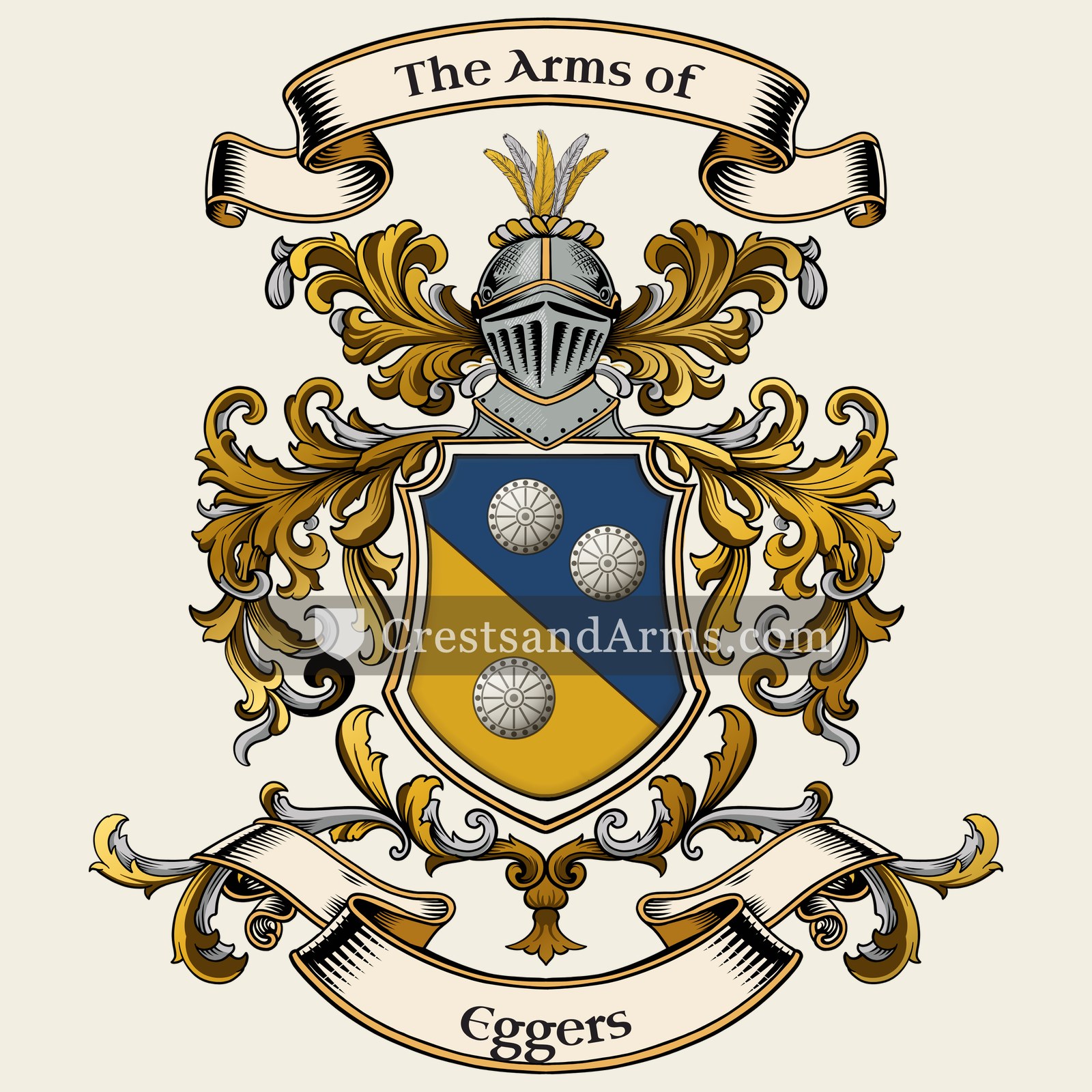
roundelA coin, and one who has been to the crusades
Colours
Gold (Or)Means: Generosity
Blue (Azure)Means: Loyalty and truth
Silver (Argent)Means: Peace and sincerity
Historical info
Source
J. B. Rietstap, Armorial Général, Gouda: G. B. van Goor Zonen, 1884–87
Blazon (the actual original written record)
“Taillé, d'or à une boule d'arg., sur azur à deux boules plus petites aussi d'arg. C.: une tour de trois étages, et une aigle d'arg., cour. d'or, iss. des créneaux.”
Swedenc. 1751
Digital archive packCoat of arms PNG, gold border print PDF, vector SVG and the certificate of authenticity. Sent to your email in minutes.
Map of Sweden showing where the Eggers arms are recorded
The Eggers arms were recorded in Sweden, c. 1751.
Arms such as these were typically recorded in Stockholm.
Stockholm held the Swedish court and the House of Nobility, where every noble family's arms were entered and kept. Families ennobled for service registered there, which is why so many are recorded around the city.
This is where the arms were entered in the register. Families often moved to other parts of the country, so the same name can turn up in more than one region.
The body that granted and recorded arms in Sweden in this period.
Frederick I of Sweden
Sovereign of the period
Frederick I of Sweden
1720–1751
Reigning in Germany when the Eggers arms are first recorded.
How Arms Worked in Sweden
In Sweden, a coat of arms belonged to a noble family as a whole rather than just one individual. These arms were passed down through the generations to all legitimate descendants. Younger branches of the family used the same shield without needing to change it. This system ensured that the entire lineage shared the same identity and status under the law.
Granting authority
The Riddarhuset, or House of Nobility, regulated all noble coats of arms in Sweden under royal authority.
How they got arms
Families received their coats of arms through royal grants of nobility which were then officially registered with the House.
Where arms were recorded
Coats of arms were officially recorded in the Swedish House of Nobility register starting in the year 1626.
The family's standing
Recorded among the armigerous families of Sweden.
Origin & History of the Eggers Family in Sweden
The history of the Eggers family in Sweden is deeply connected to the urban growth of Stockholm during the mid-eighteenth century. By 1751, members of the family were firmly established in the capital, a period when the city was becoming a bustling hub for trade and professional craftsmanship. The name itself reflects a Germanic origin, likely arriving in Sweden as part of the movement of merchants and skilled workers who traveled across the Baltic Sea to seek new opportunities in the Swedish kingdom. As these early family members settled into the social fabric of Stockholm, they integrated into the local economy and participated in the daily life of a growing European metropolis. Their presence during this era highlights the broader patterns of migration that shaped the cultural and professional landscape of Sweden during the Age of Liberty.
Eggers Meaning & Related Branches
Root word
Eckhard
Derived from the Germanic elements for edge or sword and brave.
This name
EggersA patronymic surname meaning son of Eckhard or son of the edge-brave one.
also spelled
Egers
Related arms
Drotleff de Friedenfelssimilar arms
Machfriedsimilar arms
Olenschlager d'Olensteinsimilar arms
Oliviersimilar arms
Documented Sources
J. B. Rietstap, Armorial Général, Gouda: G. B. van Goor Zonen, 1884–87
Bahlow, Hans, Deutsches Namenlexikon: Familien- und Vornamen nach Ursprung und Sinn erklärt, 1967
Heintze, Albert, Die deutschen Familien-Namen: geschichtlich, geographisch, sprachlich, 1903


 fessThe military belt, and readiness to serve
 eagleNobility, strength and a keen mind
 sunGlory, splendour and the source of life
 fessThe military belt, and readiness to serve
 eagleNobility, strength and a keen mind
 sunGlory, splendour and the source of life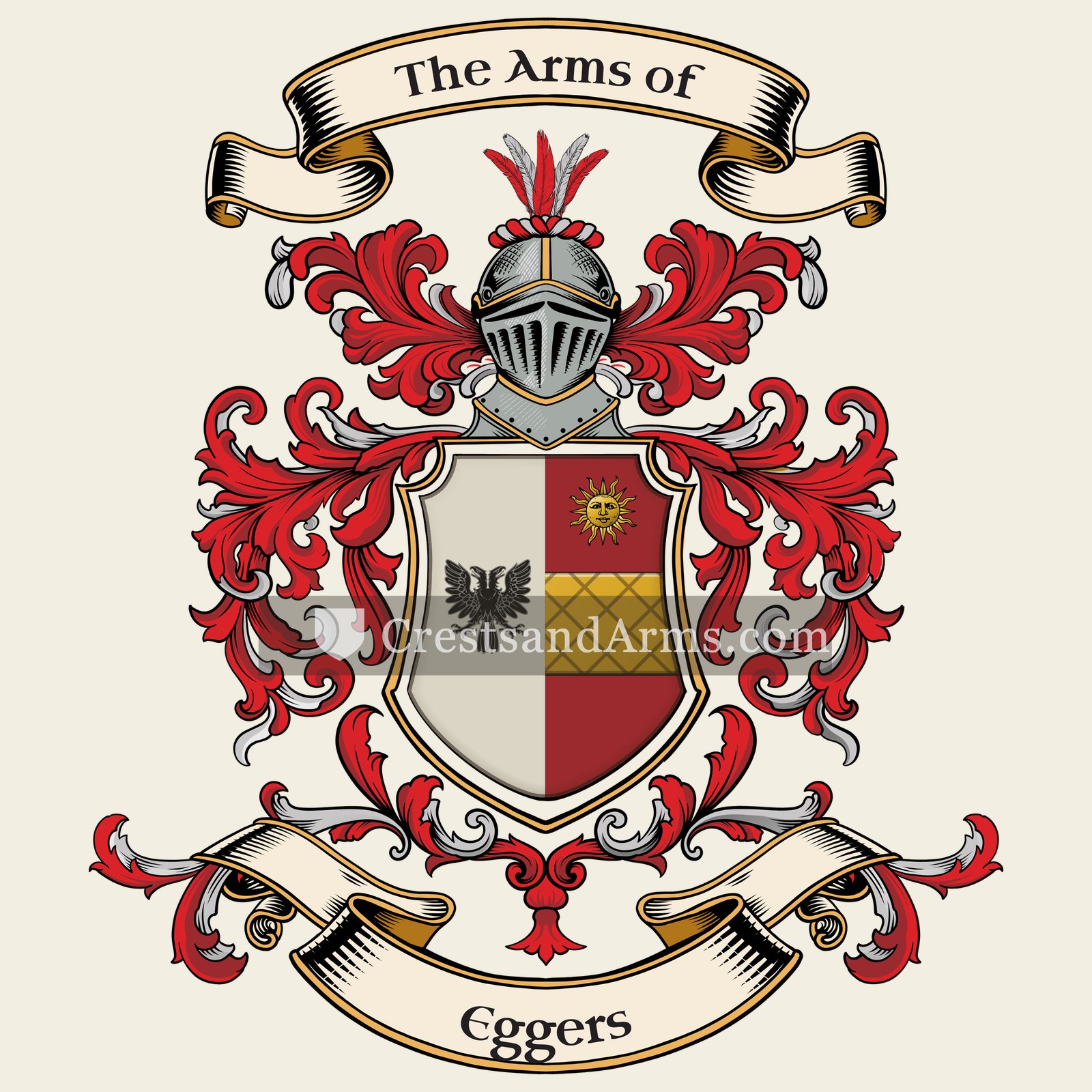


 lionCourage, strength and royalty
 fleur de lisPurity, light, and the sixth son
 wheatsheafPlenty, and the harvest of one's own labour
 sickleThe harvest, and the reaping of what was sown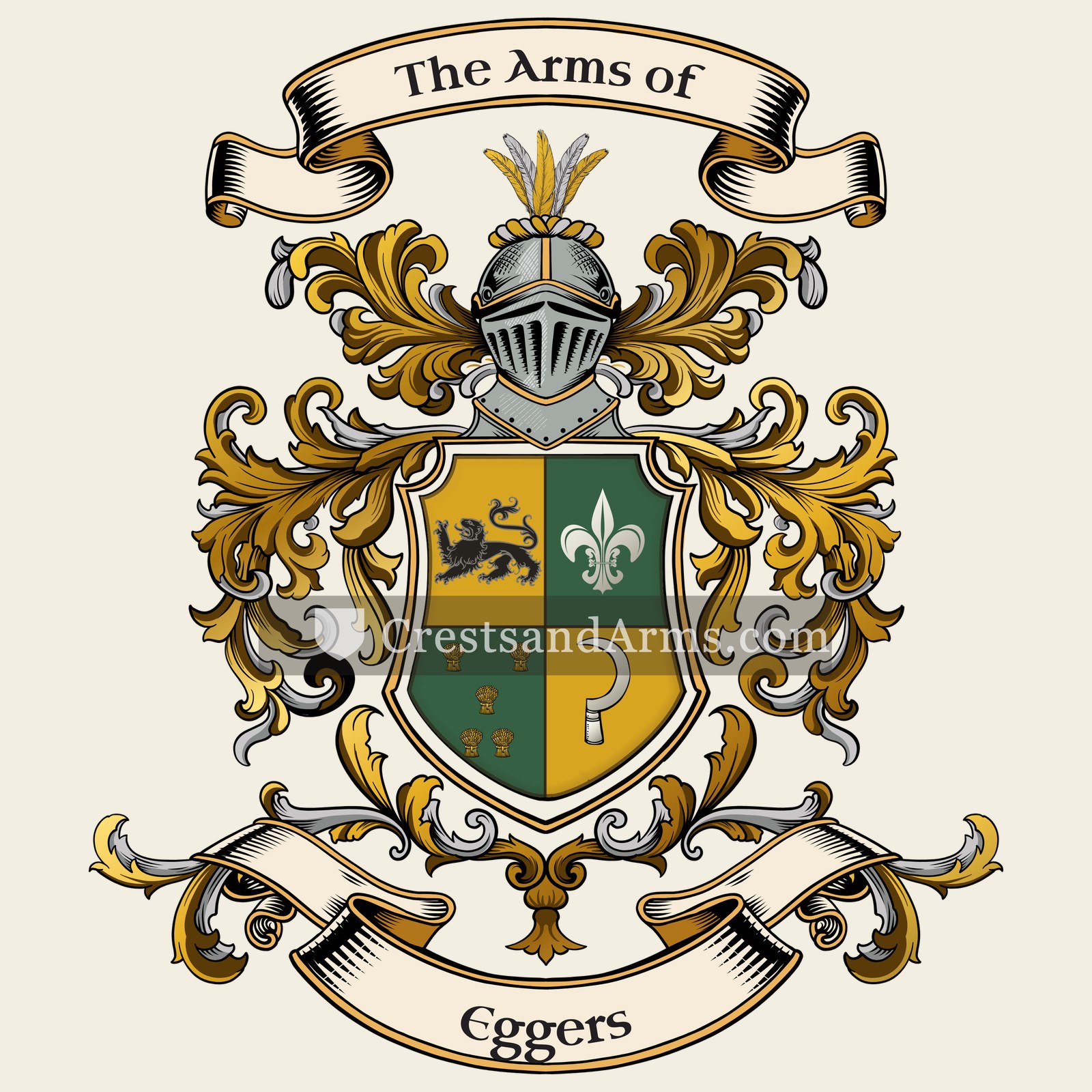


 roundelA coin, and one who has been to the crusades