Map of Netherlands showing where the Eiben arms are recorded
The Eiben arms were recorded in Netherlands, c. 1815.
Arms such as these were typically recorded in Friesland.
Friesland was low, wet country on the northern coast of the Netherlands, farmed by families who had held the same land for centuries. Free landholders were unusually common there, and a free landholder could carry arms.
This is where the arms were entered in the register. Families often moved to other parts of the country, so the same name can turn up in more than one region.
Region
Friesland
First recorded
1815
Granting Authority for the Eiben Arms
Hoge Raad van Adel
Photograph made by me · CC BY-SA 3.0
The body that granted and recorded arms in Netherlands in this period.
William I of the Netherlands
Sovereign of the period
William I of the Netherlands
1815–1840
Reigning in Netherlands when the Eiben arms are first recorded.
How Arms Worked in Netherlands
In the Netherlands, coats of arms were often used by noble families and those who held specific public offices. These arms were passed down through the generations to legitimate descendants. Younger branches of a family usually kept the original design without needing to add special marks. This system ensured that the family identity remained clear and consistent over many years.
Granting authority
The Hoge Raad van Adel is the official body that regulates and manages noble titles and coats of arms in the Netherlands.
How they got arms
Families typically obtained their coats of arms through official royal grants or by proving their long-standing historical use of the symbols.
Where arms were recorded
Coats of arms are officially recorded in the registers held by the Hoge Raad van Adel, which began its work in 1814.
The family's standing
Recorded among the armigerous families of Netherlands.
Origin & History of the Eiben Family in Netherlands
The surname Eiben is deeply rooted in the history of the northern Netherlands, particularly within the province of Friesland. By the early 19th century, records confirm that families bearing this name were well-established in the region. The name itself is likely derived from the Germanic word for the yew tree, which was a symbol of longevity and endurance in ancient European cultures. During the Napoleonic era, the French administration required citizens to adopt permanent surnames for official civil registration. This period forced many families to formalize their identities in government ledgers for the first time. For the Eiben family in Friesland, this transition helped solidify their presence in local society as they moved from traditional naming patterns to the structured records used by the Dutch state. These early ancestors were often part of the rural working class, contributing to the agricultural and maritime traditions that defined the Frisian landscape during the 1800s.
Coat of Arms & Family Crest Details
Symbols on this shield
swanGrace, light and the poet's art
fleur de lisPurity, light, and the sixth son
Colours
Black (Sable)Means: Constancy
Gold (Or)Means: Generosity
Blue (Azure)Means: Loyalty and truth
Silver (Argent)Means: Peace and sincerity
Red (Gules)Means: Military strength
Historical info
Source
J. B. Rietstap, Armorial Général, Gouda: G. B. van Goor Zonen, 1884–87
Blazon (the actual original written record)
“Ec.: aux 1 et 4 de sa. à un navet d'arg., feuillé de sin.; aux 2 et 3 d'or à quatre fleurs-de-lis de gu., 2 et 2. Sur le tout d'azur à un cygne d'arg., nageant sur une eau du même.”
BrabantBrabant, c. 1737
Digital archive packCoat of arms PNG, gold border print PDF, vector SVG and the certificate of authenticity. Sent to your email in minutes.
Map of Belgium showing where the Eiben arms are recorded
The Eiben arms were recorded in Brabant, c. 1737.
Brabant lay at the heart of the Low Countries, where the trade routes met. Its towns were wealthy and its landowners many, and both kinds of family kept arms, which is why the region is so heavily represented.
This is where the arms were entered in the register. Families often moved to other parts of the country, so the same name can turn up in more than one region.
The body that granted and recorded arms in Belgium in this period.
Charles VI, Holy Roman Emperor
Sovereign of the period
Charles VI, Holy Roman Emperor
1711–1740
Reigning in Netherlands when the Eiben arms are first recorded.
How Arms Worked in Belgium
In Belgium, a coat of arms is considered personal property that is passed down through the male line to legitimate descendants. Families often use the same shield design across generations to show their shared heritage. If a branch of the family wants to change the design, they must apply for an official update to their specific version of the arms.
Granting authority
The Conseil héraldique is the official body that regulates and approves all coats of arms in Belgium.
How they got arms
Families obtain their coats of arms through formal royal grants or by confirming their historical right to use existing designs.
Where arms were recorded
All approved coats of arms are officially recorded in the public registers of the Conseil héraldique since 1844.
The family's standing
Recorded among the armigerous families of Brabant.
Origin & History of the Eiben Family in Belgium
The family name Eiben has roots that trace back to the historic Duchy of Brabant, where records confirm members of the family were living as early as 1737. During the eighteenth century, this region was a central hub for trade and agriculture within the Austrian Netherlands. Families in Brabant often lived in close-knit rural communities or bustling market towns, where they contributed to the local economy through farming, craftsmanship, or trade. The name Eiben likely evolved from regional dialects spoken in the Low Countries, reflecting the linguistic blend of Germanic and local influences common to the area. As the family established themselves in Brabant, they became part of the social fabric of a region defined by its complex history of shifting borders and cultural exchange. By settling in this area, the early Eibens participated in the daily life of a society that valued community ties and local traditions, laying the foundation for their presence in the region for generations to come.
Coat of Arms & Family Crest Details
Symbols on this shield
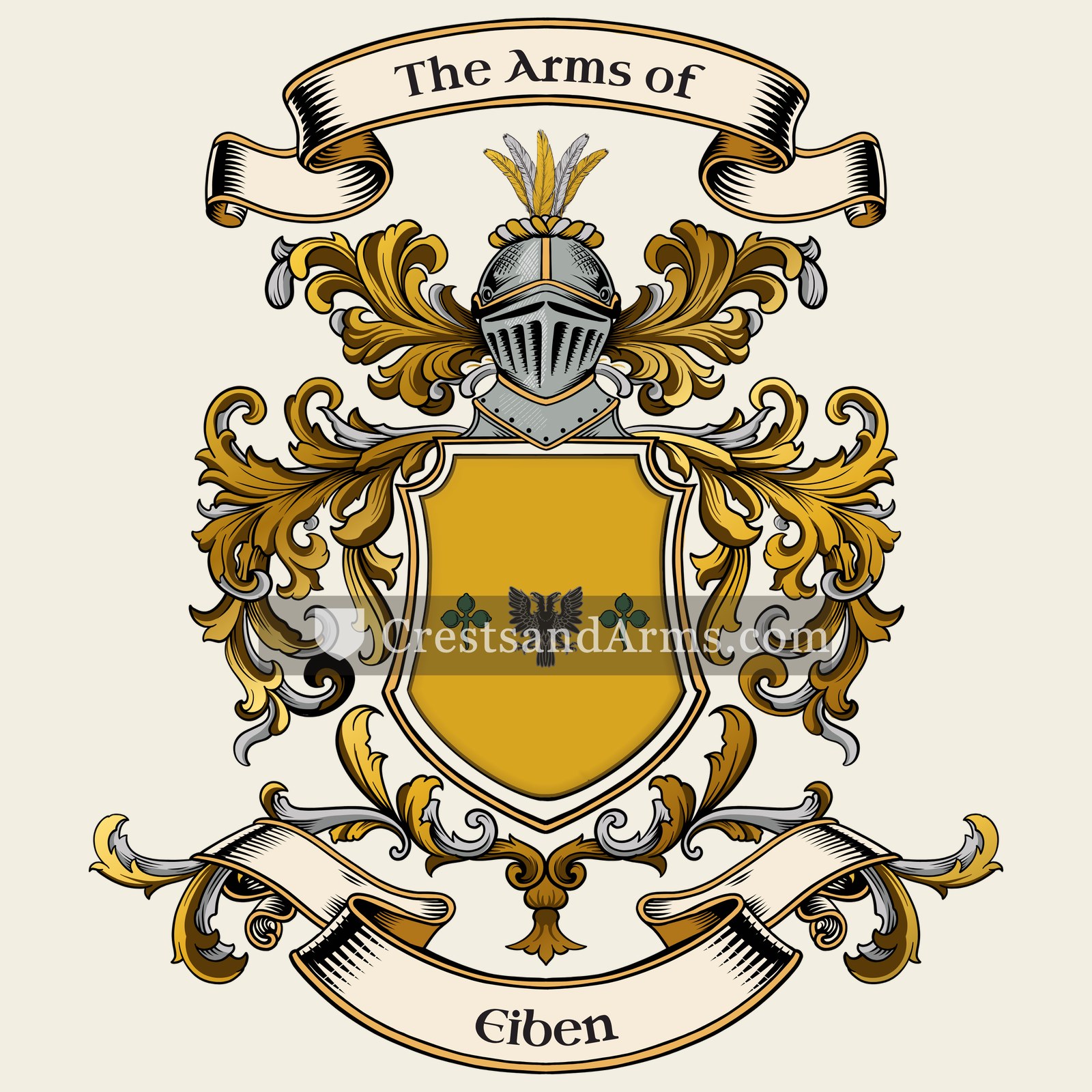
eagleNobility, strength and a keen mind
trefoilPerpetuity, and the Trinity
Colours
Gold (Or)Means: Generosity
Black (Sable)Means: Constancy
Green (Vert)Means: Hope
Historical info
Source
J. B. Rietstap, Armorial Général, Gouda: G. B. van Goor Zonen, 1884–87
Blazon (the actual original written record)
“D'or à l'aigle de sa., accostée entre ses ailes de deux trèfles de sin.; à trois clous à têtes rondes, enfoncées dans la tête de l'aigle. Cq. cour. C.: l'aigle, iss. Le casque accosté de deux bannières, celle à dextre d'azur plein, celle à sen. d'or à l'aigle ép. de sa.; lesdites bannières frangées d'or.”
MecklenburgMecklenburg, c. 1680
Digital archive packCoat of arms PNG, gold border print PDF, vector SVG and the certificate of authenticity. Sent to your email in minutes.
Map of Germany showing where the Eiben arms are recorded
The Eiben arms were recorded in Mecklenburg, c. 1680.
Mecklenburg was farming country in the north of Germany, held by a small number of families who kept their estates for generations. Owning land was what entitled a family to arms, so a great many Mecklenburg names ended up in the registers.
This is where the arms were entered in the register. Families often moved to other parts of the country, so the same name can turn up in more than one region.
The body that granted and recorded arms in Germany in this period.
Leopold I, Holy Roman Emperor
Sovereign of the period
Leopold I, Holy Roman Emperor
1658–1705
Reigning in Netherlands when the Eiben arms are first recorded.
How Arms Worked in Germany
In the Holy Roman Empire, coats of arms were often granted to individuals by the Emperor or his representatives. These arms were then passed down through the generations to all legitimate descendants of the original holder. Younger branches of a family usually kept the same shield design without needing to change it, as the arms belonged to the entire lineage.
Granting authority
The Holy Roman Emperor held the sole power to grant new coats of arms throughout his vast imperial territories.
How they got arms
Families typically obtained their coats of arms through a formal imperial grant or by proving their noble status to the authorities.
Where arms were recorded
These grants were officially recorded in the Imperial Chancery registers, which began keeping formal records of such honors during the Middle Ages.
The family's standing
Recorded among the armigerous families of Mecklenburg.
Origin & History of the Eiben Family in Germany
The surname Eiben is deeply rooted in the historical landscape of northern Germany, with documented evidence placing the family in the region of Mecklenburg by the year 1680. The name is believed to be derived from the Middle High German word for the yew tree, which was a plant of great cultural and symbolic significance in ancient Germanic traditions. During the late 17th century, families in Mecklenburg often lived in small, agrarian communities where surnames were frequently tied to the local landscape or specific natural landmarks. As the family established itself in this northern territory, they became part of the complex social fabric of the region, which was then defined by shifting borders and the influence of the Hanseatic League. By settling in Mecklenburg, the early members of the Eiben family participated in the steady development of rural life and local governance that characterized this part of Germany during the post-Thirty Years' War era.
Eiben Meaning & Related Branches
Root word
Iwa
Old Germanic word referring to the yew tree.
This name
EibenA topographic or habitational name denoting someone who lived near a yew tree.
also spelled
Eiben
Iben
Documented Sources
J. B. Rietstap, Armorial Général, Gouda: G. B. van Goor Zonen, 1884–87
Tresoar (Fries Historisch en Letterkundig Centrum), Burgerlijke Stand van Friesland
Meertens Instituut, Nederlandse Familienamenbank
Van der Schaar, J., Woordenboek van voornamen, 1964
Digital archive packCoat of arms PNG, gold border print PDF, vector SVG and the certificate of authenticity. Sent to your email in minutes.


 helmetWisdom and security in defence
 helmetWisdom and security in defence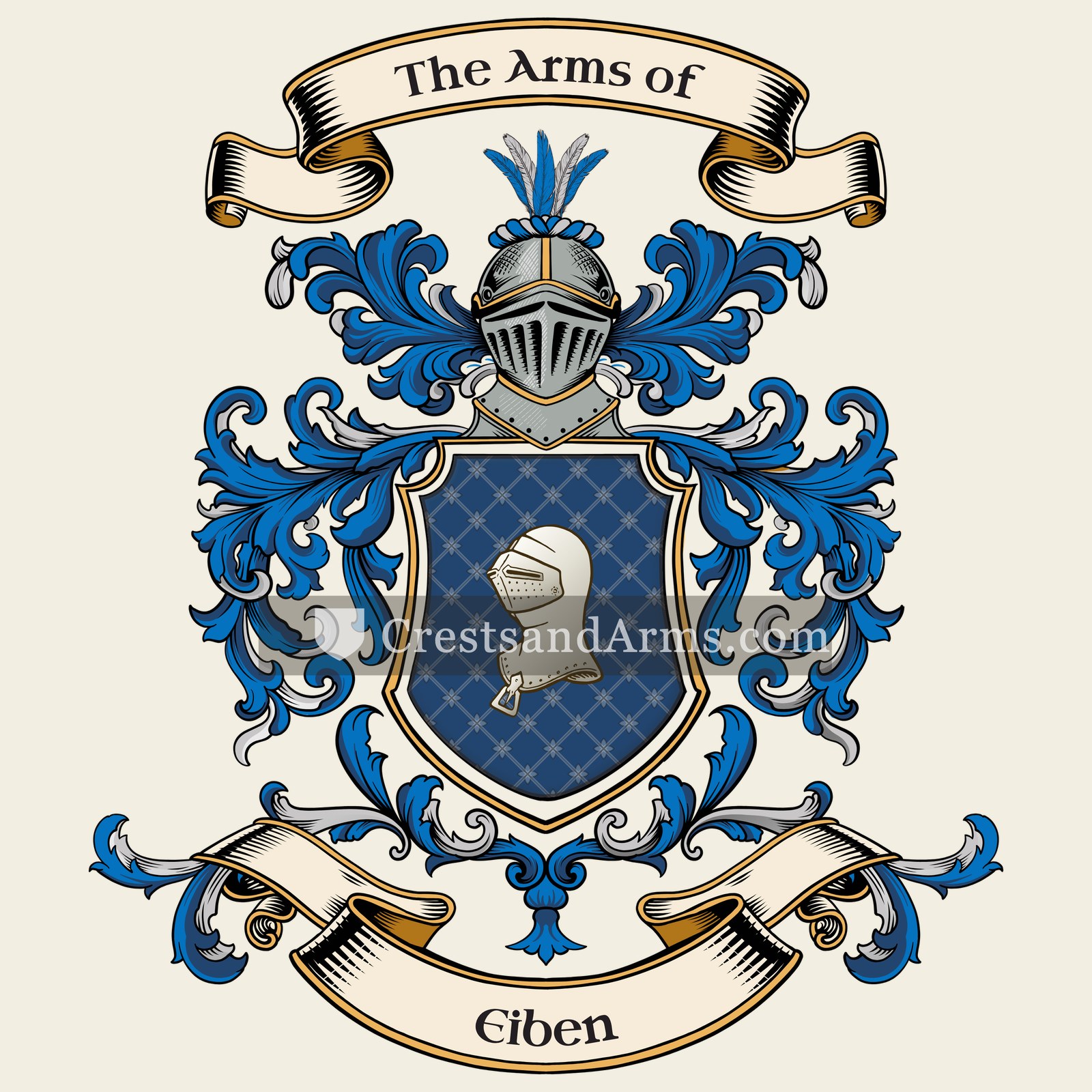


 swanGrace, light and the poet's art
 fleur de lisPurity, light, and the sixth son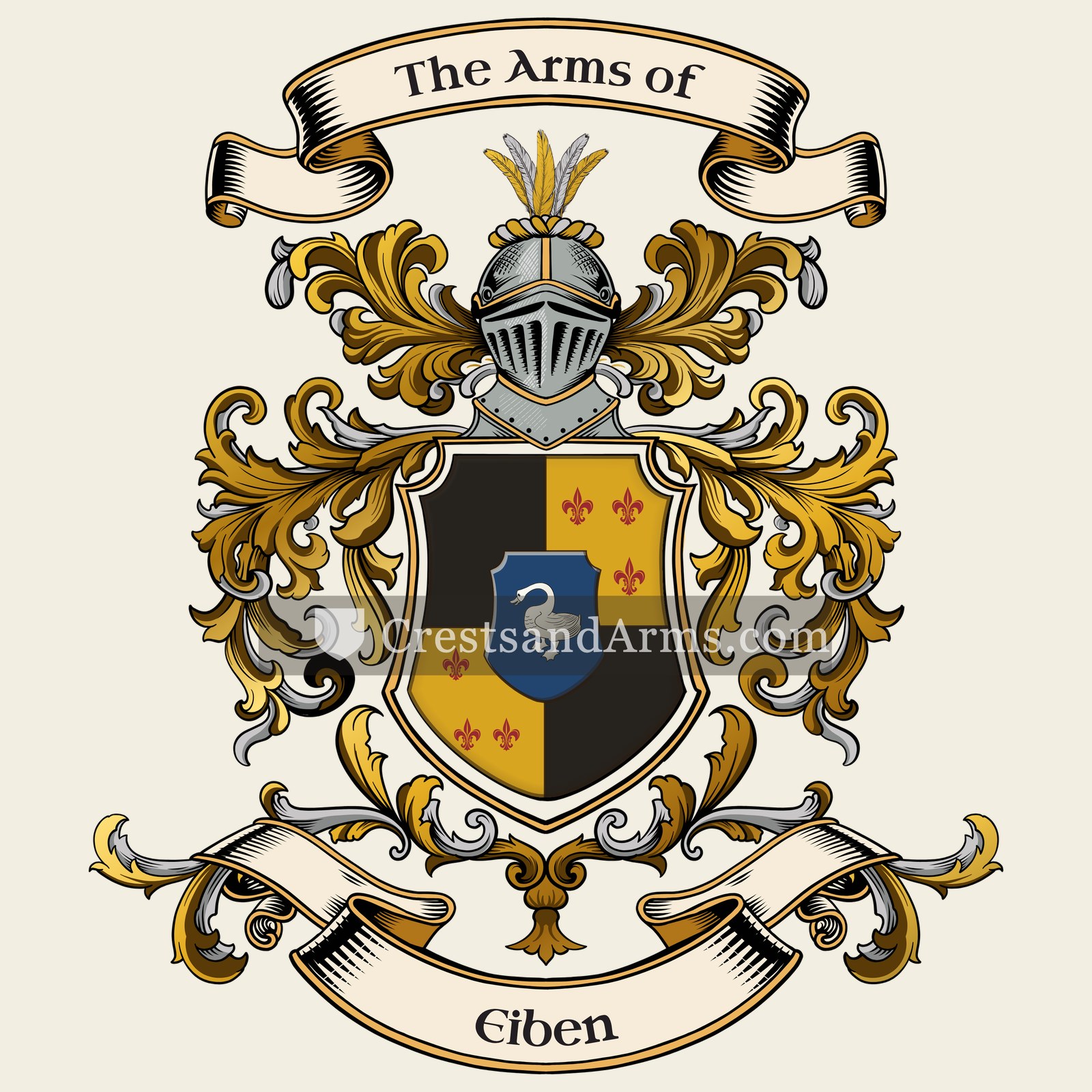


 eagleNobility, strength and a keen mind
 trefoilPerpetuity, and the Trinity