Map of Denmark showing where the Eison arms are recorded
The Eison arms were recorded in Denmark, c. 1722.
Arms such as these were typically recorded in Sjaælland.
Zealand held the Danish court, the crown's offices and Copenhagen itself. Families who served the king kept estates within reach of it, and royal service was the ordinary route to a coat of arms.
This is where the arms were entered in the register. Families often moved to other parts of the country, so the same name can turn up in more than one region.
The body that granted and recorded arms in Denmark in this period.
Frederik IV of Denmark
Sovereign of the period
Frederik IV of Denmark
1699–1730
Reigning in Denmark when the Eison arms are first recorded.
How Arms Worked in Denmark
Danish heraldry during this period was closely tied to noble status and royal favor rather than being open to all citizens. Arms were typically granted by the monarch to individuals, and these symbols were then shared by all members of the noble house. If a family line died out, the right to use those specific arms ended with them.
Granting authority
The Danish royal chancery held the power to issue and regulate official coats of arms for the kingdom.
How they got arms
Families usually received their arms through a formal royal grant that confirmed their noble status and rights.
Where arms were recorded
These grants were officially recorded in the Danish Royal Chancery records starting in the sixteenth century.
The family's standing
Recorded among the armigerous families of Denmark.
Origin & History of the Eison Family in Denmark
The history of the Eison family in Denmark begins with documented roots on the island of Sjælland as early as 1722. During the eighteenth century, the name emerged within a society defined by strict social hierarchies and the transition toward standardized naming practices. Families living in the rural districts of Sjælland during this period were often tied to the land through agricultural labor or local craftsmanship. As the Eison name became established in the region, it likely functioned as a way to distinguish the household within the local parish community. Life for these early ancestors involved navigating the complex church record systems of the time, which were essential for tracking births, marriages, and deaths in the Danish countryside. Over the following generations, the family name persisted as a marker of their specific lineage, reflecting the broader patterns of migration and settlement that shaped the population of eastern Denmark.
Meaning of the Eison family crest colors & symbols
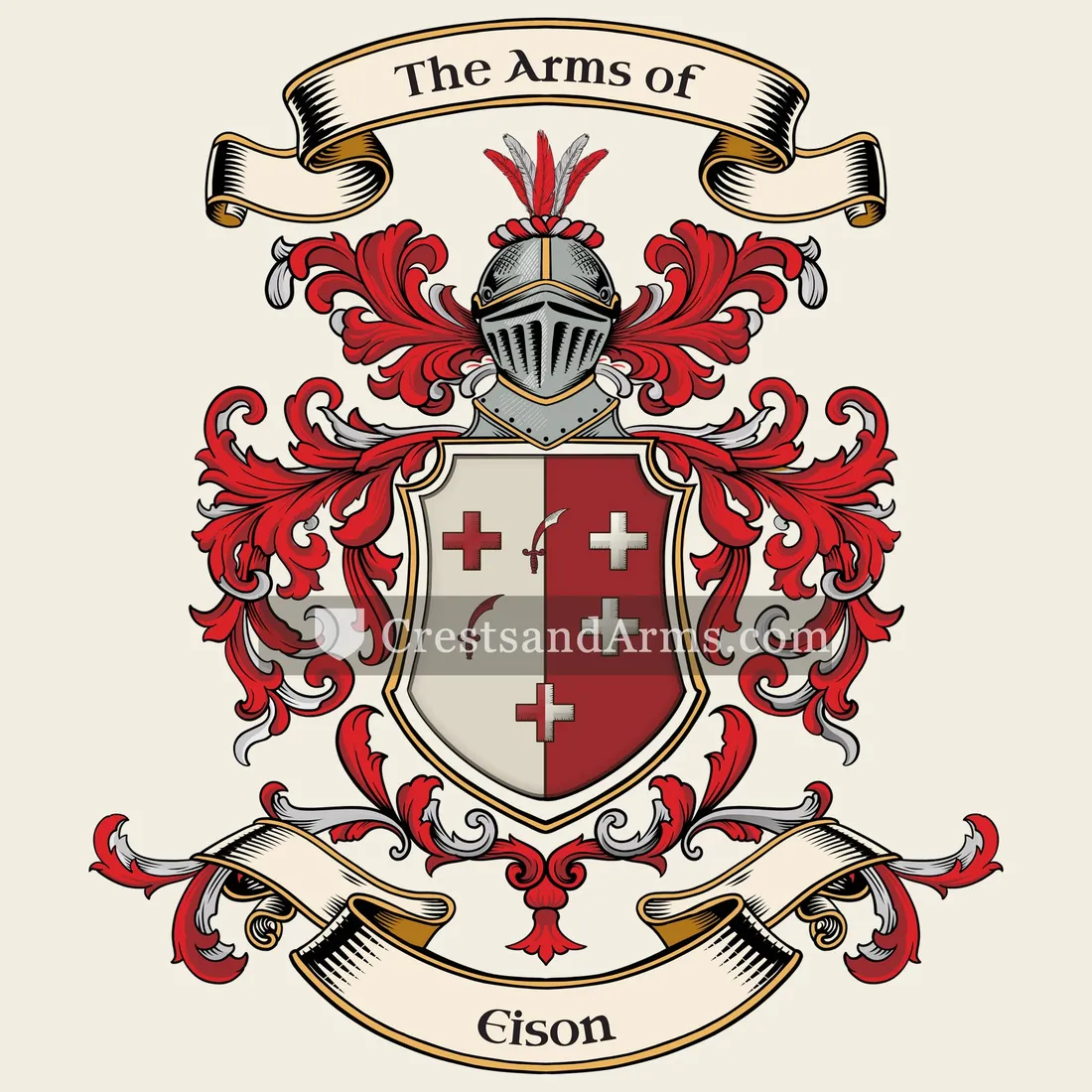
Symbols on this shield
cross symbolChristian faith and service
swordJustice, and military honour
Colours
Silver (Argent)Means: Peace and sincerity
Red (Gules)Means: Military strength
Historical info
Source
J. B. Rietstap, Armorial Général, Gouda: G. B. van Goor Zonen, 1884–87
Blazon (the actual original written record)
“Parti d'arg. et de gu.; à deux épées, passées en saut., br. sur le parti et cant. de quatre croisettes pattées, le tout de l'un en l'autre. Cq. cour. C.: une aigle iss. de gu.”
GermanyNuremberg, c. 1765
Digital archive packCoat of arms PNG, gold border print PDF, vector SVG and the certificate of authenticity. Sent to your email in minutes.
Map of Germany showing where the Eison arms are recorded
The Eison arms were recorded in Nuremberg, c. 1765.
This is where the arms were entered in the register. Families often moved to other parts of the country, so the same name can turn up in more than one region.
The body that granted and recorded arms in Germany in this period.
Francis I, Holy Roman Emperor
Sovereign of the period
Francis I, Holy Roman Emperor
1745–1765
Reigning in Denmark when the Eison arms are first recorded.
How Arms Worked in Germany
In the Holy Roman Empire, coats of arms were often granted to individuals by the Emperor or his representatives. These arms were then passed down through the generations to all legitimate descendants of the original holder. Younger branches of a family usually kept the same shield design without needing to change it, as the arms belonged to the entire lineage.
Granting authority
The Holy Roman Emperor held the sole power to grant new coats of arms throughout his vast imperial territories.
How they got arms
Families typically obtained their coats of arms through a formal imperial grant or by proving their noble status to the authorities.
Where arms were recorded
These grants were officially recorded in the Imperial Chancery registers, which began keeping formal records of such honors during the Middle Ages.
The family's standing
Recorded among the armigerous families of Germany.
Origin & History of the Eison Family in Germany
The Eison family name traces its roots to the bustling urban environment of eighteenth-century Nuremberg. By 1765, records confirm that members of the family were established residents within this prominent center of trade and craftsmanship. During this period, Nuremberg served as a vital hub for metalworking and skilled artisans, which likely influenced the daily lives and occupations of early family members. The name itself reflects the linguistic patterns of the region, where surnames often evolved from nicknames or descriptions of a person's trade. As the family integrated into the social fabric of the city, they participated in the growth of a society defined by guild regulations and civic responsibility. This early presence in such a significant German city suggests that the Eisons were part of the hardworking middle class that helped sustain Nuremberg’s reputation for excellence in manufacturing and commerce.
Eison Meaning & Related Branches
Root word
Eis
A Germanic personal name derived from the word for iron.
This name
EisonA patronymic surname meaning son of Eis or son of the iron-willed one.
also spelled
Izen
Documented Sources
J. B. Rietstap, Armorial Général, Gouda: G. B. van Goor Zonen, 1884–87
Rigsarkivet (Danish National Archives), Kirkebøger for Sjællands Stift (Parish registers for the Diocese of Sjælland)
Statens Arkiver, Folketællinger i Danmark (Danish census records)
Digital archive packCoat of arms PNG, gold border print PDF, vector SVG and the certificate of authenticity. Sent to your email in minutes.


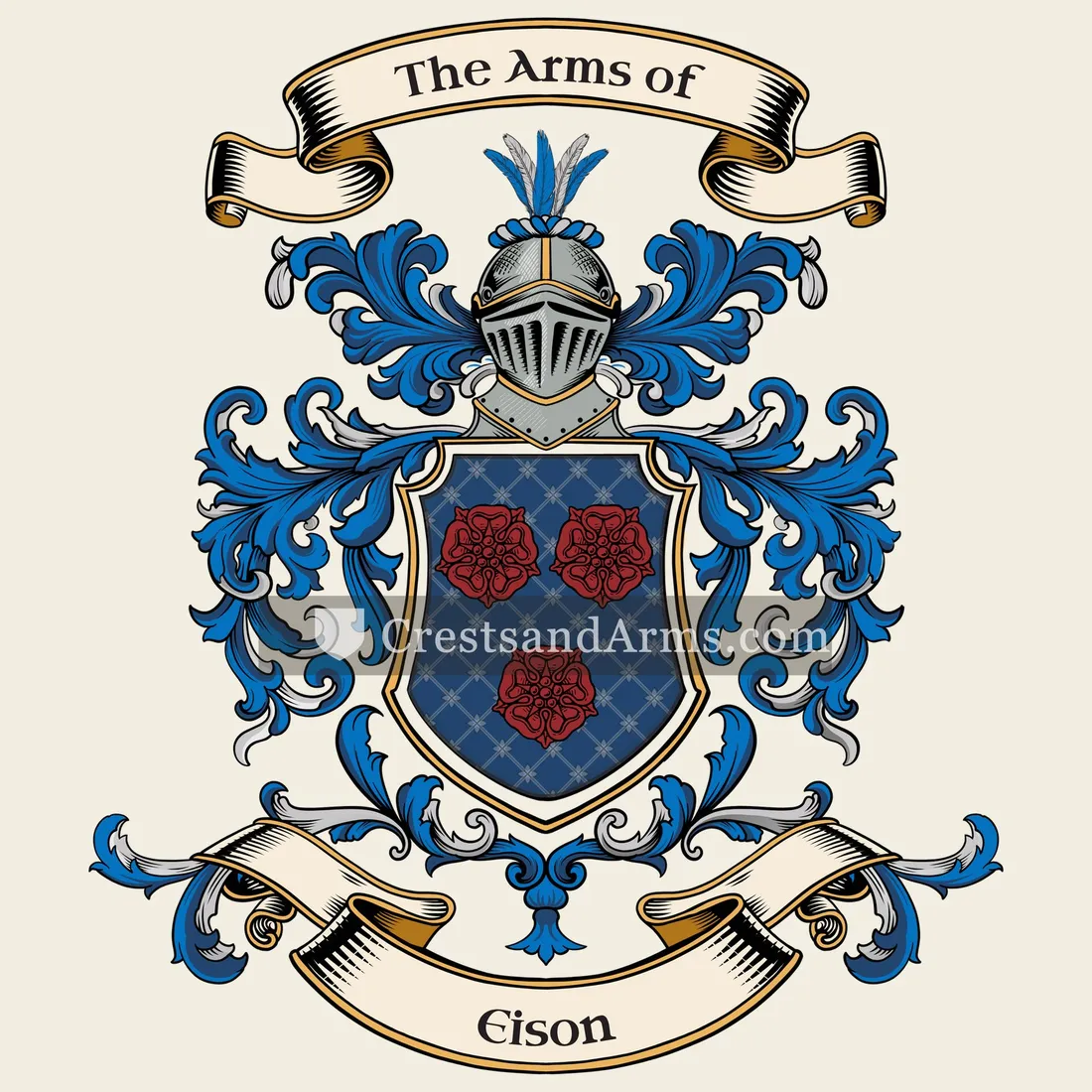
 roseThe seventh son, and beauty with grace
 roseThe seventh son, and beauty with grace


 cross symbolChristian faith and service
 swordJustice, and military honour