Map of Germany showing where the Elby arms are recorded
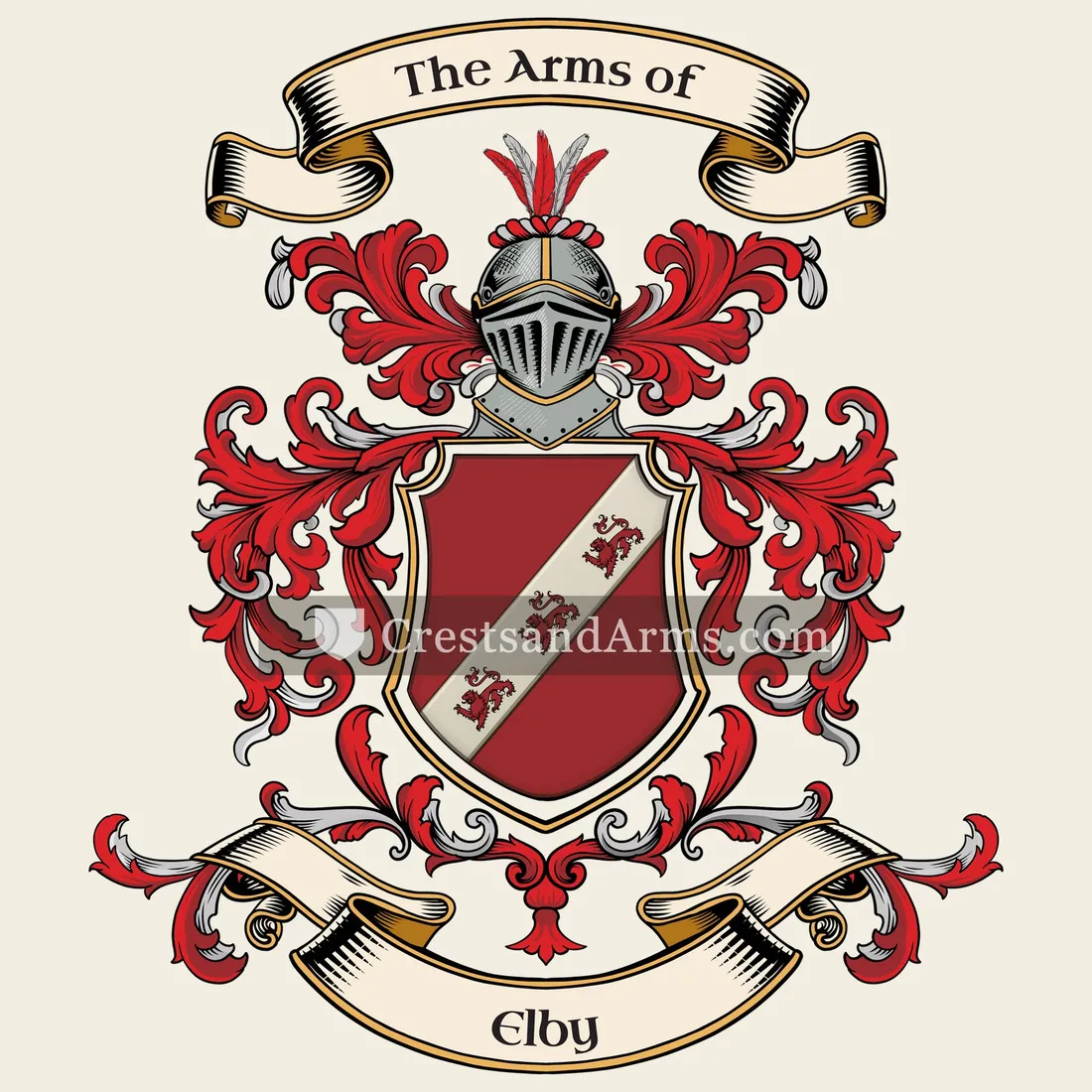
The Elby arms were recorded in Pomerania, c. 1861.
Pomerania was flat farming country on the Baltic coast, held in large estates by a small number of families. They kept their land for generations, and generations of landholding is what fills the registers.
This is where the arms were entered in the register. Families often moved to other parts of the country, so the same name can turn up in more than one region.
The body that granted and recorded arms in Germany in this period.
Frederick William IV of Prussia
Sovereign of the period
Frederick William IV of Prussia
1840–1861
Reigning in Germany when the Elby arms are first recorded.
How Arms Worked in Germany
Prussian heraldry was strictly tied to social rank and noble status rather than being a free choice for every citizen. These symbols were treated as permanent family property that moved through the generations to all legitimate heirs. If a family branch wanted to change their design to stand out, they had to apply for official permission to alter their specific version of the shield.
Granting authority
The Prussian Heroldsamt acted as the central state office that managed and strictly controlled all noble titles and coats of arms.
How they got arms
Families usually obtained their arms through formal royal grants or by proving their long-standing noble status to the state authorities.
Where arms were recorded
All official coats of arms were kept in the rolls of the Prussian Heroldsamt, which functioned from 1706 until 1918.
The family's standing
Recorded among the armigerous families of Pomerania.
Origin & History of the Elby Family in Germany
The surname Elby is deeply connected to the historical region of Pomerania, a coastal area along the Baltic Sea that was once a hub of trade and agricultural life. By 1861, records confirm that families bearing this name were well-established within the Pomeranian landscape. The name likely evolved from local geographic markers or traditional naming customs common in Northern Europe during the nineteenth century. As the region underwent significant social and political changes during this era, families like the Elbys often lived as farmers or skilled laborers who contributed to the growth of their local communities. Their presence in Pomerania suggests a long history of resilience, as they navigated the shifting borders and economic transitions that defined this part of the world throughout the 1800s.
Elby Meaning & Related Branches
Root word
Alberich
A Germanic name composed of elements meaning elf and ruler.
This name
ElbyA topographic or habitational name derived from a river or settlement associated with elf-like spirits.
also spelled
Elbee
Elbey
Documented Sources
J. B. Rietstap, Armorial Général, Gouda: G. B. van Goor Zonen, 1884–87
Landesarchiv Greifswald, Zivilstandsregister der Provinz Pommern (Civil Status Registers of the Province of Pomerania)
Staatsarchiv Stettin, Kirchenbücher der Provinz Pommern (Church Books of the Province of Pomerania)
Heitz, Gerhard, Die Entwicklung der gutsherrlich-bäuerlichen Verhältnisse in Pommern von der Mitte des 18. bis zum Beginn des 19. Jahrhunderts, 1956
Schmidt, Roderich, Das historische Pommern: Personen, Orte, Ereignisse, 2007
Digital archive packCoat of arms PNG, gold border print PDF, vector SVG and the certificate of authenticity. Sent to your email in minutes.


 lionCourage, strength and royalty
 lionCourage, strength and royalty