Map of Belgium showing where the Emans arms are recorded
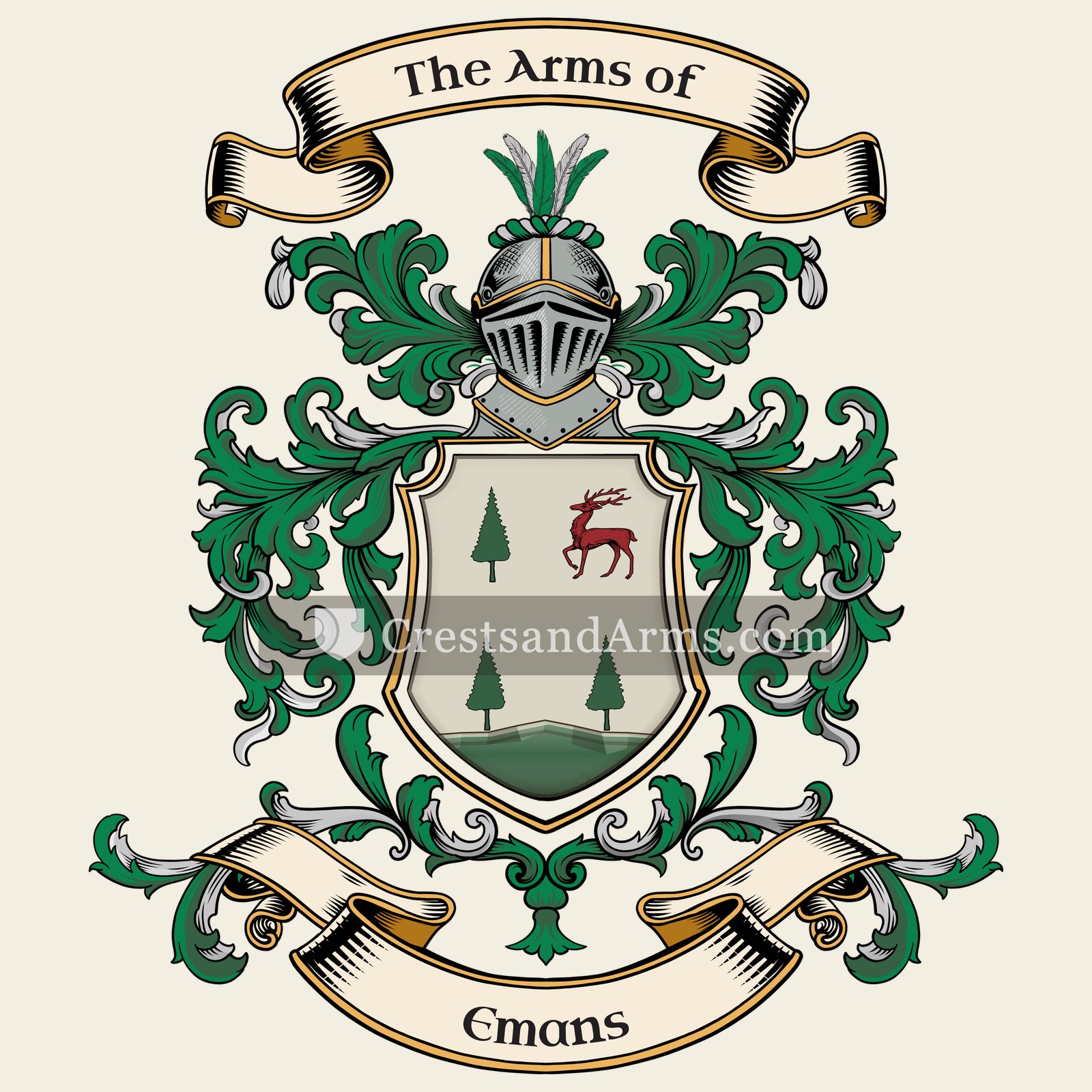
The Emans arms were recorded in Belgium, c. 1737.
Arms such as these were typically recorded in Brabant.
Brabant lay at the heart of the Low Countries, where the trade routes met. Its towns were wealthy and its landowners many, and both kinds of family kept arms, which is why the region is so heavily represented.
This is where the arms were entered in the register. Families often moved to other parts of the country, so the same name can turn up in more than one region.
The body that granted and recorded arms in Belgium in this period.
Charles VI, Holy Roman Emperor
Sovereign of the period
Charles VI, Holy Roman Emperor
1711–1740
Reigning in Belgium when the Emans arms are first recorded.
How Arms Worked in Belgium
In Belgium, a coat of arms is considered personal property that is passed down through the male line to legitimate descendants. Families often use the same shield design across generations to show their shared heritage. If a branch of the family wants to change the design, they must apply for an official update to their specific version of the arms.
Granting authority
The Conseil héraldique is the official body that regulates and approves all coats of arms in Belgium.
How they got arms
Families obtain their coats of arms through formal royal grants or by confirming their historical right to use existing designs.
Where arms were recorded
All approved coats of arms are officially recorded in the public registers of the Conseil héraldique since 1844.
The family's standing
Recorded among the armigerous families of Belgium.
Origin & History of the Emans Family in Belgium
The family name Emans has deep roots in the historical region of Brabant, which spans parts of modern-day Belgium and the Netherlands. By the year 1737, records confirm that members of the family were well-established in this area, living within a society defined by agricultural traditions and local trade. The name itself is likely a patronymic, meaning it was originally derived from a shortened form of a given name like Embrecht or Emanuel. During the eighteenth century, families in Brabant often lived in close-knit rural communities where they played active roles in parish life and local commerce. As the family grew, they became part of the social fabric of the Low Countries, contributing to the development of the region through their work and community involvement. This early history reflects the broader movement of families who settled in the fertile lands of Brabant and built lives that would span many generations.
Emans Meaning & Related Branches
Root word
Eman
A Germanic personal name derived from the element meaning universal or entire.
This name
EmansA patronymic surname indicating descent from a person bearing the name Eman.
also spelled
Emantz
Emons
Documented Sources
J. B. Rietstap, Armorial Général, Gouda: G. B. van Goor Zonen, 1884–87
Regionaal Archief Tilburg, Doop-, trouw- en begraafregisters (DTB)


 mountThe ground held, and steadfastness upon it
 stagPeace and harmony, and one who will not fight unprovoked
 pine treeSteadfastness through every season
 mountThe ground held, and steadfastness upon it
 stagPeace and harmony, and one who will not fight unprovoked
 pine treeSteadfastness through every season