A record of documented arms, meaning and origin, researched for the Engelbrecht family lines. Documented in 3 countries.
Reg. 6327 · Swedish, D–F
Coat of Arms & Family Crest Details
Symbols on this shield
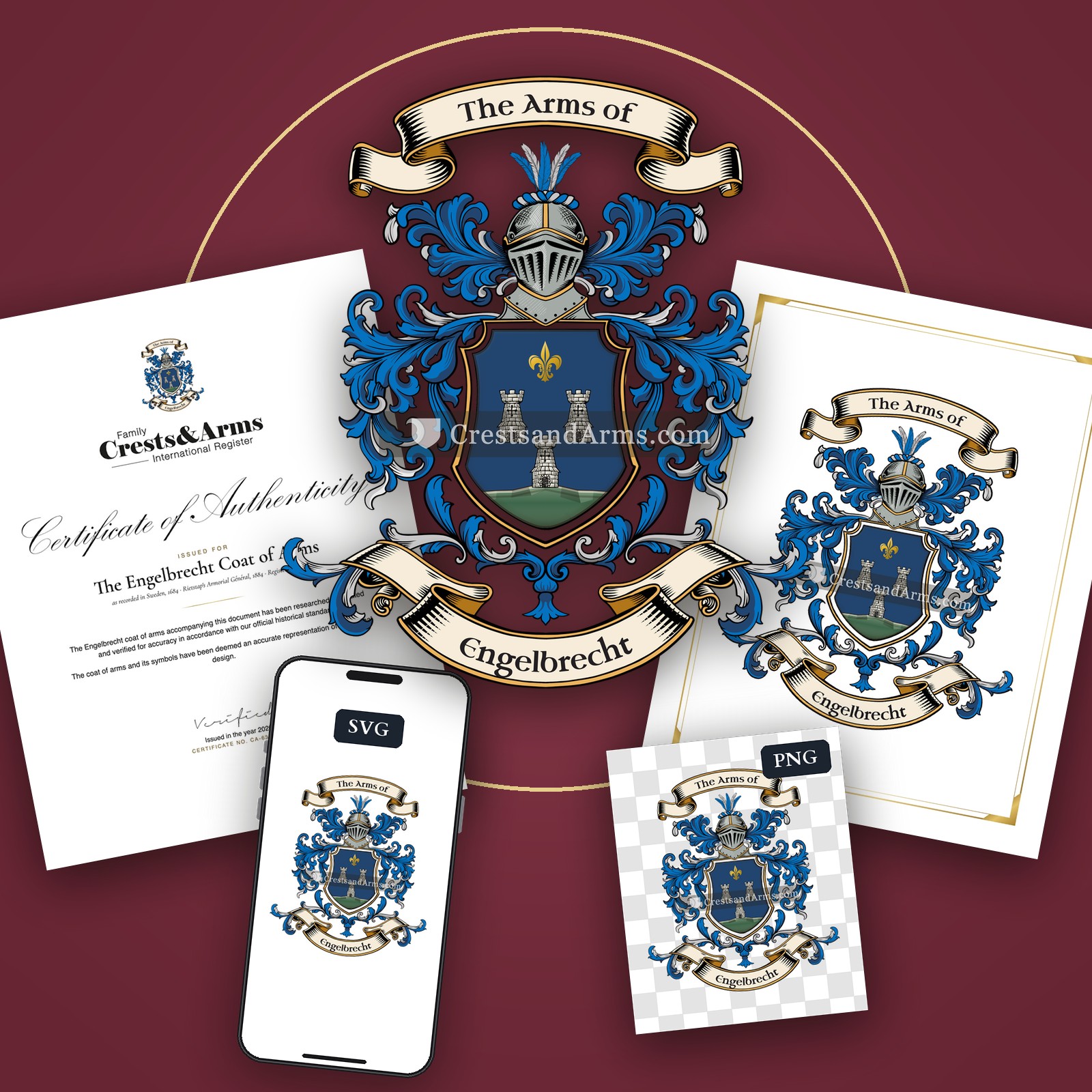
mountThe ground held, and steadfastness upon it
towerGrandeur and solidity, and a stronghold defended
fleur de lisPurity, light, and the sixth son
Colours
Blue (Azure)Means: Loyalty and truth
Green (Vert)Means: Hope
Silver (Argent)Means: Peace and sincerity
Gold (Or)Means: Generosity
Historical info
Source
J. B. Rietstap, Armorial Général, Gouda: G. B. van Goor Zonen, 1884–87
Blazon (the actual original written record)
“D'azur à un château flanqué de deux tours d'arg., portillé d'or, les battants ouv., posé sur un tertre de sin.; le tout acc. en chef d'une fleur-de-lis d'or. Cq. cour. C.: la fleur-de-lis. L.: à dextre d'or et d'azur, à sen. d'arg. et d'azur.”
Swedenc. 1684
Digital archive packCoat of arms PNG, gold border print PDF, vector SVG and the certificate of authenticity. Sent to your email in minutes.
Map of Sweden showing where the Engelbrecht arms are recorded
The Engelbrecht arms were recorded in Sweden, c. 1684.
Arms such as these were typically recorded in Stockholm.
Stockholm held the Swedish court and the House of Nobility, where every noble family's arms were entered and kept. Families ennobled for service registered there, which is why so many are recorded around the city.
This is where the arms were entered in the register. Families often moved to other parts of the country, so the same name can turn up in more than one region.
The body that granted and recorded arms in Sweden in this period.
Charles XI of Sweden
Sovereign of the period
Charles XI of Sweden
1660–1697
Reigning in Sweden when the Engelbrecht arms are first recorded.
How Arms Worked in Sweden
In Sweden, a coat of arms belonged to a noble family as a whole rather than just one individual. These arms were passed down through the generations to all legitimate descendants. Younger branches of the family used the same shield without needing to change it. This system ensured that the entire lineage shared the same identity and status under the law.
Granting authority
The Riddarhuset, or House of Nobility, regulated all noble coats of arms in Sweden under royal authority.
How they got arms
Families received their coats of arms through royal grants of nobility which were then officially registered with the House.
Where arms were recorded
Coats of arms were officially recorded in the Swedish House of Nobility register starting in the year 1626.
The family's standing
Recorded among the armigerous families of Sweden.
Origin & History of the Engelbrecht Family in Sweden
The name Engelbrecht carries a deep history that reflects the movement of people across Northern Europe during the seventeenth century. While the name has Germanic roots, its presence in Sweden became firmly established by the late 1600s. Records confirm that members of the family were living in Stockholm by 1684, a time when the city was a growing hub of trade and administration. During this era, families with this name often integrated into the urban professional class, working as craftsmen, merchants, or civil servants within the Swedish capital. As the family settled into Swedish society, they adapted to the local culture while maintaining the distinct identity associated with their name. This transition highlights how families from abroad contributed to the social and economic development of Stockholm during the period of the Swedish Empire.
Coat of Arms & Family Crest Details
Symbols on this shield
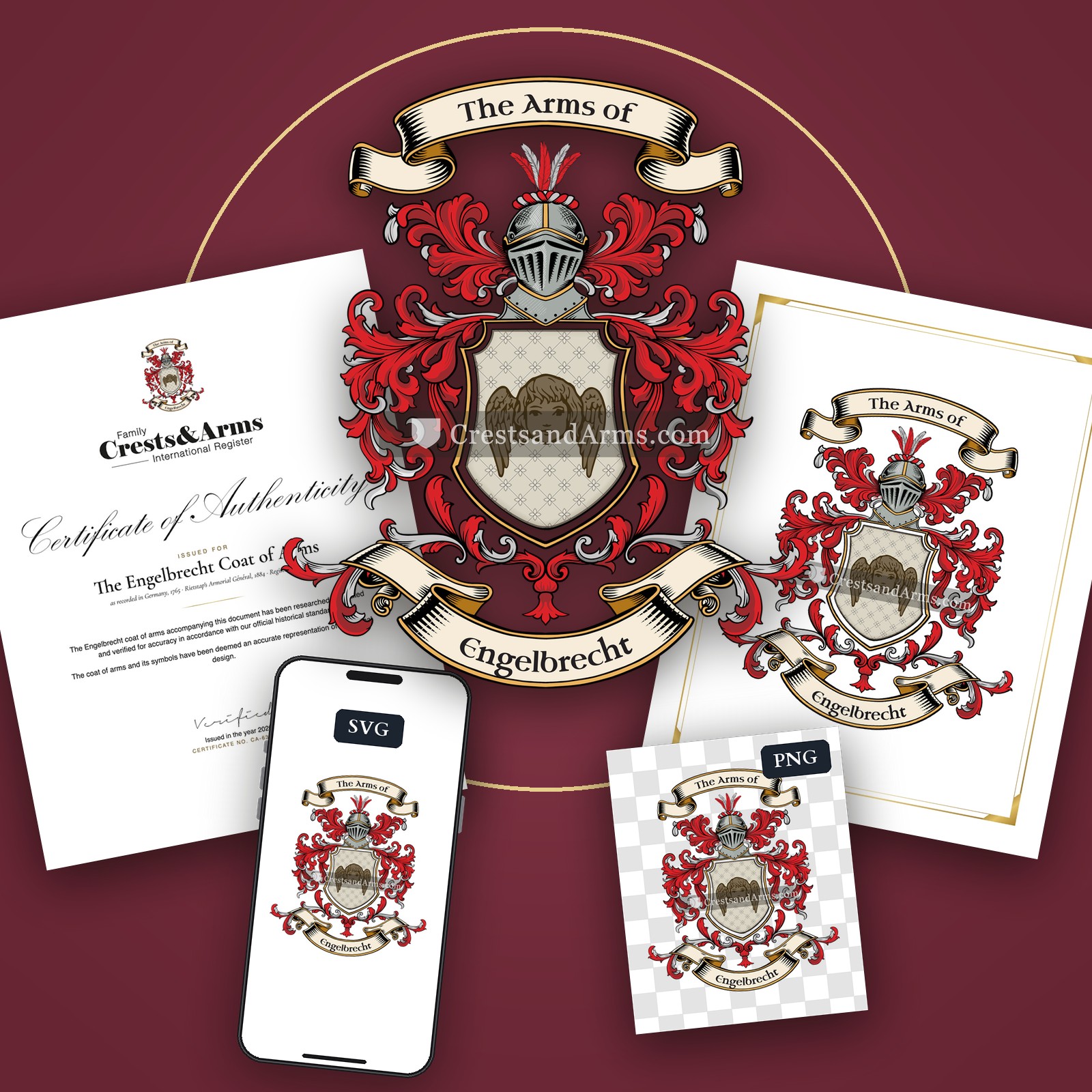
cherubDivine protection over the innocent
Colours
Silver (Argent)Means: Peace and sincerity
Historical info
Source
J. B. Rietstap, Armorial Général, Gouda: G. B. van Goor Zonen, 1884–87
Blazon (the actual original written record)
“D'arg. à un chérubin de carn., les ailes de sa. C.: un vol de sa. L. d'arg. et de sa.”
BrandenburgBrandenburg, c. 1765
Digital archive packCoat of arms PNG, gold border print PDF, vector SVG and the certificate of authenticity. Sent to your email in minutes.
Map of Germany showing where the Engelbrecht arms are recorded
The Engelbrecht arms were recorded in Brandenburg, c. 1765.
Brandenburg was sandy farming country around Berlin, held in large estates by families who served as officers. Land and military service each brought arms, and most families there had both.
This is where the arms were entered in the register. Families often moved to other parts of the country, so the same name can turn up in more than one region.
The body that granted and recorded arms in Germany in this period.
Francis I, Holy Roman Emperor
Sovereign of the period
Francis I, Holy Roman Emperor
1745–1765
Reigning in Sweden when the Engelbrecht arms are first recorded.
How Arms Worked in Germany
In the Holy Roman Empire, coats of arms were often granted to individuals by the Emperor or his representatives. These arms were then passed down through the generations to all legitimate descendants of the original holder. Younger branches of a family usually kept the same shield design without needing to change it, as the arms belonged to the entire lineage.
Granting authority
The Holy Roman Emperor held the sole power to grant new coats of arms throughout his vast imperial territories.
How they got arms
Families typically obtained their coats of arms through a formal imperial grant or by proving their noble status to the authorities.
Where arms were recorded
These grants were officially recorded in the Imperial Chancery registers, which began keeping formal records of such honors during the Middle Ages.
The family's standing
Recorded among the armigerous families of Brandenburg.
Origin & History of the Engelbrecht Family in Germany
The surname Engelbrecht is a compound name rooted in the Old High German language, combining the words for angel and bright or famous. This name was historically used as a given name before it eventually transitioned into a hereditary family name during the Middle Ages. By the time the family became established in the Brandenburg region of Germany around 1765, the name had already been associated with families across various German territories for several centuries. In the context of 18th-century Brandenburg, families like the Engelbrechts were often part of the rural or growing urban middle class, living through a period of significant agricultural and administrative reform under the Prussian state. Their presence in this region reflects the broader movement of families who settled in the fertile lands of the Prussian heartland to participate in the local economy and community life of the era.
Coat of Arms & Family Crest Details
Symbols on this shield
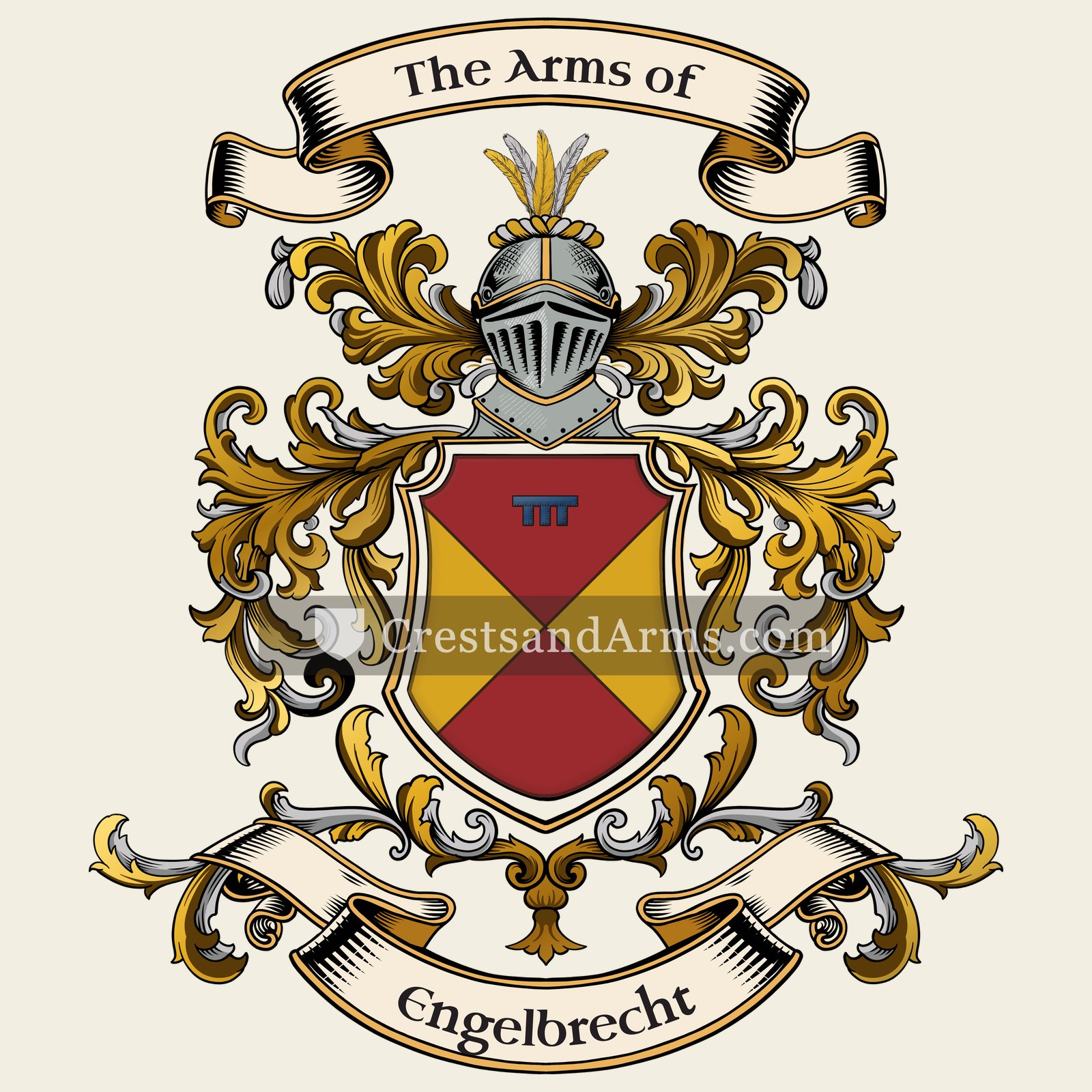
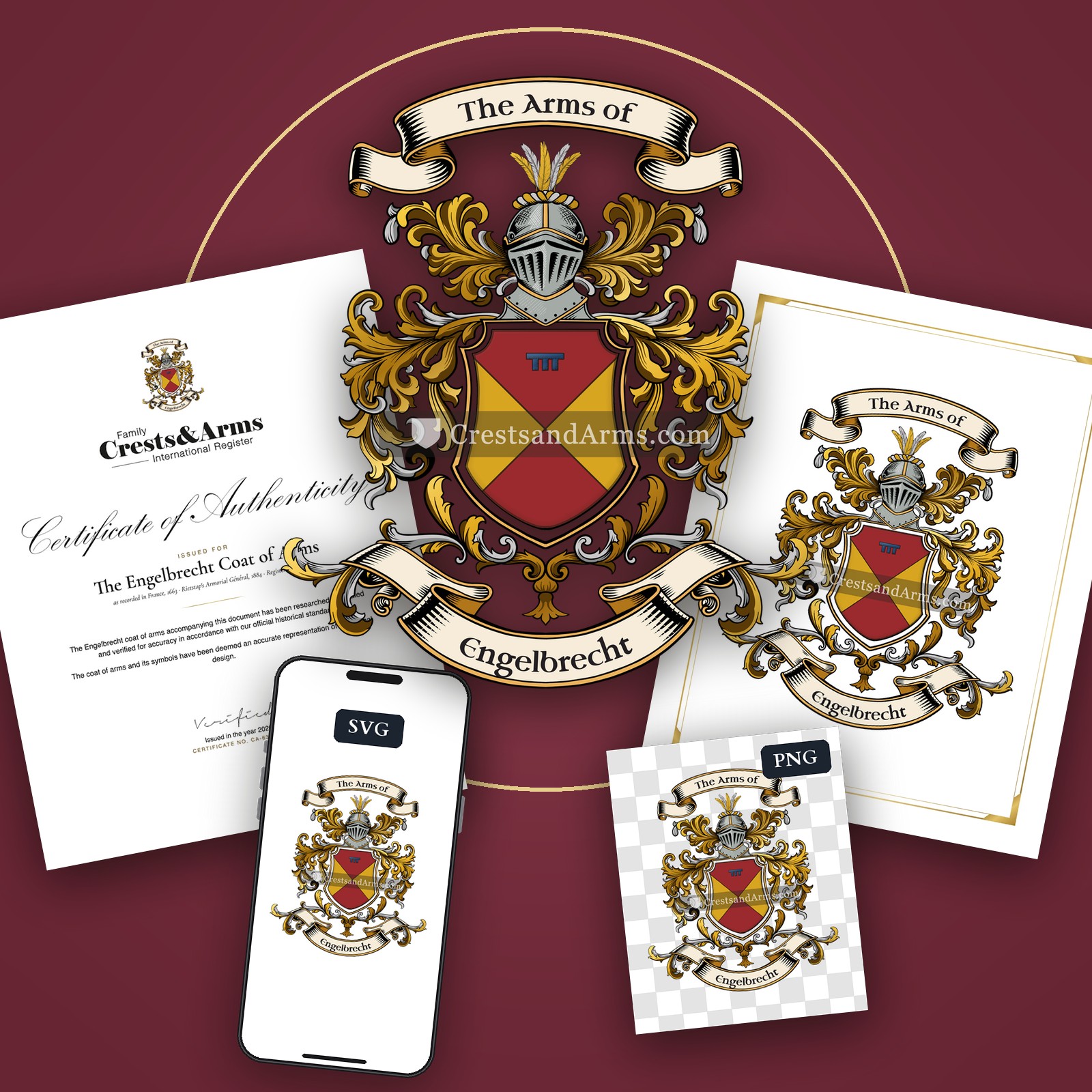
labelThe eldest son, during his father's life
Colours
Gold (Or)Means: Generosity
Red (Gules)Means: Military strength
Blue (Azure)Means: Loyalty and truth
Historical info
Source
J. B. Rietstap, Armorial Général, Gouda: G. B. van Goor Zonen, 1884–87
Blazon (the actual original written record)
“Éc. en saut. d'or et de gu.; au lambel d'azur en chef.”
FranceStrasbourg, c. 1663
Digital archive packCoat of arms PNG, gold border print PDF, vector SVG and the certificate of authenticity. Sent to your email in minutes.
Map of France showing where the Engelbrecht arms are recorded
The Engelbrecht arms were recorded in Strasbourg, c. 1663.
This is where the arms were entered in the register. Families often moved to other parts of the country, so the same name can turn up in more than one region.
The body that granted and recorded arms in France in this period.
Louis XIV of France
Sovereign of the period
Louis XIV of France
1643–1715
Reigning in Sweden when the Engelbrecht arms are first recorded.
How Arms Worked in France
In France, a coat of arms was a mark of honor that passed down through the male line to all legitimate descendants. Families often used the same shield without changes to show their shared heritage. If a branch wanted to stand out, they could add a small mark to their shield to show their specific place in the family tree.
Granting authority
The Juge d'armes de France acted as the official authority that regulated and verified coats of arms across the country.
How they got arms
Families typically inherited their arms from ancestors, though they could also receive them through royal grants or by proving their noble status.
Where arms were recorded
Coats of arms were officially recorded in the Armorial Général de France, which began its main collection in the year 1696.
The family's standing
Recorded among the armigerous families of France.
Origin & History of the Engelbrecht Family in France
The name Engelbrecht has deep roots in the Alsace region, a territory that has shifted between French and German cultural influences for centuries. By 1663, records confirm that members of the family were well-established in Strasbourg, a city that served as a vital crossroads for trade and intellectual exchange in eastern France. The name itself is of Germanic origin, combining words that translate to "angel" and "bright" or "shining," which suggests that the earliest ancestors may have been associated with religious or scholarly life. During the seventeenth century, families like the Engelbrechts in Strasbourg often navigated the complex social landscape of a border city, balancing local traditions with the growing administrative reach of the French crown. As the region became more integrated into the kingdom of France, these families contributed to the unique blend of customs and languages that defined the Alsatian identity. Their presence in the city during this era highlights a history of resilience and adaptation as they lived through the political transitions that shaped modern France.
Engelbrecht Meaning & Related Branches
Root word
Engelbert
Derived from the Germanic elements for angel and bright or famous.
This name
EngelbrechtA patronymic surname signifying the son of a person named Engelbert.
also spelled
Engelbrekt
Engelbrechtt
Related arms
Kerckeringrecorded with Engelbrecht, same area
Documented Sources
J. B. Rietstap, Armorial Général, Gouda: G. B. van Goor Zonen, 1884–87
Stockholm City Archives (Stockholms stadsarkiv), Mantalslängder för Stockholms stad 1684
National Archives of Sweden (Riksarkivet), Kyrkoarkiv: Födelse- och dopböcker för Stockholms församlingar
Lundkvist, Sven, Stockholms historia under 1600-talet, 1965
Sjöström, Oskar, Stockholm i en brytningstid, 2008
Digital archive packCoat of arms PNG, gold border print PDF, vector SVG and the certificate of authenticity. Sent to your email in minutes.


 mountThe ground held, and steadfastness upon it
 towerGrandeur and solidity, and a stronghold defended
 fleur de lisPurity, light, and the sixth son
 mountThe ground held, and steadfastness upon it
 towerGrandeur and solidity, and a stronghold defended
 fleur de lisPurity, light, and the sixth son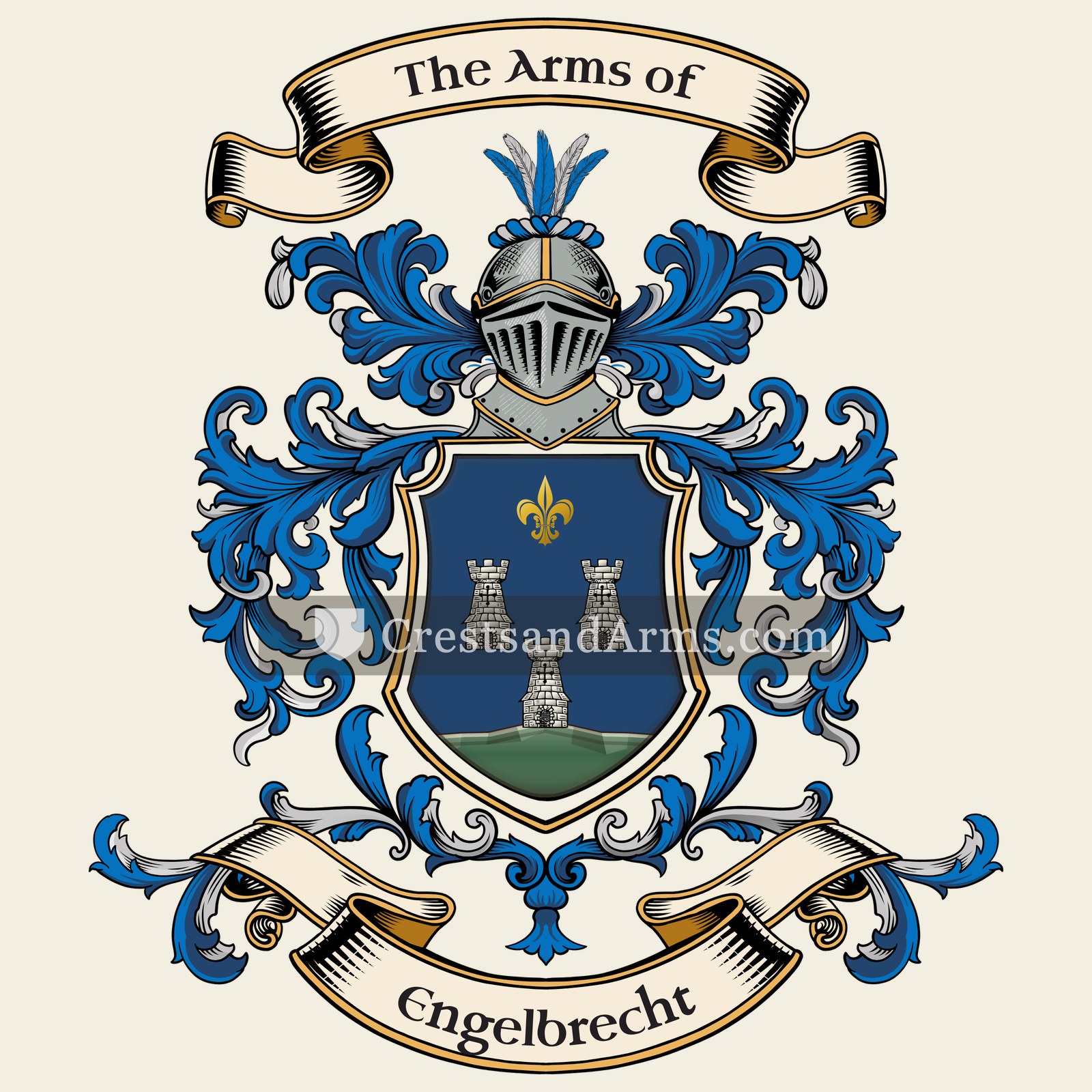


 cherubDivine protection over the innocent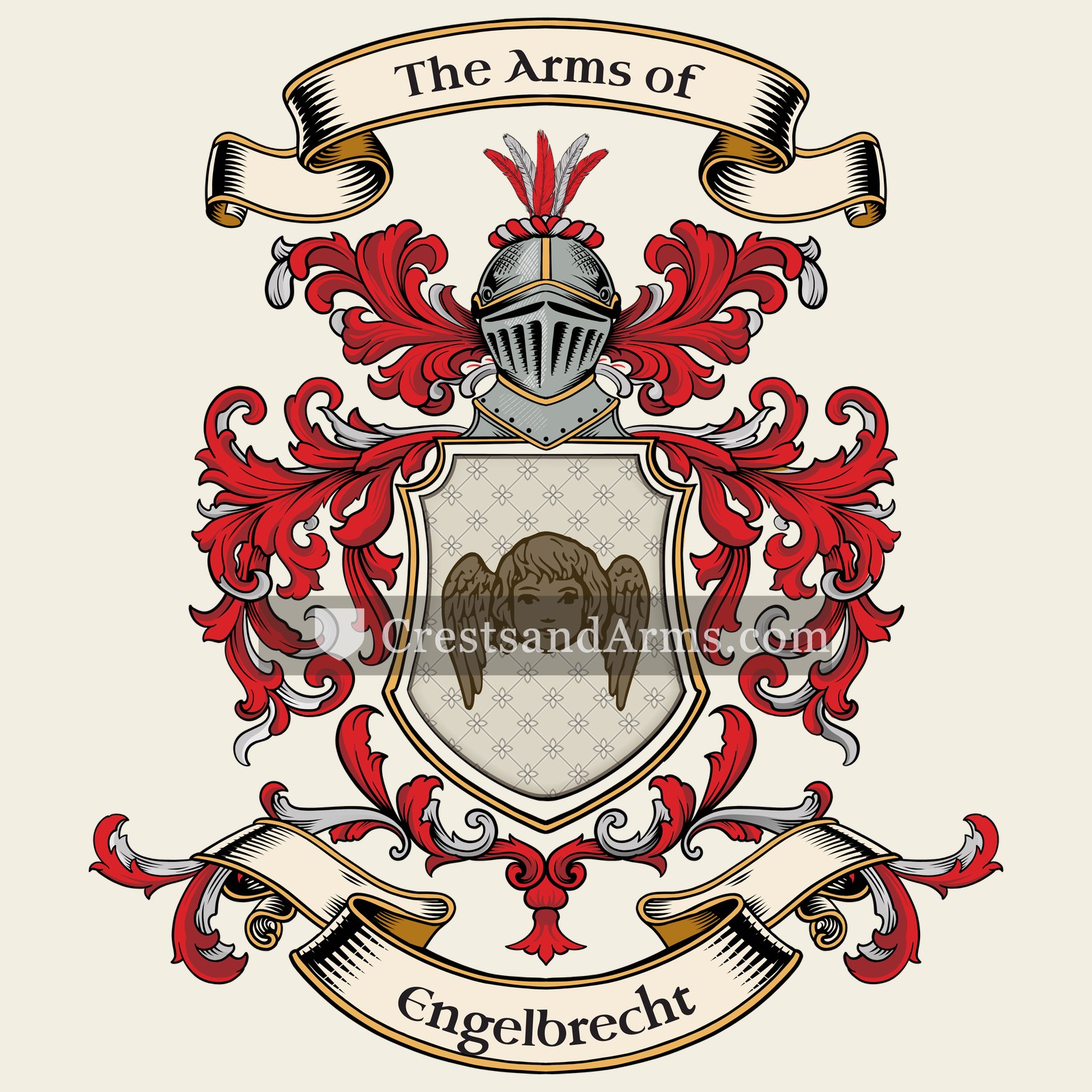


 labelThe eldest son, during his father's life