Map of Germany showing where the Engelking arms are recorded
The Engelking arms were recorded in Harlem, c. 1765.
Arms such as these were typically recorded in Bavaria.
Bavaria was a country of old landed families and walled market towns. Estates passed down the same line for centuries, and both the landowners and the leading townsmen kept arms, which is why so many Bavarian names sit in the registers.
This is where the arms were entered in the register. Families often moved to other parts of the country, so the same name can turn up in more than one region.
The body that granted and recorded arms in Germany in this period.
Francis I, Holy Roman Emperor
Sovereign of the period
Francis I, Holy Roman Emperor
1745–1765
Reigning in Germany when the Engelking arms are first recorded.
How Arms Worked in Germany
In the Holy Roman Empire, coats of arms were often granted to individuals by the Emperor or his representatives. These arms were then passed down through the generations to all legitimate descendants of the original holder. Younger branches of a family usually kept the same shield design without needing to change it, as the arms belonged to the entire lineage.
Granting authority
The Holy Roman Emperor held the sole power to grant new coats of arms throughout his vast imperial territories.
How they got arms
Families typically obtained their coats of arms through a formal imperial grant or by proving their noble status to the authorities.
Where arms were recorded
These grants were officially recorded in the Imperial Chancery registers, which began keeping formal records of such honors during the Middle Ages.
The family's standing
Recorded among the armigerous families of Germany.
Origin & History of the Engelking Family in Germany
The surname Engelking belongs to a group of German names that likely originated as a descriptive nickname or a reference to a person’s character. Etymologically, the name is rooted in the Germanic word "Engel," meaning angel, combined with a suffix that often denoted a person of youthful or diminutive stature. By the middle of the 18th century, records confirm that families bearing this name were established in the region of Bavaria. During this period, the family was part of the agrarian and artisan classes that formed the backbone of the Holy Roman Empire. Life in 1765 Bavaria was defined by strict local social structures and the influence of the church, which kept detailed parish registers of births, marriages, and deaths. These early Engelking ancestors likely lived in small village communities where they were known by their trade or their specific family lineage within the local parish. As the family grew, they moved through the changing political landscape of the German states, eventually becoming part of the broader history of the region.
Meaning of the Engelking family crest colors & symbols
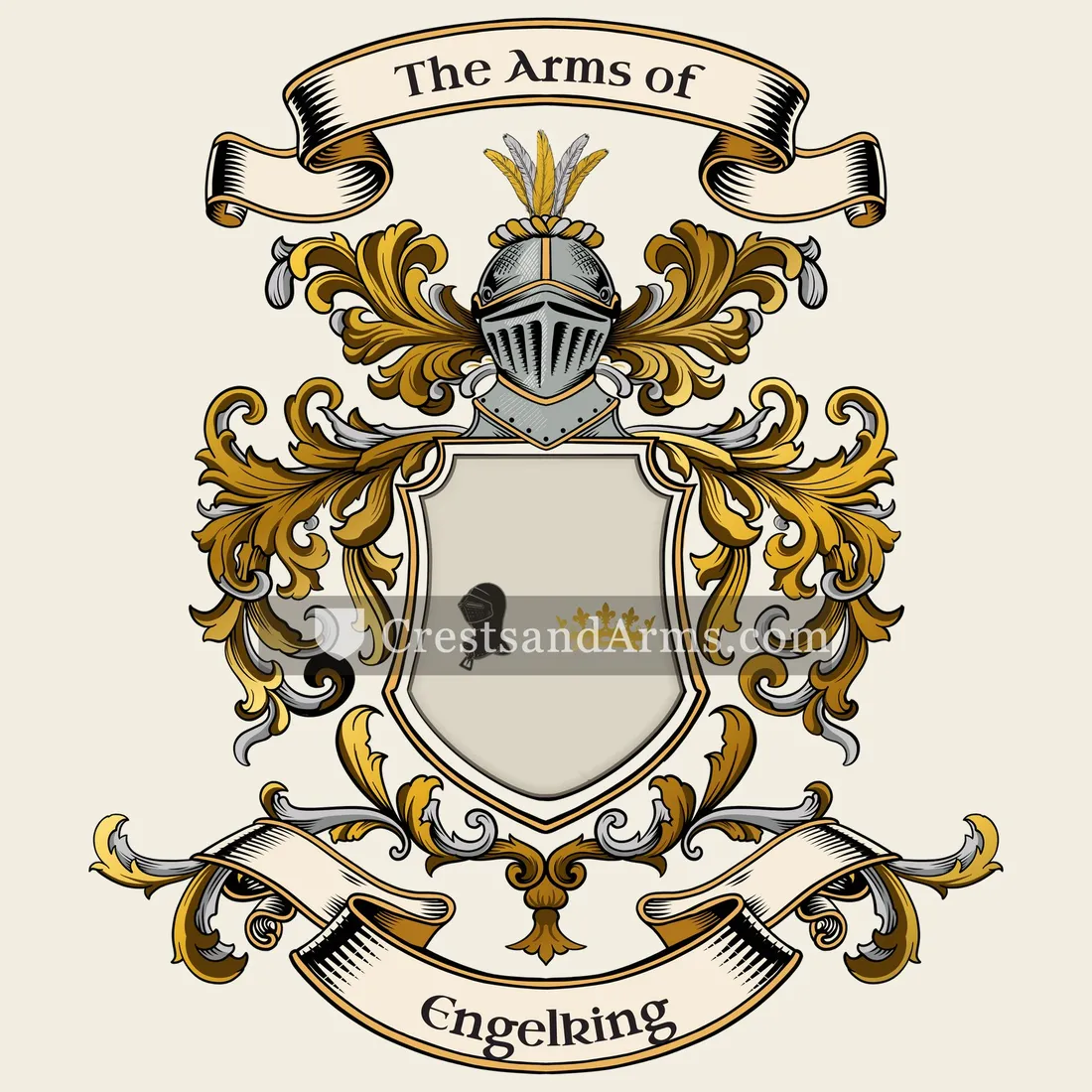
Symbols on this shield
helmetWisdom and security in defence
crownSovereignty, authority and just reward
Colours
Silver (Argent)Means: Peace and sincerity
Black (Sable)Means: Constancy
Gold (Or)Means: Generosity
Historical info
Source
J. B. Rietstap, Armorial Général, Gouda: G. B. van Goor Zonen, 1884–87
Blazon (the actual original written record)
“D'arg. à un casque de sa., taré de front, timbré d'une couronne de six feuilles rondes d'or et portant en cimier un trèfle de sin.”
Netherlandsc. 1815
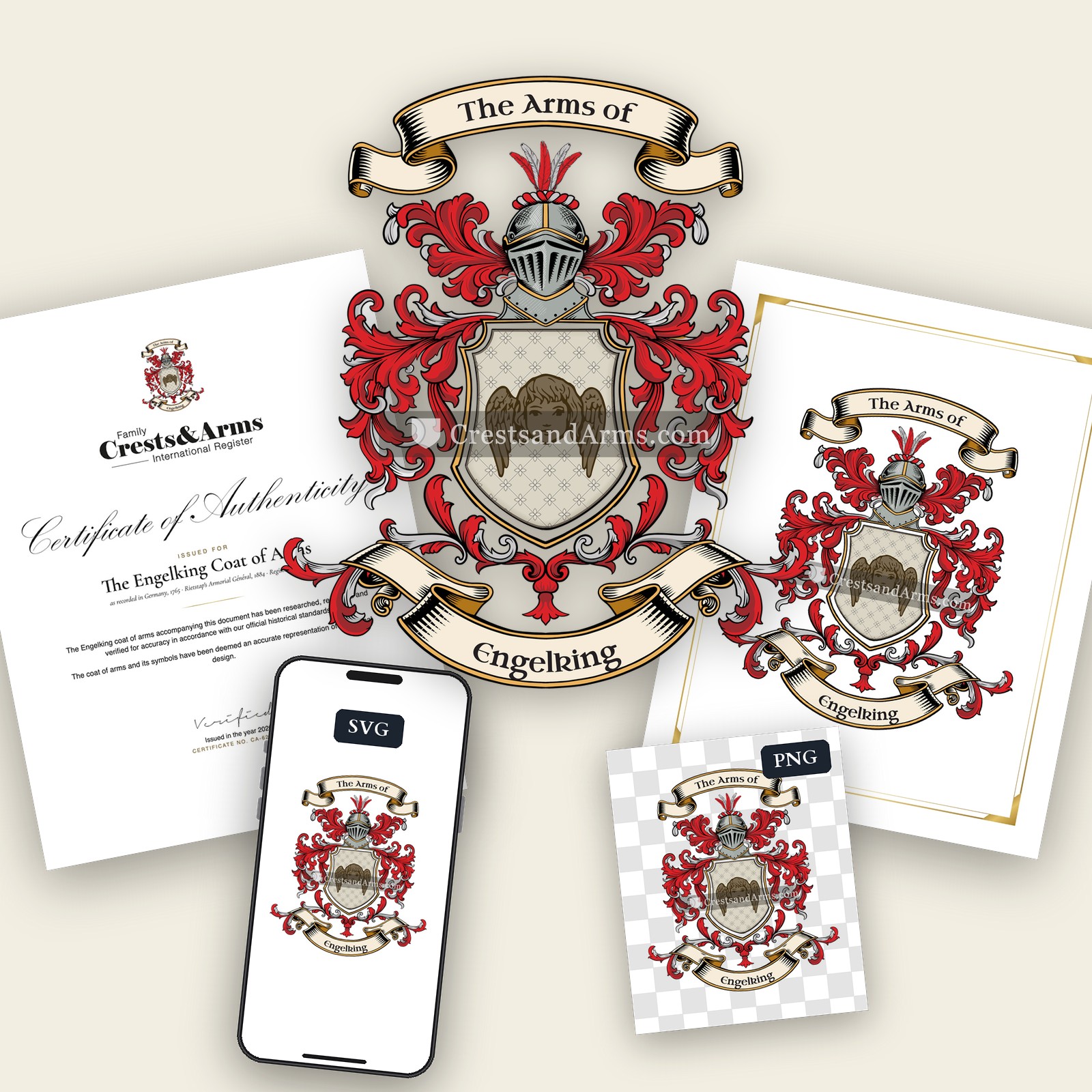
Digital archive packCoat of arms PNG, gold border print PDF, vector SVG and the certificate of authenticity. Sent to your email in minutes.
Map of Netherlands showing where the Engelking arms are recorded
The Engelking arms were recorded in Netherlands, c. 1815.
Arms such as these were typically recorded in Friesland.
Friesland was low, wet country on the northern coast of the Netherlands, farmed by families who had held the same land for centuries. Free landholders were unusually common there, and a free landholder could carry arms.
This is where the arms were entered in the register. Families often moved to other parts of the country, so the same name can turn up in more than one region.
Region
Friesland
First recorded
1815
Granting Authority for the Engelking Arms
Hoge Raad van Adel
Photograph made by me · CC BY-SA 3.0
The body that granted and recorded arms in Netherlands in this period.
William I of the Netherlands
Sovereign of the period
William I of the Netherlands
1815–1840
Reigning in Germany when the Engelking arms are first recorded.
How Arms Worked in Netherlands
In the Netherlands, coats of arms were often used by noble families and those who held specific public offices. These arms were passed down through the generations to legitimate descendants. Younger branches of a family usually kept the original design without needing to add special marks. This system ensured that the family identity remained clear and consistent over many years.
Granting authority
The Hoge Raad van Adel is the official body that regulates and manages noble titles and coats of arms in the Netherlands.
How they got arms
Families typically obtained their coats of arms through official royal grants or by proving their long-standing historical use of the symbols.
Where arms were recorded
Coats of arms are officially recorded in the registers held by the Hoge Raad van Adel, which began its work in 1814.
The family's standing
Recorded among the armigerous families of Netherlands.
Origin & History of the Engelking Family in Netherlands
The surname Engelking carries a deep connection to the northern regions of the Netherlands, particularly within the province of Friesland. By the early nineteenth century, the name was firmly established in this area, appearing in official records around 1815. The name itself is rooted in Germanic naming traditions, where the prefix "Engel" often referred to the Angles, a historic group of people, while the suffix "king" frequently functioned as a diminutive or a signifier of lineage. This suggests that the family likely descended from early settlers who moved through the coastal regions of the North Sea. As the family integrated into Frisian society, they became part of a unique cultural landscape known for its strong emphasis on local identity and independent landholding. Over time, the name evolved alongside the linguistic shifts of the region, reflecting the family's long-standing presence in the Dutch countryside.
Engelking Meaning & Related Branches
Root word
Angil
An ancient Germanic word meaning hook or spear point.
This name
EngelkingA diminutive form referring to a descendant of the Angel tribe or people.
also spelled
Engelingh
Documented Sources
J. B. Rietstap, Armorial Général, Gouda: G. B. van Goor Zonen, 1884–87
Bahlow, Hans, Deutsches Namenlexikon: Familien- und Vornamen nach Ursprung und Sinn erklärt, 1967
Heintze, Albert, Die deutschen Familien-Namen: geschichtlich, geographisch, sprachlich, 1903
Bayerisches Hauptstaatsarchiv, Kirchenbücher und Standesamtliche Unterlagen
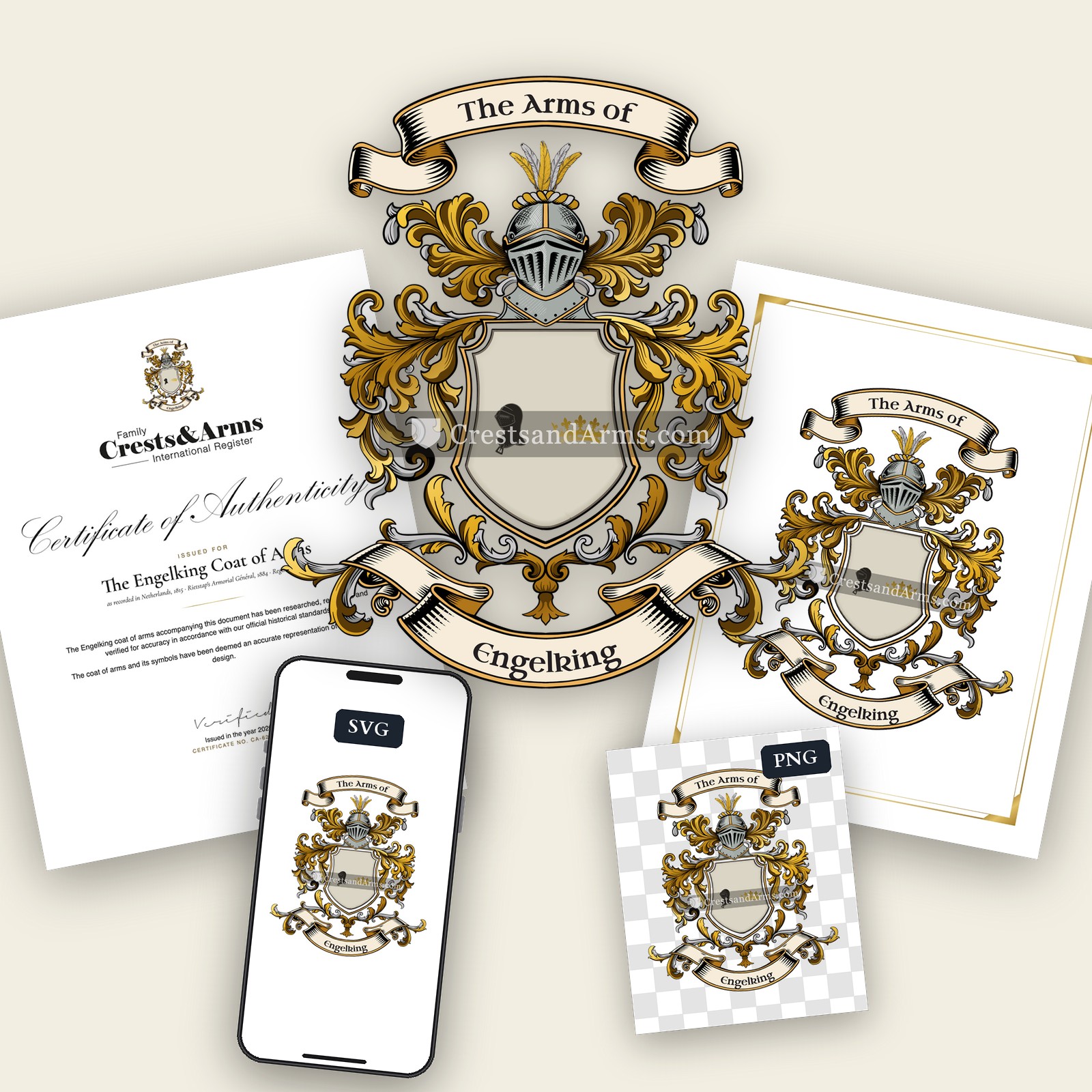
Digital archive packCoat of arms PNG, gold border print PDF, vector SVG and the certificate of authenticity. Sent to your email in minutes.


 cherubDivine protection over the innocent
 cherubDivine protection over the innocent
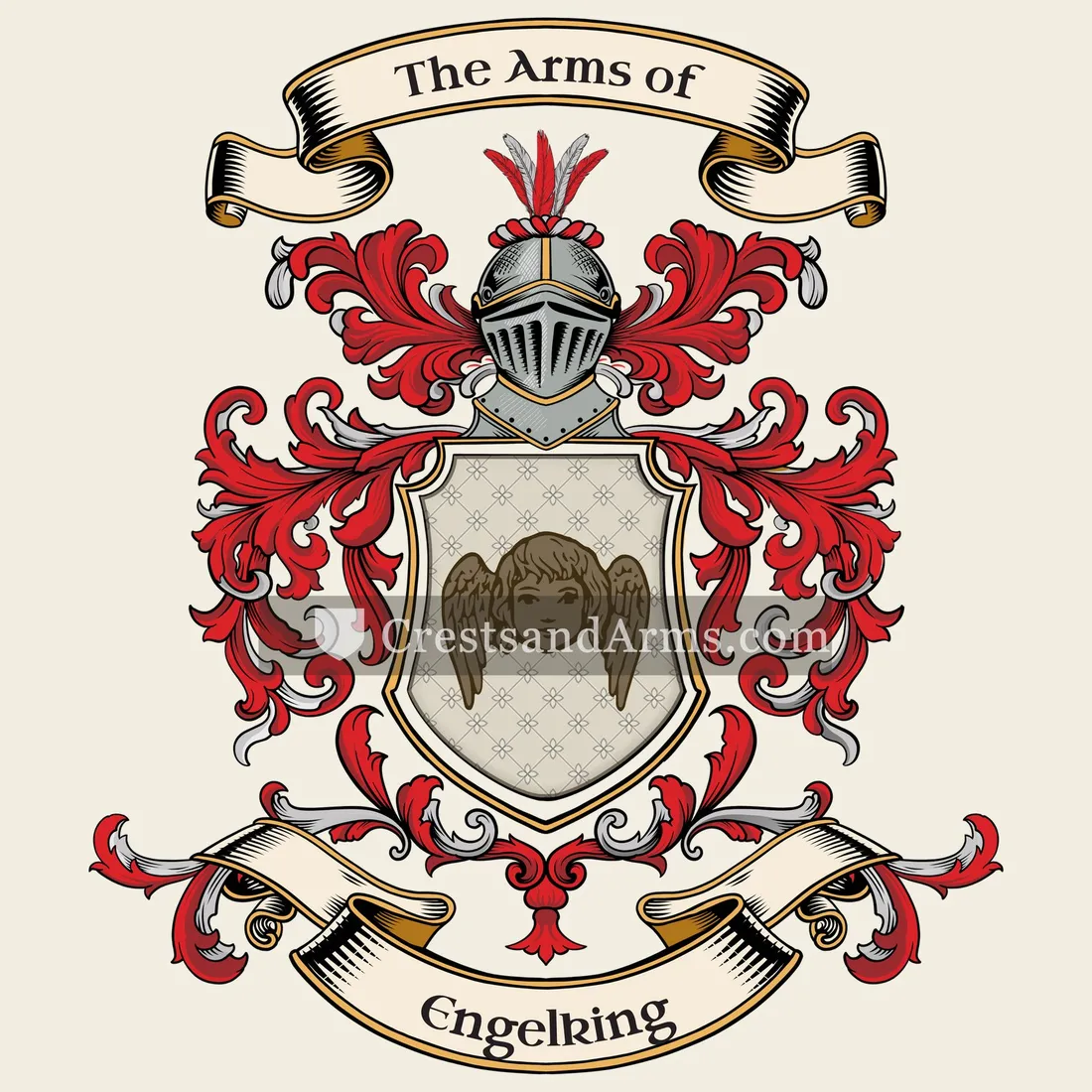


 helmetWisdom and security in defence
 crownSovereignty, authority and just reward