A record of documented arms, meaning and origin, researched for the Englebert family lines. Documented in 2 countries.
Reg. 6230 · Belgian, D–F
Coat of Arms & Family Crest Details
Symbols on this shield
trefoilPerpetuity, and the Trinity
lanceKnightly service and the tilt
hammerHonest labour, and the smith's craft
hollyTruth, and protection through winter
Colours
Silver (Argent)Means: Peace and sincerity
Green (Vert)Means: Hope
Black (Sable)Means: Constancy
Gold (Or)Means: Generosity
Historical info
Source
J. B. Rietstap, Armorial Général, Gouda: G. B. van Goor Zonen, 1884–87
Blazon (the actual original written record)
“Éc.: au 1 d'arg. à trois trèfles de sin.; au 2 d'arg. à une ruche de gu., br. sur deux tridents de sa., passés en saut.; au 3 d'azur à un marteau d'or, cour. du même, posé en pal; au 4 d'arg. à une feuille de houx de sin., la tige en bas. C.: un trèfle de sin”
Belgiumc. 1737
Digital archive packCoat of arms PNG, gold border print PDF, vector SVG and the certificate of authenticity. Sent to your email in minutes.
Map of Belgium showing where the Englebert arms are recorded
The Englebert arms were recorded in Belgium, c. 1737.
Arms such as these were typically recorded in Brabant.
Brabant lay at the heart of the Low Countries, where the trade routes met. Its towns were wealthy and its landowners many, and both kinds of family kept arms, which is why the region is so heavily represented.
This is where the arms were entered in the register. Families often moved to other parts of the country, so the same name can turn up in more than one region.
The body that granted and recorded arms in Belgium in this period.
Charles VI, Holy Roman Emperor
Sovereign of the period
Charles VI, Holy Roman Emperor
1711–1740
Reigning in Belgium when the Englebert arms are first recorded.
How Arms Worked in Belgium
In Belgium, a coat of arms is considered personal property that is passed down through the male line to legitimate descendants. Families often use the same shield design across generations to show their shared heritage. If a branch of the family wants to change the design, they must apply for an official update to their specific version of the arms.
Granting authority
The Conseil héraldique is the official body that regulates and approves all coats of arms in Belgium.
How they got arms
Families obtain their coats of arms through formal royal grants or by confirming their historical right to use existing designs.
Where arms were recorded
All approved coats of arms are officially recorded in the public registers of the Conseil héraldique since 1844.
The family's standing
Recorded among the armigerous families of Belgium.
Origin & History of the Englebert Family in Belgium
The surname Englebert finds its roots in the Germanic linguistic tradition, where it is derived from the elements "Ing," referring to a tribal god, and "berht," meaning bright or famous. By the early eighteenth century, the family was firmly established within the Duchy of Brabant, a region that served as a vital cultural and economic hub in what is now modern-day Belgium. Records from 1737 confirm the presence of Englebert families living within this territory, likely working as skilled tradespeople or agricultural landowners who contributed to the local economy. During this period, the region was under the control of the Austrian Habsburgs, and families like the Engleberts navigated the complex social structures of the time by maintaining deep ties to their local parishes. As members of the community, they were subject to the shifting political landscape of the Low Countries, yet they remained anchored to the Brabant region through generations of births, marriages, and labor. This history reflects the broader experience of many families in the area who helped shape the identity of the Belgian provinces long before the nation achieved its formal independence.
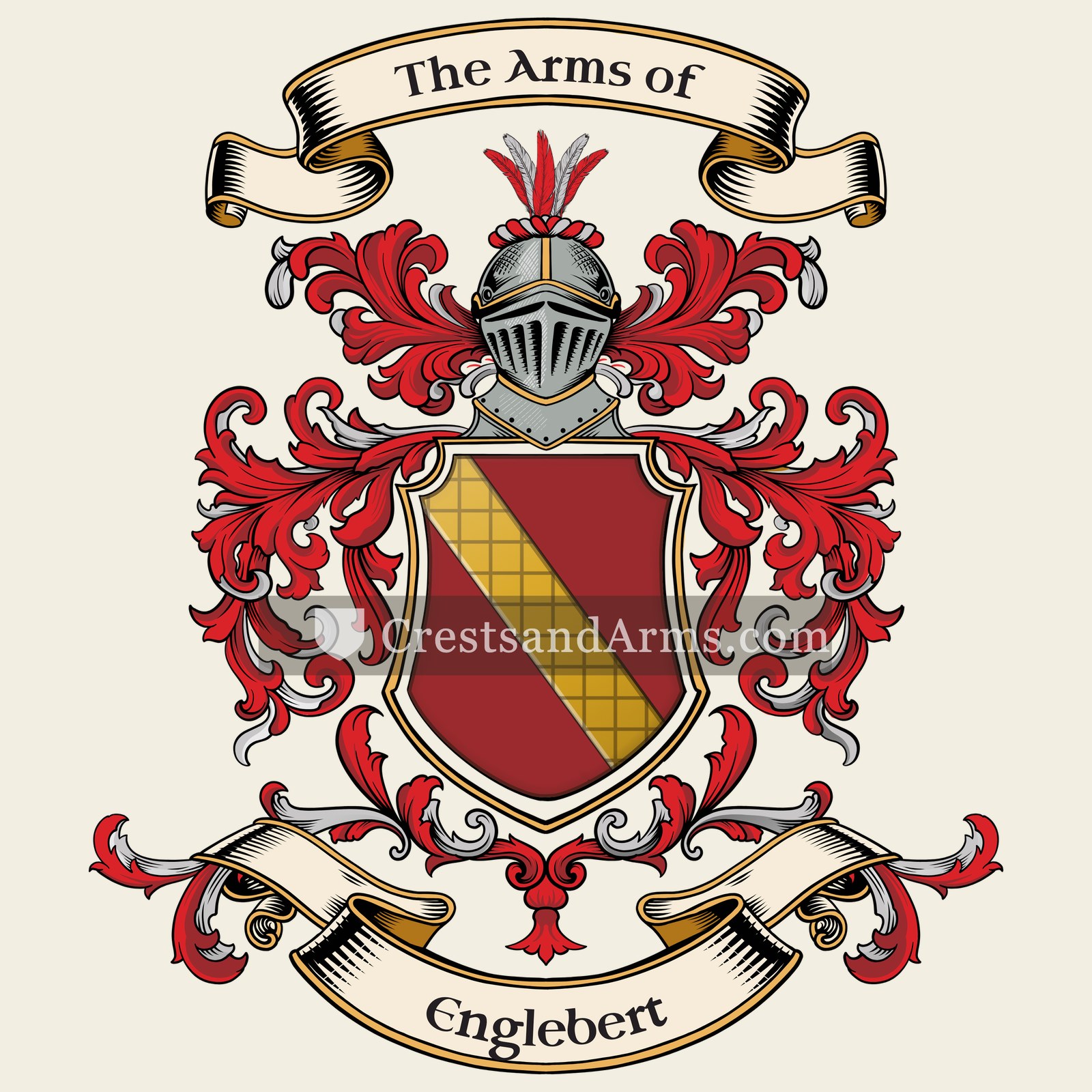
Coat of Arms & Family Crest Details
Symbols on this shield
bendDefence, and the scarf of a commander
Colours
Red (Gules)Means: Military strength
Gold (Or)Means: Generosity
Historical info
Source
Sir Bernard Burke, The General Armory of England, Scotland, Ireland and Wales, London: Harrison & Sons, 1884
Blazon (the actual original written record)
“Gu. a bend or, cotised ar”
DorsetSherborne · Dorset, c. 1620
Digital archive packCoat of arms PNG, gold border print PDF, vector SVG and the certificate of authenticity. Sent to your email in minutes.
Map of England showing where the Englebert arms are recorded
The Englebert arms were recorded in Dorset, c. 1620.
Dorset was quiet farming and grazing country along the south coast. Its gentry were middling rather than grand, but they held their manors for a very long time, and long holding is what puts a name in the records.
This is where the arms were entered in the register. Families often moved to other parts of the country, so the same name can turn up in more than one region.
The body that granted and recorded arms in England in this period.
James VI and I
Sovereign of the period
James VI and I
1603–1625
Reigning in Belgium when the Englebert arms are first recorded.
How Arms Worked in England
English heraldry allowed arms to be shared by all legitimate descendants of the original owner. These symbols were treated as personal property that moved through the generations to all children. While the eldest son kept the original design, other family members could use the same shield without needing to change it or register their own unique versions.
Granting authority
The College of Arms in London has regulated the use of coats of arms throughout England and Wales since 1484.
How they got arms
Families typically obtained their coats of arms through a formal grant from the Crown or by proving their ancient right to them.
Where arms were recorded
All official coats of arms are recorded in the registers kept at the College of Arms, which date back to the fifteenth century.
The family's standing
Recorded among the armigerous families of Dorset.
Origin & History of the Englebert Family in England
The surname Englebert traces its roots back to ancient Germanic origins, where it was composed of elements meaning bright and famous. While the name was well established on the European continent, it eventually crossed the channel to become a part of the English landscape. By the year 1620, historical records confirm that members of the Englebert family were living in the county of Dorset. During this period, families in Dorset often worked in agriculture or maritime trades, as the coastal geography of the region played a significant role in daily life. Settling in this area suggests that the family was part of the local community structure that defined rural England in the early seventeenth century. As they integrated into English society, the name persisted through generations, marking the family as a stable presence in the southern counties long before the modern era.
Englebert Meaning & Related Branches
Root word
Engelbertus
Derived from Germanic elements meaning bright or famous angel.
This name
EnglebertA name of Germanic origin signifying a bright or illustrious angel.
also spelled
Engelbert
Related arms
Engelbertvariant spelling
Athaelrecorded with Englebert, same area
Chafyrecorded with Englebert, same area
Chamberlaynerecorded with Englebert, same area
Documented Sources
J. B. Rietstap, Armorial Général, Gouda: G. B. van Goor Zonen, 1884–87
State Archives in Belgium (Rijksarchief te België), Parochieregisters van Brabant
State Archives in Belgium (Rijksarchief te België), Registers van de Burgerlijke Stand
Debrabandere, Frans, Woordenboek van de familienamen in België en Noord-Frankrijk, 2003
Genicot, Léopold, Histoire de la Wallonie, 1973
Digital archive packCoat of arms PNG, gold border print PDF, vector SVG and the certificate of authenticity. Sent to your email in minutes.


 trefoilPerpetuity, and the Trinity
 lanceKnightly service and the tilt
 hammerHonest labour, and the smith's craft
 hollyTruth, and protection through winter
 trefoilPerpetuity, and the Trinity
 lanceKnightly service and the tilt
 hammerHonest labour, and the smith's craft
 hollyTruth, and protection through winter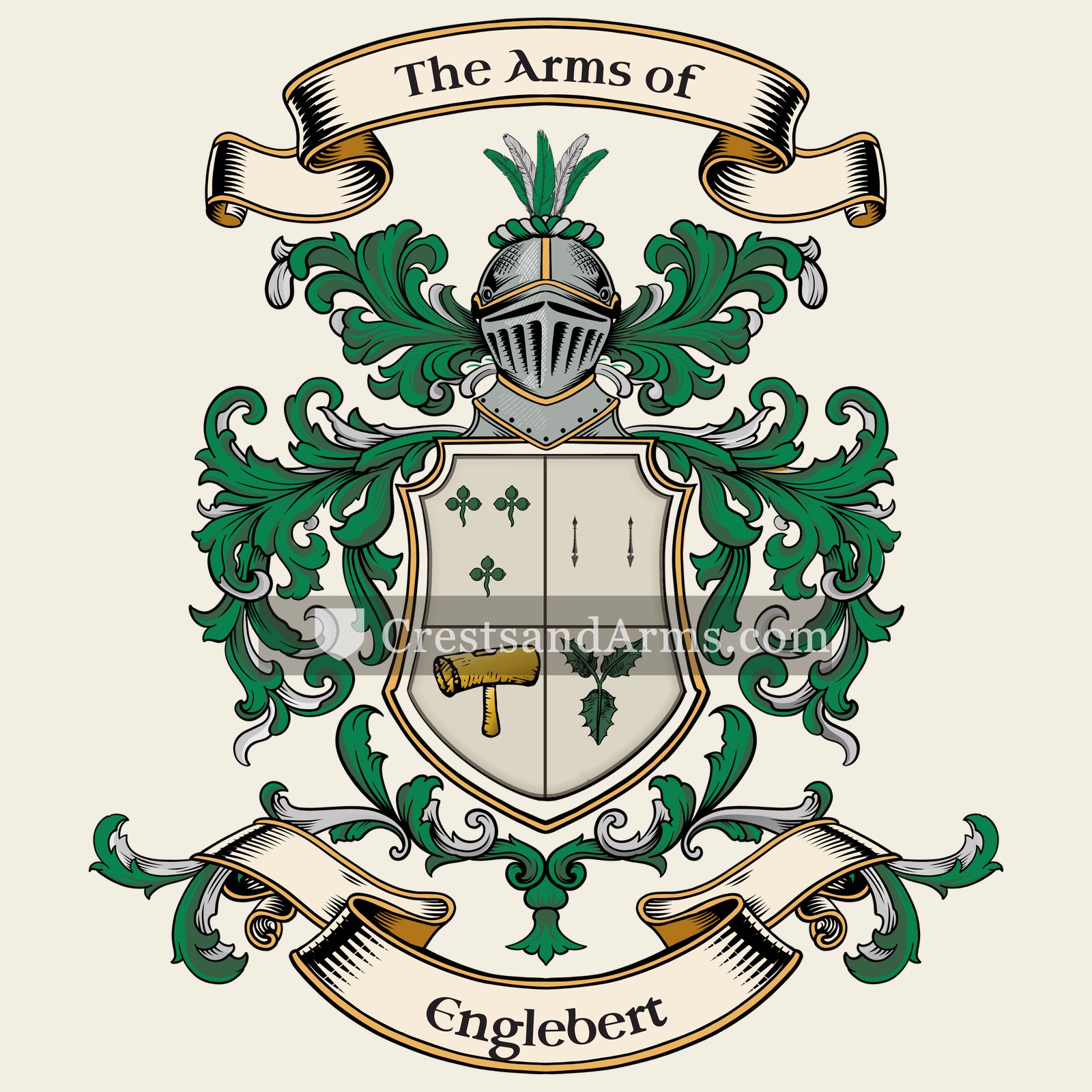


 bendDefence, and the scarf of a commander