Map of Belgium showing where the Englert arms are recorded
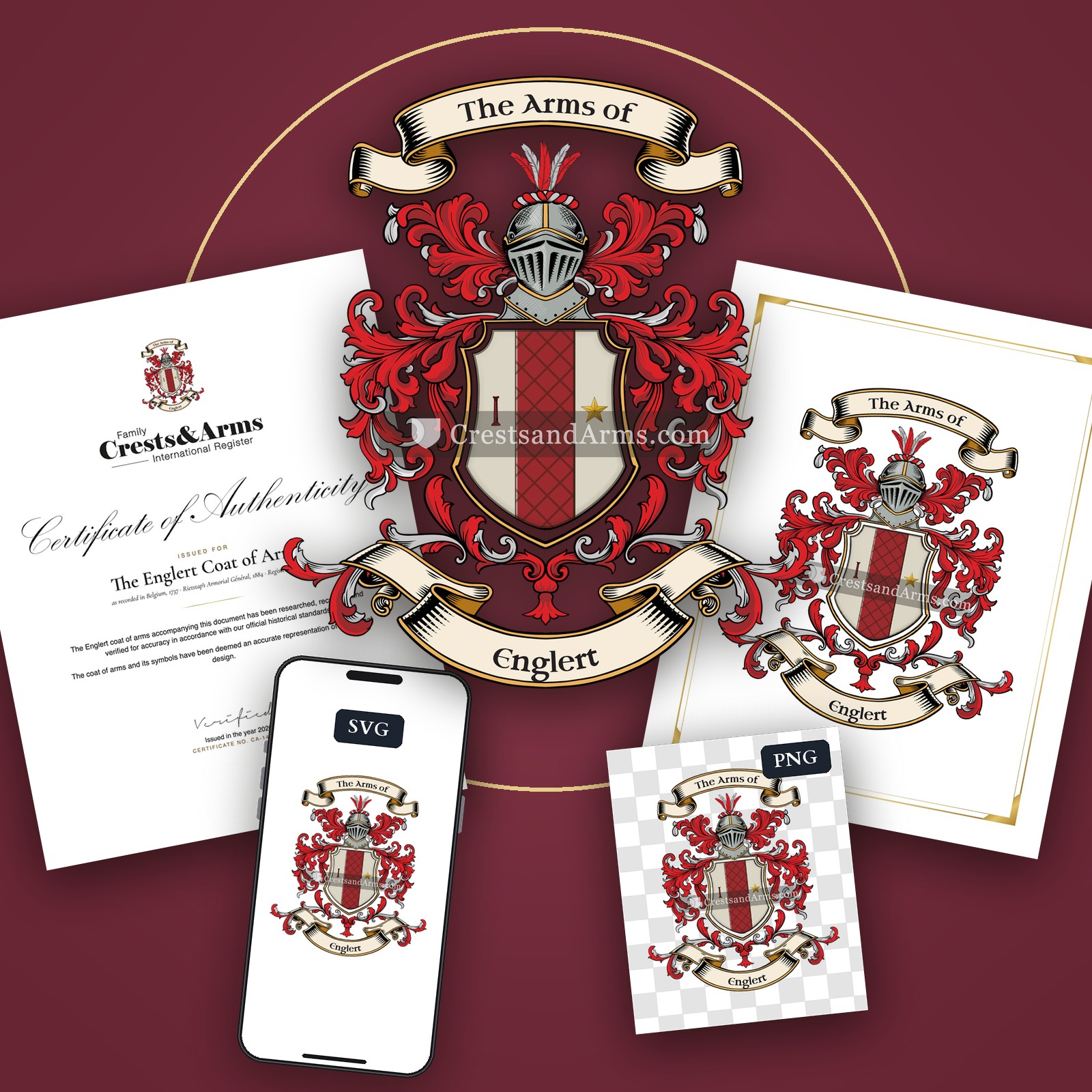
The Englert arms were recorded in Bruxelles, c. 1737.
This is where the arms were entered in the register. Families often moved to other parts of the country, so the same name can turn up in more than one region.
The body that granted and recorded arms in Belgium in this period.
Charles VI, Holy Roman Emperor
Sovereign of the period
Charles VI, Holy Roman Emperor
1711–1740
Reigning in Belgium when the Englert arms are first recorded.
How Arms Worked in Belgium
In Belgium, a coat of arms is considered personal property that is passed down through the male line to legitimate descendants. Families often use the same shield design across generations to show their shared heritage. If a branch of the family wants to change the design, they must apply for an official update to their specific version of the arms.
Granting authority
The Conseil héraldique is the official body that regulates and approves all coats of arms in Belgium.
How they got arms
Families obtain their coats of arms through formal royal grants or by confirming their historical right to use existing designs.
Where arms were recorded
All approved coats of arms are officially recorded in the public registers of the Conseil héraldique since 1844.
The family's standing
Recorded among the armigerous families of Belgium.
Origin & History of the Englert Family in Belgium
The family name Englert has deep roots in the region of modern-day Belgium, where it emerged as a distinct surname during the transition from the Middle Ages to the early modern period. While the name is Germanic in origin, its presence in the city of Brussels by 1737 highlights the family's integration into the urban life of the Low Countries. During this era, Brussels served as a major crossroads for trade and administration, and families like the Englerts often worked as skilled artisans or merchants to support the growing city economy. By settling in this bustling capital, early family members became part of a diverse population that navigated the complex social and political changes occurring under the rule of the Austrian Netherlands. Their presence in official city records from the eighteenth century suggests that they were established residents who contributed to the local community through their trades and civic participation.
Meaning of the Englert family crest colors & symbols
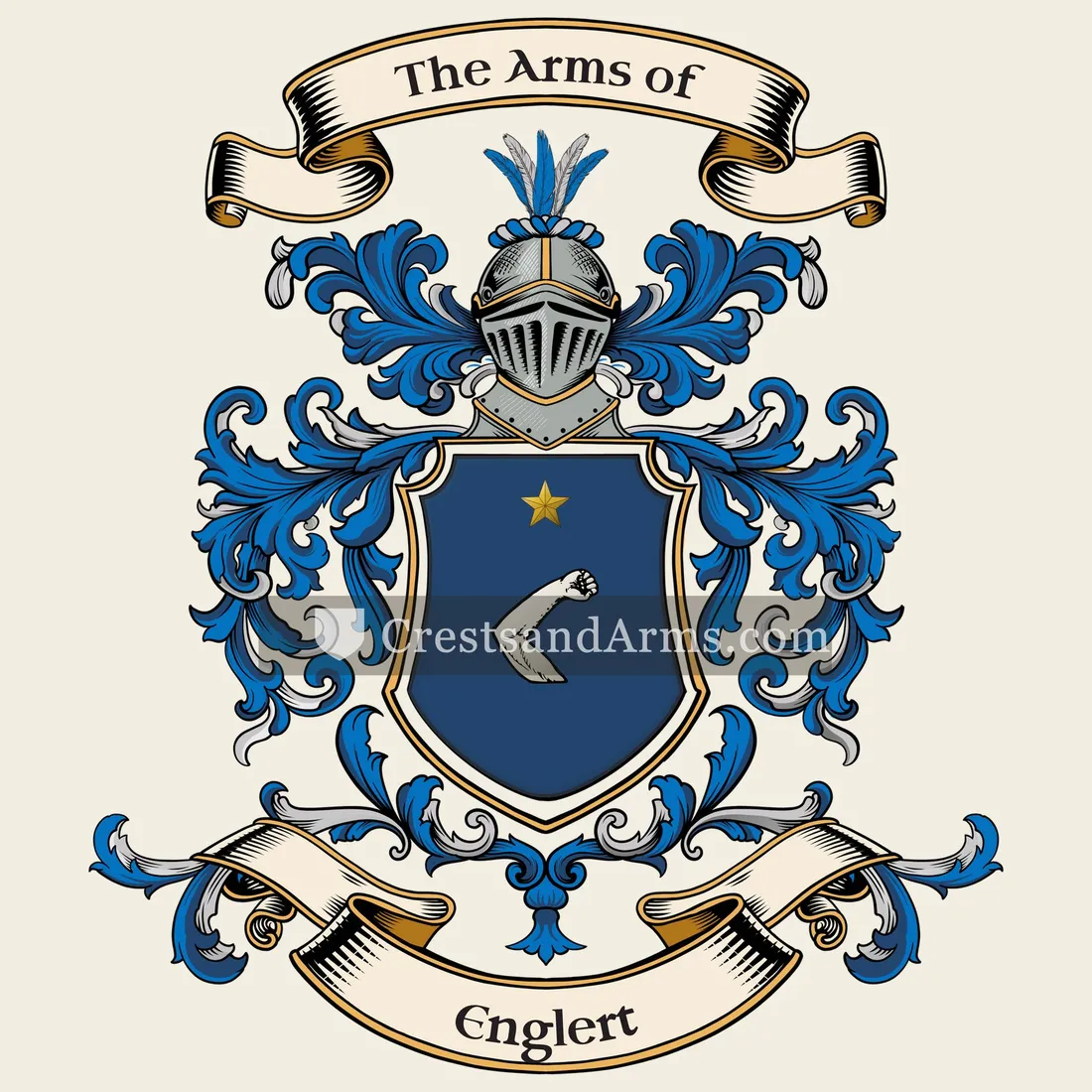
Symbols on this shield
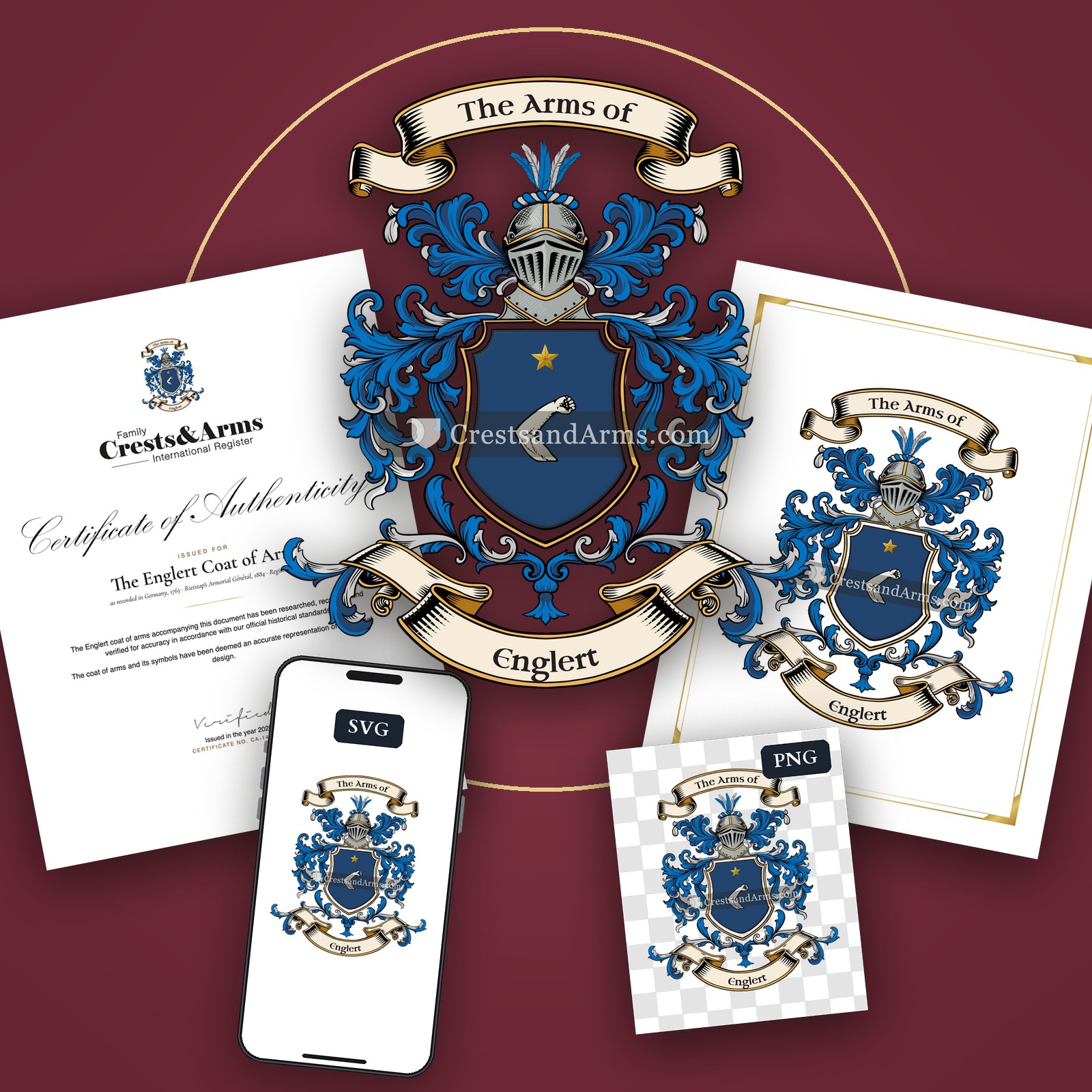
armA person of action, industrious and laborious
mulletThe third son, and a divine quality from above
Colours
Blue (Azure)Means: Loyalty and truth
Gold (Or)Means: Generosity
Historical info
Source
J. B. Rietstap, Armorial Général, Gouda: G. B. van Goor Zonen, 1884–87
Blazon (the actual original written record)
“D'azur à un avant-bras de carn., posé en pal, mouv. de flammes d'or en p. et supp. une étoile d'or. Cq. cour. C.: un demi-vol, aux armes de l'écu. L. d'or et d'azur.”
GermanyMemmingen Bav, c. 1765
Digital archive packCoat of arms PNG, gold border print PDF, vector SVG and the certificate of authenticity. Sent to your email in minutes.
Map of Germany showing where the Englert arms are recorded
The Englert arms were recorded in Memmingen Bav, c. 1765.
This is where the arms were entered in the register. Families often moved to other parts of the country, so the same name can turn up in more than one region.
The body that granted and recorded arms in Germany in this period.
Francis I, Holy Roman Emperor
Sovereign of the period
Francis I, Holy Roman Emperor
1745–1765
Reigning in Belgium when the Englert arms are first recorded.
How Arms Worked in Germany
In the Holy Roman Empire, coats of arms were often granted to individuals by the Emperor or his representatives. These arms were then passed down through the generations to all legitimate descendants of the original holder. Younger branches of a family usually kept the same shield design without needing to change it, as the arms belonged to the entire lineage.
Granting authority
The Holy Roman Emperor held the sole power to grant new coats of arms throughout his vast imperial territories.
How they got arms
Families typically obtained their coats of arms through a formal imperial grant or by proving their noble status to the authorities.
Where arms were recorded
These grants were officially recorded in the Imperial Chancery registers, which began keeping formal records of such honors during the Middle Ages.
The family's standing
Recorded among the armigerous families of Germany.
Origin & History of the Englert Family in Germany
The surname Englert is a variation of the ancient Germanic name Engelhardt, which combines the words for angel and hard or brave. This name was popular in the Middle Ages because it carried a sense of strength and divine protection. By the time the family was firmly established in the city of Memmingen in 1765, the name had evolved through regional dialects to its current form. During this period, Memmingen was a bustling center of trade and craftsmanship within the Holy Roman Empire. Families like the Englerts often lived in these urban hubs to participate in the guild system, which organized local artisans and merchants. Living in a city like Memmingen meant that the family was likely part of a stable, tax-paying class that contributed to the local economy and civic life. Over several generations, the name became a permanent fixture in the region as the family adapted to the changing social and political landscape of southern Germany.
Meaning of the Englert family crest colors & symbols
Symbols on this shield
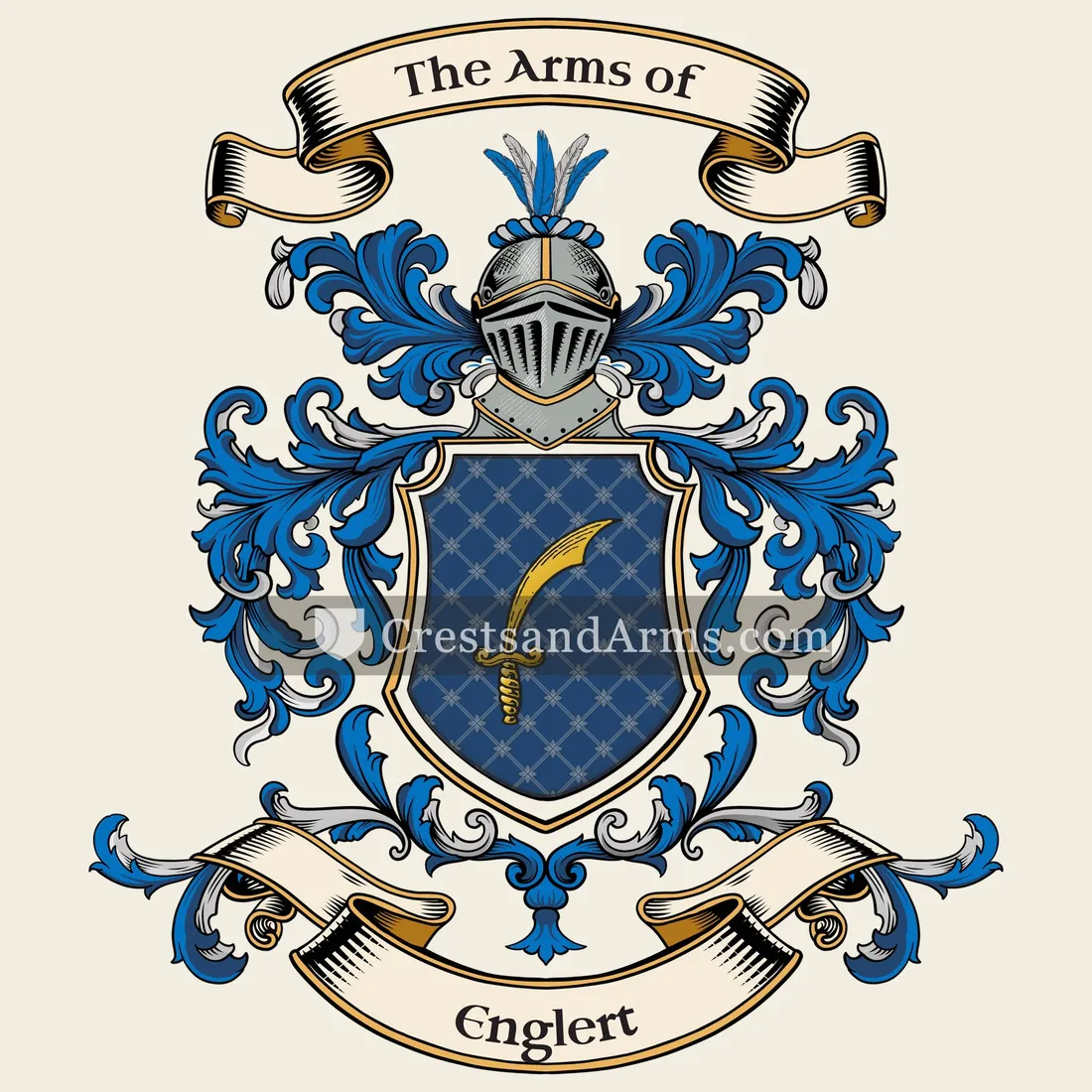
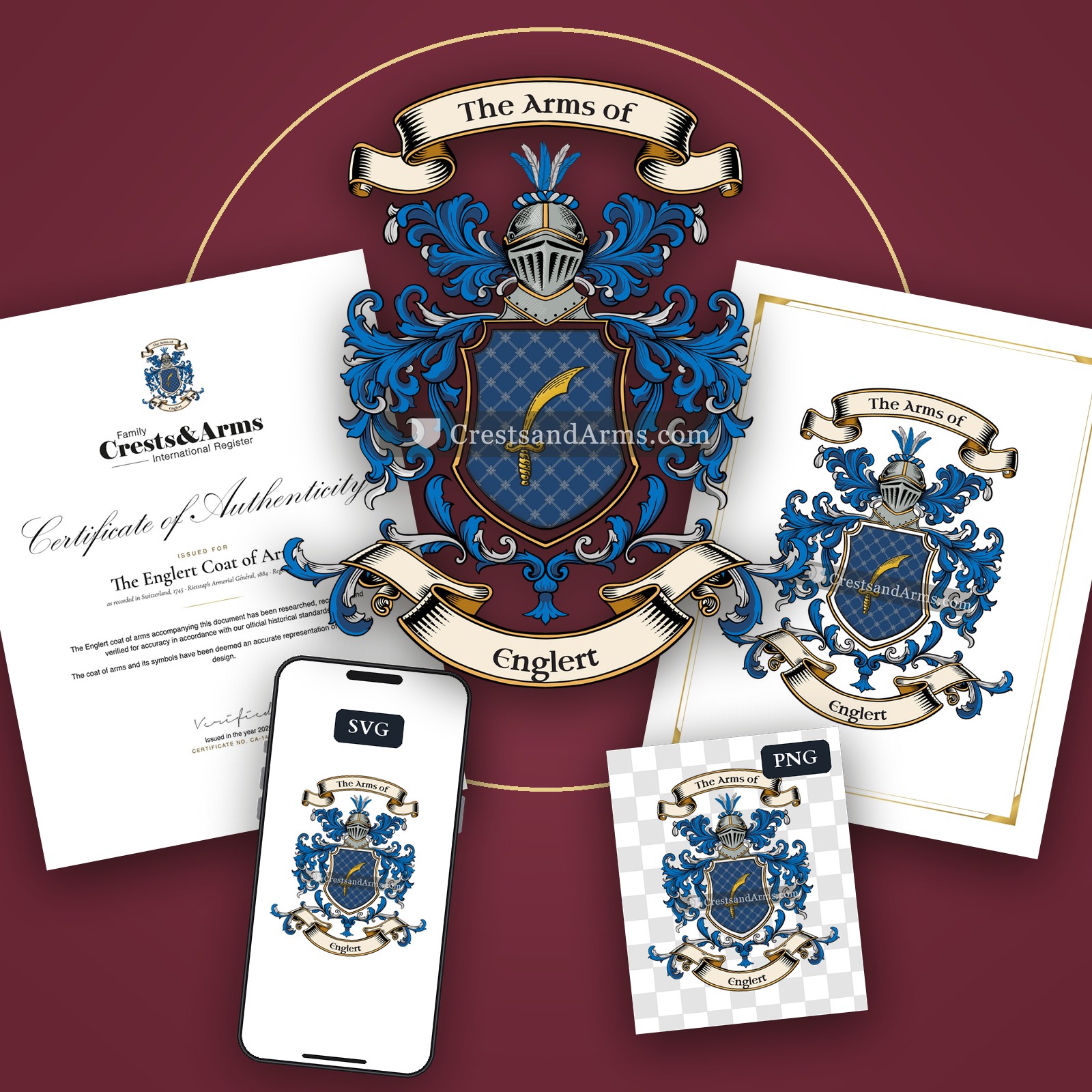
swordJustice, and military honour
Colours
Blue (Azure)Means: Loyalty and truth
Gold (Or)Means: Generosity
Historical info
Source
J. B. Rietstap, Armorial Général, Gouda: G. B. van Goor Zonen, 1884–87
Blazon (the actual original written record)
“D'azur à une représentation de la Justice, hab. de gu., ailée d'or, les yeux bandés d'arg., tenant de sa main dextre une épée et de sa sen. une balance d'or. C.: la Justice, iss. L. d'or et d'azur.”
SwitzerlandBâle, c. 1745
Digital archive packCoat of arms PNG, gold border print PDF, vector SVG and the certificate of authenticity. Sent to your email in minutes.
Map of Switzerland showing where the Englert arms are recorded
The Englert arms were recorded in Bâle, c. 1745.
This is where the arms were entered in the register. Families often moved to other parts of the country, so the same name can turn up in more than one region.
The body that granted and recorded arms in Switzerland in this period.
How Arms Worked in Switzerland
In Switzerland, coats of arms were not restricted to the nobility and were often adopted by common citizens and families. These symbols were passed down through generations to show family identity. When branches of a family grew, they often changed small details of the design to distinguish their own line from the original group.
Granting authority
Cantonal and civic authorities managed the use of coats of arms within their specific regions and local jurisdictions.
How they got arms
Families typically assumed their own coats of arms based on local custom rather than receiving them from a central monarch.
Where arms were recorded
Arms were recorded in various cantonal and civic registers starting from the fourteenth century throughout the Swiss region.
The family's standing
Recorded among the armigerous families of Switzerland.
Origin & History of the Englert Family in Switzerland
The family name Englert has deep roots in the Germanic regions of Europe, with a notable presence in Switzerland by the mid-eighteenth century. Records confirm that members of the Englert family were established in the city of Basel by 1745. During this period, Basel served as a major center for trade and intellectual exchange, attracting families who were often involved in skilled crafts or merchant activities. The name itself is thought to derive from the ancient Germanic name Engelhardt, which combines words meaning angel and hardy or brave. As these families settled into Swiss society, they integrated into the local urban structure, contributing to the professional and social life of the city. Their presence in Basel suggests that they were part of the steady migration of families moving across the Rhine valley, seeking stability and opportunity in the thriving Swiss cantons.
Englert Meaning & Related Branches
Root word
Engelhard
Derived from the Germanic elements for angel and hardy or brave.
This name
EnglertA patronymic surname signifying a descendant of someone known as the brave angel.
also spelled
Englerr
Englar
Documented Sources
J. B. Rietstap, Armorial Général, Gouda: G. B. van Goor Zonen, 1884–87
Archives: Archives de la Ville de Bruxelles, Registres paroissiaux (Baptêmes, Mariages, Sépultures)
Archives: Archives générales du Royaume, État civil et registres paroissiaux
Book: Debrabandere, Frans, Woordenboek van de familienamen in België en Noord-Frankrijk, 2003
Digital archive packCoat of arms PNG, gold border print PDF, vector SVG and the certificate of authenticity. Sent to your email in minutes.


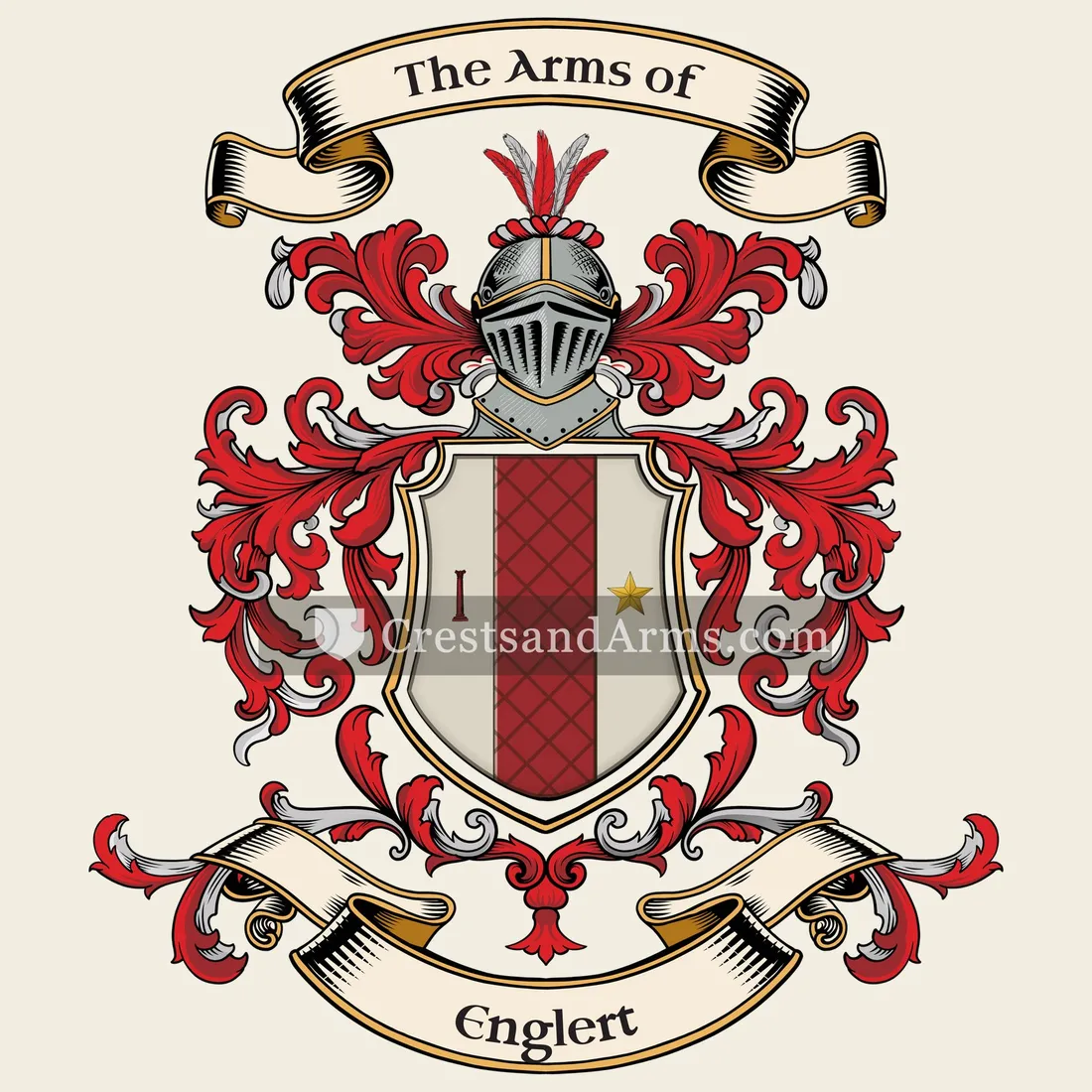
 columnFortitude and constancy
 mulletThe third son, and a divine quality from above
 columnFortitude and constancy
 mulletThe third son, and a divine quality from above


 armA person of action, industrious and laborious


 swordJustice, and military honour