Map of Belgium showing where the Erck arms are recorded
The Erck arms were recorded in Bruges, c. 1737.
This is where the arms were entered in the register. Families often moved to other parts of the country, so the same name can turn up in more than one region.
The body that granted and recorded arms in Belgium in this period.
Charles VI, Holy Roman Emperor
Sovereign of the period
Charles VI, Holy Roman Emperor
1711–1740
Reigning in Belgium when the Erck arms are first recorded.
How Arms Worked in Belgium
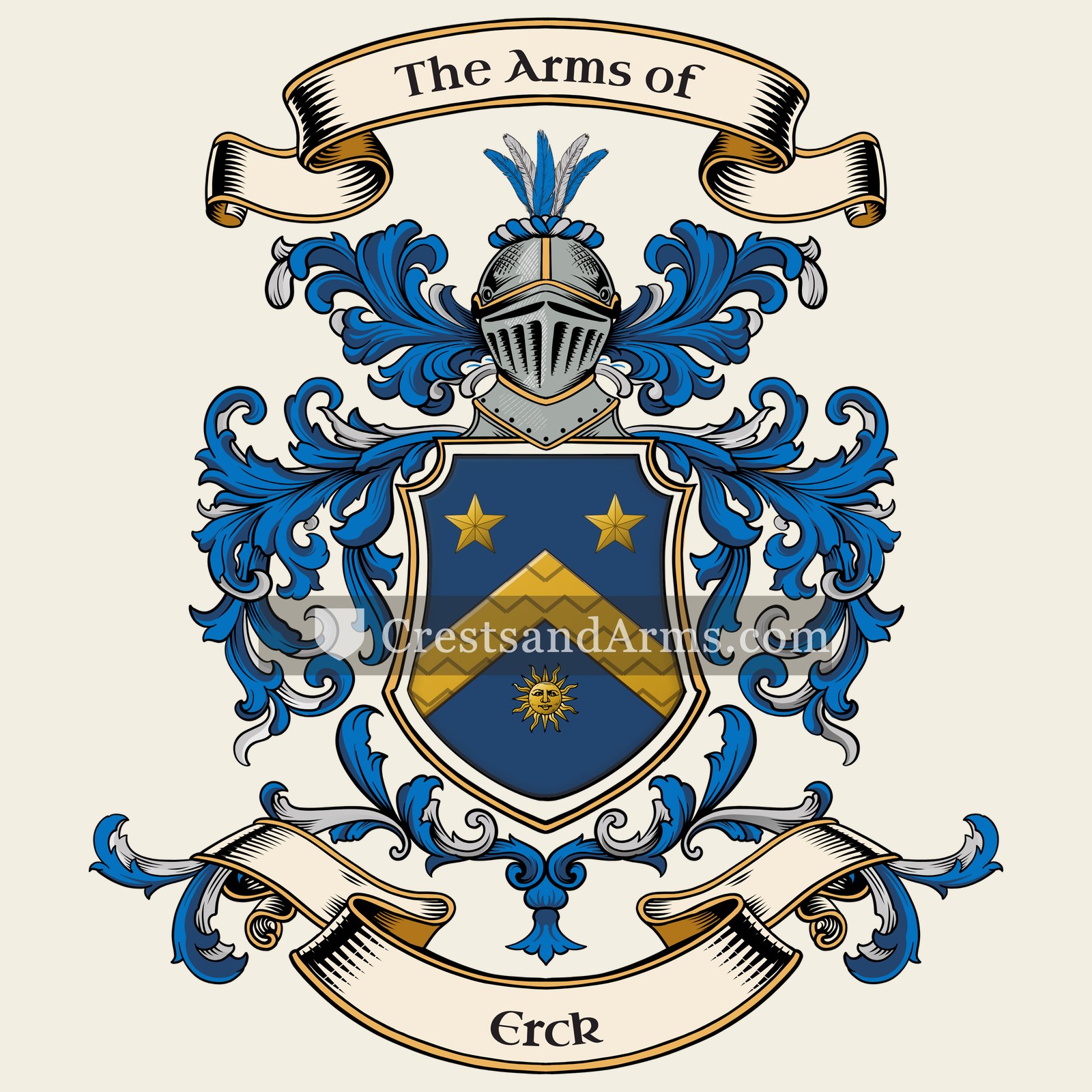
In Belgium, a coat of arms is considered personal property that is passed down through the male line to legitimate descendants. Families often use the same shield design across generations to show their shared heritage. If a branch of the family wants to change the design, they must apply for an official update to their specific version of the arms.
Granting authority
The Conseil héraldique is the official body that regulates and approves all coats of arms in Belgium.
How they got arms
Families obtain their coats of arms through formal royal grants or by confirming their historical right to use existing designs.
Where arms were recorded
All approved coats of arms are officially recorded in the public registers of the Conseil héraldique since 1844.
The family's standing
Recorded among the armigerous families of Belgium.
Origin & History of the Erck Family in Belgium
The family name Erck has deep roots in the historical landscape of Western Europe, particularly within the bustling merchant city of Bruges. By the year 1737, records confirm that members of the Erck family were established residents of this influential trading hub. During the eighteenth century, Bruges served as a vital center for international commerce and craftsmanship, which likely provided the family with opportunities to engage in trade or specialized labor. The name itself is thought to be a variation of older Germanic given names, often evolving from short forms of names containing the element "erkan," which translates to genuine or noble. As the family navigated the social and economic shifts of the Low Countries, they integrated into the local community, contributing to the vibrant urban life that defined the region during the Enlightenment era.
Erck Meaning & Related Branches
Root word
Erich
Derived from the Germanic elements for ever and ruler.
This name
ErckA patronymic form indicating a descendant of a powerful or eternal ruler.
also spelled
Erck
Ercken
Erckee
Erke
Documented Sources
J. B. Rietstap, Armorial Général, Gouda: G. B. van Goor Zonen, 1884–87
Stadsarchief Brugge, Registers van de Burgerlijke Stand en Parochieregisters
De Flou, Karel, Woordenboek der Toponymie van westelijk Vlaanderen, Vlaamsch Artesië, het Land van den Hoek, de graafschappen Guines en Boulogne en een gedeelte van Fransch-Vlaanderen, 1914
Parmentier, Richard A., Geschiedenis van de Brugse Koopmansgilden, 1954
Digital archive packCoat of arms PNG, gold border print PDF, vector SVG and the certificate of authenticity. Sent to your email in minutes.


 chevronProtection, and faithful service completed
 mulletThe third son, and a divine quality from above
 sunGlory, splendour and the source of life
 chevronProtection, and faithful service completed
 mulletThe third son, and a divine quality from above
 sunGlory, splendour and the source of life