Map of France showing where the Erice arms are recorded
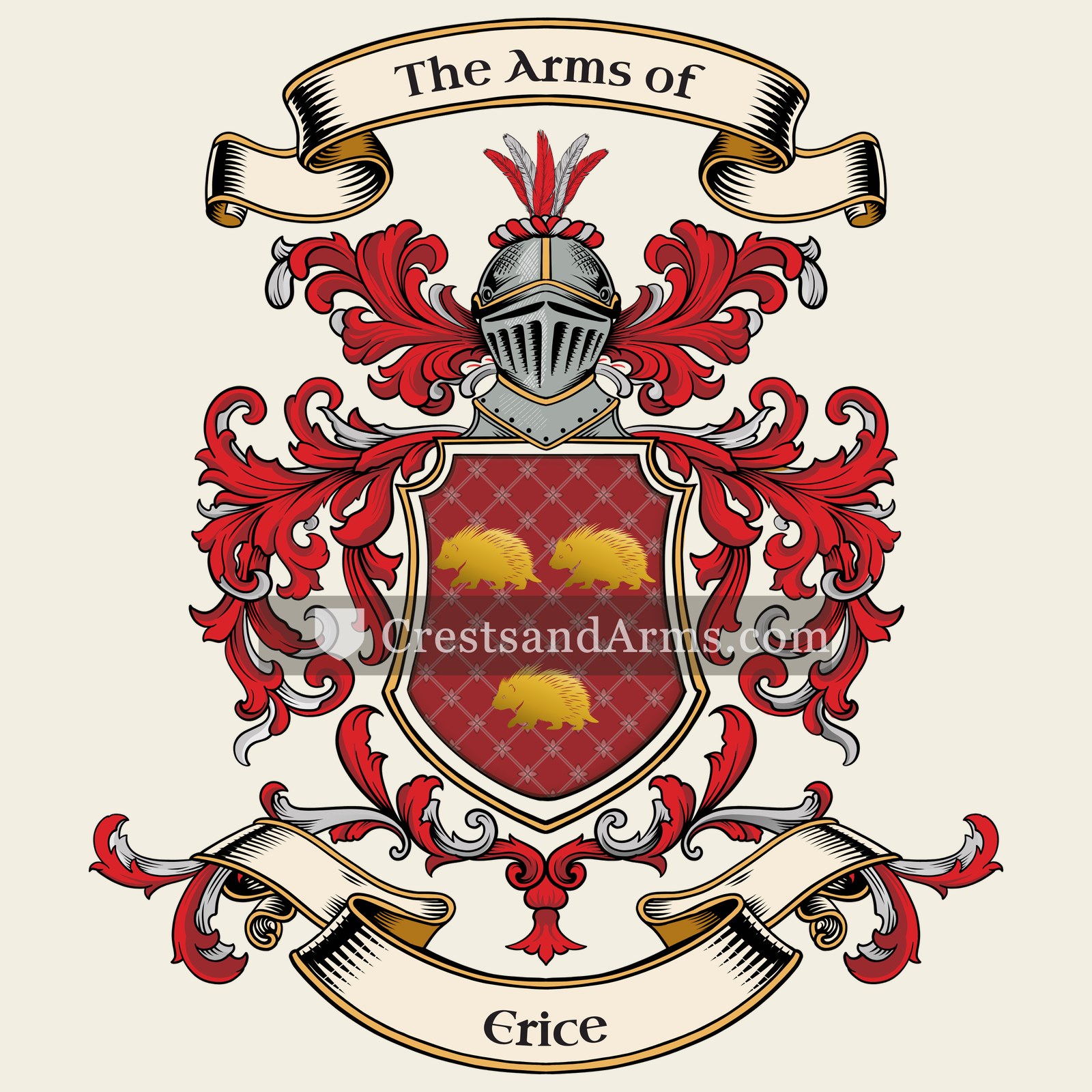
The Erice arms were recorded in Maine, c. 1663.
Maine was quiet farming country in western France, held in small manors by families who stayed for generations. Nothing about it was grand, but steady landholding is exactly what puts a name in the registers.
This is where the arms were entered in the register. Families often moved to other parts of the country, so the same name can turn up in more than one region.
The body that granted and recorded arms in France in this period.
Louis XIV of France
Sovereign of the period
Louis XIV of France
1643–1715
Reigning in France when the Erice arms are first recorded.
How Arms Worked in France
In France, a coat of arms was a mark of honor that passed down through the male line to all legitimate descendants. Families often used the same shield without changes to show their shared heritage. If a branch wanted to stand out, they could add a small mark to their shield to show their specific place in the family tree.
Granting authority
The Juge d'armes de France acted as the official authority that regulated and verified coats of arms across the country.
How they got arms
Families typically inherited their arms from ancestors, though they could also receive them through royal grants or by proving their noble status.
Where arms were recorded
Coats of arms were officially recorded in the Armorial Général de France, which began its main collection in the year 1696.
The family's standing
Recorded among the armigerous families of Maine.
Origin & History of the Erice Family in France
The family name Erice is deeply rooted in the rugged landscapes of northern Spain, specifically within the Basque Country and the region of Navarre. The name is often associated with the village of Erice in the valley of Lizoáin, where the local language and geography shaped the identity of its earliest inhabitants. By the mid-seventeenth century, members of the family began to venture far from their ancestral homes, seeking new opportunities across the Atlantic. Records confirm that individuals bearing the name were present in Maine by 1663, marking a significant transition from their European origins to the harsh, frontier environment of colonial North America. These early settlers were likely drawn to the region by the thriving maritime and timber industries, which offered a stark contrast to the mountainous terrain of their homeland. This migration highlights the resilience of the family, as they adapted to a new climate and culture while maintaining the legacy of their unique surname.
Erice Meaning & Related Branches
Root word
Eiríkr
Old Norse name meaning eternal ruler or ever-powerful king.
This name
EriceA French toponymic surname derived from the town of Erice in the Basque region.
also spelled
Erice
Hericee
Herisay
Heris
Heryce
Documented Sources
J. B. Rietstap, Armorial Général, Gouda: G. B. van Goor Zonen, 1884–87
Mikel Belasko, Diccionario etimológico de los nombres de los pueblos, villas y ciudades de Navarra, 1999
Maine State Archives, Province and Court Records of Maine, 1663
Patxi Salaberri Zaratiegi, Nombres de persona y de lugar en la Navarra medieval, 2003
Digital archive packCoat of arms PNG, gold border print PDF, vector SVG and the certificate of authenticity. Sent to your email in minutes.


 hedgehogA provident provider
 hedgehogA provident provider